
Sign up to save your podcasts
Or



You were betrayed.
That's something that happened to you.
But has it become who you are?
After discovering an affair, it's natural to want answers. You read the books, listen to podcasts, join support groups and spend countless hours trying to understand what happened and how to recover.
And much of that work can be incredibly valuable.
But what happens when healing stops being something you're doing and starts becoming part of your identity?
When your days revolve around understanding your triggers, assessing your progress and trying to work out whether you've healed enough, it's worth asking whether the recovery process is still helping you move forward.
Or whether it's become something familiar that you're reluctant to move beyond.
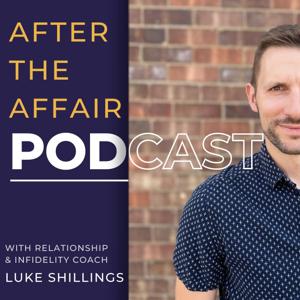
In this episode of After the Affair, Luke explores how the identity of being betrayed can sometimes become a source of protection, and how the very activities intended to help us recover might inadvertently keep betrayal at the centre of our lives.
This isn't about suggesting that you should have recovered by now, or that continuing to experience pain means you're doing something wrong.
There is no universal deadline for healing.
And seeking support isn't a sign that you're stuck.
But perhaps there's a question worth considering:
Am I doing this because it's helping me build the life I want, or because it helps me avoid the discomfort of moving towards that life?
Because understanding your past and creating your future are two different things.
You can acknowledge what happened, recognise the impact it's had on your life, and still begin to explore who you want to become.
Healing isn't the life you're trying to create. Healing is supposed to help you live that life.
So perhaps the question isn't whether you've finished healing.
Perhaps it's what you'd like your life to be about beyond the betrayal.
If you're ready to explore what moving forward could look like for you, and would like some support along the way, you can find out more about working with Luke through the links below.
And if this episode resonates with you, consider sharing it with somebody who might benefit from hearing it too.
Connect with Luke:
Join the After the Affair community at www.facebook.com/groups/aftertheaffaircommunity
You decided to stay after the affair.
At first, things seemed to be improving. You were communicating better, rebuilding trust, and perhaps even beginning to feel hopeful about the future.
You started to believe you'd made the right decision.
But then things became difficult again.
And suddenly you're asking yourself:
Was staying a mistake?
After betrayal, it's easy to judge our decisions based on how things are going right now. A good month can reassure us that we made the right choice. A difficult week can leave us questioning everything.
But what if the outcome of a decision isn't quite as straightforward as right or wrong?
In this episode of After the Affair, Luke explores four ways we make decisions, why our values can provide a more reliable foundation than fear or other people's opinions, and why the point at which we assess a decision can completely change our perspective.
Drawing on an old Chinese parable about a farmer, his horses and the unpredictable nature of fortune, Luke challenges the idea that we can always determine whether a decision was right simply by looking at what happened afterwards.
You can make a thoughtful, responsible decision and still experience an outcome you didn't want.
Equally, you can make a poor decision and get lucky.
The question isn't always whether you made the right decision.
Sometimes a more useful question is:
What does what I know now tell me about what I should do next?
Because you can't expect your past self to have known everything your present self knows.
And you don't have to declare your original decision a mistake in order to make a different one today.
If you're struggling to decide whether to stay, leave or continue rebuilding your relationship after infidelity, you can find out more about working with Luke through the links in the show notes.
And if this episode resonates, consider sharing it with somebody who's questioning a difficult decision of their own.
Connect with Luke:
Join the After the Affair community at www.facebook.com/groups/aftertheaffaircommunity
You have a good day together.
You laugh. You feel close. Maybe for a few hours, you barely think about the affair at all.
And then comes the thought:
Am I letting them off too easily?
After betrayal, even feeling better can become complicated. A good weekend can suddenly feel like evidence that you've forgiven them. Enjoying sex can make you question whether you're taking what happened seriously enough. Laughing together can leave you wondering whether you're becoming too comfortable, too quickly.
But does a good day really have to mean any of those things?
In this episode, Luke explores why moments of happiness and connection can sometimes feel surprisingly unsafe after betrayal - and why we can end up turning every good or bad experience into evidence about whether we should stay or leave.
The significance of what happened isn't measured by how long you remain miserable afterwards.
You don't have to keep hurting to prove that you were hurt.
So the next time you notice yourself enjoying being with your partner, instead of asking:
“Should I really be enjoying this?”
Try asking:
“What am I frightened this enjoyment means?”
You don't have to make a good moment mean anything more than it means.
Sometimes a good day is just a good day.
And you're allowed to have one.
Connect with Luke:
Join the After the Affair community at www.facebook.com/groups/aftertheaffaircommunity
“I’m not ready.”
It sounds reasonable. And sometimes it is.
But when you're facing a difficult decision after betrayal, waiting can easily feel like the safe option. You don't have to commit. You don't have to risk making the wrong choice. You can gather more information, ask more questions and keep trying to work out what will happen next.
The problem is that waiting is still a choice.
In this episode, Luke explores the cost of inaction and why the search for certainty can leave you stuck for far longer than you realise.
Because while you're deciding what to do with the next six months, you're living them.
This isn't about rushing into a decision or forcing yourself to stay or leave. Sometimes waiting is exactly the right thing to do.
The important question is whether you're deliberately choosing to wait for a reason, or whether fear is choosing for you.
If there's something you've been putting off, try asking yourself a different question:
What is waiting costing me?
You may decide that waiting is still the wisest choice.
But put it on the scales.
Because doing nothing doesn't get to sit outside the decision pretending to be free.
It has a cost.
It has consequences.
And it is still a choice.
Connect with Luke:
Join the After the Affair community at www.facebook.com/groups/aftertheaffaircommunity2
After discovering an affair, have you found yourself looking back at your relationship and wondering whether everything meant something different?
The late nights at work. The distance. The phone habits. That holiday. That argument from years ago.
Things that once seemed completely ordinary can suddenly look suspicious.
In this episode, Luke explores the halo effect, the tendency for one strong impression of someone to influence how we interpret everything else about them, and what can happen when betrayal turns that positive halo into something much more negative.
Because betrayal doesn't just change what you know.
It can change what everything you already knew appears to mean.
You'll learn why reassessing the past after betrayal makes complete sense, how understandable suspicion can sometimes become an overcorrection, and how separating facts from stories can help you distinguish between what you actually know and what now feels possible.
Luke also turns the idea inward, exploring what happens when:
"I didn't know" becomes "I'm an idiot."
Or:
"I trusted them" becomes "I can't trust myself."
The goal isn't to think more positively about your partner, excuse their behaviour or put them back on a pedestal.
It's to see them, your relationship and yourself, more accurately.
A question to take away:
Choose one belief you now have about your partner, your relationship or yourself.
What is the fact?
And then:
What is the story you've built around that fact?
You don't need to replace it with a more positive story.
Just start by noticing the difference.
Connect with Luke:
Join the After the Affair community at www.facebook.com/groups/aftertheaffaircommunity
Betrayal is emotional. So why can it make you feel physically awful?
The tight chest. The sick feeling in your stomach. The exhaustion. The tension. The racing heart. Being completely shattered but somehow unable to sleep.
None of this feels particularly "emotional" when you're the one experiencing it.
In this episode, Luke explores the relationship between emotional and physical pain, and why the distinction between the two isn't always as neat as we imagine.
More importantly, he looks at the feedback loop that can develop after betrayal: emotional distress affects your physical state, while exhaustion, poor sleep and physical tension can make your emotional experience even harder to manage.
You'll discover why your physical state matters when you're trying to make sense of what happened, why feelings can be treated as notifications rather than instructions, and why looking after your body isn't avoiding the emotional work.
Sometimes, it's what makes the emotional work possible.
A question to take away:
What condition is your body in while you're asking yourself to heal?
Connect with Luke:
Join the After the Affair community at www.facebook.com/groups/aftertheaffaircommunity
"What if I'm ignoring the signs again?"
After betrayal, that question can be incredibly difficult to shake.
You trusted before. You believed what you were being told. And somewhere along the way, you discovered that your version of reality wasn't quite what you thought it was.
So now you pay attention.
You check their phone. Their location. The affair partner's social media. You analyse changes in tone, unexplained delays and tiny inconsistencies.
And the more you look, the more you seem to find.
So is your gut trying to tell you something?
Or has your mind simply become extraordinarily good at finding evidence of the thing it's already afraid of?
In this episode, I explore what I call "the algorithm" - the way our repeated attention and behaviours can gradually train our minds to notice more of the same.
Just like a social media algorithm learns what keeps you engaged and serves you more of it, your mind can begin curating its own version of reality based on what you've repeatedly taught it matters.
And after betrayal, hypervigilance can feel remarkably similar to wisdom.
This isn't about ignoring your intuition.
It isn't about convincing yourself everything is fine.
And it certainly isn't about overlooking genuine evidence that something is wrong.
It's about recognising that being alert to danger and accurately assessing danger aren't necessarily the same thing.
Your mind learnt to protect you for a very understandable reason.
The question now is whether the protection it's offering is still helping you.
What are you repeatedly feeding your internal algorithm?
The profiles you check. The conversations you replay. The evidence you search for. The people you speak to.
Because the filter you're looking through isn't necessarily the truth.
It's a filter.
And filters can change.
If you'd like support breaking these patterns, rebuilding trust in yourself and creating more clarity after betrayal, you can find out more about my one-to-one coaching and the After the Affair Collective at lifecoachluke.com.
And if this episode helped you understand something you've been struggling to put into words, consider sharing it with someone else who might need to hear it.
Connect with Luke:
Stay or leave?
After betrayal, it can feel as though there must be a right answer.
So you do what you've probably done successfully with countless other important decisions.
You gather information. Weigh the options. Consider the risks.
What happens to the children? The finances? The house? What if they do it again? What if they've genuinely changed? What if you leave and regret it? What if you stay and waste another five years?
You create pros and cons lists. Run different scenarios. Have the same conversations repeatedly.
You're trying to optimise the decision.
To find the option most likely to produce the best possible outcome.
There's just one problem.
Most of the variables you need aren't actually knowable.
You can't produce a reliable five-year forecast for your marriage. You can't calculate the return on investment of a divorce. And there's no spreadsheet capable of telling you which choice will create the least pain three years from now.
In this final episode of the three-part series, I explore why trying to find the objectively best decision can keep you trapped — and what you might ask yourself instead.
Perhaps the question isn't:
“Which decision will produce the best outcome?”
Perhaps it's:
“Which decision am I willing to take responsibility for?”
Because you can make a thoughtful, considered decision and still experience pain afterwards.
You can choose to stay based on everything you know today and later receive new information that changes your mind.
You can choose to leave and still miss them.
You can make a good decision and get an outcome you didn't want.
Changing your mind later doesn't automatically mean you were wrong today.
Self-trust doesn't require you to predict the future correctly.
Perhaps it means trusting yourself to respond when the future actually arrives.
And maybe that's the bigger shift.
Not:
I trust myself to always get it right.
But:
I trust myself to respond to whatever happens next.
This is the final episode in this short three-part series exploring overthinking, capability, uncertainty and decision-making after betrayal.
If you're stuck between staying and leaving, you don't necessarily need somebody else to make the decision for you.
You may need somewhere to separate fear, predictions, expectations and everybody else's opinions from what you actually want.
That's exactly the kind of work we can do together.
You can learn more about my one-to-one coaching and the After the Affair Collective at lifecoachluke.com.
Connect with Luke:
Join the After the Affair community at www.facebook.com/groups/aftertheaffaircommunity
You're usually the person who handles things.
The calm one. The problem-solver. The person others rely on when something goes wrong.
And then betrayal happens.
Suddenly, you can't concentrate. You're questioning everything. You're checking their phone at midnight, replaying conversations when you're supposed to be working, crying in the car and struggling to make decisions that once would have seemed simple.
But perhaps the most painful part isn't even that you're struggling.
It's what you start making that struggle mean about you.
This isn't me.
When you've spent years seeing yourself as capable, composed and dependable, being completely knocked sideways by betrayal can feel like an identity crisis on top of everything else.
In this short episode, I explore why competence and invulnerability aren't the same thing, and why being extremely capable in other areas of your life doesn't necessarily prepare you for a deeply personal, emotional rupture.
You can manage a team, make enormous decisions, solve complicated problems and remain calm when everyone around you is panicking… and still find yourself completely undone by betrayal.
Those things aren't contradictory.
Competence isn't the same as invulnerability.
You haven't suddenly become less capable because you're struggling in unfamiliar territory.
Perhaps the shift is simply to stop using how you're feeling right now as evidence of who you are.
This is the second of three short episodes exploring how some of the qualities that serve us brilliantly elsewhere in life can unexpectedly make betrayal recovery more difficult.
In the final episode, we'll look at one of the biggest decisions after betrayal - whether to stay or leave - and why trying to calculate your way to the right answer might actually be keeping you stuck.
If you'd like support navigating betrayal, rebuilding self-trust and deciding how you want to move forward, you can learn more about my one-to-one coaching and the After the Affair Collective at lifecoachluke.com.
Connect with Luke:
Join the After the Affair community at www.facebook.com/groups/aftertheaffaircommunity
If you're usually good at solving problems, betrayal can be uniquely frustrating.
You're used to something going wrong, gathering the information, understanding what happened and figuring out what to do next.
So when infidelity happens, you naturally try to do the same thing.
Why did they do it?
What did I miss?
What does this mean?
What should I do now?
How can I make sure it never happens again?
You research. Replay conversations. Ask more questions. Run different scenarios. Perhaps you listen to another podcast episode hoping this will finally be the one that makes everything click.
But what if the problem isn't that you haven't figured it out yet?
What if you're trying to solve something that was never really a puzzle in the first place?
In this short episode, I explore why our ability to analyse and problem-solve can sometimes work against us after betrayal - and how thinking can quietly shift from a useful attempt to understand what happened into a sophisticated way of avoiding what we're actually feeling.
The question I want to leave you with is:
Am I actually trying to understand something new, or am I using analysis to avoid sitting with a feeling I haven't let myself have yet?
You don't necessarily need another answer.
Sometimes, the next step is recognising that not everything difficult can be solved. Some experiences have to be moved through.
This is the first of three short episodes exploring how some of the very qualities that help us succeed elsewhere in life can unexpectedly make recovery after betrayal more difficult.
In the next episode, we'll look at what happens when being someone who normally handles things becomes part of the problem, and why struggling can start to feel like evidence that something is wrong with you.
If you'd like support navigating betrayal, rebuilding self-trust and figuring out what you actually want moving forward, you can learn more about my one-to-one coaching and the After the Affair Collective at lifecoachluke.com.
Connect with Luke:
From the publisher's feed
Ranked by our users in the last 21 days
491 Listeners

408 Listeners
746 Listeners
386 Listeners
1,429 Listeners

203 Listeners

27,887 Listeners

448 Listeners

193 Listeners

359 Listeners
197 Listeners

1,054 Listeners

18,895 Listeners
58 Listeners

94 Listeners