
Sign up to save your podcasts
Or



Based on Podcast App listening data
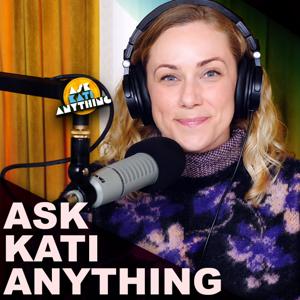
This week licensed therapist Kati Morton offers her thoughts on using AI chat agents in between therapy sessions, why trauma can be hard to move past, and what it really means to be willing versus just trying. She also talks about wanting friends while being a socially anxious introvert, and why our therapist telling us she cares about us can be triggering.
Ask Kati Anything ep. 249 | Your mental health podcast, with Kati Morton, LMFT
1. I’m currently seeing a therapist (cognitive behavioral therapy with a focus on trauma). Since the sessions can be emotionally intense, I’ve started to use ChatGPT between appointments to help process my thoughts and manage difficult emotions. I had previously tried journaling, but it felt more like a monologue and wasn’t as helpful. Using ChatGPT, however, has allowed me to engage in a dialogue, which has been more effective in organizing my thoughts and gaining clarity. When I shared this with my therapist, she expressed concern. She mentioned that using AI in this way might be similar to seeking support from another therapist, which could interfere with the therapeutic process. She also cautioned against the risk of isolation. My question for you: From a psychological perspective, what do you think about using AI as a supplemental tool between therapy sessions? Could it hinder the healing process? If so, what alternatives would you recommend to help navigate emotionally challenging periods between sessions? 00:36
2. I’ve noticed a lot of talk about repressed trauma on the podcast. I, however, remember everything. I’m currently working through some of this with an EMDR therapist. I’m having some difficulty letting go of these incidents, mainly because I feel like this invalidates them. Also, I feel the need to keep them in my back pocket- so to speak- so as to justify my hurt whenever I need to. My question is- what does it look like to work through trauma, while still recognizing that it was awful? As a separate note- why am I having an extreme physical reaction (shaking, almost convulsing) in the midst of EMDR therapy? 04:51
3. What does it really mean to be willing vs just trying? My therapist says I need to stop trying and start being willing, but I don’t understand the difference. In my mind, wanting to get better, going to therapy, and putting in effort is being willing. It sometimes feels like he’s suggesting I’m not trying hard enough, which is frustrating. For context, I have CPTSD from significant childhood emotional neglect and abuse, which has continued into adulthood. Thanksgiving was especially traumatic, and I’m working hard to... 10:43
4. I’m a very socially anxious introvert, which causes me to avoid a lot of social situations and interactions. Sometimes I feel lonely and “friendless” but I am very close to my mom and my sister which feels like enough human connection to me. But is that really enough? 6:49
5. How do I stop being mad at my therapist for telling me she cares about me? Every time she tells me she has been worried or that she cares about me I get this voice in my head screaming at me that it's fake and that this relationship is not a real one. I feel like she says this stuff only because it's... 21:50
X https://twitter.com/KatiMorton
Instagram https://www.instagram.com/katimorton
Learn more about your ad choices. Visit megaphone.fm/adchoices
This week licensed therapist, Kati Morton discusses how to know if we are doing therapy “right” and why it can feel so unstructured at times. She then dives into why we can want certain people to worry about us, how isolation can help us and also hurt us, and the effects of having a narcissistic mother and being the eldest daughter.
Instagram https://www.instagram.com/katimorton
Learn more about your ad choices. Visit megaphone.fm/adchoices
This week licensed therapist Kati Morton talks about why we can sometimes think we are in love with our therapist, ways we can get unstuck in life, and what to do with our passive suicidal thoughts. She also talks about feeling safe after surviving a trauma, and how to deal with transference and attachment in therapy.
Ask Kati Anything ep. 247 | Your mental health podcast, with Kati Morton, LMFT
2. Could you please talk about how one can get unstuck in life? I feel like I am reliving the same day over and over again, and not growing/evolving anymore. I’m so used to just watching life on the sidelines, like a movie, as opposed to actively participating in it. For reference, I do suffer from depression and I’m on medication for it. Thank you so much for everything that you do! 00:09:28
3. Hi, could you talk a bit more about passive suicidal thoughts. I almost got run over by a truck when crossing the street (he stopped in time at the end). I basically didn’t care, no shock, nothing. I just thought „ first of all, embarrassing, second of all this death would have been very welcome, sadly he stopped in time“. I went about my day as usual thinking about how chill I reacted not even caring if I would have died or not. I do have a past when it comes to suicidal thoughts and depression. 00:16:06
4. What does it mean to 'feel safe'? I have CPTSD and am hypervigilant. I get relaxation induced anxiety. I have tried following steps for reducing this but they often ask you to 'visualise somewhere you feel safe' or 'someone you feel safe with'. What does 'feel safe' mean? Is it a feeling in the body, or is it just the absence of overt fear? Or is it just an expression for some concept, like saying something is an 'act of god'? I expect my issue has the same root cause as my inability to feel happy / positive emotions. 00:20:29
5. What happens if transference and extreme attachment is not worked through in therapy and then therapy ends? This has happened for me and I am so overwhelmed by my emotions 24/7. I know how to work on attachment stuff by myself now from your videos but I just don’t know how to get closure if that makes sense. I miss her so much and it takes everything in me not to text her. Therapy ended a few months ago and I still miss her like crazy and I am so sad about it. Will that ever get better? Also can you feel “worse” in a way if you don’t work through issues (e.g transference) that came up in therapy? 00:24:44
6. In your opinion is this important to get a proper diagnosis? I was in therapy but I’ve never received a proper diagnosis. In my country only psychiatrists are allowed to diagnose you. I think I have quiet BPD among other mental illnesses and... 00:32:12
X https://twitter.com/KatiMorton
Instagram https://www.instagram.com/katimorton
Learn more about your ad choices. Visit megaphone.fm/adchoices
This week we talk about sitting with our feelings and dealing with anxious thoughts, why self-harm is often talked about only in relation to teens, and why we can suddenly have suicidal thoughts. Then we get into whether or not we can do inner child work by ourselves, how to get ourselves to realize things aren’t as bad as they seem, and if therapy can be harmful.
Instagram https://www.instagram.com/katimorton
Learn more about your ad choices. Visit megaphone.fm/adchoices
This week we are talking all about getting a diagnosis. Why we might want one, why we might not agree when we finally get one, and my thoughts on self-diagnosis. We will talk about assessments and what it means to get a proper diagnosis. Finally, we will dig into labels as a whole and whether or not they can be stigmatizing.
Ask Kati Anything ep. 245 | Your mental health podcast, with Kati Morton, LMFT
1. Why do I feel the need to diagnose myself or “pathologize” myself with a name for a mental illness/disorder? If I discover a diagnosis I could potentially have, I do sooo much research on it (almost to the point of it being obsessive because it’s all I can think about). I really want to have the diagnosis, but why? Why do I have to put a name to it? I feel like I need to be “sick” in order to be seen and for my experience to be valid. My mom (who is a therapist) doesn’t like that I do this because she says labels don’t help me move forward and it becomes my whole identity. And she says that... 00:37
2. What are the pros and cons of having a label or diagnosis for a mental illness? I know it can be validating but can it ever be detrimental? Like for example, even though I KNOW I struggle with social anxiety, I really want to be professionally diagnosed with social anxiety disorder. To me it feels like a way to prove my suffering to the world but I also am worried that I will... 10:51
3. I sincerely wanted to know Kati, do labels not cripple people further? Where it almost becomes an excuse for people to act in certain ways with little accountability. So instead it should be more of behavioral patterns we acknowledge with the intent of trying to assist people in a more CBT approach? I hope I’m making sense, thank you!! 18:30
4. Hi Kati, I've been wondering for a long time how to get diagnoses for a bunch of stuff since my family is quite opposed to the idea of me being autistic, or having ADHD, and other stuff they don't even know about like a dissociative disorder, OCD, and a possible eating disorder. Do I just have to wait until I become an adult if I can't get support in my home? Thanks for the podcast, it's so informative and, in my opinion, enjoyable! 22:28
5. Hey Kati! Is it possible to be DID/osdd without knowing, even if you don't remember any significant trauma? Thanks! 26:57
6. Hi Kati, I’m someone who has had undiagnosed ASD until this year. I’m having trouble accepting this new identity. How can people learn to accept this? What do people do with it? 31:17
Instagram https://www.instagram.com/katimorton
#podcast #psychology #katimorton
Learn more about your ad choices. Visit megaphone.fm/adchoices
This week licensed therapist Kati Morton talks about dealing with loneliness and how to cope with feeling isolated and alone. She also explains the reasons behind us being immature, how to let ourselves be genuinely happy, and how to know whether therapy is working or not.
Ask Kati Anything ep.244 | Your mental health podcast, with Kati Morton, LMFT
1. I’m struggling with feeling incredibly lonely and like I don’t matter, even though I logically know there are people who love me. It’s hard to shake the feeling that others might be happier without me around. Most of the time, I’m alone outside of work, and I often see others spending time together, which only deepens that feeling. I try to reach out ahead of time and let friends know I’d love to join if they make plans, but when the time comes, I don’t get invited—and then I find out they still got together without me. This has been a pattern for as long as I can remember, and it’s hard not to believe that it’s because there’s something wrong with me or that I’m unlovable. How can I break out of this rut and start to believe I’m worth connecting with? While I’m safe and won’t act on it, it’s sometimes really hard to keep battling the thoughts of whether I still want to be here. For context, I was significantly bullied as a kid, have CPTSD, am in therapy (both EMDR and talk), and have a history of emotional neglect and abuse from most of my family. Thank you for reading and for any advice you can offer. 00:54
2. How do I deal with being alone? My boyfriend of 6 years is moving away for a few months for his university placements before I join him later in the year for our permanent move. I’m terrified of being left at home by myself. I know I can talk to him every day but it just won’t feel the same. I’m very affectionate and love physical closeness so being physically distant feels heartbreaking. How can I cope if traveling to see him isn’t an option due to the need to save money for the move in the future? 07:23
3. My therapist recently told me I was emotionally immature (it's true, but it still hurt to hear it). Even though I have a lot of other issues (I'm a highly sensitive person, I have low self esteem), I want to work on improving myself. Do you have any tips or tools to improve my emotional maturity? Thanks for your amazing podcast, you've had such a positive impact on my life. 13:05
4. Why won't I allow myself to be genuinely happy? I have been diagnosed with MDD and GAD. I go through depressive episodes that last a few days to about a week and they happen every few months. It used to last much longer and come more frequently but meds, therapy, and PHP have brought it down to where it is now. However when I am not in an episode, I still feel like I am existing and not living - it's like my mind won't let me be happy. It is a point I feel stuck with in therapy. 21:56
5. I have been in therapy for a couple years and I still can’t figure out if it’s working or not. Some of my symptoms have faded, I feel more functional, and my physical symptoms have minimized. However, I feel more suicidal then I ever have, I struggle with self harm, I always feel horrible about myself, and the only thing I look forward to is therapy. It’s like my whole life just relies on therapy and my therapist. 25:48
Instagram https://www.instagram.com/katimorton
Learn more about your ad choices. Visit megaphone.fm/adchoices
This week we discuss not getting better in therapy, when we should give up, and if it’s up to us to know what we want to work on in therapy. We will also talk about depression and how to come to terms with it, and how to know if we are burnt out.
Ask Kati Anything ep. 243 | Your mental health podcast, with Kati Morton, LMFT
2. My counselor told me ‘I can’t really help you if you don’t bring anything to our sessions’. I have already explained that when I come into a session and she says, ‘what do you want to talk about today?’ It stresses me out and I don’t know what to say, so a couple of weeks ago I wrote a list of stuff that is the biggest issues I have and stuff that I am finding the most difficult to deal with at the moment and I gave it to her and we went through that for a session so she has an idea of the stuff I want to work on but she continues to ask every week ‘what do you want to talk about today?’ 16:23
3. How to deal with (come to terms with, accept) depression? How do I get over feeling so useless, unable to function as an adult??? 19:32
4. I’ve been in therapy for 3+ years now and I don’t know it’s getting any better. I’ve been diagnosed with MDD and although functioning, I can’t seem to find joy in my everyday life. I’ve also spoken to my therapist about it and even told her about my want to stop therapy because I feel like I’m wasting her time. My therapist assured me I’m not wasting her time, and also gently persisted about continuing therapy since therapy is the only consistency right now that doesn’t malfunction (note: every other consistent routine doesn’t seem to stick even if I tried). What can I do to get out of the rut? Any advice would be helpful. Thanks for all that you do. 24:12
5. Hey Kati, could you possibly talk about burnout? What could it look like? Would someone with depression already be more susceptible to burnout? And why might it be so hard to admit it and get help? I think I am either completely burnt out or close to it. I work a lot of overtime and can’t just take a break because I don’t have anyone to cover my position (head/only full time chef and kitchen manager at a residential school) I organize the whole week of meals for out students and to be able to take my “normal” days off, it requires so much extra work. I don’t know how to stand up for myself, how to rest when I do have small bits of time and even on my days off there are usually texts or calls to answer from work. I’m leaving my job in 6 months but that feels like a long time to just try and hang on. Any information, help or advice would be so appreciated. Thank you for everything. 27:37
6. Why do the Pollyannas keep telling me "it gets better" when it's painfully obvious that it only gets worse? 38:06
Instagram https://www.instagram.com/katimorton
Learn more about your ad choices. Visit megaphone.fm/adchoices
This week Kati talks about child on child abuse, and if being abused as a child means that we will abuse others. She also explains what trauma processing looks like and whether or not talking out our trauma could itself be traumatizing. Finally, she discusses reparenting and what it can look like, why we want to push our therapist away, and how we can process all we have been through.
Ask Kati Anything ep. 242 | Your mental health podcast, with Kati Morton, LMFT
1. Hi Kati, I am wondering if a child who abuses other children will become an adult who abuses children? I ask because my brother (5yrs my senior) molested me from the time I can remember up to about age 5, when his friend took over. He’s since moved far away (we are adults now) but has had access to young children. I worry about the safety of those children. Could he really still be abusing children so many years later? 00:42
2. Could you talk about bit about child on child sexual abuse? When is it considered normal child exploration and when is it abuse? And is 4 years old too young for it to be considered abuse? When I was about 4 years old, a boy in my class (who used to bully/tease me sometimes) (also 4) “touched me” (I won't go into the details). He somehow convinced me to let him and... 04:09
3. Can you talk about trauma and processing it? Why do I feel like I have to talk about events in therapy more than once? I already talked about it, why can’t it just be a one and done? I shared it once, isn't that enough? 12:28
4. I am wondering why after almost a year in therapy and on the cusp of being honest and opening up about my childhood trauma, I am questioning everything my therapist is doing and trying to push her buttons? I seem to want to put conditions on the things I share or do. I don't mean to do this but can't seem to stop. Is this normal or a part of the process? 16:40
5. I was wondering if you can explain how reparenting is supposed to help? I have done it a few times with my therapist or on my own and it just feels like I’m shoving down my feelings and telling myself it’s ok and I’m safe when it’s like the opposite of what I’m feeling. Although, when others do it it’s helpful. it’s just weird because I’m giving myself something that I should or should have gotten from others? Isn’t the point of community to get feel good messages? Like how can I be my own parent? My parent wasn’t the parent I needed and I can’t fill that void. I don’t think one person or thing fills that void. I think it’s multiple things and relationships. Anyway, I couldn’t be my own parent as a kid, so how can I now be one as an adult? I don’t know if that makes sense. 21:07
6. How do I emotionally process a lot stuff that happened this year, example doing splits shifts to getting a new job along with family stuff sprinkled in all within a few months and going to a wedding? I’ve felt like I’ve been on auto pilot and not dealt with it. 29:14
Learn more about your ad choices. Visit megaphone.fm/adchoices
Compulsions, intrusive thoughts, anxiety, and OCD. This week licensed therapist Kati Morton will discuss what compulsions really are, whether our intrusive thoughts can pop up in our dreams, what causes us to develop OCD, and how to better manage the physical symptoms of OCD and anxiety.
YouTube https://www.youtube.com/katimorton
Learn more about your ad choices. Visit megaphone.fm/adchoices
This week licensed therapist, Kati Morton talks about therapy and how to get comfortable sharing with our therapist. She also discusses honesty in therapy, its importance, and how we can find the courage to share what we are going through. She then explains how to know when we need to see a therapist versus talking to our friends and family, and finally she digs into therapy ending, why it would happen and how we can cope with it.
#podcast #psychology #katimorton
YouTube https://www.youtube.com/katimorton
Learn more about your ad choices. Visit megaphone.fm/adchoices
From the publisher's feed
Ranked by our users in the last 21 days
684 Listeners

3,328 Listeners

2,480 Listeners
834 Listeners

2,518 Listeners

602 Listeners

14,903 Listeners
433 Listeners
591 Listeners

2,346 Listeners

363 Listeners

1,849 Listeners

41,321 Listeners

280 Listeners

1,386 Listeners