
Sign up to save your podcasts
Or

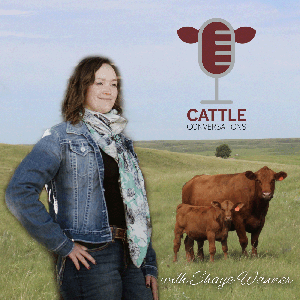


Today on Casual Cattle Conversations, Shaye interviews Devlon Ford, a regenerative ranching advisor at the Noble Research Institute, about managing drought in cattle operations. Ford explains drought-stress indicators producers should watch for, including forage color and condition, lack of rainfall, and cattle manure consistency as a signal of declining forage protein.
Reactive options discussed include early weaning, strategic destocking (culling old, open, ornery, and poor performers while considering market profitability), and carefully analyzing the costs of purchasing hay or supplements. He also suggests subdividing pastures to increase stock density, improve grazing uniformity, and extend recovery time. Proactively, Ford emphasizes calculating carrying capacity and setting stocking rate below it, using rainfall trigger dates for destocking decisions, avoiding overgrazing to protect soil cover and biology, and using flexible enterprises like stockers/custom grazing during high-forage years.
Learn about carrying capacity and stocking rate with Devlon: https://www.casualcattleconversations.com/casual-cattle-conversations-podcast-shownotes/devlon-ford
Catch more conversations like this one and learn more at https://www.casualcattleconversations.com/
Today on the Casual Cattle Conversations Podcast, Shaye interviews Jasper Oeltjen of Heritage and Horizons about why ranchers feel overwhelmed financially, mentally, and operationally, and how those areas intertwine. Jasper shares her background in education, IT strategy, and a 14-year cow-calf operation, describing how constant hustling led to plateauing and reactive decision-making that created domino effects in nutrition, calving, labor, medications, margins, and relationships.
They discuss how unavoidable hard seasons are easier to navigate with a foundation of goals, clear expectations, and defined roles. Jasper outlines a four-phase “road trip” framework: set shared long-term goals, map the route with shorter targets, define day-to-day tactics and metrics aligned to goals, and proactively anticipate issues (like aging cows or replacement needs) to avoid “construction.” She also explains helping producers clarify goals via conversation and four focus categories: optimize, innovate, maintain, or grow.
Start Building a More Intentional Operation 👇
https://www.casualcattleconversations.com/ranchermind-events
Learn more about Noble here: https://bit.ly/3DD7uG0
Catch more conversations like this one and learn more at https://www.casualcattleconversations.com/
00:59 Meet Jasper Oeltjen
02:32 From Hustle to Strategy
04:06 Reactive Decisions Dominoes
07:10 Financial and Operational Strain
10:23 Relationships and Tough Seasons
12:48 Root Causes Goals and Roles
17:34 Four Phase Planning Framework
20:56 Finding Your Real Goals
26:06 Keep It Simple and Take Action
29:10 Rancher Mind Series Invite
Today, Shaye welcomes back Nebraska rancher, Jaclyn Wilson to discuss how extensive international travel has shaped her ranch management and views of global agriculture. Wilson describes how travel began through the Nebraska LEAD program and expanded into regular international speaking and industry visits, leading to operational changes at home such as organized team planning with whiteboards and calendars and greater delegation. She contrasts U.S. open-pasture wintering with UK/Ireland winter confinement driven by mud and heavy clay soils, and shares a Netherlands example where turning cows out to grass becomes an agritourism event.
Wilson outlines Dutch regulations and subsidies tied to nitrates, water runoff, stocking limits, and methane, and questions measurement accuracy for emissions and carbon credits. From Kenya, she highlights corruption concerns, diverse agricultural tours, and a “My Tank” water project. She emphasizes U.S. beef efficiency and safety but notes persistent overseas perceptions about sanitation, traceability, confinement, and antibiotics, and encourages producers to stay aware of global concerns and opportunities, including genetics and investment abroad.
Learn more about what Vence could look like on your operation here: https://bit.ly/4kfWrCG
Learn more about Noble here: https://bit.ly/3DD7uG0
Catch more conversations like this one and learn more at https://www.casualcattleconversations.com/
01:24 Jaclyn’s Travel Bug Origins
03:29 Ranch Changes From Travel
05:35 Whiteboards And Planning
07:16 Winter Housing Culture Shock
10:16 Netherlands Dairy And Agritourism
12:00 EU Rules Subsidies And Nitrates
15:21 Methane Carbon And Measurement
17:52 Africa And Nuffield Journey
20:33 Kenya Corruption And Water
24:43 Water Links Every Country
25:48 Why Home Matters Most
28:08 US Beef Strengths And Perception
31:13 Genetics Trade And Open Minds
On today's show, Shaye Wanner interviews Saskatchewan ranchers John and Deanne about using Vence virtual fencing on their 400 cow-calf commercial operation near the Bronson Forest. They explain how virtual fencing improves utilization on rough, boggy forest lease country where conventional fencing is difficult and expensive, while saving labor, supporting planned/rotational grazing, and helping soil health by controlling stock density and drift with back fences.
They describe added benefits like better monitoring for predation claims, reducing temporary electric fencing on rented land, and sorting groups (heifers, main herd, and open cows) using different virtual fences, achieving about a 95% success rate in a week. They discuss software tools like maps and heat maps, training protocols, cow-to-cow variation in responses, challenges with bull collar retention, collar loss rates improving with tighter fitting, and battery life lasting closer to six months than nine.
Learn more about what Vence could look like on your operation here: https://bit.ly/4kfWrCG
Catch more conversations like this one and learn more at https://www.casualcattleconversations.com/
On this episode of the Casual Cattle Conversations Podcast, Shaye interviews first-generation Texas rancher Kim Jungkind about staying curious to reduce cattle stress and improve performance. Kim shares how observing cattle led her to test music and color preferences: her herd moved away from rock music but gathered closely to Bach, especially Yo-Yo Ma’s cello, which she now plays during feeding and stressful events like trailering or difficult births to calm the herd; she connects stress reduction to better weight gain by preventing metabolic energy loss.
She also found cattle are drawn to yellow after placing art in a corral, and notes cattle see yellow best and blue well, inspiring practical changes like using yellow flags on sorting sticks. Kim recounts transitioning from nursing and academia to ranching after inheriting her father-in-law’s operation, receiving community support through a local church, and facing a major fire early on. She recommends helping new ranchers network and directs listeners to order her book, “Back to the Barn and Bach,” at www.insightskj.com.
Links and Resources
Learn more about Cargill here: https://bit.ly/4e1qygS
Learn more about Vence here: https://bit.ly/4kfWrCG
Catch more conversations like this one and learn more at https://www.casualcattleconversations.com/
On this episode of Casual Cattle Conversations podcast, Shaye interviews Jaclyn Ketchum, who grew up on a registered Red Angus ranch using AI and embryo technologies, earned advanced degrees in reproductive physiology, and now runs her family’s custom AI business while expanding embryo work. Ketchum explains benefits of AI and fixed-time AI with synchronization, including access to superior genetics at lower cost than buying bulls, use of sexed semen, improved early conception linked to heavier calves, more uniform calf crops, and reduced bull-to-cow ratios with cleanup bulls.
She discusses why some producers still heat-detect, heifer protocol considerations, and how weather can reduce estrus expression and conception. Key success factors include communication, strict protocol timing, facility readiness, proper product handling and dosing, semen storage and shipping, skilled technicians, and managing expectations before and after AI.
Mentioned Episodes
Lacey Quail on Improving Preg Rates: https://www.casualcattleconversations.com/casual-cattle-conversations-podcast-shownotes/lacey-quail
Jennifer Koziol on Bull Fertility: https://www.casualcattleconversations.com/casual-cattle-conversations-podcast-shownotes/p4fffrydex27m1zkm1cj7bmrgpp56d
Links and Resources
Learn more about Cargill here: https://bit.ly/4e1qygS
Learn more about Corteva here: RangeAndPasture.com/CattleConversations
Learn more about CattleMax Here: https://bit.ly/4aG7K5q
Catch more conversations like this one and learn more at https://www.casualcattleconversations.com/
00:00 Why AI Matters
00:18 Meet Jaclyn Ketchum
01:50 AI and Fixed Time Benefits
07:53 Why Skip Synchronization
11:17 Heifer Protocol Basics
13:20 Planning a Successful AI Day
22:07 Heat Detecting 21 Day AI
24:35 Weather and Conception
27:45 Resync and Backup Plans
30:18 Sync for Natural Service
32:37 Repro Efficiency Big Picture
34:45 Final Takeaways and Wrap
From the publisher's feed
Cattle Conversations is the podcast for beef cattle producers and ranchers to explore new ideas and hear stories that will help them improve their current operations and lifestyles. Shaye Wanner…

84 Listeners
425 Listeners
123 Listeners

378 Listeners
23 Listeners
1,313 Listeners
112 Listeners
32 Listeners

227 Listeners
73 Listeners
1,681 Listeners

199 Listeners

22 Listeners
29 Listeners

270 Listeners