
Sign up to save your podcasts
Or

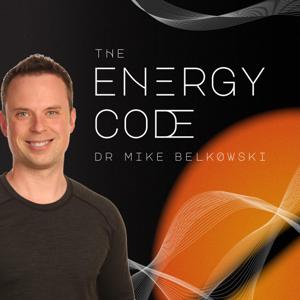

Welcome to the first Energy Code Deep Dive—daily research reviews translated into real life. Dr. Mike Belkowski and co-host Don Bailey break down a brand-new (Jan 3, 2026) pilot study on transcranial photobiomodulation (tPBM) for chemobrain (cancer-related cognitive impairment).
We define what chemobrain actually feels like, why there aren’t many proven treatments, and why researchers are exploring 810nm brain-directed light + an intranasal component to support mitochondrial energy (cytochrome c oxidase/ATP), inflammation balance, blood flow, and repair signaling.
Then we walk through the real-world clinical cohort (31 women), the protocol (weekly sessions, ~20 minutes, 10+ sessions), and the eye-opening outcomes: 29/31 improved, average cognitive scores rose dramatically, and a meaningful percentage normalized. We also keep it honest—small sample, retrospective design, no control group—so you know what’s promising now and what still needs randomized trials.
-
Article Discussed in Episode:
Transcranial photobiomodulation for the treatment of chemobrain: new perspectives from a pilot study
-
Key Quotes From Dr. Mike:
“It’s like your brain’s running 30 browser tabs and somebody started a video call in the background.”
“Think of it like giving your brain cells a more efficient ‘charge cycle,’ not by caffeine, but by improving cellular energy production.”
“This is why device specs aren’t nerd trivia. They’re the difference between a protocol and a placebo.”
“This pilot study suggests that transcranial photobiomodulation may meaningfully improve chemobrain symptoms… but we still need larger controlled trials.”
-
Chemobrain is real: attention, processing speed, verbal fluency, executive function — often lingering for years and impacting daily life.
The study reviewed a Jan 3, 2026 pilot exploring tPBM as a potential supportive treatment when proven options are limited.
Mechanism focus: light targets mitochondrial function (cytochrome c oxidase → ATP), with downstream effects on inflammation, blood flow, and repair signaling.
Cohort: 31 women, average age ~52, post-chemo cognitive impairment; cognition tracked via FACT-Cog.
Protocol: 810nm transcranial + intranasal, ~20 min/session, weekly, 10+ sessions; some also used whole-body PBM.
Why 810nm: penetration matters; modeling suggests near-optimal depth to reach cortical targets; intranasal may help access harder-to-reach regions.
Results were striking: average score improved from ~63 to ~101; 29/31 improved; ~29% normalized into typical range.
Limitations & takeaway: retrospective + no control group (can’t rule out time/placebo), but the effect size supports moving toward larger randomized trials and reinforces that parameters/device specs matter.
-
00:00 – Welcome to the first Energy Code Deep Dive + Don’s role as the “question-asker”
01:30 – What is chemobrain (symptoms + what it feels like day-to-day)
04:00 – Why treatment options are limited (the “brutal part”)
05:30 – What transcranial photobiomodulation is (plain-English translation)
07:30 – Biology: cytochrome c oxidase, ATP, inflammation, blood flow, repair signaling
10:00 – Study design + who they studied (31 women, France, post-chemo, FACT-Cog)
12:30 – Real-life impacts (reading, admin work, conversations, driving, fatigue, sleep)
14:30 – Protocol details (810nm, intranasal, weekly 20 min, 10+ sessions, some whole-body)
17:00 – Why 810nm + why intranasal (penetration + access)
19:00 – Results (63 → 101, 29/31 improved, ~29% normalized, QoL changes)
21:30 – Mood/anxiety/depression findings + interpretation
23:00 – Mechanisms: chemo injury pathways vs PBM supportive pathways
25:30 – Limitations (small sample, retrospective, no control, can’t split brain vs whole-body)
27:30 – Safety notes + “what do I do with this?” (talk to clinician; parameters matter)
29:00 – One-sentence takeaway + close (“Protect your energy / mitochondria”)
Stay up-to-date on social media:
Dr. Mike Belkowski:
BioLight:
Website
YouTube
 View all episodes
 By Dr. Mike Belkowski

4.8
124124 ratings
Welcome to the first Energy Code Deep Dive—daily research reviews translated into real life. Dr. Mike Belkowski and co-host Don Bailey break down a brand-new (Jan 3, 2026) pilot study on transcranial photobiomodulation (tPBM) for chemobrain (cancer-related cognitive impairment).
We define what chemobrain actually feels like, why there aren’t many proven treatments, and why researchers are exploring 810nm brain-directed light + an intranasal component to support mitochondrial energy (cytochrome c oxidase/ATP), inflammation balance, blood flow, and repair signaling.
Then we walk through the real-world clinical cohort (31 women), the protocol (weekly sessions, ~20 minutes, 10+ sessions), and the eye-opening outcomes: 29/31 improved, average cognitive scores rose dramatically, and a meaningful percentage normalized. We also keep it honest—small sample, retrospective design, no control group—so you know what’s promising now and what still needs randomized trials.
-
Article Discussed in Episode:
Transcranial photobiomodulation for the treatment of chemobrain: new perspectives from a pilot study
-
Key Quotes From Dr. Mike:
“It’s like your brain’s running 30 browser tabs and somebody started a video call in the background.”
“Think of it like giving your brain cells a more efficient ‘charge cycle,’ not by caffeine, but by improving cellular energy production.”
“This is why device specs aren’t nerd trivia. They’re the difference between a protocol and a placebo.”
“This pilot study suggests that transcranial photobiomodulation may meaningfully improve chemobrain symptoms… but we still need larger controlled trials.”
-
Chemobrain is real: attention, processing speed, verbal fluency, executive function — often lingering for years and impacting daily life.
The study reviewed a Jan 3, 2026 pilot exploring tPBM as a potential supportive treatment when proven options are limited.
Mechanism focus: light targets mitochondrial function (cytochrome c oxidase → ATP), with downstream effects on inflammation, blood flow, and repair signaling.
Cohort: 31 women, average age ~52, post-chemo cognitive impairment; cognition tracked via FACT-Cog.
Protocol: 810nm transcranial + intranasal, ~20 min/session, weekly, 10+ sessions; some also used whole-body PBM.
Why 810nm: penetration matters; modeling suggests near-optimal depth to reach cortical targets; intranasal may help access harder-to-reach regions.
Results were striking: average score improved from ~63 to ~101; 29/31 improved; ~29% normalized into typical range.
Limitations & takeaway: retrospective + no control group (can’t rule out time/placebo), but the effect size supports moving toward larger randomized trials and reinforces that parameters/device specs matter.
-
00:00 – Welcome to the first Energy Code Deep Dive + Don’s role as the “question-asker”
01:30 – What is chemobrain (symptoms + what it feels like day-to-day)
04:00 – Why treatment options are limited (the “brutal part”)
05:30 – What transcranial photobiomodulation is (plain-English translation)
07:30 – Biology: cytochrome c oxidase, ATP, inflammation, blood flow, repair signaling
10:00 – Study design + who they studied (31 women, France, post-chemo, FACT-Cog)
12:30 – Real-life impacts (reading, admin work, conversations, driving, fatigue, sleep)
14:30 – Protocol details (810nm, intranasal, weekly 20 min, 10+ sessions, some whole-body)
17:00 – Why 810nm + why intranasal (penetration + access)
19:00 – Results (63 → 101, 29/31 improved, ~29% normalized, QoL changes)
21:30 – Mood/anxiety/depression findings + interpretation
23:00 – Mechanisms: chemo injury pathways vs PBM supportive pathways
25:30 – Limitations (small sample, retrospective, no control, can’t split brain vs whole-body)
27:30 – Safety notes + “what do I do with this?” (talk to clinician; parameters matter)
29:00 – One-sentence takeaway + close (“Protect your energy / mitochondria”)
Stay up-to-date on social media:
Dr. Mike Belkowski:
BioLight:
Website
YouTube
785 Listeners
365 Listeners
7,206 Listeners

5,000 Listeners
720 Listeners
1,723 Listeners

4,898 Listeners
3,469 Listeners

9,268 Listeners

169 Listeners
1,092 Listeners
1,775 Listeners
842 Listeners
525 Listeners
305 Listeners