
Sign up to save your podcasts
Or

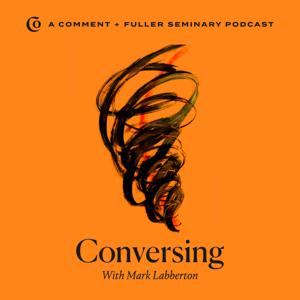


In February 2026, Jeanelle Austin filed for Minnesota Senate District 62. She started canvassing her district during a polar vortex, and persisted through triple-digit summer heat. And in August she lost in the Democratic Primary.
In this episode, she sits down with Mark Labberton to reflect on what this experience has taught her about power, democracy, and what citizenship and neighbor-love means in the South Minneapolis neighborhood where she grew up.
The executive director of Rise & Remember—the nonprofit that preserves the memorial at George Floyd Square—Austin followed a conviction, that if running for office meant she could save just one person's life, she would do it.
She reflects on what it means to "run for something rather than against someone," the win-win campaign she designed by first answering what she would do with power if she lost, and the democratic machinery most voters never see: caucuses, delegates, conventions, endorsements, and party mailers that carry only the endorsed name. She reveals the shadow side of running against an incumbent in her own party: friends who could not endorse her, the party regular who said challengers to progressive incumbents should be punished, the front-porch conversations, the youth-built platform she carried to a rural Republican youth group, and the value a campaign loss is still worth when first-time voters turn out.
Episode Highlights
About Jeanelle Austin
Jeanelle Austin is executive director and co-founder of Rise & Remember, the Minneapolis nonprofit that preserves thousands of offerings left at George Floyd Square, where she also serves as lead memorial caretaker. She founded Racial Agency Initiative, a racial justice leadership coaching practice, in 2019. She holds a BA in Christian ministries from Messiah College and an MDiv in ethics and an MA in intercultural studies from Fuller Theological Seminary. In 2026 she ran in the DFL primary for Minnesota Senate District 62. The fourth of seven children, she grew up in Minneapolis's Bryant neighborhood, just blocks from the site of George Floyd's killing at 38th and Chicago Avenue.
Helpful Links and Resources
Show Notes
#JeanelleAustin #GeorgeFloydSquare #Minneapolis #RunForOffice #Democracy #CivicEngagement #FaithAndPolitics #Conversing
Production Credits
Conversing is produced and distributed in partnership with Comment Magazine and Fuller Seminary.
Growing up, Beth Moore was taught that 1 Timothy 2 and 1 Corinthians 14 were the whole of what scripture had to say about women: submissive and silent. The founder of Living Proof Ministries and one of the most widely read Bible teachers in America, Moore objects to a hermeneutic limited to those passages.
In this episode, Mark Labberton revisits his 2018 conversation with Beth Moore, recorded in the months following her viral open letter, "A Letter to My Brothers." Almost 10 years later, debates over women in leadership and whether women are free to use their full gifts in the full service of the church still roil American Christianity. This episode is an invitation to hear Moore's unique journey—discovering what it means to receive women as teachers and instructors of scripture for the building up of the church—and about the faithfulness of God to one woman's story, as she tries simply to be heard. They discuss the cost of speaking up in 2018 and the backlash that came hardest from women, her decision to repent of her own complicity, the way gender gets used abusively in every part of the church, and what it looks like to keep going with Jesus when the way ahead is cloudy.
Episode Highlights
About Beth Moore
Beth Moore is an evangelist, author, and Bible teacher who founded Living Proof Ministries in Houston in 1994 to teach women the scriptures. Her books and studies, including Breaking Free and So Long, Insecurity, have been translated into more than twenty languages. Her 2018 open letter "A Letter to My Brothers" named the misogyny she had absorbed in conservative evangelical life. She left the Southern Baptist Convention in 2021 and now worships as an Anglican. Her memoir, All My Knotted-Up Life, won the 2024 ECPA Book of the Year. She teaches now on the podcast Living Proof with Beth Moore.
Helpful Links and Resources
Show Notes
#BethMoore #WomenInMinistry #Conversing #MarkLabberton #WomenInLeadership #Evangelicalism #BibleTeaching #ChurchToo #Complementarianism
Production Credits
Conversing is produced and distributed in partnership with Comment Magazine and Fuller Seminary.
Our hearts are restless, says Saint Augustine, until they find their rest in God. The biological science and the spiritual metaphor are in agreement here. Over the course of billions of beats, our hearts never stop to rest. Your magnificent heart exchanges or pumps your entire blood volume, just over a gallon, every single minute. (Athlete hearts can pump up to 10 gallons per minute!)
In this episode, Mark Labberton discusses matters of the heart with his close friend Dr. David Anderson, a cardiologist of four decades who trained at Johns Hopkins and helped launch one of the first interventional cardiology programs in San Francisco.
Anderson reflects on the medical science of cardiology, the profound life-saving medical advances over the past forty years, heart disease versus coronary artery disease, how the brain and the heart communicate, and what happens during a heart attack.
In the second half of their conversation, they move from physiology to spirituality of the heart: Pharaoh's hardened heart, "out of the heart the mouth speaks," and the human need to find somewhere to locate the self.
Anderson closes with what a cardiologist would tell anyone worried about their own heart, and with a case for medicine as a noble profession.
Episode Highlights
About David Anderson
David Anderson is a cardiologist who practiced for more than four decades before retiring. He studied at Stanford as an undergraduate and earned his medical degree at Johns Hopkins University School of Medicine. He stayed at Hopkins for residency, then trained in San Francisco at the dawn of interventional cardiology, helping to build an angioplasty program in the early 1980s.
Helpful Links and Resources
Show Notes
#Conversing #MarkLabberton #Cardiology #Heart #MedicalScience #HeartHealth #Biology #ChristianHumanism
Production Credits
Conversing is produced and distributed in partnership with Comment magazine and Fuller Seminary.
The Old Testament, Walter Brueggemann said, is an old text that simply refuses to stay old. "It reads like it was written yesterday." For him, God offers no artificial closure, but is active in the meantime, and at peace with the "unfinished."
Walter Brueggemann died on June 5, 2025, at the age of ninety-two, and his own influence is unfinished. This episode is from the Conversing archives: a conversation Mark Labberton hosted with Brueggemann at Fuller Seminary for the 2015 Fuller Forum "Justice, Grace, and Law in the Mission of God."
Brueggemann was an Old Testament scholar for the sake of the church, the author of over one hundred books including The Prophetic Imagination, and came to the Bible as a text-wrestler, "comfortable with collisions," taking the Hebrew text and his own life as an artist with equal and total seriousness. He describes his method of exegesis written longhand, "at the end of his pen," catching himself speaking the words as he writes them.
Together they discuss the artistry of biblical language and why art is inherently subversive; Abraham Joshua Heschel on the suffering of God in Jeremiah; the pastor as scribe rather than prophet; the violence of God in the Old Testament and what it means to call it recovery; and justice as the "willingness to be inconvenienced." Brueggemann closes with Psalm 73: " Whom have I in heaven, and who do I desire on Earth but you?"
Walter Brueggemann was the McPheeters Professor Emeritus of Old Testament at Columbia Theological Seminary.
Episode Highlights
About Walter Brueggemann
Walter Brueggemann (1933–2025) was among the most widely read Old Testament scholars of the past century, author of more than one hundred books, including The Prophetic Imagination and Theology of the Old Testament. Born in Tilden, Nebraska, to a German Evangelical pastor, he studied at Elmhurst College, Eden Theological Seminary, Union Theological Seminary, and Saint Louis University. He taught at Eden from 1961 to 1986 and at Columbia Theological Seminary from 1986 until his retirement in 2003, holding the William Marcellus McPheeters chair in Old Testament. His final book, God of All Promises, was published posthumously in 2026.
Helpful Links and Resources
Show Notes
#WalterBrueggemann #PropheticImagination #OldTestament #Conversing #MarkLabberton #Preaching #Theology
Production Credits
Conversing is produced and distributed in partnership with Comment magazine and Fuller Seminary.
Why are we still "kicking the hornet's nest"? The last time Mark Labberton interviewed Daniel Zoughbie (UC Berkeley/UCSF) for his expertise on international diplomacy in the Middle East, there was not yet an Iran war. Regardless of your geographical distance, this war is imminently important as it escalates and impacts not just Iran but the entire Middle East and the entire world economy.
"War is really supposed to be a last resort."
Taking seriously both the significance and validity of Israel as a nation and the need for appropriate and just treatment of all Jews, Christians, and Muslims during a time of rising anti-Semitism and Islamophobia, this conversation comes at a volatile moment, pregnant with violence and chaos in American foreign policy.
Starting the timeline at the 2018 US exit from the "Iran nuclear deal" (the Joint Comprehensive Plan of Action) Zoughbie discusses a variety of interconnected issues, including the role of Middle Eastern geography such as the Strait of Hormuz and the Bab el-Mandab ("Gate of Tears"), the proliferation cascade a Saudi Arabian nuclear program could set off, and the difference between tactical brilliance and strategic vision.
Together, they also consider hopes for improvement, looking at Gerald Ford's unpopular but effective ultimatum that forced Egypt and Israel to talk; the Olmert-Abbas negotiations that almost reached a two-state solution; the role of Christianity in politics; the danger of national pride; wisdom from antiquity in Herodotus, Croesus, and Cyrus the Great; and a definition of greatness that has nothing to do with force.
Episode Highlights
About Daniel Zoughbie
Daniel E. Zoughbie is a complex-systems scientist, diplomatic historian, and expert on presidential decision-making. He is associate project scientist at the UCSF/UCB Center for Global Health Delivery, Diplomacy, and Economics; principal investigator of Berkeley's Middle East and North Africa Diplomacy, Development, and Defense Initiative; and a nonresident senior fellow at the Atlantic Council's MENA Futures Lab. He wrote Kicking the Hornet's Nest: U.S. Foreign Policy in the Middle East from Truman to Trump and Indecision Points. He founded Microclinic International, whose model has reached refugee and low-income communities across four continents, and studied at Oxford as a Marshall and Weidenfeld Scholar.
Helpful Links and Resources
Show Notes
#Conversing #MarkLabberton #DanielZoughbie #IranWar #ForeignPolicy #StraitOfHormuz #NuclearProliferation #MiddleEast #Diplomacy #FaithAndPolitics
Production Credits
Conversing is produced and distributed in partnership with Comment magazine and Fuller Seminary.
What is it that actually forms our inner reality? Our values, our perspective, our judgment, our understanding of wisdom about the issues that really matter? What difference does that make in Christian character formation? The American church consistently produces fruit that many of its own leaders either don't recognize, don't want, or disapprove of. Under- and malformed Christian people reflect a grounding in the surrounding culture rather than the character and love and gospel of Jesus Christ.
In this episode, author, professor, and consultant Tod Bolsinger argues that culture is the thing that forms you before you ever realize it, let alone consent to it. He suggests that the soil of community and belonging—rooted in attachment, vulnerability, trust, and joy—is what makes sense of exemplary models of Christian formation.
"If you wanna grow good fruit—abundant harvests of good fruit—you don't focus on the fruit, you focus on the soil."
With Mark Labberton, Tod reflects on the agricultural model of spiritual formation; regenerative farming and the impact of soil health on the quality of the fruit; the example of Andre Trocme and the French Huguenots of Le Chambon-sur-Lignon, village whose radical hospitality saved thousands of Jews during the Holocaust; trust, pain, and care The intentionally formative community: joyful belonging, shared values, vulnerable self-reflection, care that isn't comfort.
Episode Highlights
About Tod Bolsinger
Tod Bolsinger is co-founder and principal of AE Sloan Leadership, a coaching and consulting firm working with churches, nonprofits, universities, and businesses in seasons of change. He is associate professor of leadership formation at Fuller Theological Seminary, where he earned an MDiv and PhD and served six years as a vice president. His books include "Canoeing the Mountains," "Tempered Resilience," "It Takes a Church to Raise a Christian," and the four-volume Practicing Change Series. He was a Presbyterian pastor for 27 years, most recently in San Clemente, California.
Helpful Links and Resources
Show Notes
#SpiritualFormation #Discipleship #ChristianLeadership #LeChambon #AdaptiveLeadership #ChurchLeadership #ChristianNationalism #Fuller
Production Credits
Conversing is produced and distributed in partnership with Comment Magazine and Fuller Seminary.
Can technology be leveraged for the human good? Or will AI technology and its explosive expansion bring about the opposite—a culture that reduces our magnificent humanity to means for technocratic ends?
"We can either create the Tower of Babel or we can rebuild the walls of the New Jerusalem."
Brian Patrick Green has spent his career asking these difficult questions and seeking to apply ethical theory to real world technological developments. He is director of technology ethics at Santa Clara University's Markkula Center for Applied Ethics, and he is co-author of "Encountering Artificial Intelligence" as well as the newly released "Reclaiming Human Agency in the Age of Artificial Intelligence."
In this episode, Green explains the technocratic paradigm—the worldview that reduces people and the created world to raw material, data, and units of production, and sets against it what Pope Francis called a culture of encounter. He and Mark Labberton discuss the argument and impact of Pope Leo XIV's May 2026 encyclical on artificial intelligence, "Magnifica Humanitas", an uplifting moral appeal to troubled people in troubled times.
They discuss the Eucharist and the ongoing incarnation as the anchor of Catholic social teaching; how technocratic thinking distorts immigration and war from the Marshall Islands to autonomous drones in Ukraine; just war theory in an age of ever more powerful weapons; the encyclical's principles from human dignity to solidarity; and where AI genuinely serves the vulnerable in medicine, in surfacing hidden bias, and in caring for the Earth.
Episode Highlights
About Brian Patrick Green
Brian Patrick Green directs technology ethics at the Markkula Center for Applied Ethics at Santa Clara University, where he teaches engineers to weigh the human stakes of their work. A former genetics major, he turned toward technology's social impact after a year with the Jesuit Volunteers International in the Marshall Islands, a landscape marked by nuclear testing. He earned his doctorate at the Graduate Theological Union and has focused on AI since 2016. He co-authored "Encountering Artificial Intelligence: Ethical and Anthropological Investigations" and the new "Reclaiming Human Agency in the Age of Artificial Intelligence," and advises Catholic and multi-faith AI efforts, including at the Vatican.
Helpful Links and Resources
"The technocratic paradigm thus involves a double distortion: first, of the human person as reducible to an agent of interventions by which to manipulate life's material conditions; and, second, of the world—including the persons within it—as reducible to a field of raw material to be mastered and manipulated by means of technology. Against such reductions, the Pope urges that we cultivate a "culture of encounter"—a culture that seeks the contact of mind with mind and heart with heart, in a relational sharing of life that embraces the most vulnerable." (from "Encountering Artificial Intelligence: Ethical and Anthropological Investigations", 2023)
Show Notes
#AIEthics #FaithAndTechnology #CatholicSocialTeaching #ArtificialIntelligence #TechnocraticParadigm #PopeLeoXIV #HumanDignity #MagnificaHumanitas #ConversingPodcast
Production Credits
Conversing is produced and distributed in partnership with Comment Magazine and Fuller Seminary.
American history is riddled with collisions between legally defensible rulings and morally costly outcomes. Still, "the purpose of law in any society is to embody a moral framework in practice," says Yuval Levin, who joins Mark Labberton to explore the moral architecture in the foundation of the American legal system, as they review the most recent rulings of the U.S. Supreme Court. The Court has just closed one of the most consequential terms in recent memory, articulating the tension between faithfulness to the Constitution and enacting justice and morality.
Together they reflect on why and how a system founded on equality must be both majoritarian and counter-majoritarian at once; why a judge's job is to articulate their legal (rather than their moral) opinion; the rise of Constitutional originalism; why pre-Trump conservative arguments win at this Court while "Trumpy" ones lose; the contemporary relevance of the Federalist Papers; what recourse citizens have when they believe the Court has done wrong; and why the American legal system's worst failures still cluster around race.
They explore several of the 2025-26 rulings of the Supreme Court, including imposition of tariffs, immigration enforcement, and birthright citizenship, and the Voting Rights Act.
Episode Highlights
About Yuval Levin
Yuval Levin is a senior fellow at the American Enterprise Institute, where he holds the Beth and Ravenel Curry Chair in Public Policy and directs Social, Cultural, and Constitutional Studies. He founded and edits National Affairs, and he is a senior editor at The New Atlantis and a contributing editor at National Review. His books include "The Great Debate," "The Fractured Republic," "A Time to Build," and most recently, "American Covenant."
He served on the White House domestic policy staff under George W. Bush and earned his PhD at the University of Chicago's Committee on Social Thought.
Helpful Links and Resources
Show Notes
#SupremeCourt #Constitution #VotingRights #Originalism #ExecutivePower #FaithAndPolitics #YuvalLevin #Conversing
Production Credits
Conversing is produced and distributed in partnership with Comment Magazine and Fuller Seminary.
Against persistent fear of death, mortality avoidance, and the vices that emerge from terror management, this episode offers a personal testimony of a Christian experience of dying.
With scientific precision, disarming honesty, and immense gratitude for life, biologist Jeff Schloss offers an intimate, firsthand account of his recent diagnosis of an extremely rare terminal neurological disease: multiple system atrophy (MSA).
His doctors put the prognosis plainly: "It is terminal, it is incurable, and it's rapidly progressive."
A longtime and beloved Westmont College biology professor and senior scholar at BioLogos, Schloss offers speaks directly to the experience of dying—as he encounters each new week of this rapidly progressive disease.
He reconsiders the meaning of a "good death": increased gratitude and awareness of gift, the reality of pain, the loss of surfing and guitar-playing, the sacredness of family, and the surprising nearness of Christ as everything else falls away.
A profound witness to Christian attitudes about life and death, Schloss seeks not a hero's death, but a daily, humble life-giving commerce with Christ.
Schloss revisits a life that began in a nonreligious Jewish refugee family and pivoted through a dramatic conversion as a college-dropout surf bum in Hawaii. He traces what has changed, and what hasn't, now that death is no longer an abstraction but a daily fact in his body.
With pastoral care and hope, Mark Labberton explores with Schloss what it means to experience dying rather than simply anticipate it, the grief of losing fifty years of surfing and guitar-playing to pain and paralysis, the gift of Simone Weil's writing on suffering, the Heidelberg Catechism's opening words on "our only comfort in life and in death," and the difference between the thrill of surfing and the sacredness of family and commerce with Christ.
Episode Highlights
About Jeff Schloss
Jeff Schloss has spent four decades at the intersection of evolutionary biology and Christian theology. Now retired as Distinguished Professor of Biology at Westmont College, he continues as senior scholar at BioLogos, working alongside Francis Collins for more than fifteen years. He co-edited "The Believing Primate: Scientific, Philosophical, and Theological Reflections on the Origin of Religion" and "Evolution and Ethics: Human Morality in Biological and Religious Perspective," a Templeton Science-Religion Book of Distinction winner. He has lectured at Cambridge, Oxford, and Harvard.
Helpful Links and Resources
Show Notes
#ConversingPodcast #MarkLabberton #JeffSchloss #FaithAndScience #BioLogos #MultipleSystemAtrophy #Mortality #ChristianFaith #Westmont #Gratitude
Production Credits
Conversing is produced and distributed in partnership with Comment Magazine and Fuller Seminary.
As we come to the 250th celebration of America's founding, what is happening in our country? Pundits, writers, historians, political scientists, and average citizens are all trying to take stock of where we are as a nation. In this episode, we seek perspective by returning to the conversation between Mark Labberton and David Brooks immediately following the 2024 election, before the beginning of Trump's second term and all the events that have unfolded since.
Whether you come to the 250th celebrating our national life, or questioning our national life; whether you're in support of what's happening currently in America, or whether you're overwhelmed by so much that you wish was different, may we give thanks.
Thanks be to God for the place that we get to live, even as it's a place that is struggling to reach its ideals, and may we continue to pray and seek its welfare, its justice, its purpose, its fairness, and its equity.
In this episode, Mark Labberton welcomes David Brooks (The Atlantic, formerly of The New York Times) for reflections about the 2024 General Election, the state of American politics, and how we got here.
Together they discuss the multi-generational class divide; sources of alienation and distrust; how loss of faith and meaning influences political life; intellectual virtues of courage, firmness, humility, and flexibility; what it means to be a Republican in exile; the capacity for self-awareness and self-critique; and much more.
Episode Highlights
"In my opinion, Donald Trump is the wrong answer to the right question." "The flow of status and respect in this country has gone to people with elite credentials." "If you tell 51% of the country 'Your voices don't matter,' people are going to get upset." "Jesus was more a badass revolutionary than an Oxford don." "The world just loves a human being that's trying to act like Jesus."
Helpful Links and Resources
"Confessions of a Republican Exile" (The Atlantic): https://www.theatlantic.com/ideas/archive/2024/10/trumpism-republican-party-exile-david-brooks/680243/
How to Know a Person: The Art of Seeing Others Deeply and Being Deeply Seen, by David Brooks: https://www.amazon.com/How-Know-Person-Seeing-Others/dp/059323006X
My Bright Abyss: Meditation of a Modern Believer, by Christian Wiman: https://www.amazon.com/My-Bright-Abyss-Meditation-Believer/dp/0374534373
David Brooks's current writing at The Atlantic: https://www.theatlantic.com/author/david-brooks/
Brooks and Capehart, PBS NewsHour: https://www.pbs.org/newshour/tag/brooks-and-capehart
About David Brooks
David Brooks is staff writer for The Atlantic and is Presidential Senior Fellow at Yale Jackson School of Global Affairs. Prior to that he wrote for The New York Times for 22 years*.* He is author of How to Know a Person: The Art of Seeing Others Deeply and Being Deeply Seen; The Second Mountain: The Quest for a Moral Life; Bobos in Paradise: The New Upper Class and How They Got There; The Social Animal: The Hidden Sources of Love, Character, and Achievement, and is founder of Weave: The Social Fabric Project.
Show Notes
#Conversing #DavidBrooks #MarkLabberton #FaithAndPolitics #AmericanPolitics #HowToKnowAPerson #ChristianHumanism #Election2024
Production Credits
Conversing is produced and distributed in partnership with Comment magazine and Fuller Seminary.
From the publisher's feed

1,120 Listeners

1,102 Listeners

4,430 Listeners
371 Listeners
5,088 Listeners
364 Listeners

465 Listeners

576 Listeners
220 Listeners
1,929 Listeners

561 Listeners
847 Listeners

131 Listeners
874 Listeners
913 Listeners