
Sign up to save your podcasts
Or



That sleep med your doctor gave you for benzo withdrawal? Amitriptyline might actually be making things worse. Here's the surprising reason. Your brain is trying to heal its GABA receptors, a process that can take 6 to 24 months. Amitriptyline messes with that delicate repair job.
Its anticholinergic effects can worsen the brain fog you're already fighting, and it can even lower your seizure threshold, a huge risk during withdrawal.
So what actually works? Patience, sleep hygiene, and gentle supports like low-dose melatonin.
Your brain's natural healing gives the most sustainable results.
Pregabalin withdrawal is one of Australia's most under-diagnosed clinical emergencies — and most doctors still don't recognise it. Emergency departments are reporting a 200% increase in presentations linked to stopping Lyrica, yet patients are routinely misdiagnosed with panic attacks, viral illness, or cardiac events.
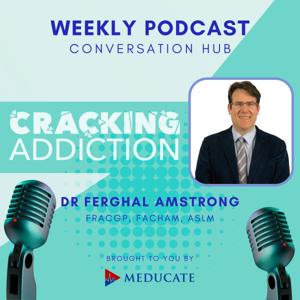
Dr. Ferghal Armstrong breaks down exactly what's happening and what every prescriber and patient needs to know.
Understand the true opioid withdrawal timeline and why symptoms are not linear. Dr. Ferghal Armstrong clarifies the science behind how your brain reacts during recovery.Many people mistakenly believe that opioid withdrawal symptoms get steadily worse over time. This video breaks down the evidence-based reality of what happens physically and neurologically when someone stops using opioids.
By examining how regular use changes the brain reward system and receptor sensitivity, you will gain a clearer picture of the physiological process involved.This breakdown is designed for patients, families, and healthcare providers looking for accurate information regarding addiction medicine. We look at why endorphin production drops and how that influences your experience. Having a realistic expectation of the opioid withdrawal timeline can help remove the fear often associated with the recovery process.Subscribe for weekly addiction medicine breakdowns, and comment below with which recovery topic you want us to cover next.
Mixing cocaine and alcohol creates cocaethylene, a deadly substance 25 times more toxic than cocaine alone. Learn the risks here.Most cocaine users are unaware that combining these two substances triggers a dangerous chemical reaction in the liver.
This process produces cocaethylene, a completely different drug that significantly increases the risk of fatal toxicity. Understanding how mixing cocaine and alcohol works is essential for anyone interested in pharmacology and drug safety.
Dr. Ferghal Armstrong breaks down the biological process behind this reaction, explaining why 50 to 90 percent of users unknowingly create this potent toxin. This analysis focuses on the specific chemistry occurring inside the body during substance use.
By examining the toxicology of cocaethylene, you will gain a clearer understanding of why this common combination is far more lethal than either substance used independently.
Why does meth withdrawal take 6 months when alcohol withdrawal takes days?It's all about dopamine depletion and neuroplasticity 🧠Dr. Ferghal breaks down:• The 3-phase withdrawal timeline• What happens to your reward pathways• Evidence-based treatments that work• Why anhedonia drives relapseUnderstanding the science helps reduce stigma and improves treatment outcomes.
30% of kids with excess weight that we help have trauma-based eating patterns.
That's not willpower failure — that's biology.
When children experience domestic violence, financial stress, or emotional chaos at home, their brains learn to cope with emotions using food. Specifically hyper-palatable foods that trigger dopamine release.
A child dealing with stress doesn't reach for broccoli — they reach for processed foods engineered by billion-dollar companies to be literally more dopaminergic. The tragedy? These kids often have no consistent, reliable adult to help them process emotions safely. So their bodies translate emotional pain into hunger signals, creating a cycle where food becomes their primary coping mechanism.
This isn't about eating less vegetables — it's about addressing the underlying emotional dysregulation.
MYTH: You need to hit 'rock bottom' to recover from addiction. But here's what addiction specialist Dr. Ferghal Armstrong's guest Tom reveals: his worst moment wasn't losing everything – it was waking up in a Brazilian favela after cocaine and alcohol, having stolen from his hostel.
But here's the brain recovery insight that changes everything: Tom describes addiction as 'a connection to your past that doesn't serve you, instead of connection to your future.' Your brain's neuroplasticity means you can literally rewire those connections.
Tom's recovery started when his future self began speaking to his past self – that's your prefrontal cortex overriding your limbic reward system. Recovery isn't about hitting bottom – it's about choosing your future over your past.
Think trauma only happens from big events like car crashes? Wrong. Dr. Ferghal here with a myth-bust that'll change how you see childhood forever.
The biggest trauma isn't what you think — it's relational trauma. When your caregivers can't regulate their own emotions, your developing brain learns the world isn't safe. Here's the kicker: your infant brain literally relies on your caregiver's nervous system to learn emotional regulation.
But here's the hope — your brain has neuroplasticity. Even anxious, avoidant, or disorganised attachment patterns formed in childhood can heal through new relationships. The same way trauma happens in relationships, healing happens in relationships too.
Your foundation might have cracks, but it's never too late to rebuild. Want more? Check out our MedHeads YouTube channel.
Most people are told that benzodiazepine withdrawal should improve in a straight line. That myth keeps many people trapped in shame, fear, and confusion when symptoms come back in waves.
But brain recovery does not always move in a smooth upward path. In many cases, the nervous system heals unevenly, and that can make week six feel harder than week two.
GABA receptor recovery creates withdrawal setbacks on purpose. Week 6 can feel worse than week 2 - here's the neuroscience behind benzodiazepine waves and why your brain isn't broken.
Dopamine pathways and addiction recovery:
Why smoking during addiction treatment reduces your chances of lasting sobriety by 30%
🚬 THE MYTH WE'VE ALL BELIEVED
For decades, addiction treatment centres have operated on the "quit the hard drugs first, worry about cigarettes later" principle.
This approach treats smoking as a lesser evil - a crutch we can address once the "real" addiction is under control.
🧠 THE NEUROSCIENCE REALITYNew JAMA Psychiatry research following 2,600 Americans reveals the truth: people who quit smoking during recovery had 30% higher sustained remission rates from other substance use disorders.
From the publisher's feed
Ranked by our users in the last 21 days

21,067 Listeners

1,259 Listeners

130 Listeners

18 Listeners

14,910 Listeners

8,560 Listeners
1,349 Listeners
730 Listeners

291 Listeners

27,700 Listeners

573 Listeners

363 Listeners

29,191 Listeners

256 Listeners
155 Listeners