
Sign up to save your podcasts
Or

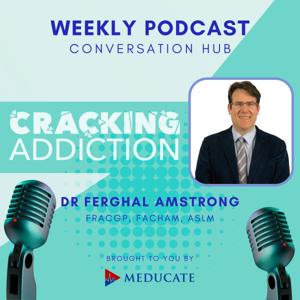


Recovery paths aren't one-size-fits-all.
Dr. Fergal Armstrong explains why neuroplasticity supports multiple evidence-based approaches to addiction recovery.
**THE MYTH: One "Right" Way to Recover
**Society pressures people to define recovery as complete abstinence or perfect programme adherence. This black-and-white thinking ignores how addiction rewires the brain's reward system differently for each person.
**THE NEUROSCIENCE: Individual Brain Recovery
**Addiction affects dopamine pathways, prefrontal cortex function, and neural reward circuits uniquely in each brain.
Research shows neuroplasticity enables recovery through multiple pathways:
• Abstinence-based recovery rebuilds natural dopamine regulation
• Medication-assisted treatment stabilises disrupted neurotransmitter systems
• Harm reduction approaches protect brain health whilst supporting gradual healing
**WHAT THIS MEANS FOR YOUR RECOVERY:
**✓ **Safety First
**: Stable housing and medical care create optimal conditions for brain recovery✓
**Progress Over Perfection
**: 2024 NIDA research confirms reducing use (even without total abstinence) improves depression, cravings, and social functioning✓
**Neuroplasticity Works
**: Your brain can heal through multiple evidence-based pathways✓
**Relapse ≠ Failure
**: 40-60% relapse rates match other chronic conditions like diabetes
75% of people with significant substance problems eventually recover. Whether through abstinence, medication support, or harm reduction, recovery is possible.
Addiction neuroscience explains why cravings feel urgent, physical, and overpowering—and why that does not mean recovery is impossible.
Many people still believe cravings happen because of weak willpower or because someone simply “wants pleasure.” That myth misses what is really happening in the addicted brain.
Cravings are not random moral failures. They are learned brain predictions combined with a real physiological stress response. When drug-related cues appear, the reward system, dopamine pathways, and parts of the prefrontal cortex and insula can activate rapidly, creating a state that feels immediate, embodied, and hard to ignore.
In this video:
Why cravings can feel physical, urgent, and irrational
How the brain links cues, memory, and substance use
The role of the ventromedial prefrontal cortex, anterior cingulate cortex, and ventral striatum
Why people, places, emotions, and routines can become relapse triggers
How stress circuitry amplifies cravings
Why do cravings usually peak and fall instead of lasting forever
How does urge surfing, CBT-style awareness, and trigger mapping support recovery
A lot of people still think addiction recovery is just about willpower.
But addiction neuroscience tells a different story: dopamine, the reward system, and relapse risk all help explain why recovery often needs long-term management, not shame.
The encouraging part is that brain recovery is real. With support, treatment, and time, people can rebuild healthier patterns and protect executive function.
What do you think helps most with long-term recovery: routine, therapy, support groups, purpose, or something else?
Addiction neuroscience, dopamine, cravings: detox ends withdrawal, but it does not end addiction.The MythA common myth in addiction recovery is that once detox is over, the problem is solved. Many people assume that if the physical withdrawal symptoms are gone, addiction itself should be gone too. But that is not how addiction works.This episode breaks down one of the most important distinctions in recovery science: physical dependence is not the same as psychological addiction. Someone can be fully detoxed and still experience intense cravings, compulsive thoughts, emotional vulnerability, and relapse risk. That is why relapse so often happens after the acute withdrawal phase has ended.The NeuroscienceAddiction changes the brain’s reward system, stress system, and prefrontal cortex. Over time, repeated substance use strengthens learned associations between cues, emotions, routines, and drug or alcohol use. These pathways do not disappear just because the substance leaves the body.
Dr. Fergal Armstrong reframes relapse in addiction, explaining why it's not a personal failure but a common part of the recovery journey, comparable to chronic illnesses.
Understanding the neuroscience of addiction, particularly how cortisol responses impact stress management, is crucial for effective relapse prevention in addiction recovery.
This episode offers vital addiction recovery motivation to build protective factors and support overall brain health.
Withdrawal is one of the most feared parts of addiction recovery.
But neuroscience shows something important:
Withdrawal isn’t a failure of willpower — it’s the brain restoring balance after long-term changes to the dopamine reward system.
Understanding the neurobiology of addiction can make recovery feel less frightening.
Question for the community:
What surprised you most about the science of withdrawal and brain recovery?
🚨 TOLERANCE ≠ ADDICTION 🚨Most people — even healthcare professionals — use these terms incorrectly.
And that confusion is hurting patients.
In this episode, we break down:
🧠 The real definition of addiction
💊 Why opioid tolerance doesn’t automatically mean addiction
📉 What physical dependence actually is
📖 What the DSM-5 REALLY says
⚠️ How mislabeling leads to stigma”,
Most people think methadone is the only real option for opioid addiction.
Wrong.
Buprenorphine — especially long-acting injectable depot — is flipping the entire system upside down.
No daily pharmacy visits.
No takeaway dose arguments.
Lower overdose risk.
Better treatment retention.
More freedom.
This isn’t just medication-assisted treatment.
It’s a complete shift toward patient-centered care.
And yet… stigma and outdated policies are still blocking access.
If you care about smarter healthcare and real recovery solutions, you need to hear this.
Want more? Check out our MedHeads YouTube channel.
Addiction neuroscience explains why wanting to quit isn’t the same as being able to quit. Dopamine reshapes the brain’s reward system.
In Episode 3 of Addiction Basics, we tackle one of the most painful and misunderstood questions in recovery:
“If I truly want to stop… why can’t I?”
The common myth is that addiction is a failure of willpower.
The science tells a very different story.
Addiction creates a functional imbalance between two major systems:
The Limbic System – your fast, survival-driven reward circuitry
The Prefrontal Cortex – your executive control and decision-making center
Repeated dopamine surges strengthen the brain’s reward system, training it to treat substance use as a survival-level priority. At the same time, the prefrontal cortex — responsible for impulse control and long-term planning — becomes functionally weakened.
When stress, emotional triggers, or environmental cues appear:
The limbic system activates rapidly
Cravings intensify
Executive function drops
Control feels lost
This is not weakness. It is neurobiology.
🧠 The Brain Conflict Behind Addiction
Addiction neuroscience explained. Dopamine, cravings, brain recovery, and neuroplasticity — backed by research.If you’ve ever wondered how addiction works in the brain, this is the science most people never hear.Addiction is not about pleasure. It’s about dopamine-driven learning, reward prediction error, and long-term changes in the brain’s reward system.In this evidence-based breakdown, Dr Ferghal Armstrong explains:
🧠 How Addiction Rewires the BrainThe real role of dopamine in addiction
How the nucleus accumbens strengthens habit loops
Why cues trigger cravings before conscious choice
⚠️ The 3 Brain Changes in Addiction
Cue sensitisation and trigger amplification
Reduced response to natural rewards (dopamine tolerance)
Prefrontal cortex impairment and weakened impulse control
🔄 Brain Recovery and Neuroplasticity
What brain imaging studies show after abstinence
How dopamine transporter levels normalise
Why recovery takes months — but is measurable
This video covers:
Addiction neuroscience, dopamine explained, reward system function, executive control, relapse science, cognitive behavioural therapy, brain healing after drugs, and neuroplasticity recovery.
If you are researching addiction recovery, studying neuroscience, supporting someone in recovery, or simply want to understand how cravings work, this video provides clarity without stigma.
Recovery is not a motivational theory.It’s a measurable brain change.
Subscribe to MedHeads for evidence-based medical education and brain science explained clearly.
From the publisher's feed
Ranked by our users in the last 21 days

21,067 Listeners

1,259 Listeners

130 Listeners

18 Listeners

14,910 Listeners

8,560 Listeners
1,349 Listeners
730 Listeners

291 Listeners

27,700 Listeners

573 Listeners

363 Listeners

29,191 Listeners

256 Listeners
155 Listeners