
Sign up to save your podcasts
Or

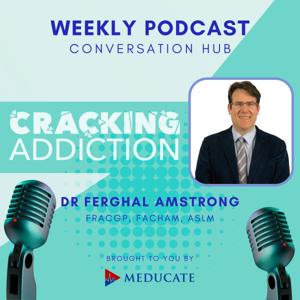


Addiction isn’t a failure of willpower — it’s a brain disorder.And misunderstanding that fact has cost millions of people their recovery.In Part 1 of this 10-part series, you’ll finally understand what addiction really is — and why telling someone to “just stop” is about as effective as telling a diabetic to make more insulin.For decades, addiction has been treated as a moral flaw. But modern neuroscience tells a very different story.In this episode, you’ll discover:Why addiction is officially classified as a chronic relapsing brain diseaseHow addictive substances hijack the brain’s survival circuitryWhy dopamine floods make drugs feel more important than food, connection, or safetyHow repeated use physically changes brain structure and functionWhy stress dramatically increases relapse riskAnd why willpower alone almost always fails — even in highly motivated peopleYou’ll also learn why relapse rates in addiction mirror those of diabetes and hypertension, and what that means for long-term recovery.This episode lays the foundation for the entire series. If you misunderstand addiction at this level, everything else — treatment, recovery, and relapse — stops making sense.By the end, you’ll walk away with:A stigma-free, science-based understanding of addictionA new way to think about recovery that actually worksAnd the clarity needed to support yourself or someone you love👉 This is Episode 1 of a 10-part evidence-based series on addiction, recovery, and brain health.Subscribe now so you don’t miss the next episode — where we’ll break down how addiction starts long before substances ever enter the picture.
What if quitting smoking is the fastest way to strengthen addiction recovery?
That sounds backwards… but the science says otherwise.
For decades, addiction treatment has repeated the same advice: deal with cigarettes later.
But groundbreaking research reveals that this approach may be quietly sabotaging long-term recovery.
In this episode, you uncover surprising new evidence showing that people who quit smoking during recovery had a 30% higher chance of sustained remission from other substance use disorders.
That’s not a small improvement—it’s a game-changing shift in how recovery should be approached.In this video, you’ll discover:
Why smoking is deeply wired into addiction rituals
How nicotine affects the same brain systems as drugs and alcohol
Why quitting cigarettes can strengthen recovery instead of overwhelming it
The overlooked reason smoking causes more deaths than drugs in people with addiction
How stopping smoking builds confidence, momentum, and long-term success
This isn’t about willpower or guilt. It’s about using science to recover smarter.
If you’re in recovery, supporting someone who is, or working in healthcare, this episode will challenge what you think you know—and give you a powerful new tool to improve outcomes.
These drugs calm your brain—but what if they’re silently increasing your stroke risk?
For decades, benzodiazepines like Valium and Xanax were seen as safe, even neuroprotective.
Doctors believed that by calming overexcited brain cells, these medications might actually help during a stroke. That assumption shaped years of prescribing habits.
But the science has changed—and the new data is disturbing.
In this episode, you’ll uncover emerging research that links benzodiazepines and Z-drugs to increased stroke risk, dangerous falls, pneumonia, and even higher death rates after stroke.
Even more concerning? These risks don’t just affect the elderly—they show up in younger adults, too.
⚠️ What you’ll learn in this video:
Why the original “brain-protective” theory behind benzodiazepines may be wrong
The shocking stroke risk seen in long-term benzo users
Why dose and duration matter more than most doctors realise
What happens when benzodiazepines are given after a stroke
Why falls, fractures, and pneumonia skyrocket in hospitalized patients
What to do without stopping suddenly or putting yourself at risk
This isn’t fear-mongering. Benzodiazepines have legitimate medical uses. But they are not the harmless medications we once believed, especially when it comes to stroke and recovery.
If you—or someone you care for—uses anxiety medications, sleep aids, or sedatives, this is information you can’t afford to ignore.
For decades, alcohol has enjoyed a surprising reputation as a health booster—especially red wine.
You’ve heard the claims: stronger hearts, longer life, protection against dementia.
But when you dig into the actual science, the story falls apart fast.
In this episode, you’ll discover why many of the studies praising moderate drinking were built on a critical flaw—they compared drinkers to the wrong people.
So-called “non-drinkers” often included sick quitters: people who had already stopped drinking because their health was declining.
That single mistake distorted decades of public health advice. Using modern methods like Mendelian randomisation, newer research strips away the illusion.
Instead of a protective effect, the data show a clear, linear relationship:
👉 more alcohol = higher dementia risk
👉 more alcohol = higher cancer risk
👉 more alcohol = measurable brain shrinkage
You’ll learn:
Why the famous J-shaped curve was misleading
What alcohol actually does to your brain and hippocampus
How even “low-risk” drinking increases long-term harm
The updated Canadian alcohol guidelines—and why they shocked experts
What to do if you drink now (and why less really is better)
If you care about brain health, longevity, or evidence-based medicine, this episode will completely change how you think about alcohol.
In this episode, we explore "kava kava," a traditional Pacific plant with anxiolytic effects similar to low-dose benzodiazepines.
We discuss its active compounds, kavalactones, and how they contribute to "anxiety relief" and muscle relaxation without significant dependence risks.
Understanding how this plant works offers important insights into natural "stress relief" and self-management techniques for "mental health," touching on broader implications for "addiction."
Can a brain scan predict addiction risk BEFORE first use? 🚨
Most people think substances change the brain after experimentation.But this episode flips the script.In Cracking Addiction, Dr. Ferghal Armstrong breaks down new MRI research suggesting some kids show brain-based vulnerability years before alcohol, cannabis, or cigarettes enter the picture
.✅ What you’ll learn:•
Why “bigger brain” doesn’t automatically mean “better”
• The impulse-control regions that may signal higher risk
• What this means for parents (hint: hope + early skills, not fear)
• Why addiction is a brain-based condition, not a character flaw
👉 Watch the episode now, then comment:
Do you think prevention should start BEFORE the teen years?
🔔 Subscribe for more neuroscience-backed addiction insights.
Kava is everywhere… but is it silently damaging your patients’ livers?
Kava is now turning up in Australian pharmacies, health food stores and online — marketed as a “natural” fix for anxiety, stress and insomnia.
But behind the glossy labels lies a messy reality: wild dosing, limited clinical trials, and real-world reports of hepatotoxicity, drug interactions and impaired driving.
In this episode of Cracking Addiction, addiction medicine specialist Dr Ferghal Armstrong breaks down what most clinicians don’t know about kava — and what you need to start asking your patients today.
You’ll discover how a traditional Pacific Island ceremonial drink became a CNS depressant supplement with:
Huge dose discrepancies between traditional use (up to 8000 mg kavalactones) and commercial capsulesUnclear safety margins and a weak evidence base dominated by descriptive and traditional-use reports
Short- and long-term effects: muscle relaxation, drowsiness, dermatopathy, weight loss, GI disturbance, impotence and poor overall health
Serious drug interactions with benzodiazepines, alcohol, barbiturates, levodopa, anticonvulsants, MAOIs, antipsychotics and anticoagulants
Driving impairment data from real motor vehicle collisions in kava-using populations
Red-flag groups: young people, pregnant or breastfeeding women, and those with harmful use patterns
If you’re a GP, pharmacist, nurse, psychiatrist or allied health professional, this episode will help you:
Ask targeted questions about kava use in your consultations
Screen for concurrent CNS depressants and liver disease
Give clear, practical advice on driving, alcohol and daily functioning
Counsel patients with nuance instead of either fear or blind reassurance
You’ll walk away with a sharper lens on “natural” supplements, a better grasp of kava safety, and a framework to protect your patients from avoidable harm.
👉 Watch now to learn why kava is not a benign supplement — and what to do about it.
Don’t forget to like, subscribe, and share this episode with colleagues who are seeing more kava in their clinics.
How to Cut Sugar by 78% in 30 Days.
Sugar is hijacking your brain — but you can take control back faster than you think.Most people want to quit sugar… but at 3 p.m., stressed and tired, the biscuits in the break room somehow win.
In this episode, addiction specialist and lifestyle medicine practitioner Dr. Fergal Armstrong reveals why your willpower isn’t the problem — and how a simple, research-backed strategy can help you cut sugar by up to 78% in just 30 days.
You’ll discover:Why the average person is unknowingly consuming around 400 teaspoons of sugar per weekThe massive gap between intention and action when trying to quit sugarHow implementation planning (a powerful psychology tool) rewires your brain for better choices
The three-step system: clear daily sugar goals, if-then action plans, and relapse-proof coping strategiesReal-world examples you can copy today to reduce sugar cravings, emotional eating, and mindless snackingThis isn’t another “just use willpower” video.
You’ll learn a science-based approach used in clinical research to:
Bring your intake in line with World Health Organisation sugar guidelinesImprove your confidence in managing cravings, stress, and social pressure
Build sustainable healthy habits around food, energy, and moodIf you’ve tried to reduce sugar before and felt like you failed, this episode will show you what was missing — and how to finally create a realistic, compassionate plan that works with your brain, not against it.
👉 Watch now to learn the 3-step formula to break free from sugar — for good.
And if you find this helpful, subscribe for more evidence-based insights on addiction, nutrition, and metabolic health.
Chapters00:00 – The shocking truth: 400 teaspoons of sugar a week
00:19 – The 78% reduction study and why willpower isn’t enough
00:47 – Step 1: Setting clear sugar goals using WHO guidelines
01:15 – Hidden sugars in “healthy” foods you eat every day
01:19 – Step 2: Implementation plans – the power of if-then thinking
01:55 – Real-life if-then examples for cravings and supermarket traps
02:00 – Step 3: Coping plans and why relapse is part of the cycle
02:20 – Identifying your personal triggers: stress, boredom, social pressure
02:34 – How this method cut cravings by 60% and doubled confidence
02:57 – Sugar, the brain, and rewiring your neural pathways
03:21 – Your 3-day action challenge to break free from sugar
What Happens to Teen Brains After Cannabis?
What if one long-term study could completely reshape how we view teenage cannabis use? T
his jaw-dropping video unpacks a landmark 38-year study from Dunedin, New Zealand, where scientists tracked over 1,000 children from birth into adulthood—and what they discovered could change everything. Spoiler: it's not your typical “just say no” narrative. It’s raw, data-driven neuroscience.
Through extensive IQ testing and life tracking, researchers found that those who started using cannabis regularly before age 18 lost up to eight IQ points—a decline that never fully recovered, even if they quit. Meanwhile, adult users showed almost no cognitive impact. Why? It’s all about neuroplasticity.
During adolescence, the brain is undergoing massive rewiring. THC from cannabis disrupts this critical developmental phase, leading to lasting damage in memory, focus, and decision-making skills.This isn’t anti-drug propaganda—it’s real science that exposes how early cannabis use hijacks your brain's natural cannabinoid system.
If you’re under 18 or care about someone who is, this video is a must-watch.
Discover why protecting the teen brain could be the key to unlocking lifelong success. Perfect for educators, parents, and curious minds alike, this is a wake-up call we can't afford to ignore.
Millions unknowingly store a lethal cocktail in their medicine cabinets—and it’s not from illicit drugs. In this gripping episode,
Dr. Ferghal Armstrong reveals a hidden danger in modern medicine: the deadly combination of opioids, benzodiazepines, and gabapentinoids.
Backed by alarming research from North Carolina and Australia, he highlights how these commonly prescribed medications, meant to relieve pain, anxiety, and nerve discomfort, can create a perfect storm of respiratory depression and overdose—even when taken as directed.You’ll learn how taking opioids with benzos increases overdose risk tenfold, and how adding drugs like pregabalin can raise it even higher.
Shockingly, 80% of opioid patients are also prescribed benzodiazepines—making this a widespread issue, not an anomaly. Dr. Armstrong dives into the science behind these drug interactions, explains why naloxone isn’t always enough, and shares crucial steps for patients and caregivers to stay safe.This is a must-watch for anyone prescribed these medications or caring for someone who is. Discover life-saving insights, actionable tips, and the importance of medication-assisted treatment for opioid dependence. If you thought your prescribed meds were safe, think again.
From the publisher's feed
Ranked by our users in the last 21 days

21,067 Listeners
1,259 Listeners
130 Listeners
18 Listeners

14,910 Listeners

8,560 Listeners
1,349 Listeners
730 Listeners

291 Listeners
27,700 Listeners

573 Listeners
363 Listeners

29,191 Listeners

256 Listeners
155 Listeners