
Sign up to save your podcasts
Or



Based on Podcast App listening data
Is it really a good idea to get medical care from online pharmacies posing as clinics?
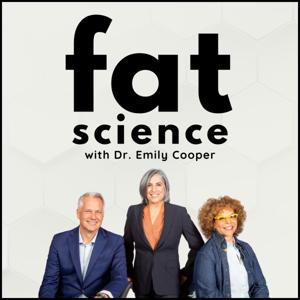
This week on Fat Science, Dr. Emily Cooper, Mark Wright, and Andrea Taylor dig into a Yale secret shopper study that tested 49 websites selling GLP-1 medications online. The websites look and market like medical clinics, but the study found that most patients never spoke to a clinician at all before getting a prescription. Dr. Cooper, Mark, and Andrea unpack what real medical care requires, why these platforms skip it, and what that means for anyone considering this route.
KEY TAKEAWAY
Two-thirds of the sites in the study issued a prescription with no clinician contact of any kind — despite marketing themselves as medical clinics.
Fewer than 40% asked for any clinical measurement (blood pressure, labs, etc.), and only 18% asked whether the patient even had a primary care doctor.
Many of these sites are financially connected to compounding pharmacies and use leading questions to push add-ons that create untested drug combinations.
Real medical care means a full history, objective labs, and ongoing monitoring — not a five-minute questionnaire and an automatic credit card charge.
NOTABLE QUOTE
"The marketing appears to be a medical clinic or a medical company, when in fact it's really just a sale of a drug." Dr. Emily Cooper
LINKS & RESOURCES
Study published in JAMA on the secret shopper findings
Links & Resources
Podcast Home: fatsciencepodcast.com
Cooper Center for Metabolism: coopermetabolic.com
Resources from Dr. Cooper: coopermetabolic.com/resources
Join Our Community: patreon.com/cw/FatSciencePodcast
Submit Your Question: [email protected] or [email protected]
Fat Science is supported by the Diabesity Institute, a nonprofit dedicated to increasing access to effective, science-based metabolic care.
This podcast is for informational purposes only and is not intended as medical advice. Please consult with a qualified healthcare provider for personalized recommendations.
Does exercise really boost metabolism, or is there a hidden truth?
In this episode, Dr. Emily Cooper uncovers the science behind why exercise isn’t just about burning calories. Dive into the fascinating world of myokines, the chemical messengers released by muscles that impact everything from mood to inflammation. Discover why it's not your fault if exercise alone isn't solving your metabolic issues.
KEY TAKEAWAYS
Exercise impacts more than calorie burn; it's a signaling system for the body.
Myokines, released during exercise, affect organs like the brain and liver.
Muscle contractions broadcast vital signals affecting overall health.
NOTABLE QUOTE
"Exercise is more than burning energy; it's communication throughout the body." — Dr. Emily Cooper
LINKS & RESOURCES
Cooper Center for Metabolism: coopermetabolic.com
Resources from Dr. Cooper: coopermetabolic.com/resources
To register for course: https://learn.diabesityinstitute.org/products/live_events/live-virtual-update-event
Links & Resources
Podcast Home: fatsciencepodcast.com
Cooper Center for Metabolism: coopermetabolic.com
Resources from Dr. Cooper: coopermetabolic.com/resources
Join Our Community: patreon.com/cw/FatSciencePodcast
Submit Your Question: [email protected] or [email protected]
Fat Science is supported by the Diabesity Institute, a nonprofit dedicated to increasing access to effective, science-based metabolic care.
This podcast is for informational purposes only and is not intended as medical advice. Please consult with a qualified healthcare provider for personalized recommendations.
How does biology affect our perception of body size?
Dr. Emily Cooper answers listener questions about body dysmorphia and metabolic dysfunction. Mark and Andrea discuss the challenges with compounded medications and the implications of insurance-driven diet requirements.
KEY TAKEAWAYS
Body dysmorphia can have biological components related to metabolic dysfunction.
Compounded medications may lack the testing and safety guarantees of brand names.
Insurance requirements often lack a medical basis and can hinder proper treatment.
NOTABLE QUOTE
"The altered body image perception may be linked to metabolic signals." — Dr. Emily Cooper
LINKS & RESOURCES
None mentioned.
Links & Resources
Podcast Home: fatsciencepodcast.com
Cooper Center for Metabolism: coopermetabolic.com
Resources from Dr. Cooper: coopermetabolic.com/resources
Join Our Community: patreon.com/cw/FatSciencePodcast
Submit Your Question: [email protected] or [email protected]
Fat Science is supported by the Diabesity Institute, a nonprofit dedicated to increasing access to effective, science-based metabolic care.
This podcast is for informational purposes only and is not intended as medical advice. Please consult with a qualified healthcare provider for personalized recommendations.
Why is your fat talking to you?
In the latest solo episode, Dr. Emily Cooper, Andrea Taylor, and Mark Wright explore groundbreaking research into metabolic health. Learn why the scale doesn't always reflect metabolic risk, and discover the science behind fat's active role in the body.
KEY TAKEAWAYS
Metabolic dysfunction cannot be judged by scale weight alone.
Visceral fat is a stronger predictor of heart failure than BMI.
Hormonal environments profoundly affect fat storage and health risks.
NOTABLE QUOTE
"Your fat is talking to you." — Andrea Taylor
LINKS & RESOURCES
Obesity Reviews Paper
Immunological Reviews Journal Article
European Congress on Obesity Study
Links & Resources
Podcast Home: fatsciencepodcast.com
Cooper Center for Metabolism: coopermetabolic.com
Resources from Dr. Cooper: coopermetabolic.com/resources
Join Our Community: patreon.com/cw/FatSciencePodcast
Submit Your Question: [email protected] or [email protected]
Fat Science is supported by the Diabesity Institute, a nonprofit dedicated to increasing access to effective, science-based metabolic care.
This podcast is for informational purposes only and is not intended as medical advice. Please consult with a qualified healthcare provider for personalized recommendations.
Is your brain starving for glucose?
In this episode, Dr. Emily Cooper explores the critical role of the brain as a metabolic organ and its dependence on glucose and insulin. Listeners will learn why good sleep and a holistic lifestyle are vital for cognitive health.
KEY TAKEAWAYS
The brain uses about 20% of your body's energy at rest.
Insulin plays a non-fuel role in brain function, supporting neural connections and mood.
Sleep is essential for the brain's waste clearance system, the glymphatic system.
Insulin resistance in the brain is linked to cognitive decline and dementia.
Exercise, a balanced diet, and social engagement are key to brain health.
NOTABLE QUOTE
"The brain is the most metabolically active organ in our body." — Dr. Emily Cooper
LINKS & RESOURCES
JAMA: US POINTER Study on Cognitive Decline
Novo Nordisk: EVOKE & EVOKE Plus Trials
Links & Resources
Podcast Home: fatsciencepodcast.com
Cooper Center for Metabolism: coopermetabolic.com
Resources from Dr. Cooper: coopermetabolic.com/resources
Join Our Community: patreon.com/cw/FatSciencePodcast
Submit Your Question: [email protected] or [email protected]
Fat Science is supported by the Diabesity Institute, a nonprofit dedicated to increasing access to effective, science-based metabolic care.
This podcast is for informational purposes only and is not intended as medical advice. Please consult with a qualified healthcare provider for personalized recommendations.
Is it normal for GLP-1 medications to become less effective over time?
Dr. Emily Cooper discusses listener questions about the nuances of metabolic health and the real reasons behind weight fluctuations and food cravings. With insights into GLP-1 medications, mechanical eating, and more, the episode aims to debunk myths and provide science-based encouragement.
KEY TAKEAWAYS
Trusting your body's hunger signals can prevent metabolic slowdown.
Mechanical eating can help manage sugar cravings and maintain metabolic health.
Navigating pediatric metabolic issues requires understanding genetic influences and appropriate medical intervention.
NOTABLE QUOTE
"It's not your fault. Trust your body and step up to the higher end of your metabolic flexibility." — Dr. Emily Cooper
LINKS & RESOURCES
American Board of Obesity Medicine: obesitymedicine.org
Links & Resources
Podcast Home: fatsciencepodcast.com
Cooper Center for Metabolism: coopermetabolic.com
Resources from Dr. Cooper: coopermetabolic.com/resources
Join Our Community: patreon.com/cw/FatSciencePodcast
Submit Your Question: [email protected] or [email protected]
Fat Science is supported by the Diabesity Institute, a nonprofit dedicated to increasing access to effective, science-based metabolic care.
This podcast is for informational purposes only and is not intended as medical advice. Please consult with a qualified healthcare provider for personalized recommendations.
Have you ever wondered why your body holds onto weight despite your best efforts?
In this eye-opening episode, Dr. Cooper reveals groundbreaking research showing that 100% of healthy adults carry at least six different plastic-related chemicals in their bodies daily. These endocrine disruptors don't just affect your hormones - they may be stored in your fat tissue and could be a hidden driver of metabolic dysfunction. The good news? New Australian research proves you can dramatically reduce these chemicals in just one week with targeted changes.
KEY TAKEAWAYS
Every single person tested had at least 6 plastic chemicals in their urine, with food packaging being the primary source
Participants cut phthalate levels by 38-54% and BPA by 60% in just 7 days with adjustments in reducing plastic exposure in food and food packaging
Ultra-processed foods introduce plastic chemicals through multiple processing and packaging steps
Certain chemicals like DEHP may be stored in fat tissue and released during weight loss
Heat accelerates plastic migration into food - avoid microwaving in plastic and pouring hot food into plastic containers
Simple swaps like choosing fresh over canned foods and using glass containers make significant impacts
The EPA research office studying these chemicals was recently eliminated, removing key consumer protections
NOTABLE QUOTE
"People who switched to the low plastic food and kitchenware cut the phthalates excretion by 38 to 54% in one week and they cut their BPA excretion by 60% in one week." — Dr. Emily Cooper
Links & Resources
Podcast Home: fatsciencepodcast.com
Cooper Center for Metabolism: coopermetabolic.com
Resources from Dr. Cooper: coopermetabolic.com/resources
Join Our Community: patreon.com/cw/FatSciencePodcast
Submit Your Question: questions@fatsciencepodcast.com or dr.c@fatsciencepodcast.com
Fat Science is supported by the Diabesity Institute, a nonprofit dedicated to increasing access to effective, science-based metabolic care.
This podcast is for informational purposes only and is not intended as medical advice. Please consult with a qualified healthcare provider for personalized recommendations.
What happens when GLP-1 medications stop working the way you hoped they would? In this mailbag episode, Dr. Emily Cooper answers listener questions about fasting, insulin levels, PCOS, lipedema, plateaus on Zepbound, and the complicated reality behind metabolic dysfunction. From the dangers of under-fueling to why individualized treatment matters so much, this conversation unpacks the science behind weight resistance with clarity and compassion.Key Takeaways
Why fasting and restrictive eating may worsen metabolic adaptation
The real role insulin plays in metabolic health
How PCOS and lipedema complicate weight loss treatment
Why some people plateau on GLP-1 medications over time
The importance of fueling, muscle preservation, and individualized care
Links & Resources
Podcast Home: fatsciencepodcast.com
Cooper Center for Metabolism: coopermetabolic.com
Resources from Dr. Cooper: coopermetabolic.com/resources
Join Our Community: patreon.com/cw/FatSciencePodcast
Submit Your Question: questions@fatsciencepodcast.com or dr.c@fatsciencepodcast.com
Fat Science is supported by the Diabesity Institute, a nonprofit dedicated to increasing access to effective, science-based metabolic care.
This podcast is for informational purposes only and is not intended as medical advice. Please consult with a qualified healthcare provider for personalized recommendations.
Could you have metabolic dysfunction even at a normal weight?
This episode challenges everything we've been taught about weight and health. Dr. Cooper reveals that up to 25% of normal-weight people have metabolic syndrome, yet they're rarely screened because doctors assume they're healthy based on appearance alone.
KEY TAKEAWAYS
Weight and metabolic health are not the same thing - you can be metabolically unhealthy at any size
Normal weight people with metabolic dysfunction are often overlooked and undertreated by healthcare providers
Key screening tests include fasting glucose, insulin, HbA1c, triglycerides, HDL cholesterol, blood pressure, and inflammatory markers like HSCRP
Metabolic dysfunction can start in your 20s and take decades to develop into serious disease
Both normal weight and higher weight patients face bias - normal weight people aren't screened enough, while higher weight people have everything blamed on their weight
Early screening and treatment can prevent catastrophic health outcomes later in life
The liver plays a crucial role in metabolism and can become insulin resistant regardless of body weight
NOTABLE QUOTE
"You cannot tell anything about someone's health from their outside, what they look like or what, even what they're doing necessarily, but definitely not their body size. So you can be healthy or unhealthy at any size body, and I think that's what's overlooked quite a bit." — Dr. Emily Cooper
Links & Resources
Podcast Home: fatsciencepodcast.com
Cooper Center for Metabolism: coopermetabolic.com
Resources from Dr. Cooper: coopermetabolic.com/resources
Join Our Community: patreon.com/cw/FatSciencePodcast
Submit Your Question: questions@fatsciencepodcast.com or dr.c@fatsciencepodcast.com
Appendix: Key References
Primary literature supporting this episode
• Wang et al. Prevalence of Metabolically Unhealthy Normal Weight and Its Influence on the Risk of Diabetes. Journal of Clinical Endocrinology & Metabolism, 2023.
• Review: Beyond BMI — Rethinking Obesity Metrics and Cardiovascular Risk in the Era of Precision Medicine. Journal of Clinical Medicine, December 2025.
• Korean meta-analyses on metabolic dysfunction phenotypes and cardiometabolic risk, Cardiovascular and Metabolic Sciences Journal review, 2024.
• Frontiers in Nutrition, January 2026. Associations of metabolic heterogeneity with the progression of cardiometabolic multimorbidity.
• International Journal of Obesity, September 2025. Cardiovascular risk factors associated with metabolic health phenotypes.
Mechanism references
• MASLD — metabolic dysfunction-associated steatotic liver disease — nomenclature and clinical framework. AASLD/EASL consensus, 2023.
• Insulin signaling, adipose tissue dysfunction, and ectopic fat deposition — reviews on the upstream-downstream relationship.
• Epicardial adipose tissue and cardiovascular dysfunction — Frontiers in Cardiovascular Medicine, January 2026.
Fat Science is supported by the Diabesity Institute, a nonprofit dedicated to increasing access to effective, science-based metabolic care.
This podcast is for informational purposes only and is not intended as medical advice. Please consult with a qualified healthcare provider for personalized recommendations.
Have you been told your metabolism is broken and there's nothing you can do about it?
This mailbag episode tackles tough questions about medication effectiveness, unexpected side effects, and the complex realities of treating metabolic dysfunction. Dr. Cooper addresses why some people regain weight while still on GLP-1s, explores the connection between hair loss and weight loss medications, and explains why leptin levels can remain stubbornly low even with proper nutrition.
KEY TAKEAWAYS
Weight regain while on GLP-1 medications is more common than most people realize
Hair loss from weight loss medications is usually related to nutrient deficiencies, not the medication itself
Leptin dysfunction involves both hormone levels and signaling pathways throughout the body
Hypoglycemia after meals often indicates complex metabolic issues that require specialized testing
Starting elderly patients on GLP-1s requires careful monitoring of nutrition, blood pressure, and side effects
Mechanical eating differs from intuitive eating and remains important even when medications are working
Annual weight loss rates of 10% or higher indicate medications are still effective
NOTABLE QUOTE
"It is not uncommon to see the weight go up while on these meds, contrary to what people think. They're great, but we always wanna point out some people don't even respond to these." — Dr. Emily Cooper
Links & Resources
Podcast Home: fatsciencepodcast.com
Cooper Center for Metabolism: coopermetabolic.com
Resources from Dr. Cooper: coopermetabolic.com/resources
Join Our Community: patreon.com/cw/FatSciencePodcast
Submit Your Question: questions@fatsciencepodcast.com or dr.c@fatsciencepodcast.com
Fat Science is supported by the Diabesity Institute, a nonprofit dedicated to increasing access to effective, science-based metabolic care.
This podcast is for informational purposes only and is not intended as medical advice. Please consult with a qualified healthcare provider for personalized recommendations.
From the publisher's feed
Ranked by our users in the last 21 days

9,151 Listeners

7,922 Listeners

335 Listeners

131 Listeners

621 Listeners

65 Listeners
1,677 Listeners
414 Listeners
356 Listeners

1,214 Listeners
268 Listeners

217 Listeners
363 Listeners

106 Listeners
173 Listeners