
Sign up to save your podcasts
Or



Based on Podcast App listening data
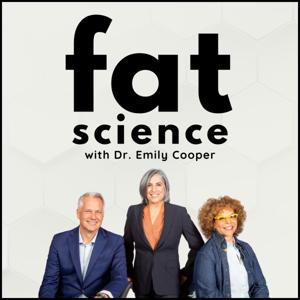
his week on Fat Science, Dr. Emily Cooper, Mark Wright, and Andrea Taylor answer listener mailbag questions that get to the heart of metabolic health. The team explains the real difference between meals and snacks, discusses whether GLP-1 medications can be appropriate for children in complex cases, explores why some people appear to be “non-responders” to Wegovy, and breaks down why alarming headlines about rapid weight regain miss the bigger metabolic picture. They also explain how to set a goal weight using body composition, labs, and overall health—rather than the scale alone.
Key Questions Answered
• What separates a meal from a snack metabolically?
• Why can grazing all day backfire—even with healthy food?
• Are GLP-1s ever appropriate for kids?
• Why do some people feel hungrier as GLP-1 doses increase?
• How are PCOS and insulin dysregulation connected?
• What is a mixed meal tolerance test, and why does it matter?
• Do GLP-1 users really regain weight faster?
• How should goal weight be determined after major weight loss?
Key Takeaways
• Meals provide structure; snacks prevent long gaps—both matter.
• GLP-1 “non-response” often signals deeper metabolic issues.
• Weight regain reflects underlying dysfunction, not personal failure.
• Maintenance dosing must be individualized.
• Body composition matters more than BMI or scale weight.
Dr. Cooper’s Actionable Tips
• Eat structured meals with carbs, protein, and fats.
• Use snacks strategically to avoid long gaps.
• Ask about deeper glucose/insulin testing when progress stalls.
• Prioritize DEXA body composition over scale-based goals.
• Avoid compounded GLP-1s—especially in children.
Notable Quote
“If you stop treating the metabolic dysfunction, the dysfunction is still there—and the body will drive weight back to where it was headed all along.”
—Dr. Emily Cooper
Links & Resources
Podcast Home: https://fatsciencepodcast.com/
Episode References: https://fatsciencepodcast.com/wp-content/uploads/2025/06/Scientific-References-Fat-Science-Episodes.pdf
Cooper Center: https://coopermetabolic.com/podcast/
Resources from Dr. Cooper: https://coopermetabolic.com/resources/
Submit a Question: [email protected]
Fat Science: No diets, no agendas—just science that makes you feel better. This podcast is for informational purposes only and is not intended to be medical advice.
This week on Fat Science, Dr. Emily Cooper, Mark Wright, and Andrea Taylor break down two GLP-1 studies that challenge a major media myth: GLP-1 medications don’t drive weight loss just because people eat less. Instead, drugs like tirzepatide and semaglutide create direct metabolic shifts—including increased fat oxidation and improved fuel partitioning—regardless of appetite.
The team also explores mechanical eating, the psychological impact of “diet food,” and Andrea’s 13-year metabolic recovery journey.
Key Questions Answered
Key Takeaways
Dr. Cooper’s Actionable Tips
Notable Quote:
“What that study proved is that doing the calorie restriction is causing the metabolic slowing… and that’s why it’s so confusing to me that we keep advising people to restrict calories when they’re trying to improve their metabolic function.” —Dr. Emily Cooper
Links & Resources
Podcast Home: https://fatsciencepodcast.com/
Episode References: https://fatsciencepodcast.com/wp-content/uploads/2025/06/Scientific-References-Fat-Science-Episodes.pdf
Cooper Center: https://coopermetabolic.com/podcast/
Resources from Dr. Cooper: https://coopermetabolic.com/resources/
Submit a Question: [email protected]
Dr. Cooper Email: [email protected]
Fat Science: No diets, no agendas—just science that makes you feel better. This podcast is for informational only, and is not intended to be medical advice.
This week on Fat Science, Dr. Emily Cooper, Mark Wright, and Andrea Taylor tackle a wide-ranging mailbag episode with listener questions from the U.S., UK, and Europe. Topics include unexpected weight regain on GLP-1s, post-meal sleepiness and hypoglycemia, metabolic dysfunction despite normal labs, GLP-1 dosing strategies, and why these medications are about metabolism, not appetite suppression.
Key Questions Answered
Key Takeaways
Dr. Cooper’s Actionable Tips
Notable Quote
“GLP-1s aren’t about eating less—they’re about strengthening metabolic signaling” — Dr. Emily Cooper
Links & Resources
Podcast Home: Fat Science Podcast Website – https://fatsciencepodcast.com/
Podcast Episode References: https://fatsciencepodcast.com/wp-content/uploads/2025/06/Scientific-References-Fat-Science-Episodes.pdfCooper Center for Metabolism & Fat Science Episodes: https://coopermetabolic.com/podcast/
Resources from Dr. Cooper: https://coopermetabolic.com/resources/
Submit a Show Question: [email protected]
Dr. Cooper direct show email: [email protected]
Fat Science breaks diet myths and advances the science of real metabolic health. No diets, no agendas—just science that makes you feel better. This show is informational only and does not constitute medical advice.
This week on Fat Science, Dr. Emily Cooper, Mark Wright, and Andrea Taylor talk with pediatric eating disorder specialist Dr. Julie O’Toole (Kartini Clinic) and pediatric obesity expert Dr. Evan Nadler about what childhood obesity really is: a biologic, metabolic disease—not a willpower problem and not a failure of parenting.
They explore how excess weight, constant hunger, and disordered eating in kids are often signs of underlying metabolic dysfunction and genetics—and why the old “eat less, move more” advice can do real harm, especially when children are shamed or restricted in the name of “health.”
Key Questions Answered
Key Takeaways
Dr. Cooper’s Actionable Tips
Notable Quote
“Not treating childhood obesity is doing harm. It’s a disease, not a lifestyle choice.” — Dr. Evan Nadler
Links & Resources
Connect with Our Guests
Dr. Evan P. Nadler, MD, MBA – Founder, ProCare Consultants & ProCare TeleHealth
Website: obesityexplained.com
YouTube Channel: Obesity Explained
Dr. Julie K. O’Toole, M.D., M.P.H. – Chief Medical Officer & Founder, Kartini Clinic
Website: kartiniclinic.com
Books: amazon.com/author/julieotoole
*Fat Science breaks diet myths and advances the science of real metabolic health. No diets. No agendas. Just science that makes you feel better. This episode is informational only and not medical advice.
This week on Fat Science, Dr. Emily Cooper, Mark Wright, and Andrea Taylor talk with exercise physiologist Russell Cunningham and patient Becca Wert about a counterintuitive reality: for some people, exercise can actually slow metabolism, stall weight loss, and trigger weight gain—especially when the brain senses a threat to energy availability.
Dr. Cooper explains how overtraining, under-fueling, and even thinking about workouts can activate famine signals in the brain and shut down key hormone pathways and what it takes to rebuild trust so movement becomes helpful instead of harmful.
Key Questions Answered
Key Takeaways
Dr. Cooper’s Actionable Tips
Notable Quote“Exercise should not be used as a weight loss tool. It should be used as a performance and a health tool.” — Dr. Emily Cooper
Links & ResourcesPodcast Home: Fat Science Podcast Website – https://fatsciencepodcast.com/Cooper Center for Metabolism & Fat Science Episodes: https://coopermetabolic.com/podcast/Resources and education from Dr. Cooper: https://coopermetabolic.com/resources/Submit a Show Question: [email protected]Dr. Cooper direct show email: [email protected]
Fat Science is your source for breaking diet myths and advancing the science of true metabolic health. No diets, no agendas—just science that makes you feel better. The show is informational only and does not constitute medical advice.
This week on Fat Science, Dr. Emily Cooper, Mark Wright, and Andrea Taylor unpack the biggest GLP-1 headlines from around the world—from the World Health Organization’s first-ever GLP-1 obesity guidelines to access battles, brain research, and the coming wave of generics and new meds.
Dr. Cooper explains what the WHO’s move really means for patients, why long-term treatment matters, and how policy decisions in places like California and India could reshape who actually benefits from these breakthroughs. This isn’t hype—it’s metabolic medicine, health-system reality, and grounded hope.
Key Questions Answered
Key Takeaways
Dr. Cooper’s Actionable Tips
Notable Quote
“Your metabolism is a lifelong issue. It’s not a headache.”
— Andrea Taylor
Links & Resources
*Fat Science is your source for breaking diet myths and advancing the science of true metabolic health. No diets, no agendas—just science that makes you feel better.
This week on Fat Science, Dr. Emily Cooper, Mark Wright, and Andrea Taylor answer listener questions about BMI cutoffs, weight cycling, metabolic adaptation, trauma, GLP-1 differences, and why some people gain weight on ultra-low calories. Dr. Cooper explains what’s really happening inside the metabolic system and why individualized treatment—not dieting—creates sustainable change.
Key Questions Answered
Key Takeaways
1. BMI rules don’t reflect metabolic truth.
A mid-20s BMI can still mask significant dysfunction, especially with weight cycling.
2. Weight cycling is metabolically stressful.
Repeated losses/regains increase visceral fat, insulin abnormalities, and cardiovascular risk.
3. Obesity is a multi-hormonal disease.
Most people need pharmacology plus sleep, fueling, and movement—not restrictive dieting.
4. Metabolic adaptation is powerful.
Under-fueling lowers thyroid output, suppresses fat-burning, and slows metabolism dramatically.
5. After bariatric surgery or on GLP-1s, frequency matters.
Frequent, nutrient-dense snacks protect muscle, metabolism, and energy.
6. Set point changes with better signaling.
GLP-1s and related therapies help the brain accurately detect weight and lower the defended level.
7. Genetics often mean lifelong support.
Family patterns of obesity usually indicate long-term need for metabolic medication.
8. Trauma amplifies metabolic risk.
Childhood trauma disrupts IGF-1, sleep, stress hormones, insulin, leptin, and ghrelin.
9. Medications can cause weight gain—GLP-1s can help counteract it.
Steroids, mood meds, hormonal agents, and more can be metabolically unfriendly.
10. “Newer” isn’t always better.
Some people respond poorly to the GIP component in Mounjaro/Zepbound. Individual physiology rules.
Dr. Cooper’s Actionable Tips
Notable Quote
“Obesity isn’t a willpower problem. It’s a metabolic disease, and when the underlying system is supported, the body finally has permission to change.” — Dr. Emily Cooper
Links & Resources
Fat Science is your source for breaking diet myths and advancing the science of true metabolic health. No diets, no agendas—just science that makes you feel better. The show is informational only and does not constitute medical advice.
Dr. Emily Cooper, Mark Wright, and Andrea Taylor talk with Maria from Buffalo, a longtime listener who shares her lifelong journey with obesity, psoriatic arthritis, and binge eating—and how finally understanding the science of metabolism gave her hope. Maria describes early childhood weight gain, joint damage, and years of restrictive dieting and food shame, then explains how GLP‑1 therapy (Zepbound) plus mechanical eating helped her lose about 50 pounds while eating more food, more often, and with more joy.
Dr. Cooper breaks down the underlying biology—leptin, weight set point, the melanocortin pathway, and the impact of pain, sleep, and chronic inflammation on hunger hormones—and reframes obesity as a symptom of deeper metabolic problems, not a character flaw. This episode doubles as a practical, emotionally honest guide for patients trying to navigate a traditional health‑care system without a dedicated metabolic specialist.
Key Questions Answered
How can rapid childhood weight gain, autoimmune disease, and early joint damage signal serious metabolic dysfunction rather than “too much food” or “not enough exercise”?
What is leptin, what does “too low for your size” mean, and how does that affect hunger, weight set point, and weight loss?
What is monogenic obesity testing, who might qualify for free genetic screening, and how can results inform (but not necessarily change) treatment?
How do GLP‑1 medications like Zepbound work with mechanical eating so someone can lose weight while eating more regularly and with more variety?
Which labs (fasting glucose, insulin, leptin, etc.) help uncover hidden metabolic issues, and when is a mixed‑meal test more useful than a simple fasting snapshot?
When should brain‑active medications (such as bupropion/naltrexone combinations) be considered, and what trade‑offs and side effects matter?
How can patients respectfully push for tests, challenge old “eat less, move more” advice, and set boundaries around weigh‑ins and stigmatizing language?
Key Takeaways
It’s not your fault: Rapid childhood weight gain and early‑onset obesity often reflect serious metabolic biology, including rare gene variants, growth phases, and hormone signaling—not gluttony or laziness.
Obesity is a symptom: Excess weight is better understood as a side effect of underlying metabolic fires (leptin issues, insulin resistance, brain signaling problems) that need proper diagnosis and treatment.
Leptin really matters: Low leptin for your size can act as a biological brake on weight loss, and chronic dieting, under‑fueling, over‑exercise, and some high‑dose supplements can suppress it further.
GLP‑1s plus mechanical eating: Medications like Zepbound can quiet food noise and support weight loss, but scheduled, balanced eating is essential to avoid under‑fueling, protect muscle, and support hormones.
Pain and sleep are metabolic: Chronic pain and poor sleep increase hunger hormones like ghrelin and disrupt repair processes, worsening metabolic dysfunction unless directly addressed.
Script your visits: Bring a printed list of diagnoses, medications, and questions; use patient portals to request specific tests; and practice simple boundary phrases around weighing and diet talk.
Notable Quote
“This isn’t all just caused by diets and things like that. There was an original metabolic problem. It was amplified because of the food restriction and the psychology around it, but you are a product of cumulative insults to your system—not a moral failure.” — Dr. Emily Cooper
Links & Resources
Podcast Home: https://fatsciencepodcast.com/
Cooper Center for Metabolism & Fat Science Episodes: https://coopermetabolic.com/podcast/
Resources and education from Dr. Cooper: https://coopermetabolic.com/resources/
Submit a Show Question: [email protected]
Dr. Cooper direct show email: [email protected]
Fat Science is informational only and does not constitute medical advice.
This week on Fat Science, Dr. Emily Cooper, Mark Wright, and Andrea Taylor field your most urgent metabolic health questions—exploring care advocacy, novel drug use, lab results, and how to filter fact from fiction in the TikTok age.
Dr. Cooper offers clinical clarity, real-world perspective, and actionable hope—with an emphasis on what truly matters for your long-term health and energy.
Hear from listeners experiencing real breakthroughs (and challenges) with GLP-1s, get tips for navigating confusing cholesterol results, and learn why self-advocacy and good science matter more than credentials or hype. This is not a quick-fix episode; it’s real metabolic medicine, mythbusting, and grounded encouragement for your health journey.
Key Questions Answered
Key Takeaways
Dr. Cooper’s Actionable Tips
Notable Quote
“The most important thing is somebody who cares, not necessarily their degrees.”— Dr. Emily Cooper
Links & Resources
Podcast Home: Fat Science Podcast WebsiteSubmit a Show Question: [email protected] or [email protected]
Dr. Emily Cooper on LinkedIn
Mark Wright on LinkedIn
Andrea Taylor on Instagram
Advanced cholesterol testing: CardioIQ at Quest, NMR at LabCorpFat Science is your source for breaking diet myths and advancing the science of true metabolic health. No diets, no agendas—just science that makes you feel better. The show is informational only and does not constitute medical advice.
This week on Fat Science, Dr. Emily Cooper, Mark Wright, and Andrea Taylor dive into your burning questions from around the world—exploring misunderstood metabolic problems, hard-won solutions for real people, and the science behind the headlines. From “selfish brain” physiology to the rollercoaster of insurance and medication access, Dr. Cooper brings clinical clarity and practical hope.
Hear real-world listener stories, get advice on tuning your metabolic health, and learn why personalization—not “calories in, calories out”—leads to better outcomes. This is no silver bullet show: it’s metabolic medicine, mythbusting, and science-backed encouragement for your journey.
Key Questions Answered
Key Takeaways
Dr. Cooper’s Actionable Tips
Notable Quote
“The metabolism is regulated by a feedback loop…when you introduce outside hormone forms, you strengthen signals to favor fuel utilization over energy conservation.”— Dr. Emily Cooper
Links & Resources
Fat Science is your source for breaking diet myths and advancing the science of true metabolic health. No diets, no agendas—just science that makes you feel better. The show is informational only and does not constitute medical advice.
From the publisher's feed
Ranked by our users in the last 21 days

9,151 Listeners

7,922 Listeners

335 Listeners

131 Listeners

621 Listeners

65 Listeners
1,677 Listeners
414 Listeners
356 Listeners

1,214 Listeners
268 Listeners

217 Listeners
363 Listeners

106 Listeners
173 Listeners