
Sign up to save your podcasts
Or

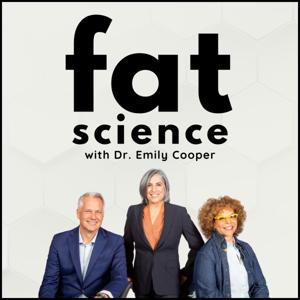


Based on Podcast App listening data
Ever wonder why you can improve your health but still feel like you're failing because the scale isn't cooperating?
Dr. Cooper breaks down groundbreaking new clinical guidelines from three major obesity organizations that are completely reframing what success in obesity treatment actually means. For the first time, these groups are saying quality of life, energy levels, and overall health matter more than the number on the scale.
KEY TAKEAWAYS
Three major obesity organizations worked collaboratively to issue guidelines prioritizing quality of life over weight loss as primary treatment goals
Guidelines explicitly address medical stigma as a structural barrier to care requiring systemic change
Treatment is positioned as long-term management similar to other chronic conditions like thyroid disorders
Document notably avoids calorie restriction language, focusing instead on healthy lifestyle alongside medication
Setmelanotide receives strong recommendation for rare genetic obesity conditions with available genetic testing
Strong medication recommendations now include GLP-1s like semaglutide and tirzepatide, plus bupropion-naltrexone combination
NOTABLE QUOTE
"Nobody ever asked. Nobody ever looked. Nobody ever said anything. I was like, 'I think there's something wrong with my metabolism or something because I'm not eating a ton.' They're like, 'Well, you must be.' And I'm like, 'N- n- no, I don't think so. I mean, unless it's happening when I'm sleeping. I don't know.'" — Andrea Taylor
Reference Link
Alexander L, Purnell JQ, et al. Pharmacological management of obesity in adults: a clinical guidance statement from The Obesity Society, the Obesity Medicine Association, and the Obesity Action Coalition. Obesity. 2026;34(4):851–870. doi:10.1002/oby.70164 https://onlinelibrary.wiley.com/doi/10.1002/oby.70164
Links & Resources
Podcast Home: fatsciencepodcast.com
Cooper Center for Metabolism: coopermetabolic.com
Resources from Dr. Cooper: coopermetabolic.com/resources
Join Our Community: patreon.com/cw/FatSciencePodcast
Submit Your Question: questions@fatsciencepodcast.com or dr.c@fatsciencepodcast.com
Fat Science is supported by the Diabesity Institute, a nonprofit dedicated to increasing access to effective, science-based metabolic care.
This podcast is for informational purposes only and is not intended as medical advice. Please consult with a qualified healthcare provider for personalized recommendations.
Have you been told you have PCOS but nothing seems to help?
In May 2024, after 14 years of global collaboration involving 56 organizations and 22,000 stakeholders, the medical community officially changed PCOS to PMOS - and the reason why reveals everything that's been wrong with how this condition has been understood and treated for decades. Dr. Cooper breaks down why this isn't just a name change, but a complete reframe that puts metabolic dysfunction at the center where it belongs.
KEY TAKEAWAYS
NOTABLE QUOTE
"Most patients with this label that they've had in the past, the PCOS label, feel a sense of hopelessness, and even join support groups and things like that, and thinking that this will be a condition they have forever. And what I try to do is explain, no, this is just a physical manifestation of the metabolic disruption that we treat all the time" — Dr. Emily Cooper
Links & Resources
Podcast Home: fatsciencepodcast.com
Cooper Center for Metabolism: coopermetabolic.com
Resources from Dr. Cooper: coopermetabolic.com/resources
Join Our Community: patreon.com/cw/FatSciencePodcast
Submit Your Question: questions@fatsciencepodcast.com or dr.c@fatsciencepodcast.com
Fat Science is supported by the Diabesity Institute, a nonprofit dedicated to increasing access to effective, science-based metabolic care.
This podcast is for informational purposes only and is not intended as medical advice. Please consult with a qualified healthcare provider for personalized recommendations.
Have you been told it's just calories in calories out while your lived experience says otherwise?
In this mailbag episode, Dr. Cooper addresses complex metabolic questions from listeners worldwide. From eating disorders requiring specialized care to GLP-1 plateau management, each question reveals how individual biology trumps one-size-fits-all solutions.
KEY TAKEAWAYS
Eating disorders like anorexia require comprehensive medical team treatment, not self-management approaches
Side effects from GLP-1 medications often improve with consistent eating patterns and adequate nutrition
The calories in calories out model ignores the biological complexity of how your body actually burns fuel
PCOS responds well to metabolic treatments because it's driven by underlying insulin and hunger hormone imbalances
Sleep deprivation and chronic stress significantly impact GLP-1 effectiveness and overall metabolic function
Bioidentical progesterone may help perimenopause sleep issues without the metabolic side effects of older formulations
Stroke survivors may experience hypothalamic obesity that responds remarkably well to GLP-1 medications
NOTABLE QUOTE
"If that really worked, imagine, you know, would we actually need these sophisticated medications that are so groundbreaking? Would we have had decades and decades, or actually centuries of failed, you know, diet experiences by so many people?" — Dr. Emily Cooper
Links & Resources
Podcast Home: fatsciencepodcast.com
Cooper Center for Metabolism: coopermetabolic.com
Resources from Dr. Cooper: coopermetabolic.com/resources
Join Our Community: patreon.com/cw/FatSciencePodcast
Submit Your Question: questions@fatsciencepodcast.com or dr.c@fatsciencepodcast.com
Fat Science is supported by the Diabesity Institute, a nonprofit dedicated to increasing access to effective, science-based metabolic care.
This podcast is for informational purposes only and is not intended as medical advice. Please consult with a qualified healthcare provider for personalized recommendations.
Are your legs painful to touch and resistant to weight loss despite your best efforts?
Dr. Ellen Derrick, a vascular surgeon and lipedema specialist, reveals the truth about this misunderstood condition affecting 20% of women worldwide. Lipedema isn't obesity - it's a fat cell disorder where tissue responds abnormally to inflammation, creating painful, swollen areas that don't respond to traditional weight loss methods. She explains the connection between lipedema and venous insufficiency, why patients are often dismissed by doctors, and the emerging treatments offering hope.
KEY TAKEAWAYS
NOTABLE QUOTE
"The medical community really has done an outstanding job, in a way, gaslighting these patients. These patients have been aware that something is different about their body and their legs since puberty." — Dr. Ellen Derrick
GUEST BIO
Dr. Ellen Derrick is a Seattle-based board-certified vascular and general surgeon with over 20 years of clinical experience and a Master of Public Health from the University of Washington. She founded Boxbar Vascular, specializing in lipedema and related metabolic conditions, and serves on the board of the Lipedema Society working toward formal medical recognition of the condition.
Links & Resources
Podcast Home: fatsciencepodcast.com
Cooper Center for Metabolism: coopermetabolic.com
Resources from Dr. Cooper: coopermetabolic.com/resources
Join Our Community: patreon.com/cw/FatSciencePodcast
Submit Your Question: questions@fatsciencepodcast.com or dr.c@fatsciencepodcast.com
Fat Science is supported by the Diabesity Institute, a nonprofit dedicated to increasing access to effective, science-based metabolic care.
This podcast is for informational purposes only and is not intended as medical advice. Please consult with a qualified healthcare provider for personalized recommendations.
Dr. Emily Cooper, Mark Wright, and Andrea Taylor break down three breaking metabolic health stories in this quick bonus episode — from a newly approved oral GLP-1 to a major price drop for Medicare patients.
Links & Resources
Podcast Home: fatsciencepodcast.com
Cooper Center for Metabolism: coopermetabolic.com
Resources from Dr. Cooper: coopermetabolic.com/resources
Join Our Community: patreon.com/cw/FatSciencePodcast
Submit Your Question: [email protected] or [email protected]
Fat Science is supported by the Diabesity Institute, a nonprofit dedicated to increasing access to effective, science-based metabolic care.
Disclaimer: This podcast is for informational purposes only and is not intended as medical advice. Please consult with a qualified healthcare provider for personalized recommendations.
Have you ever wondered if you should get liposuction when you need skin removal surgery after major weight loss?
In this mailbag episode, Dr. Cooper, Mark, and Andrea tackle questions from listeners around the world, from Germany to Alabama to Chicago. They discuss why restricting calories while on GLP-1 medications can actually work against you, address the reality of finding metabolic-informed doctors internationally, and explain the science behind fat cell removal during skin surgeries. Plus, they share details about the newly approved oral GLP-1 medication orforglipron (Foundayo) and why vegetables, fats and starches matter even when you're protein-focused.
KEY TAKEAWAYS
Restricting calories on GLP-1 medications can lower your metabolic rate and weaken your body's natural GLP-1 production
Liposuction during skin removal surgery may disrupt leptin signaling, though males may be less affected than females due to naturally lower leptin levels
Finding metabolic-informed doctors globally remains challenging, but obesity medicine certification and Canadian and European obesity organizations may offer better resources
The oral GLP-1 medication orforglipron will likely be less expensive but also less effective than dual-agonist medications like tirzepatide
Mechanical eating without calorie counting often produces better long-term results than restrictive approaches
Vegetables provide essential micronutrients and support healthy microbiome function that protein alone cannot replace
Major weight loss surgery like tummy tucks is serious surgery that requires careful consideration and qualified surgeons
NOTE: This episode was recorded before Foundayo (orforglipron) was released on the market. The price is the same as the Wegovy pill. Listen to our episode - “New Obesity Drugs” for more information https://podcasts.apple.com/us/podcast/fat-science/id1715377331?i=1000762362056
NOTABLE QUOTE
"If only they didn't fall into that diet cycle, some of them, their weight would be a hundred pounds less. Yes, it might be still elevated, but a large chunk of that weight was caused by the diet cycle itself." — Dr. Emily Cooper
Links & Resources
Podcast Home: fatsciencepodcast.com
Cooper Center for Metabolism: coopermetabolic.com
Resources from Dr. Cooper: coopermetabolic.com/resources
Join Our Community: patreon.com/cw/FatSciencePodcast
Submit Your Question: questions@fatsciencepodcast.com or dr.c@fatsciencepodcast.com
Fat Science is supported by the Diabesity Institute, a nonprofit dedicated to increasing access to effective, science-based metabolic care.
Disclaimer: This podcast is for informational purposes only and is not intended as medical advice. Please consult with a qualified healthcare provider for personalized recommendations.
Ever hear someone say GLP-1 medications cause osteoporosis or make your hair fall out?
This episode tackles the top 10 biggest myths about GLP-1 medications flooding social media and separates the science from the scary headlines. Dr. Cooper breaks down what's actually happening in your body versus what the internet claims, from bone density concerns to the dreaded "Ozempic face."
KEY TAKEAWAYS
· GLP-1 medications don't cause osteoporosis - inadequate nutrition while losing weight can weaken bones
· Hair loss is typically from nutritional deficits, not the medication itself
· These drugs slow gastric emptying but don't cause permanent stomach paralysis
· Weight regain after stopping is expected since you're treating a chronic medical condition
· Muscle loss comes from eating too little, not from the medication directly
· The thyroid cancer warning comes from rodent studies and hasn't been observed in humans
· GLP-1s actually protect the pancreas rather than damage it
NOTABLE QUOTE
"Metabolic dysfunction is biological, it's not something within your means to correct just through lifestyle strategies." — Dr. Emily Cooper
Links & Resources
Podcast Home: fatsciencepodcast.com
Cooper Center for Metabolism: coopermetabolic.com
Resources from Dr. Cooper: coopermetabolic.com/resources
Join Our Community: patreon.com/cw/FatSciencePodcast
Submit Your Question: questions@fatsciencepodcast.com or dr.c@fatsciencepodcast.com
Fat Science is supported by the Diabesity Institute, a nonprofit dedicated to increasing access to effective, science-based metabolic care.
This podcast is for informational purposes only and is not intended as medical advice. Please consult with a qualified healthcare provider for personalized recommendations.
The obesity medication landscape just changed — again. One brand-new pill is already in pharmacies, and five more are in various stages of approval. But the real story isn't the drugs themselves: it's what they're revealing about how your metabolism actually works, and why willpower was never the problem.
This week on Fat Science, Dr. Emily Cooper, Mark Wright, and Andrea Taylor break down six metabolic medications — two newly FDA-approved and four in the pipeline — covering everything from a flexible new oral GLP-1 pill to drugs that target the brain's central metabolic pathway directly. Dr. Cooper explains the science behind each one, who might benefit, and what the pipeline tells us about the future of metabolic care. This is the most comprehensive drug update the show has done, and it arrives at a moment when the field is moving faster than ever.
Key Takeaways
Foundayo (orforglipron), approved April 1st, is the first small molecule oral GLP-1 — no empty stomach requirement, no cold chain, and potentially lower production costs long-term.
The amylin hormone may uniquely address both "I'm nourished" and "I weigh enough" signals in the brain — making the amylin pathway a powerful and underutilized target.
Retatrutide (Lilly's triple agonist targeting GLP-1, GIP, and glucagon receptors) is showing unprecedented effectiveness plus significant non-scale benefits, including fatty liver reduction — but is still years from approval.
The brain's melanocortin 4 receptor is the CEO of metabolism — regulating energy expenditure, appetite, and insulin — and new drugs targeting it represent the deepest intervention yet.
Many of these medications are showing weight-independent benefits, including improvements in kidney, liver, cardiovascular risk, sleep apnea, and joint health that have nothing to do with how much weight is lost.
Notable Quote
"Everybody focuses on appetite, and you just need to eat less. But now with these medications and how they actually affect our biology, it becomes very clear that there's so much more to this." — Dr. Emily Cooper
Links & Resources
Podcast Home: fatsciencepodcast.com
Cooper Center for Metabolism: coopermetabolic.com
Resources from Dr. Cooper: coopermetabolic.com/resources
Join Our Community: patreon.com/cw/FatSciencePodcast
Submit Your Question: questions@fatsciencepodcast.com or dr.c@fatsciencepodcast.com
Fat Science is supported by the Diabesity Institute, a nonprofit dedicated to increasing access to effective, science-based metabolic care.
Disclaimer: This podcast is for informational purposes only and is not intended as medical advice. Please consult with a qualified healthcare provider for personalized recommendations.
Have you been told insulin resistance testing doesn't exist or wondered if you're increasing your GLP-1 dose too quickly?
Dr. Cooper, Andrea, and Mark tackle listener questions from around the world, addressing common concerns about insulin resistance testing availability, managing severe GI side effects from higher doses, interpreting DEXA scan results, and developing sustainable maintenance strategies. They discuss the difference between hunger and food noise, explain why winter illness might stall weight loss, and share insights about visceral fat concerns even at normal weight.
KEY TAKEAWAYS
Insulin resistance can be tested through fasting insulin and glucose ratios, even in countries where insulin testing is less common
Rapid weight loss rates above 15% annually may indicate no need for dose increases
Severe GI side effects warrant investigation beyond medication adjustment, including gallbladder evaluation
DEXA scans provide valuable visceral fat measurements, but results should be interpreted alongside overall health markers
Maintenance strategies should focus on nutritional stability before considering medication tapering
NOTABLE QUOTE
"It's not that the medicine causes the rebound weight gain, it's that with the medication in there, the body is getting better signals, and then you go and take the medication away and you're in the same boat." — Dr. Emily Cooper
Links & Resources
Podcast Home: fatsciencepodcast.com
Cooper Center for Metabolism: coopermetabolic.com
Resources from Dr. Cooper: coopermetabolic.com/resources
Join Our Community: patreon.com/cw/FatSciencePodcast
Submit Your Question: questions@fatsciencepodcast.com or dr.c@fatsciencepodcast.com
Fat Science is supported by the Diabesity Institute, a nonprofit dedicated to increasing access to effective, science-based metabolic care.
Disclaimer: This podcast is for informational purposes only and is not intended as medical advice. Please consult with a qualified healthcare provider for personalized recommendations.
Are you getting a GLP-1 prescription from someone who's never examined you?
Dr. Vin Gupta, pulmonologist and former Chief Medical Officer at Amazon, joins Dr. Cooper to expose the dangerous gap between legitimate obesity medicine and the unregulated direct-to-consumer market. This conversation reveals why proper medical evaluation matters and how profit-driven platforms are exploiting desperate patients.
KEY TAKEAWAYS
NOTABLE QUOTE
"I see so many people that come in, you know, they're obsessed with monitoring their HRV, their heart rate variability, and yet they had no idea they have pre-diabetes and they had no idea that they have triglyceride levels through the roof." — Dr. Emily Cooper
GUEST BIO
Dr. Vin Gupta is a pulmonologist, public health expert, and medical analyst for NBC News. He served as Chief Medical Officer at Amazon and has dedicated his career to translating complex science into actionable health insights at both individual and population levels.
GLOSSARY
GLP-1 medications: Glucagon-like peptide-1 receptor agonists, medications that help regulate blood sugar and appetite, including brand names like Ozempic, Wegovy, and Zepbound
Microdosing: Taking smaller amounts of medication than officially prescribed or approved
Direct-to-consumer (D2C): Healthcare services that bypass traditional medical settings, often delivered through apps or online platforms
HRV: Heart rate variability, a measurement of the variation in time between heartbeats
Pre-diabetes: Blood sugar levels that are higher than normal but not high enough to be diagnosed as type 2 diabetes
Links & Resources
Podcast Home: fatsciencepodcast.com
Cooper Center for Metabolism: coopermetabolic.com
Resources from Dr. Cooper: coopermetabolic.com/resources
Join Our Community: patreon.com/cw/FatSciencePodcast
Submit Your Question: [email protected] or [email protected]
Fat Science is supported by the Diabesity Institute, a nonprofit dedicated to increasing access to effective, science-based metabolic care.
Disclaimer: This podcast is for informational purposes only and is not intended as medical advice. Please consult with a qualified healthcare provider for personalized recommendations.
From the publisher's feed
Ranked by our users in the last 21 days

9,151 Listeners

7,922 Listeners

335 Listeners

131 Listeners

621 Listeners

65 Listeners
1,677 Listeners
414 Listeners
356 Listeners

1,214 Listeners
268 Listeners
217 Listeners
363 Listeners

106 Listeners
173 Listeners