
Sign up to save your podcasts
Or

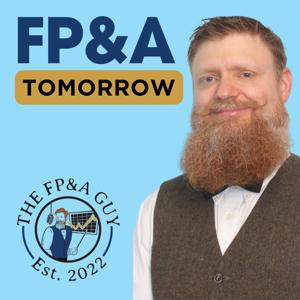


Welcome to FP&A Tomorrow, where we discuss financial planning and analysis, examining its current state and future prospects, with your host Paul Barnhurst.
In today’s episode, Paul Barnhurst is joined by Ken Lane, to discuss what makes great FP&A, the challenges and opportunities in mid-market companies, and the impact of technology and AI on finance.
Ken, a seasoned financial controller and FP&A professioal from Ontario, provides valuable guidance about the importance of collaboration, the role of AI and technology, and why he feels mid-market companies allow you to make a bigger difference in the work you are doing.
Here is a summary of the key points from the discussion:
Quotes:
Here are a few relevant quotes from the episode
Follow Ken:
LinkedIn - https://www.linkedin.com/in/kennethlane/
Website - https://smoothaccounting.ca/
Follow Paul:
Website - https://www.thefpandaguy.com
LinkedIn - https://www.linkedin.com/in/thefpandaguy
World-class Digital FP&A Course Bundle:
Signup for over ten hours of video content with 4 different courses and 8 modules on FP&A topics including: Business Partnering, Data Analysis, Financial Modeling Design Principles, and Modern Excel. Use code Podcast to save 25% . What are you waiting for signup below:
The FP&A Guy (thefpandaguy.com)
In today's episode:
[00:00] - Introduction
[00:47] - Guest Introduction
[02:01] - Anticipating Changes in FP&A
[02:40] - The Challenge of Legacy Systems
[03:35] - Guest’s Career Journey
[06:51] - Impactful Mid-Market Examples
[08:52] - Attraction to Manufacturing
[09:57] - Key Metrics in Manufacturing
[12:12] - Transition to FP&A
[15:50] - Managing Technology on a Limited Budget
[17:47] - Choosing the Right ERP Partner
[20:19] - Real-Time Decision Making with AI
[23:02] - Investing in Tech to Retain Talent
[24:55] - Rapid Fire Session
[25:57] - Role-Level Headcount Planning
[27:10] - Importance of Clean Data
[29:20] - Get to Know the guest
[32:20] - Advice for Better Business Partnering
[32:55] - Conclusion and Contact Information
Full Show Transcript:
Host: Paul Barnhurst:: Hello, everyone. Welcome to FP&A Tomorrow, where we delve into the world of financial planning and analysis, examining its current state and future prospects. I'm your host, Paul Barnhurst, guiding you through the evolving landscape of FP&A. Each week, we're joined by thought leaders, industry experts, and practitioners who share their insights and experiences helping us navigate today's complexities and tomorrow's uncertainties. Whether you're a seasoned professional or just starting your FP&A journey, this show has something for everyone. This week, I am thrilled to welcome to the show Ken Lane. Ken, welcome to the show.
Guest: Ken Lane:: Oh, thank you for having me, Paul.
Host: Paul Barnhurst:: Yes, excited to have you. So just a little bit of background about Ken and I'll allow him to introduce himself further in a few minutes. But he comes to us from Ontario, Canada. He is a financial controller. He spent most of his career either working as a controller or manager, finance, or accounting, and he spent most of it in the mid-market, in several different industries. So, Ken, we like to start the show with this question for all our guests? From your viewpoint, what does grade FP&A look like?
Guest: Ken Lane:: For me, the great FP&A is a collaboration with all the entities within your business. Because the goal of FP&A is to drive business change. So you need to understand the bottlenecks in each area. If those people feel heard, they'll buy into what you're delivering.
Host: Paul Barnhurst:: I would agree with that. So it's around collaboration and making sure the business feels heard.
Guest: Ken Lane:: Correct.
Host: Paul Barnhurst:: What are your thoughts? What do you expect it to look like in the next 3 to 5 years? Do you think what grade FP&A is going to change with everything that's going on with technology and other things?
Guest: Ken Lane:: I do, I think it will. I think in large companies it's going to change faster than in smaller mid-market companies. The reason is I think a lot of mid-market companies still have a lot of legacy systems or multiple legacy systems within a business, and they're going to need to upgrade and change those to get the full value of the future of FP&A.
Host: Paul Barnhurst:: We're not speaking from experience, having worked with a lot of mid-markets by chance, are we?
Guest: Ken Lane:: Not at all.
Host: Paul Barnhurst:: I'm sure you could tell me some data horror stories. That's probably what I should start off with. Tell me your worst data horror story. I keep that in mind for future episodes. Tell me a little bit about yourself and your background.
Guest: Ken Lane:: Yes. So I'm here in southern Ontario. Been in accounting now for 20-plus years. To be honest, went through school, came out with a computer science degree, and then fell into accounting and then worked my way up, worked with some great mentors, then went back and took some university courses for management, accounting, financial accounting, all those key things. But it never worked my way through to get licensed as a CPA. Then I've transitioned from working across a whole variety of industries, some of those interesting enough to progress and take a step up. Then even in some of those took a step back because a job or role had skills that maybe I didn't have yet. So went back in pay, went back maybe in leadership to eventually elevate myself later.
Host: Paul Barnhurst:: Got it. What led to accounting if you started with computer science? Maybe dig into that a little. I'm curious how the switch happened.
Guest: Ken Lane:: Sure. I got my first job with a finance organization, a financial banking organization, and they were looking for someone who both understood the business and understood IT. I fit that role. Growing up, my parents had multiple small businesses, and my mom always did the accounting, so I was always around it. So it wasn't brand new to me. I'd been around it. It comes naturally to me to a certain extent. So I'd seen it growing up using original ledger books writing it in pencil and putting everything in the ledger books and sawing all that, seeing all that. Then when I went to this finance institution, I did both for a while and then they opted, they felt that I gave them more value on the accounting side and then kept pushing me to progress and progress and progress. I just realized that I did enjoy it. Then started taking additional courses and doing everything to get certifications to move on.
Host: Paul Barnhurst:: So you grew up around it. They want someone on the business side, found you, liked it, and figured you'd get some more education in the area.
Guest: Ken Lane:: Correct.
Host: Paul Barnhurst:: Got it. So I know you spent pretty much your entire career working in the mid-market. Why? Why mid-market companies? What is it you like so much about them?
Guest: Ken Lane:: I like the fact that you get to. I feel like you make an impact. So when I'm in mid-market companies, I tend to find that most of those are still family-owned companies, maybe multi-generational companies as opposed to large ones. I did spend some time at some very large companies, but most of it was in the mid-market. I feel like that when you're helping out or you're driving decision-making, you see that impact on the bottom line. You see that impact on the family that helps them. When I was with large companies, sometimes I was I'd see a strategy that would come down from the corporate office, but didn't understand how what I did fed into that strategy.
Host: Paul Barnhurst:: So you mentioned one can make a bigger difference. You feel more involved than sometimes the big, huge companies. If anyone's worked in one, sometimes you feel a little bit like a cog or can't see how everything relates. So I'm curious, can you share an example where you felt like your work made a big difference in the mid-market, where you've seen that direct impact of what you were doing?
Guest: Ken Lane:: Sure. One of the companies I've worked for, they've acquired other companies over time. They had this nice small portfolio of companies that were doing very well. Somebody in their field became available. So what I was able to do then was forecast out all their portfolio of companies, do the FP&A, and do the forecast for the next so many years. Then with that work, were able to get them preferential financing from the banks to acquire that company that they later acquired and has been growing since.
Host: Paul Barnhurst:: Thanks. I appreciate you sharing that. It sounds like that's one opportunity that you're proud of and made a big difference. So that's always fun to have. Speaking of making a big difference, do you feel like it's hurt you in any way that you've worked for so many different industries, or do you think it helps you when you go to a different industry, having worked in several I think you've worked manufacturing, automotive, cannabis, commercial property, and I know different areas within manufacturing. So maybe talk a little bit about that.
Guest: Ken Lane:: It's a two-edged sword. It can help you. It can hurt you. For me, it helped me. One of the reasons is accounting is different based on what company or industry that you're in. So I've worked with people that is like, oh I spent four years getting an accounting degree. I got my CPA and I realized I hate accounting. you go, do you hate accounting or do you hate the field that you're in because you're not relating to what you're doing, what you're working on, the business that you're in, it doesn't speak to you. So I've tried a variety of different industries to see where I enjoy my fit. I always tend to come back to manufacturing, and that's where I am now. I enjoy it. I enjoy a company that manufactures something to go out. They tend to be complex. you have a lot of inventory, a lot of a lot of things to work on, a lot of different. You're working with sales across a variety of spectrum. Spectrums. So I ended up finding that manufacturing is the niche I like working in, but going across those industries allowed me to figure that out.
Host: Paul Barnhurst:: And what is it about manufacturing that you enjoy? What is it that makes that fun compared to other industries?
Guest: Ken Lane:: For me, it's the complexity of it, especially since post-COVID, the complexity of the supply chain just in time, other than maybe the Ford, GM, and Chrysler's the world. It doesn't exist anymore. You still have supply chain problems. You're still having problems bringing stuff in from China. You have to look at the macro environment as well. There are a lot of things that come into China in all of North America. What happens with the relationships between the government and all these things? You have to take into your forecast and that and go, what if scenarios and things like that. So for me manufacturing, there's just so many moving parts versus let's say, a service business that I just enjoy seeing all those different things come together and able to deliver a product to the market that the market wants.
Host: Paul Barnhurst:: Got it. That makes a lot of sense. What are the maybe the key metrics you like to look at in a manufacturing industry? What are those maybe those key operational metrics that you feel help you have a good understanding of is the business doing well or is it struggling or hey, there's a sign something may be going wrong?
Guest: Ken Lane:: Yes. The big thing for manufacturing is your cash conversion, making sure that you're turning that inventory over on a regular basis to bring the cash in for your operating cash flow. It's easy right now. I'm finding this with businesses right now, what they're doing is in order to make sure that they have a safety stock to get things out because the just-in-time isn't there anymore. They're holding more and more inventory, which is tying up dollars. But then you're watching that bank account drop, drop, drop because you got more going out than coming in. So it's watching that turnover ratio, as well as working closely with the supply chain to make sure that you have what you need, that you can get what you need, but you're not harming the business cash wise.
Host: Paul Barnhurst:: So it sounds like you're still dealing with a lot of supply chain issues. So companies are holding on to longer supply and inventory. So you got to manage that because that's cash, which isn't surprising. I mean at the end of the day, doesn't matter how profitable you are, if you have no cash in the bank, you have a problem. Makes a lot of sense there. How did you transition from accounting to more of an FP&A role, and how did that come about?
Guest: Ken Lane:: So for me, right from the beginning of my career, I guess I have a different, slightly different, different definition of accounting. To me, FP&A is a subset of accounting. Accounting is the overarching umbrella all the way from the bookkeeping, which is all the recordings and now most certified bookkeepers will take you right to the financials and then your FP&A. So every corporation I've been part of, we've had to whether I've had the title of cost analyst, you have to understand your business. You have to understand the cost and the drivers. You have to understand your sales, and what the variances are. Is it a mix, a pricing, and what is going on? So it's always been part of my role from day one. It's never been just recording. It's always been part of it.
Host: Paul Barnhurst:: And I think that makes a lot of sense being in smaller mid-market companies to have that because I've seen some of the bigger companies I work in where some people's roles are just recording and I've been in an FP&A role. I've done some accounting, not a lot, but I booked some journal entries here and there and helped with all those things. So I get it. There's some overlap between the two. Interesting perspective. I don't think I've ever thought of FP&A, including accounting. I've generally thought of them differently, so I appreciate you sharing a different perspective there. It's always good to see how people think about it. Any advice you'd offer for someone who they've been in just heavy accounting roles, and wants to make that change to FP&A. How do you think they go about that?
Guest: Ken Lane:: A couple of ways. The first way is understanding your business. So again, what are the drivers in your business to do FP&A? I think to do very well at FP&A, you have to understand everything on the accounting side, especially the cost drivers and things that are driving those bottom numbers. you have to understand your purchasing department, what is cost avoidance versus cost savings, and things like this. So get to know all the different individual areas of the company, and how they impact the company, so that you can start thinking, how does this work as a whole? And I think that's what you need to do because when you're in sometimes just in an accounting role, you're looking at one small section versus looking at the broader picture. So you need to understand that broader picture. I think when you're looking to move over when you get interviewed, you can start expressing, hey, this is how the broader picture is impacting you. I see that I can help you there.
Host: Paul Barnhurst:: Got it. I would agree with that. Starting to understand the broader picture of the business is one of the most important things you have to do. I want to switch gears here a little bit. I know when you and I chatted,As we talked quite a bit about technology, and you mentioned how SMBs and mid-markets, from your perspective, will need to invest more in tech going forward. Why is that?
Guest: Ken Lane:: As I alluded to before, a lot of these companies have multiple legacy systems. A lot of SMBs will...
Welcome to FP&A Tomorrow, where we discuss financial planning and analysis, examining its current state and future prospects, with your host Paul Barnhurst.
In today’s episode, Paul engages with Andrew Jepson, to discuss the world of Financial Planning and Analysis.
Andrew, founder of the FBPteam, has over 20 years of experience in financial planning and analysis, starting his career as an auditor and evolving into a sought-after business partner and trainer. As a passionate advocate for professional development, Andrew has authored a book on business partnering, facilitated numerous training programs worldwide, and is dedicated to elevating the capabilities of finance professionals.
Here is a concise summary of the key points from the discussion:
Quotes:
Here are a few relevant quotes from the episode
In this episode, Andrew shares his journey from auditor to business partner and offers valuable insights into the evolving landscape of FP&A. Remember to prioritize your mental health and continuously seek ways to improve your processes and time management.
Link to courses:
FP&A Business Partnering (thinkific.com)
Modern Microsoft Excel (thinkific.com)
Follow Andrew:
LinkedIn - https://www.linkedin.com/in/financebusinesspartnering/
Website - https://www.thefbpteam.com/
Follow Paul:
Website - https://www.thefpandaguy.com
LinkedIn - https://www.linkedin.com/in/thefpandaguy
In today's episode:
[01:01] - Introduction
[01:43] - Guest Introduction
[02:35] - Defining Great FP&A
[03:34] - Anticipation in FP&A
[05:21] - Andrew’s Career Journey
[08:10] - Importance of Business Partnering
[11:45] - Key Skills for FP&A Professionals
[15:45] - Transitioning from Being Right to Being Effective
[28:10] - Common Themes in FP&A Struggles
[43:17] - Rapid Fire Session
[50:01] - Get to know the Guest
[53:15] - Conclusion
Welcome to FP&A Tomorrow, where we discuss financial planning and analysis, examining its current state and future prospects, with your host Paul Barnhurst.
In today’s episode, Paul engages with Bonnie Tomei, in the discussion on what makes great FP&A, the future of AI in finance, and key strategies for aspiring CFOs.
Bonnie, the CFO of Salience Labs and Chief Strategy Officer for K2X, has a wealth of experience in finance, strategic planning, and M&A activities, including being the former CFO of Spectra7, where she was voted Woman CFO of the Year for smaller public companies by FBI Silicon Valley.
Here is a concise summary of the key points from the discussion:
FP&A professionals should act as strategic partners to executives, helping them achieve financial roadmaps and objectives. Understanding both internal and external factors is crucial for effective financial planning and analysis.
AI and software are transforming FP&A roles, pushing analysts to mature faster and providing deeper insights. Despite the rise of AI, the need for human intelligence to interpret data and make strategic decisions remains critical.
FP&A is a strong pathway to becoming a CFO, but professionals need to understand the technical accounting side and have business acumen. Building strong relationships with the executive team and demonstrating strategic thinking are essential for aspiring CFOs.
FP&A teams play a vital role in M&A activities, particularly in modeling and due diligence. Professionals should volunteer for tasks and demonstrate business intelligence to stay relevant during acquisitions.
Technical skills like Excel are fundamental, but equally important are soft skills such as emotional intelligence (EQ) and effective communication.
Understanding and defining key performance indicators (KPIs) is crucial for measuring success and aligning with strategic goals.
Quotes:
Here are a few relevant quotes from the episode
"Every time they come up with something new I've always fallen back to the good old days of that quick shortcut the ctrl+C, ctrl+V anyway.”-Bonnie Tomei
“Getting involved and understanding how you can help in looking at all of that and being a trusted advisor from a financial standpoint would help tremendously.”-Bonnie Tomei
In this episode, Bonnie Tomei provides a comprehensive look at the evolving landscape of FP&A, emphasizing the importance of strategic partnership, the impact of AI, and the essential skills needed to excel in the field. Bonnie's insights offer valuable guidance on navigating the complexities of financial planning and analysis. Stay curious, be proactive, and focus on building strong professional relationships to thrive in your FP&A career.
Link to courses:
FP&A Business Partnering (thinkific.com)
Modern Microsoft Excel (thinkific.com)
Follow Bonnie:
LinkedIn - https://www.linkedin.com/in/bonnie-tomei-a288b91/
Website - https://saliencelabs.ai/
Follow Paul:
Website - https://www.thefpandaguy.com
LinkedIn - https://www.linkedin.com/in/thefpandaguy
For CPE credit please go to earmarkcpe.com, listen to the episode, download the app, and answer a few questions. For AFP FPAC certification answer the questions and contact Paul Barnhurst for further details.
In today's episode:
[01:01] - Introduction
[01:43] - Guest Introduction
[03:35] - Defining Great FP&A
[05:21] - Future Changes in FP&A
[07:00] - Career Progression to CFO
[11:07] - Advice for FP&A During M&A Activities
[13:19] - Transition to CFO
[16:27] - FP&A as a Pathway to CFO
[27:35] - Skills for Aspiring CFOs
[30:55] - Being More Strategic in FP&A
[34:02] - Rapid Fire Session
[37:34] - Contact Information of the Guest
[39:10] - Final Advice and Conclusion
Welcome to FP&A Tomorrow, where we discuss financial planning and analysis, examining its current state and future prospects, with your host Paul Barnhurst.
In today’s episode, Paul engages in an insightful roundtable discussion with Michael Dion on how FP&A goes beyond numbers and reports, focusing on collaboration and leveraging cutting-edge technology like generative AI to drive business success.
Michael, a seasoned finance professional and senior manager at a Fortune 100 company, is passionate about storytelling and presentations, transforming traditional financial reviews into engaging, story-based approaches. As a finance leader with extensive experience in media and entertainment, his innovative use of generative AI and dedication to continuous learning set him apart as a visionary in the FP&A field.
Key takeaways from this week's episode include:
Here is a concise summary of the key points from the discussion:
Quotes:
Here are a few relevant quotes from the episode
This discussion with Michael Dion focuses on the evolving role of financial planning and analysis (FP&A) in modern organizations. Key topics include the importance of collaboration, the integration of advanced technologies, and practical strategies for FP&A professionals to enhance their effectiveness and impact.
Exciting Announcement
I am excited to share my two new digital FP&A Courses with you FP&A Business Partnering, and Modern Excel. They just launched and I am excited to offer a 20% discount to my listeners using code PODCAST.
Link to courses:
FP&A Business Partnering (thinkific.com)
Modern Microsoft Excel (thinkific.com)
Follow Michael:
LinkedIn - https://www.linkedin.com/in/dionmichaelc/
Website - https://www.f9finance.com/
Follow Paul:
Website - https://www.thefpandaguy.com
LinkedIn - https://www.linkedin.com/in/thefpandaguy
For CPE credit please go to earmarkcpe.com, listen to the episode, download the app, and answer a few questions. For AFP FPAC certification answer the questions and contact Paul Barnhurst for further details.
In today's episode:
[01:20] - Introduction
[02:00] - Guest Introduction
[03:05] - Integrating Consumer Insights
[04:44] - Preparing for Technological Changes
[05:30] - How technology enhances the abilities of FP&A professionals
[11:30] - Media Industry Passion
[15:30] - Amortization of Film Costs
[18:00] - Response to F9 Finance
[24:00] - Transforming Business Reviews
[28:34] - Advice for Story-Based Reporting
[38:00] - Career Advice
[39:00] - Rapid Fire Session
[41:07] - Use of Generative AI
[45:00] - Business Partnership
[46:14] - Contact Information of the Guest
[47:00] - Conclusion
Welcome to FP&A Tomorrow, where we discuss financial planning and analysis, examining its current state and future prospects, with your host Paul Barnhurst.
In today’s episode, Paul engages in an insightful roundtable discussion with Julio Martinez on how mid-market companies can harness the power of technology, data, and business partnering to drive performance and accountability.
Julio, a visionary in the finance world, currently serving as the CEO of Abacum. His passion for innovation and technology makes him a leading voice in transforming the finance sector. With over two decades of experience in finance, investment banking, and fintech, Julio brings unparalleled insights into the evolving landscape of FP&A.
Key takeaways from this week's episode include:
Here is a concise summary of the key points from the discussion:
Quotes:
Here are a few relevant quotes from the episode
This conversation with Julio Martinez offers an in-depth look into the current and future state of FP&A, emphasizing the importance of business partnering and the transformative power of technology. As the FP&A field continues to evolve, professionals can take inspiration from Julio's journey and the innovative approaches discussed in this episode to excel in their roles.
Exciting Announcement
I am excited to share my two new digital FP&A Courses with you FP&A Business Partnering, and Modern Excel. They just launched and I am excited to offer a 20% discount to my listeners using code PODCAST.
Link to courses:
FP&A Business Partnering (thinkific.com)
Modern Microsoft Excel (thinkific.com)
Follow Julio:
LinkedIn - https://www.linkedin.com/in/thejuliomartinez/
Website - https://www.abacum.io/
Follow Paul:
Website - https://www.thefpandaguy.com
LinkedIn - https://www.linkedin.com/in/thefpandaguy
For CPE credit please go to earmarkcpe.com, listen to the episode, download the app, and answer a few questions. For AFP FPAC certification answer the questions and contact Paul Barnhurst for further details.
In today's episode:
[00:50] - Introduction
[01:48] - Guest Introduction
[03:54] - Blending of Operations in FP&A
[04:47] - Guest’s Background and Career Journey
[07:00] - The Value of a Sabbatical
[09:12] - The Impact of Community in Microfinance
[14:57] - Launching Fintech Startups and the Transition to Abacum
[18:16] - Why FP&A for a Startup- Motivation from Guest
[20:30] - Identifying Key Pain Points in FP&A
[23:34] - Mid-Market FP&A Challenges and Opportunities
[33:59] - Opportunities in Business Partnering for FP&A
[36:00] - Rapid-Fire Session
[39:50] - Get to Know Guest
[42:22] - Conclusion
Welcome to FP&A Tomorrow, where we discuss financial planning and analysis, examining its current state and future prospects, with your host Paul Barnhurst.
In today’s episode, Paul engages in an insightful roundtable discussion with Nathan Kaemingk & Karan Sood on LinkedIn. In the episode, we discuss the nuances of strategic pricing and its immense impact on business profitability.
Karan, a seasoned pricing professional, shares his extensive experience across various industries, emphasizing the importance of cross-functional alignment and value-based pricing.
Nathan, with a unique background in mechanical engineering and forecasting, highlights the critical role of understanding costs and leveraging pricing strategies to combat inflation and optimize profits.
Key takeaways from this week's episode include:
Here is a concise summary of the key points from the discussion:
Quotes:
Here are a few relevant quotes from the episode
Exciting Announcement
I am excited to share my two new digital FP&A Courses with you FP&A Business Partnering, and Modern Excel. They launched yesterday and I am excited to offer a 20% discount to my listeners. Use code PODCAST.
Link to courses:
FP&A Business Partnering (thinkific.com)
Modern Microsoft Excel (thinkific.com)
Follow Karan:
LinkedIn - https://www.linkedin.com/in/soodkaran/
Website - https://www.kobo.com/
Follow Nathan:
LinkedIn - https://www.linkedin.com/in/nathankaemingk/
Website - https://www.betterforecasting.com/
Follow Paul:
Website - https://www.thefpandaguy.com
LinkedIn - https://www.linkedin.com/in/thefpandaguy
For CPE credit please go to earmarkcpe.com, listen to the episode, download the app, and answer a few questions. For AFP FPAC certification answer the questions and contact Paul Barnhurst for further details.
In today's episode:
[01:10] - Introduction
[02:00] - Guest Introduction
[03:00] - Misconceptions About Pricing
[04:20] - The importance of Value-Based Pricing
[07:00] - The Role of FP&A in Pricing
[11:40] - Leveraging Digital Courses for FP&A Professionals
[12:00] - Guest Backgrounds
[18:40] - Impact of Inflation on Pricing
[22:00] - Strategies for Competitive Markets
[26:30] - Effective Rebate Strategies
[31:00] - Collaboration Between Finance and Pricing Teams
[36:10] - Rapid-Fire Session
[58:30] - Conclusion
Welcome to FP&A Tomorrow, where we discuss financial planning and analysis, examining its current state and future prospects, with your host Paul Barnhurst.
In today’s episode, Paul engages in an insightful interaction with Philip Watson, for a discussion on what it takes to excel in financial planning and analysis (FP&A).
Philip, the CFO of Paddle, brings a wealth of knowledge, having led FP&A at ZoomInfo through its rapid growth and IPO. He is known for his commitment to developing talent, Philip's leadership has shaped the careers of many finance professionals. Currently leading Paddle’s financial strategy, Philip is transforming how fintech companies handle complex financial operations.
Key takeaways from this week's episode include:
Here is a concise summary of the key points from the discussion:
The title sponsor for this week’s episode of FP&A Tomorrow is Plan Buddies. Plan Buddies, where professionals meet excellence. Ready to elevate your career? Visit plan-buddies.com and become a member today. Here's a special treat. Use the promo code TheFPandAGuy, that is TheFPandAGuy for an exclusive 25% discount on your first-year membership.
Quotes:
Here are a few relevant quotes from the episode
Follow Philip:
LinkedIn - https://www.linkedin.com/in/philipawatson
Website - https://www.paddle.com
Follow Paul:
Website - https://www.thefpandaguy.com
LinkedIn - https://www.linkedin.com/in/thefpandaguy
For CPE credit please go to earmarkcpe.com, listen to the episode, download the app, and answer a few questions. For AFP FPAC certification answer the questions and contact Paul Barnhurst for further details.
In today's episode:
(01:10) - Introduction
(01:45) - Guest Introduction
(02:00) - Defining Great FP&A
(03:25) - Future of FP&A
(04:20) - Guest Background
(06:04) - Scaling at ZoomInfo
(18:17) - FP&A as A Launchpad for CFO
(27:40) - Sales Commission Strategies
(32:47) - Effective Forecasting Practices
(41:49) - Rapid-Fire Session
(43:20) - Guest’s Personal Insights
(45:30) - Advice for FP&A Business Partners
Welcome to FP&A Tomorrow, where we discuss financial planning and analysis, examining its current state and future prospects, with your host Paul Barnhurst.
In today’s episode, Paul engages in an insightful interaction with Tyler Cypher, for a discussion on how generative AI is reshaping FP&A, the importance of business partnering, and optimizing cloud spend.
Tyler, the founder and CEO of OpsCipher, shares his journey from Disney finance intern to leading FP&A at top cybersecurity firms. He is an expert in leveraging generative AI for strategic decision-making. Also a passionate advocate for effective business partnering and optimizing cloud spending.
Key takeaways from this week's episode include:
Here is a concise summary of the key points from the discussion:
The title sponsor for this week’s episode of FP&A Tomorrow is Plan Buddies. Plan Buddies, where professionals meet excellence. Ready to elevate your career? Visit plan-buddies.com and become a member today. Here's a special treat. Use the promo code the FP&A Guy, that is TheFPandAGuy for an exclusive 25% discount on your first-year membership.
Quotes:
Here are a few relevant quotes from the episode
"The people who are the most successful have a genuine curiosity about the business. It's very hard to go into those teams and try to be that analytical value-add extension if you can't understand their challenges."
“If you think about software business, generally, the two biggest expenses are people and then the cost of running the software.”
“FinOps as an organizational structure. So from the first part, I think, it's inherent in the word financial operations. It's a financial stewardship-driven culture in the first place.”
Follow Tyler:
LinkedIn - https://www.linkedin.com/in/tylercyphers
Website - http://opscipher.com
Follow Paul:
Website - https://www.thefpandaguy.com
LinkedIn - https://www.linkedin.com/in/thefpandaguy
For CPE credit please go to earmarkcpe.com, listen to the episode, download the app, and answer a few questions. For AFP FPAC certification answer the questions and contact Paul Barnhurst for further details.
In today's episode:
(1:20) - Introduction
(01:50) - Guest Introduction
(02:26) - Defining Great FP&A
(05:01) - Impact of Generative AI on FP&A
(06:59) - Future of FP&A with AI
(13:25) - Becoming A Strategic Business Partner
(17:40) - Cash Flow for Coders Newsletter
(21:30) - Optimizing Cloud Spend
(30:12) - Advice for Managing Cloud Spend
(44:12) - Rapid-Fire Session
(46:40) - Essential Skills for FP&A Professionals
(47:40) - Guest’s Personal Insights.
(50:42) - Advice for FP&A Business Partners
Welcome to FP&A Tomorrow, where we discuss financial planning and analysis, examining its current state and future prospects, with your host Paul Barnhurst.
The title sponsor for this week’s episode of FP&A Tomorrow is the Third Generation FP&A Tools Showcase. Join the Showcase and see the latest technology in FP&A planning software. Register for free today: https://www.accelevents.com/e/fpatoolsshowcase
In today’s episode, Paul engages in a thought-provoking conversation with the awesome Jim Cook and Winnie Aoieong, for a fascinating discussion on the importance of decision-making systems, the value of trust in business partnerships, and the role of generative AI in modern FP&A.
Jim Cook, former CFO of Mozilla with a rich history at Netflix and Intuit, shares his valuable insights on effective decision-making systems and the power of community building.
Winnie Aoieong, VP of Business Finance at PowerSchool, discusses her experience in scaling financial operations and the critical balance of technical skills and business communication.
Key takeaways from this week's episode include: :
Here is a concise summary of the key points from the discussion:
Quotes:
Here are a few relevant quotes from the episode about the importance of decision-making systems, building trust in business partnerships, and the role of generative AI in enhancing FP&A efficiency:
Follow Jim:
Follow Winnie:
Follow Paul:
For CPE credit please go to earmarkcpe.com, listen to the episode, download the app, and answer a few questions. For AFP FPAC certification answer the questions and contact Paul Barnhurst for further details.
In today's episode:
[00:05] Introduction
[01:20] Guest’s background
[01:28] What Does Great FP&A Look Like?
[02:13] Evolution of FP&A
[02:45] Future of FP&A
[10:30] Scaling a Company
[12:00] Leadership Changes
[16:00] Role of Finance in Business
[21:32] Systems and Chart of Accounts
[29:40] Safe Space for Innovation
[40:52] FP&A Tools and Generative AI
[42:00] Rapid Fire Questions
[49:20] Get to Know Our Guests Personally
In today’s episode, Paul engages in an insightful interaction with Julian Castelli, for a discussion about the transformative role of FP&A and evolution from basic finance to a strategic role influencing business decisions and investor relations, highlighting his leadership experiences and the importance of core values.
Julian is currently serving as a board director and board chair. With experience as a board director and operating partner many times over, Julian assists SaaS and Marketplace technology companies in areas like strategy, team development, growth execution, fundraising, executive coaching, and board governance. He began his career in investment banking at Goldman Sachs and later worked as a consultant at McKinsey & Company.
Key takeaways from this week's episode include: :
Here is a concise summary of the key points from the discussion:
The title sponsor for this week’s episode of FP&A Tomorrow is the Plan Buddies. Join Plan Buddies. Plan Buddies, where professionals meet excellence. This isn't just any community. It is a community run by and for planning professionals. At Plan Buddies we’re all about fostering connections, sharing knowledge, and providing mentorship among FP&A experts. Ready to elevate your career? Visit plan-buddies.com and become a member today. Here's a special treat. Use the promo code the FP&A Guy, that is TheFPandAGuy for an exclusive 25% discount on your first-year membership.
Quotes:
Here are a few relevant quotes from the episode about FP&A's transition from basic finance to a strategic role, the critical importance of financial planning and analysis, and the influence of leadership and core values in navigating business challenges.
Follow Julian:
LinkedIn - https://www.linkedin.com/in/juliancastelli1
Follow Paul:
Website - https://www.thefpandaguy.com
LinkedIn - https://www.linkedin.com/in/thefpandaguy
For CPE credit please go to earmarkcpe.com, listen to the episode, download the app, and answer a few questions. For AFP FPAC certification answer the questions and contact Paul Barnhurst for further details.
In today's episode:
[01:16] Introduction
[03:20] Guest’s background
[05:50] How did previous experiences prepare Julian for FP&A expertise
[08:35] Turning critical information into actionable reporting
[11:05] How the value of FP&A goes beyond controller or bookkeeping
[28:20] Guest’s view about the evolution of FP&A
[30:22] Interesting facts and differences between SaaS and Marketplace
[41:49] Guest’s career journey and previous experiences
[48:27] Upcoming event promotion
[49:56] Rapid-fire session
[52:24] Guest’s personal insights.
[55:27] Advice for being a better business partner
[57:27] Conclusion
From the publisher's feed

3,232 Listeners
181 Listeners

2,706 Listeners

1,461 Listeners
342 Listeners

174 Listeners
126 Listeners
39 Listeners

810 Listeners

673 Listeners

368 Listeners
50 Listeners

159 Listeners

8 Listeners

0 Listeners