
Sign up to save your podcasts
Or



Based on Podcast App listening data
See omnystudio.com/listener for privacy information.
Carly is a counsellor and coach who specialises in building psychological hardiness, which is the ability to navigate challenge, stay engaged, and take meaningful action under pressure. Her work integrates modern psychology with Eastern and Stoic approaches, helping people build resilience, live with purpose, and respond to life’s challenges with greater clarity, courage and steadiness.
See omnystudio.com/listener for privacy information.
This conversation explores how early life stress shapes the brain, why complex trauma is different from a single traumatic event, and how people can build resilience over time. Dr Paul Taylor speaks with Dr Eamonn McCarthy about forensic psychology, trauma work, performance psychology, and the practical ways therapy, exercise, sleep, and mindset can support change.
Stress can break you—or build you into someone stronger than you thought possible. Dr Eamonn McCarthy reveals why some people unravel under pressure while others turn hardship into resilience, and how trauma, recovery, and reappraisal shape that outcome. Paul and Eamonn trace the full stress continuum, from early life adversity and complex trauma to elite performance psychology. They unpack why uncertainty is so corrosive, how hyper arousal and hypo arousal show up in real life, and why the brain’s survival strategies can be both brilliant and heartbreaking.
They also discuss Larita Academy, a program helping disadvantaged young people unlock their potential, and Mind Your Monkey, which applies resilience and performance principles to executives and high performers.
You’ll discover:
Time Stamps
01:47 - From undergraduate psychology to forensic practice
02:36 - Moving from adult offending to childhood trauma
04:27 - Child protection, youth justice, and executive leadership
05:43 - Transference, countertransference, and emotional protection
07:26 - Concerned detachment and what clients actually need
09:54 - The lasting impact of traumatic work on the clinician
11:25 - Why black humour can fail in child trauma settings
12:37 - Why social status changes stress biology
14:03 - Early life stress, the womb, and adverse childhood experiences
15:34 - Complex trauma versus single-event trauma
17:25 - Caregivers as both source of safety and danger
19:02 - Predictability, uncertainty, and survival adaptations
20:54 – Hyper arousal, hypo arousal, and the window of tolerance
24:59 - Stress inoculation, recovery, and building resilience
28:12 - Genes, environment, and why people respond differently
30:11 - How resilience can be trained over time
32:09 - Challenge mindset and self-belief under stress
34:00 - Stress as a muscle and the case against overprotection
35:55 - Why trigger warnings can worsen hypervigilance
38:19 - Mental health versus mental illness
41:37 - Helping people reframe childhood trauma in adulthood
45:02 - Reappraisal and post-traumatic growth
47:17 - Lifestyle, neuroplasticity, and psychotherapy support
49:49 - SSRIs, exercise, and why combined approaches may work better
51:39 - Severe depression, low cortisol, and burnout patterns
52:52 - How Larita Academy was founded and what it does
57:48 - Why Mind Your Monkey was created
59:57 - What “forensic” means in this business context
60:46 - Who the typical client is now
Resources
Website: mindyourmonkey.com.au
LinkedIn: https://www.linkedin.com/in/dr-eamonn-mccarthy-7705aa221/
Instagram: https://www.instagram.com/mind_your_monkey_/
Website: https://www.larita.com.au/
Instagram: https://www.instagram.com/larita_academy/
Support the Podcast
If you found this conversation valuable, consider subscribing and leaving a review on your preferred podcast platform. Your feedback helps us continue to bring you insightful discussions on important health topics.
See omnystudio.com/listener for privacy information.
See omnystudio.com/listener for privacy information.
Most of the fear we live with isn't physical. It's the old thinking we carry from past experiences: the fear of criticism, of not being good enough, of getting it wrong. In this Mojo Monday, Carly explores how fear becomes our reality when we're on autopilot, and how becoming the observer of our conditioned responses creates space to choose what happens next.
Drawing on Krishnamurti and Morita Therapy, Carly looks at fear and desire as two sides of the same coin, and how turning that coin over shifts your focus to what you really want.
In this episode:
Carly is a counsellor and coach who specialises in building psychological hardiness, which is the ability to navigate challenge, stay engaged, and take meaningful action under pressure. Her work integrates modern psychology with Eastern and Stoic approaches, helping people build resilience, live with purpose, and respond to life’s challenges with greater clarity, courage and steadiness.
See omnystudio.com/listener for privacy information.
This conversation with Dr Leah Hechtman explores how mitochondria influence far more than energy production, including fertility, aging, brain health, and hormone regulation. It also unpacks the differences between male and female reproductive biology, the effects of hormonal contraception, and what hormone replacement may mean for longevity. Leah brings a rare mix of clinical experience, genetics training, ovarian biology research, and fertility expertise, making this a practical and provocative discussion for anyone interested in reproductive health and healthy aging.
Key topics
Timestamps
04:09 - Why mitochondria are much more than cellular “powerhouses”
06:04 - Maternal inheritance of mitochondria and why mum matters so much
07:04 - How the oocyte selects sperm and what the egg is “looking for”
11:17 - Sperm count decline and why reference ranges can mislead
12:36 - Semen analysis as a longevity marker for men
15:05 - Why sperm testing reflects health from months earlier
17:41 - Female mitochondrial aging and the crossover into menopause
19:11 - Male mitochondrial and testicular decline with age
20:09 - Why regular ejaculation may improve sperm quality
21:18 - How starting the pill too early may disrupt the brain-ovary axis
22:15 - The amygdala, mood changes, and the effects of hormonal contraception
25:35 - Bioidentical versus synthetic hormones and why it matters
27:22 - Hormonal contraception and mate selection, smell, and genetics
29:00 - What menopause and andropause look like biologically
33:35 - HRT myths, timing, and the importance of body-identical hormones
36:19 - How women and men produce testosterone, estrogen, and progesterone
38:29 - Testosterone therapy in men and its fertility implications
40:49 - Why some clinicians are considering testosterone earlier in men
42:27 - DHEA, energy, stress, sleep, and the hormone cascade
44:08 - Why baseline testing around 35 can be useful for both sexes
45:24 - How stress, hydration, and even the blood draw setting affect hormone results
48:41 - The Y chromosome, aging, and why men feminize over time
50:52 - Environmental toxins, nutrition, and sperm health
55:03 - Microbiome health and its role in fertility, implantation, and miscarriage
56:14 - Caesarean birth, microbiome transfer, and downstream health effects
58:14 - What Leah is most excited about in the next wave of research
“The mitochondria is how we transmit emotional patterns, neurological patterns, trauma patterns.”
Action items
Resources
Website - https://drleahhechtman.com/
LinkedIn - https://www.linkedin.com/in/dr-leah-hechtman-phd-7828607/?isSelfProfile=false
X - https://x.com/lhechtman
Facebook - https://www.facebook.com/LeahHechtman
YouTube - https://www.youtube.com/channel/UCR07U_vqfe8Haa7GO7AEDpA/playlists
Instagram - https://www.instagram.com/drleahhechtman/
Support the Podcast
If you found this conversation valuable, consider subscribing and leaving a review on your preferred podcast platform. Your feedback helps us continue to bring you insightful discussions on important health topics.
See omnystudio.com/listener for privacy information.
See omnystudio.com/listener for privacy information.
n this episode, Carly unpacks why the instinct to rescue the people we love is often more about our own discomfort than their growth, what love looks like when you treat it as a verb instead of a feeling, and why real commitment sometimes means holding back rather than stepping in. It's a personal, practical episode about showing up for the people in your life, and what that actually looks like in action.
Key takeaways
Carly is a counsellor and coach who specialises in building psychological hardiness, which is the ability to navigate challenge, stay engaged, and take meaningful action under pressure. Her work integrates modern psychology with Eastern and Stoic approaches, helping people build resilience, live with purpose, and respond to life’s challenges with greater clarity, courage and steadiness.
See omnystudio.com/listener for privacy information.
Dr James Thompson joins me for a practical conversation about why heart disease still leads as a global killer, why cholesterol and calcium scoring have limits, and how advanced imaging is changing prevention. We also cover exercise, lifestyle, and the role AI is starting to play in cardiac imaging.
Heart disease often starts silently years before a scan or cholesterol test raises the alarm. Dr. James Thompson reveals why a zero-calcium score can still miss dangerous plaque, and why the future of prevention may depend on looking much earlier, and much deeper. We break down the limits of total cholesterol, LDL, and calcium scoring, then show how APO B, LP little A, CT coronary angiography, and cardiac MRI change the picture. If you have ever been told you are "fine" because your cholesterol is normal or your calcium score is low, this conversation will make you rethink what that actually means.
Key topics
Timestamps
(01:36) Dr Thompson’s background in radiology and cardiovascular imaging
(06:43) Why no imaging test is perfect and what each modality does best
(09:16) Why MRI found the injury that X-ray and ultrasound missed
(11:49) Cholesterol as a screening tool and its limitations
(16:45) APO B and Lp(a) as more useful markers for some patients
(18:18) What a calcium score actually measures
(20:31) Why calcified plaque is different from vulnerable non-calcified plaque
(23:27) Why a zero calcium score can still miss dangerous disease
(29:53) How calcium scoring lost ground to contrast CT angiography
(33:14) What contrast-enhanced CTA reveals about plaque burden and composition
(35:04) How coronary CTA is performed, including heart-rate control and breath-holding
(37:49) How AI is being layered onto CT imaging
(40:25) Why CTA can see both inside and outside the coronary artery
(41:37) The heart as a pump and why the coronary arteries are so important
(44:08) Why stenting and bypass are not perfect solutions
(46:19) Exercise as prevention and inactivity as an active problem
(49:22) The Dallas bed rest study and how quickly the heart can decondition
(53:23) Why vigorous exercise may be far more protective than light movement
(55:06) What “lung burn” means in Dr Thompson’s training language
(57:18) What cardiac MRI adds beyond CT
(60:36) Paul’s own cardiac imaging story and how MRI found scar tissue
(63:55) Why coronary CTA is now a class 1A test for low-risk patients with no known disease
(69:48) What’s next for AI, plaque characterization, and inflammation imaging
(74:23) Why prevention is cheaper, easier, and more effective than late-stage treatment
Action items
Resources
Website - https://drjamesthomps.com/
LinkedIn - https://www.linkedin.com/in/drjamesthomps/
X - https://x.com/DrJamesThomps
Facebook - https://www.facebook.com/drjamesthomps
YouTube - https://www.youtube.com/@gamingcardiaccta
Instagram - https://www.instagram.com/drjamesthomps
Support the Podcast
If you found this conversation valuable, consider subscribing and leaving a review on your preferred podcast platform. Your feedback helps us continue to bring you insightful discussions on important health topics.
See omnystudio.com/listener for privacy information.
See omnystudio.com/listener for privacy information.
From the publisher's feed
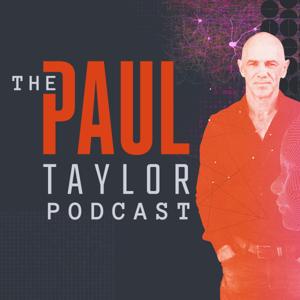
Host Dr Paul Taylor, a Psychophysiologist, Neuroscientist, Exercise Scientist, and Nutritionist interviews experts from around the world on cutting edge research and practices related to improving…
Ranked by our users in the last 21 days
11,782 Listeners
2,007 Listeners

8,502 Listeners
431 Listeners
590 Listeners
3,605 Listeners
2,602 Listeners
3,422 Listeners

7,997 Listeners
153 Listeners
376 Listeners

29,187 Listeners

2,024 Listeners
1,190 Listeners
158 Listeners