
Sign up to save your podcasts
Or

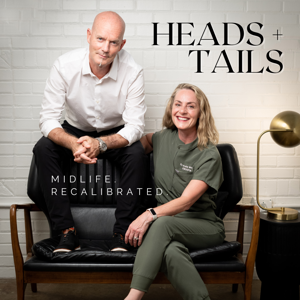


What if menopause care didn't have to be a choice between conventional medicine and "natural" medicine?
In this episode of Heads & Tails, Dr. Kate White and Jay White sit down with Dr. Suzanne Gilberg-Lenz, board-certified OB/GYN, integrative medicine physician, clinical Ayurvedic specialist, herbalist, breast cancer survivor, and author of Menopause Boot Camp.
Together, they explore what menopause care can look like when we stop treating it as a one-size-fits-all problem.
Dr. Suzanne reframes menopause as a developmental and physiologic transition—not simply a collection of symptoms to eliminate. She shares how she integrates conventional medicine with lifestyle interventions, botanicals, Ayurveda, mindfulness, and individualized hormone and nonhormonal options.
They discuss:
• Why perimenopause can leave women saying, "I just don't feel like myself."
• Menopause as transformation rather than simply loss
• What Ayurveda can teach us about individualized health and lifestyle
• The difference between "natural" and automatically "safe"
• Botanicals commonly discussed in menopause care, including chasteberry/Vitex, Siberian rhubarb, black cohosh, ashwagandha, and berberine
• Why supplement quality, dosing, interactions, and sourcing matter
• Hormone therapy—and why it should not be framed as the only tool available
• Options for women who cannot or do not want to use systemic hormone therapy
• Why sleep, exercise, resistance training, mental health, and stress regulation still matter even when using hormones
• The changing gut microbiome in midlife
• Why treatment sometimes requires experimentation, adjustment, and patience
• How to find a clinician willing to listen, learn, and partner with you
• Why trusting your own body can sometimes be lifesaving
One of the biggest messages from this conversation: you do not have to choose a camp. Good menopause care can include evidence-based medicine, lifestyle, appropriate complementary therapies, curiosity, and shared decision-making.
And perhaps most importantly: if something feels different in your body, keep asking questions.
Heads & Tails — where midlife gets a reframe.
Share this episode with a friend who is trying to figure out her own menopause toolkit, and send your questions to the Heads & Tails team.
This podcast is for education and entertainment and does not substitute for individualized medical or mental health care.
In this episode of Heads & Tails, Dr. Kate White and Jay White unpack the difference between being disagreed with, dismissed, invalidated, misunderstood, and simply not listened to.
Kate explores why dismissal can become particularly consequential for midlife women—in the doctor's office, at work, at home, and during the menopause transition. Jay explains why repeated dismissal breeds resentment and how couples can recognize when "I heard you" isn't the same as actually making someone feel heard.
They discuss medical dismissal, menopause rage, the "Karen" stereotype, changing executive function, invisible workload, and why needing something different in midlife doesn't mean something is wrong with you.
In this episode:
• The five ways we can feel unheard
• Dismissal vs. disagreement
• Why "that's normal for your age" isn't always an adequate answer
• Kate's own experience of having symptoms attributed to stress
• Why resentment often points to an unspoken need
• Menopause, mood, executive function, and "losing your filter"
• Passive vs. aggressive vs. assertive communication
• How to make specific requests at home, work, and in healthcare
• Three powerful words: "Tell me more."
The takeaway: Anger can be information. Instead of simply asking, "Why am I so angry?" ask, "What am I trying to say that isn't being heard?"
Send us your questions at mailto:[email protected].
You planned the finances. You picked the date. But have you planned the life you want after retirement?
Retirement can reshape your identity, marriage, health, intimacy, friendships, and sense of purpose—and being together all the time isn't always as easy as it sounds.
In this episode, Dr. Kate White and Jay White explore how to make retirement not just an ending, but an intentional and fulfilling next chapter.
In this episode:
→ The 3 phases of retirement—from honeymoon to reinvention
→ Finding purpose after leaving your career
→ What happens when one partner retires first
→ Balancing togetherness and independence
→ Asking your partner questions with curiosity, not judgment
→ Why more time together doesn't automatically mean more intimacy
→ Menopause, sexual health, and changing desire
→ Protecting your brain, bones, muscle, balance, and longevity
→ Friendships, community, downsizing, and where you choose to live
→ Creating a retirement based on your values—not someone else's checklist
❤️ The takeaway
Don't just ask:
"Can we afford to retire?"
Ask:
"How do we want to live?"
Retirement isn't the finish line. It may be the beginning of your best next chapter.
🎙️ Follow Heads & Tails for conversations about marriage, menopause, intimacy, relationships, and the midlife recalibration.
Share this episode with someone who's starting to think about what comes next.
When Is It Really Time to Retire?
Everyone asks the same first question about retirement:
"Do I have enough money?"
But Dr. Kate White and marriage and family therapist Jay White think there are several questions you should ask before that—or at least alongside it.
Will you be healthy enough to enjoy the retirement you've spent decades saving for?
What will give you purpose when your career no longer structures your days?
If you're married, are you and your partner imagining the same retirement?
And perhaps the most important question of all:
What are you retiring TO?
In Part 1 of this two-part Heads & Tails retirement series, Kate and Jay explore the biology, psychology, finances, identity, health, and relationships behind one of life's biggest transitions.
They discuss how health problems, caregiving responsibilities and burnout can push someone toward retirement before they planned—and why being financially able to retire doesn't necessarily mean you're emotionally ready.
Kate makes the case that retirement planning should include more than a financial portfolio. Muscle, bone health, cardiovascular fitness, brain health, balance, sleep and social connection are all investments in your future independence.
Jay explores what happens when work has been providing your purpose, achievement, routine, friendships, autonomy and sense of being needed—and suddenly it's gone.
IN THIS EPISODE:
• How do you know when it's actually time to retire?
• Financially able vs. emotionally ready
• The hidden healthcare costs of retirement
• Why healthspan belongs in your retirement plan
• Why muscle may be one of your most important retirement investments
• Bone health, falls and maintaining independence
• Cardiovascular and brain health for your next several decades
• The psychological needs your career may be meeting without you realizing it
• Purpose, achievement, autonomy, friendship, respect and intimacy after work
• Why unlimited free time isn't always as wonderful as it sounds
• Full retirement vs. consulting, volunteering or part-time work
• What happens when one partner is ready to retire and the other isn't
• Expectations around adult children and grandchildren
• The deceptively simple question: "What does Tuesday look like?"
• Why you need to retire to something, not simply from something
QUESTIONS TO ASK BEFORE YOU RETIRE
Ask yourself—and your partner:
What scares me most about retirement?
What excites me most?
What will I miss about work?
If money weren't an issue, what would my week actually look like?
What have I always wanted to learn?
What legacy do I still want to build?
And finally:
What does an ordinary Tuesday look like after I retire?
Because retirement isn't simply the day you stop working.
It's potentially decades of your life.
As Kate puts it:
Don't just save for retirement. Train for retirement.
Financial health. Physical health. Relationships. Purpose.
Start planning for all of them before your last day at work. COMING NEXT
In Part 2, Kate and Jay tackle what happens after you retire.
More time together can mean more connection—but it can also magnify differences around personal space, identity, household responsibilities, intimacy and expectations.
How do you build a retirement that both partners actually want?
Subscribe so you don't miss Part 2.
Heads & Tails: Where biology meets psychology to help you recalibrate midlife.
This podcast is for informational and entertainment purposes only and is not a substitute for individualized medical or mental health care.
The word "narcissist" is everywhere—but is your difficult boss, ex-partner, or family member actually a narcissist? Or are they simply displaying narcissistic traits?
In this episode of Heads & Tails, Dr. Kate White, gynecologist and menopause specialist, and Jay White, marriage and family therapist, unpack one of the most misunderstood psychological terms today.
Together they explain how narcissistic personality disorder differs from everyday selfishness, why social media often gets it wrong, and how toxic relationship dynamics can affect not only your emotional wellbeing—but also your physical health through chronic stress and increased allostatic load.
You'll also learn practical strategies for protecting yourself, setting healthy boundaries, and recognizing manipulation before it erodes your confidence.
In this episode:
• The difference between narcissistic traits and Narcissistic Personality Disorder
• Why the term "narcissist" is often overused
• Grandiose vs. vulnerable narcissists
• Gaslighting, projection, love bombing, and DARVO explained
• Why manipulation works—and how to stop falling for it
• The FOG framework (Fear, Obligation & Guilt)
• The DEEP strategy for protecting yourself
• Healthy boundaries that actually work
• Why chronic relationship stress impacts your physical health
• When it's time to seek professional help
Three Takeaways
✔ Not every difficult person is a narcissist—but patterns matter.
✔ You cannot control another person's personality, but you can control your boundaries.
✔ If a relationship consistently leaves you questioning your worth or walking on eggshells, you don't need a diagnosis to justify protecting your mental health.
If this episode resonated with you, please subscribe, leave a review, and share it with someone who needs to hear it.
In this episode of Heads and Tails, Dr. Kate White and Jay White sit down with Dr. Laurie Mintz, licensed psychologist, certified sex therapist, author of Becoming Cliterate, and professor emeritus of psychology at the University of Florida, and Dr. Suzette Johnson, board-certified OB-GYN with expertise in menopause, hormone health, and women's sexual medicine.
Together, they explore secondary anorgasmia: the loss of orgasm after previously being able to orgasm. This conversation brings together the "heads and tails" of sexual function—the psychology, biology, relationship dynamics, cultural messaging, medication effects, menopause changes, and practical treatment options.
Dr. Mintz and Dr. Johnson discuss their work with Mojo and their program, Rebuild Your Orgasm, designed to help women understand why orgasm can change and what can be done to support pleasure, sensation, confidence, and connection.
In this episode, we discuss:
• The difference between primary and secondary anorgasmia
• Why orgasm dysfunction is more common than women realize
• How SSRIs, stress, sleep disruption, menopause, and hormone changes can affect orgasm
• Why clitoral stimulation matters
• The role of topical sildenafil-based cream and why it is applied externally
• How vaginal estrogen, pelvic health, and menopause care fit into sexual function
• Why couples need to stop making orgasm a performance test
• What partners should—and should not—say when orgasm becomes difficult
• Why women have a right to pursue pleasure without shame
• How the Mojo program combines biology, psychology, communication, and education
This is not a "try harder" episode. It is not a "you're broken" episode. It is a conversation about science, self-advocacy, relationships, and hope.
As always, this episode is for information and entertainment purposes only and is not a substitute for individualized medical, psychological, or sexual health care.
What happens when orgasm used to happen—and then suddenly doesn't?
In this episode of Heads and Tails, Dr. Kate White and Jay White sit down with Dr. Laurie Mintz, licensed psychologist, certified sex therapist, author of Becoming Cliterate, and professor emeritus of psychology at the University of Florida, and Dr. Suzette Johnson, board-certified OB-GYN with expertise in menopause, hormone health, and women's sexual medicine.
Together, they explore secondary anorgasmia: the loss of orgasm after previously being able to orgasm. This conversation brings together the "heads and tails" of sexual function—the psychology, biology, relationship dynamics, cultural messaging, medication effects, menopause changes, and practical treatment options.
Dr. Mintz and Dr. Johnson discuss their work with Mojo and their program, Rebuild Your Orgasm, designed to help women understand why orgasm can change and what can be done to support pleasure, sensation, confidence, and connection.
In this episode, we discuss:
• The difference between primary and secondary anorgasmia
• Why orgasm dysfunction is more common than women realize
• How SSRIs, stress, sleep disruption, menopause, and hormone changes can affect orgasm
• Why clitoral stimulation matters
• The role of topical sildenafil-based cream and why it is applied externally
• How vaginal estrogen, pelvic health, and menopause care fit into sexual function
• Why couples need to stop making orgasm a performance test
• What partners should—and should not—say when orgasm becomes difficult
• Why women have a right to pursue pleasure without shame
• How the Mojo program combines biology, psychology, communication, and education
This is not a "try harder" episode. It is not a "you're broken" episode. It is a conversation about science, self-advocacy, relationships, and hope.
As always, this episode is for information and entertainment purposes only and is not a substitute for individualized medical, psychological, or sexual health care.
Becoming Cliterate by Dr Laurie Mintz
A Tired Woman's Guide to Passionate Sex: Reclaim your Desire And Reignite Your Relationship
Rebuild Your Orgasm
Raised on hose water, Stretch Armstrong, Atari, and a healthy dose of independence, Gen X learned early how to figure things out alone.
But what happens when that same self-reliance becomes one of the biggest obstacles to thriving in midlife?
In this episode of Heads & Tails, Dr. Kate White and Jay White explore why Gen X experiences midlife differently than every generation before it. From being the original latchkey kids to becoming the sandwich generation caring for both aging parents and adult children, Gen X is facing unique pressures that affect health, relationships, careers, and identity.
Dr. Kate also explains how hormonal changes, shifting executive function, and technology overload collide during midlife—and why asking for help may be the strongest thing Gen X can do.
If you've ever felt like you're carrying everyone else's backpack while ignoring your own health, this episode is for you.
In this episode:
• Why Gen X became so fiercely independent
• The downside of never asking for help
• How menopause and changing brain function impact executive functioning
• Why caring for aging parents and adult children can become overwhelming
• The transition from parenting to mentoring
• Why your friendships need as much attention as your career
• Protecting your sleep, heart, bones, and mental health
• Redefining your identity during your second act
• How to move from surviving to recalibrating
Memorable Quote
"Stop treating self-reliance as a badge of honor and start treating connection as your superpower."
Resources
Learn more about Dr. Kate White and Recalibrate Health:
RecalibrateHealthMD.com
Questions for the show?
In this special Ask Us Anything episode of Heads & Tails, Dr. Kate White and Jay White tackle some of the most common—and most important—questions they receive from listeners navigating midlife. From relationship challenges and people-pleasing to GLP-1 medications, menopause metabolism, hormone therapy after 60, and why we care so much what others think of us, this episode is packed with practical insights from both the biological and psychological sides of midlife.
In This Episode: ✔ Why you're often nicer to strangers than your spouse or family ✔ The hidden danger of "keeping score" in relationships ✔ Why caring what people think is normal—and when it becomes unhealthy ✔ The psychology behind the "spotlight effect" ✔ Are GLP-1 medications cheating? ✔ How menopause changes metabolism and increases insulin resistance ✔ Why GLP-1s may be especially beneficial for women in midlife ✔ Can you start hormone therapy after age 60? ✔ The truth about vaginal estrogen and urinary tract infections ✔ What hormone therapy can—and cannot—help after menopause
Key Takeaways • Unconditional love isn't unlimited. Healthy relationships require deposits, not just withdrawals. • Most people think about you far less than you think they do. • GLP-1 medications are not "diet drugs"—they may help correct metabolic changes associated with menopause. • It's rarely too late to have a conversation about hormone therapy with a menopause-trained clinician. • Midlife isn't a crisis—it's an opportunity for recalibration.
Connect With Us Website: HeadsAndTailsPodcast.com Questions for future episodes: [email protected] Dr. Kate White's practice: RecalibrateHealthMD.com
If you enjoyed this episode, please subscribe, leave a review, and share it with a friend navigating midlife. Because taking care of yourself means taking care of your head and your tail.
Does it feel like anxiety has become your constant companion in midlife?
You're not imagining it.
In this episode of Heads & Tails, Dr. Kate White and Jay White explore why anxiety often increases during midlife—especially during the menopause transition—and how it affects our relationships, health, sleep, and overall quality of life.
They discuss the biological changes that make anxiety more common, the life-stage pressures that amplify stress, and the practical, non-medication strategies that can help you regain control.
You'll learn:
• Why anxiety affects women and men differently
• How hormone changes can increase anxiety during perimenopause
• The surprising connection between anxiety, weight gain, blood pressure, and heart health
• Why chronic stress and anxiety aren't always the same thing
• The "Ladder of Anxiety" framework for slowing down catastrophic thinking
• How sleep, exercise, alcohol, blood sugar regulation, and social connection influence anxiety
• Why avoidance makes anxiety worse
• The role of therapy, community, and self-compassion in recovery
Key Takeaways
✅ Anxiety isn't always about the problem itself—it's often about the speed of the conclusion.
✅ Midlife anxiety grows in isolation and shrinks through connection.
✅ Small daily habits like sleep, movement, protein intake, and meaningful relationships can significantly reduce anxiety.
Memorable Quote
"Anxiety isn't the problem itself—it's the speed your brain gets to the conclusion."
Resources Mentioned
• Cognitive Behavioral Therapy for Insomnia (CBT-I)
• Headspace meditation app
• Recalibrate Health
• Sleep education resources from Dr. Andrea Matsumura
Connect With Us
Follow Heads and Tails for practical conversations where biology meets psychology to help you recalibrate midlife.
Why do couples fight about money so much in midlife? In this episode of Heads & Tails Podcast, gynecologist and menopause specialist Dr. Kate White and marriage therapist Jay White break down the emotional psychology behind financial conflict in long-term relationships.
This episode covers:
✔️ Money anxiety in midlife
✔️ Financial resentment in marriage
✔️ Spender vs saver relationships
✔️ Emotional labor & unpaid work
✔️ How menopause affects stress tolerance
✔️ Financial secrecy and intimacy
✔️ Retirement fears & aging parents
✔️ Healthy communication around money If you've ever argued about spending, saving, retirement, vacations, or financial priorities with your partner—this conversation is for you.
👍 Like, Subscribe & Share 💬 Comment: Are you the spender or the saver in your relationship?
From the publisher's feed
12,884 Listeners

254 Listeners

12,714 Listeners

6,697 Listeners

6,435 Listeners

9,148 Listeners

8,001 Listeners
1,140 Listeners

3,340 Listeners

29,204 Listeners
41,388 Listeners

19,254 Listeners

10,690 Listeners

8,463 Listeners
458 Listeners