
Sign up to save your podcasts
Or



Based on Podcast App listening data
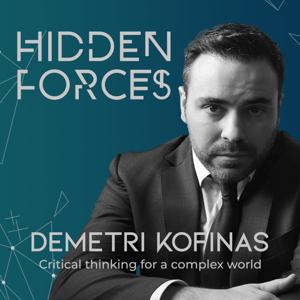
In Episode 446 of Hidden Forces, Demetri Kofinas speaks with geopolitical analyst and forecaster Kamran Bokhari about Trump's 20-point Gaza peace plan and the new security order taking shape in the Middle East.
Kamran first appeared on Hidden Forces in the days following the October 7th attacks to discuss the wider war unfolding between the U.S., Israel, and Iran, and how Hamas's attacks could serve as a catalyst for the remaking of the modern Middle East. In his subsequent appearances, he has provided critical context for understanding U.S., Israeli, and Iranian strategic aims and limitations, as well as the interests and constraints of other states in the region, including Saudi Arabia, Syria, and Turkey.
For all intents and purposes, Israel has won its war against the Islamic Republic of Iran. It has decimated both its conventional and unconventional forces and revealed to its proxies, affiliates, and supporters across the region—and even to its own people—that Iran is a weak and tottering power. With the initiation of Trump's 20-point Gaza peace plan and the cessation of hostilities in the Gaza Strip, we may be witnessing the emergence of a new security order in the Middle East—one that relies more on regional stakeholders, allowing the United States to reduce its direct exposure and the commitment of U.S. forces while still maintaining influence over regional politics.
Kamran and Demetri spend the first hour of their conversation recapping the Middle East's transformation over the last two years. They revisit Israel's systematic campaign against Hezbollah's leadership, the subsequent collapse of the Assad regime, and the consequences of the U.S.'s strategic strikes on Iran's known nuclear facilities. They also discuss the diplomatic fallout from Israel's recent attacks in Qatar, Prime Minister Netanyahu's subsequent apology call from the White House, and Washington's push for an international stabilization force in Gaza led by regional partners.
The second hour turns to what a new regional security architecture could look like and how U.S. strategy is shifting from direct management to burden-sharing among regional powers such as Turkey, Saudi Arabia, and Israel. They explore the practical implications of this emerging arrangement for Gaza—including discussions about an Arab-Muslim stabilization force, governance over the Palestinian territories, and a long reconstruction financed by Gulf and international donors—while setting realistic expectations for the creation of an independent Palestinian political entity over the next decade.
They conclude by assessing which countries stand to gain the most from Iran's retreat and the decimation of its proxies, closing with a frank discussion about America's polarized media ecosystem and the growing anti-Israel and antisemitic sentiments being expressed on both the American left and right.
Subscribe to our premium content—including our premium feed, episode transcripts, and Intelligence Reports—by visiting HiddenForces.io/subscribe.
If you'd like to join the conversation and become a member of the Hidden Forces Genius community—with benefits like Q&A calls with guests, exclusive research and analysis, in-person events, and dinners—you can also sign up on our subscriber page at HiddenForces.io/subscribe.
If you enjoyed today's episode of Hidden Forces, please support the show by:
Subscribing on Apple Podcasts, YouTube, Spotify, Stitcher, SoundCloud, CastBox, or via our RSS Feed
Writing us a review on Apple Podcasts & Spotify
Joining our mailing list at https://hiddenforces.io/newsletter/
Producer & Host: Demetri Kofinas Editor & Engineer: Stylianos Nicolaou
Subscribe and support the podcast at https://hiddenforces.io. Join the conversation on Facebook, Instagram, and Twitter at @hiddenforcespod Follow Demetri on Twitter at @Kofinas
Episode Recorded on 10/20/2025
Episode 445 is the ninth installment in the Hundred Year Pivot podcast series. In it, Demetri Kofinas and Grant Williams speak with Roger Mitchell, an entrepreneur and writer whose essay "The Answer Was Here All the Time," published in Grant Williams's 2025 compendium, explores faith, meaning, and the search for moral grounding in a contemporary West that feels increasingly unmoored and in epistemic freefall.
The conversation begins with a diagnosis of the cultural and spiritual malaise that seems to have taken hold of Western societies: the fraying of the social contract, the "boomer blues," as Roger Mitchell calls them, and why life inside "the machine" leaves us lonely, angry, afraid, and in dire need of real human contact.
The second half of the episode turns to a discussion about the dangers of politicizing religion and weaponizing faith in response to growing social and existential angst in Western societies. Demetri, Grant, and Roger explore Europe's identity crisis, the destabilizing effects of uncontrolled immigration, the cultural consequences of collapsing birth rates, the economic and social tragedy facing younger generations, and the broader epistemic collapse that has made consensus-building nearly impossible and replaced reasoned debate with a totalizing ambition for political domination.
Subscribe to our premium content—including our premium feed, episode transcripts, and Intelligence Reports—by visiting HiddenForces.io/subscribe.
If you'd like to join the conversation and become a member of the Hidden Forces Genius community—with benefits like Q&A calls with guests, exclusive research and analysis, in-person events, and dinners—you can also sign up on our subscriber page at HiddenForces.io/subscribe.
If you enjoyed today's episode of Hidden Forces, please support the show by:
Subscribing on Apple Podcasts, YouTube, Spotify, Stitcher, SoundCloud, CastBox, or via our RSS Feed
Writing us a review on Apple Podcasts & Spotify
Joining our mailing list at https://hiddenforces.io/newsletter/
Producer & Host: Demetri Kofinas Editor & Engineer: Stylianos Nicolaou
Subscribe and support the podcast at https://hiddenforces.io. Join the conversation on Facebook, Instagram, and Twitter at @hiddenforcespod Follow Demetri on Twitter at @Kofinas
Episode Recorded on 10/10/2025
In Episode 444 of Hidden Forces, Demetri Kofinas speaks with Dan Wang, author of Breakneck: China's Quest to Engineer the Future, about his pioneering new framework that compares the U.S. and China not along ideological lines or modes of governance, but by state capacity and the propensity to build.
According to Dan Wang, China is an "engineering state," focused on building big projects and diffusing technologies across its economy, while America is a "lawyerly society" that has become proficient at protecting what it has and obstructing progress in areas that are vital for its long-term prosperity. Kofinas and Wang compare each nation's leadership—staffed by engineers and mega-project managers in China and litigators and regulators in America—against each other and against each country's own history, and examine when and why the United States, in particular, went from being a country that excelled in constructing things to one more concerned with obstruction and safeguarding a comfortable way of life for the wealthiest and older segments of society.
The second hour is devoted to a discussion about the failures and unintended consequences of China's engineering state, most notably the devastating human impact of its one-child and zero-COVID policies. They also explore the similarities between the American and Chinese people, the prospects for conflict between the two superpowers, and what policies the United States can implement to get back to building again—like reforming immigration, advancing clean energy development, permitting the buildout of more housing, and increasing funding for basic scientific research and development.
Subscribe to our premium content—including our premium feed, episode transcripts, and Intelligence Reports—by visiting HiddenForces.io/subscribe.
If you'd like to join the conversation and become a member of the Hidden Forces Genius community—with benefits like Q&A calls with guests, exclusive research and analysis, in-person events, and dinners—you can also sign up on our subscriber page at HiddenForces.io/subscribe.
If you enjoyed today's episode of Hidden Forces, please support the show by:
Subscribing on Apple Podcasts, YouTube, Spotify, Stitcher, SoundCloud, CastBox, or via our RSS Feed
Writing us a review on Apple Podcasts & Spotify
Joining our mailing list at https://hiddenforces.io/newsletter/
Producer & Host: Demetri Kofinas Editor & Engineer: Stylianos Nicolaou
Subscribe and support the podcast at https://hiddenforces.io. Join the conversation on Facebook, Instagram, and Twitter at @hiddenforcespod Follow Demetri on Twitter at @Kofinas
Episode Recorded on 10/06/2025
In Episode 443 of Hidden Forces, Demetri Kofinas speaks with former investment banker turned global strategist Viktor Shvets, whose books The Great Rupture and The Twilight Before the Storm provide an audaciously comprehensive and compelling framework for understanding the forces shaping our world. These include technology and finance, amplified by climate change, demographics, and a series of socioeconomic and geopolitical shocks that have created the once-in-a-century superstorm now enveloping Western democracies.
Viktor and Demetri spend the first hour of this episode exploring Shvets' central critique of neoliberalism and why he believes that much of the current crisis stems from this failed ideology. They compare today's sociopolitical and economic dynamics to those that overtook the world in the 1930s, focusing on technology-driven social disruption, a decline in the marginal utility of labor, runaway asset prices, repeated financial shocks, pandemics, climate stress, migration, and a deep loss of faith in institutions, in our collective identity, and in our shared capacity to solve problems.
The second hour turns to questions of policy design, institutional reform, and portfolio strategy. Viktor and Demetri debate the pros and cons of redistributive solutions such as universal basic income and more heavy-handed fixes to America's broken healthcare system and antiquated educational model. They also stress-test alternative modes of sociopolitical organization such as despotic feudalism, techno-communism, or models that attempt to better balance the more extreme outcomes that a highly technologized society like ours would produce.
The two end the episode with a conversation about digital currencies and the disruptive potential that decentralized finance will have on money and banking. Kofinas also asks Shvets what assets he believes will outperform if governments are able to institute the types of reforms that he believes are necessary, and similarly, what assets investors will want to own if we trend toward some of the darker scenarios that he envisions.
Subscribe to our premium content—including our premium feed, episode transcripts, and Intelligence Reports—by visiting HiddenForces.io/subscribe.
If you'd like to join the conversation and become a member of the Hidden Forces Genius community—with benefits like Q&A calls with guests, exclusive research and analysis, in-person events, and dinners—you can also sign up on our subscriber page at HiddenForces.io/subscribe.
If you enjoyed today's episode of Hidden Forces, please support the show by:
Subscribing on Apple Podcasts, YouTube, Spotify, Stitcher, SoundCloud, CastBox, or via our RSS Feed
Writing us a review on Apple Podcasts & Spotify
Joining our mailing list at https://hiddenforces.io/newsletter/
Producer & Host: Demetri Kofinas Editor & Engineer: Stylianos Nicolaou
Subscribe and support the podcast at https://hiddenforces.io. Join the conversation on Facebook, Instagram, and Twitter at @hiddenforcespod Follow Demetri on Twitter at @Kofinas
Episode Recorded on 09/29/2025
In Episode 442 of Hidden Forces, Demetri Kofinas speaks with Kurt Campbell and Rush Doshi. Kurt is the chairman and co-founder of The Asia Group and served as the United States Deputy Secretary of State in the Joe Biden administration and as the Indo-Pacific Coordinator from 2021 to 2024. Rush also served under the previous administration in his capacity as the Deputy Senior Director for China and Taiwan Affairs on the National Security Council and is the author of the extremely influential book, "The Long Game: China's Grand Strategy to Displace American Order."
Kofinas, Doshi, and Campbell spend the first hour of their conversation discussing the nature of China's rise and the challenges it poses to American power, both in terms of its economic, technological, and military development and the scale at which it operates. They also explore the limitations of a 'go-it-alone' approach to great power competition in this new century and the importance of achieving what Kurt and Rush call "allied scale"—the notion that America's decisive advantage comes from its network of alliances. This first hour also includes a series of historical deep dives ranging from the Cold War and the Anglo-German rivalry to America's own period of rapid industrial development beginning in the late 19th century, how American industrial capacity proved decisive in shaping the balance of power in the 20th, and the lessons that can be learned when applying this history to the Chinese economy today.
The second hour is devoted to a conversation about what "allied scale" would look like in practice, the steps that would need to be taken in order to get us there, and the obstacles the United States and its historical allies face in implementing this approach. Demetri also asks Kurt and Rush whether the United States may be exaggerating the threat that China poses at the expense of more important domestic priorities, and the consequences to the stamina of America's alliances and the durability of international peace and security if it is.
The three conclude the second hour with an important conversation about Taiwan, including military contingencies, the diplomacy of deterrence, the public support (or lack thereof) for any type of security commitments to Taipei, and whether the United States is even in a position to win a war in the Pacific.
Subscribe to our premium content—including our premium feed, episode transcripts, and Intelligence Reports—by visiting HiddenForces.io/subscribe.
If you'd like to join the conversation and become a member of the Hidden Forces Genius community—with benefits like Q&A calls with guests, exclusive research and analysis, in-person events, and dinners—you can also sign up on our subscriber page at HiddenForces.io/subscribe.
If you enjoyed today's episode of Hidden Forces, please support the show by:
Subscribing on Apple Podcasts, YouTube, Spotify, Stitcher, SoundCloud, CastBox, or via our RSS Feed
Writing us a review on Apple Podcasts & Spotify
Joining our mailing list at https://hiddenforces.io/newsletter/
Producer & Host: Demetri Kofinas Editor & Engineer: Stylianos Nicolaou
Subscribe and support the podcast at https://hiddenforces.io. Join the conversation on Facebook, Instagram, and Twitter at @hiddenforcespod Follow Demetri on Twitter at @Kofinas
Episode Recorded on 09/23/2025
In Episode 441 of Hidden Forces, Demetri Kofinas speaks with Adam Posen, president of the Peterson Institute for International Economics, about the profound transformations underway in the global economy driven by America's transition away from being the world's primary insurance provider for international security to its exploiter-in-chief.
In a recently published Foreign Affairs essay titled "The New Economic Geography: Who Profits in a Post-American World?" Adam compares America's role in the post-World War II era to that of an insurance provider, underwriting global security by protecting international shipping lanes, providing deep and liquid capital markets, and enforcing international laws and standards that have formed the bedrock of the last 80 years of economic growth and prosperity.
Kofinas and Posen spend the first hour of this episode digging into Adam's insurance framework and why he believes the United States was the largest beneficiary of the system it created. They discuss some of the recent policy changes out of Washington and why they are transforming America's sphere of influence into something that looks more like a system of exploitation than a market for affordable insurance.
Adam Posen draws implications for the continued role of US Treasuries as a global safe asset and whether a reduction of foreign capital flows into dollars will ultimately prove stimulative for the resurrection of industrial ecosystems that the administration has identified as vital to American national security and the long-term prosperity of the United States. The two also consider the degree to which the increased premiums that Washington is now charging its allies can be justified by rising risks in the international security environment and by the unpopularity among the MAGA base for foreign U.S. involvement.
The second hour of their conversation turns to questions of execution—specifically, what is required for the successful implementation of a U.S. industrial policy. This includes a discussion about apprenticeships, skilled immigration, government-supported R&D, federal funding for university science and technology programs, and more integration and collaboration with allied economies.
Posen and Kofinas also discuss why the use of tariffs, subsidies, and export controls—including the CHIPS and Science Act—implemented during both Joe Biden's and Donald Trump's administrations have underdelivered. They also examine why the current administration's trade policies have been oddly more accommodative toward China than toward America's closest allies and why this will ultimately prove to be a losing strategy in the long-term.
Lastly, Demetri asks Adam for his view on what the recent battles between the Fed and the White House mean for the future of Fed independence and if Washington is laying the groundwork for a long-term rise in inflation expectations as it seeks to monetize its debt and deficits through an increasingly compliant and captured central bank.
Subscribe to our premium content—including our premium feed, episode transcripts, and Intelligence Reports—by visiting HiddenForces.io/subscribe.
If you'd like to join the conversation and become a member of the Hidden Forces Genius community—with benefits like Q&A calls with guests, exclusive research and analysis, in-person events, and dinners—you can also sign up on our subscriber page at HiddenForces.io/subscribe.
If you enjoyed today's episode of Hidden Forces, please support the show by:
Subscribing on Apple Podcasts, YouTube, Spotify, Stitcher, SoundCloud, CastBox, or via our RSS Feed
Writing us a review on Apple Podcasts & Spotify
Joining our mailing list at https://hiddenforces.io/newsletter/
Producer & Host: Demetri Kofinas Editor & Engineer: Stylianos Nicolaou
Subscribe and support the podcast at https://hiddenforces.io. Join the conversation on Facebook, Instagram, and Twitter at @hiddenforcespod Follow Demetri on Twitter at @Kofinas
Episode Recorded on 09/16/2025
In Episode 440 of Hidden Forces, Demetri Kofinas speaks with Paul Kingsnorth, a novelist, essayist, and former environmental activist who first came on many people's radars during the Covid-19 pandemic with the publication of his viral three-part series "The Vaccine Moment." His current work explores the intersection of technology, culture, and the divine. In his latest book, Against the Machine, Kingsnorth examines how our increasingly mechanized way of seeing and relating to the world—and to ourselves—has contributed to the death of Western culture, and what it would take to reclaim our humanity and save our souls.
Paul Kingsnorth and Kofinas spend the first hour of the episode tracing his journey from direct-action environmentalism through Buddhism and paganism to his eventual baptism into Orthodox Christianity and how that quest informs his critique of The Machine. They discuss AI as a false God and conduit through which humanity may be ushering in the anti-Christ and how Kingsnorth's Machine framework relates to Jacques Ellul's concept of technique and Iain McGilchrist model of the divided brain. They also explore why this historical moment feels "apocalyptic"—as if something is being unveiled—or perhaps more accurately as if something is being born through the wires and towers of the web and through the electric pulses and touchscreens of our connected devices.
The second hour turns to a conversation about how we should each respond in this consequential time, how we draw practical lines around technology, how to rebuild our communities, how to guard ourselves against charlatans and false prophets, and why love and nostalgia can guide us home.
Subscribe to our premium content—including our premium feed, episode transcripts, and Intelligence Reports—by visiting HiddenForces.io/subscribe.
If you'd like to join the conversation and become a member of the Hidden Forces Genius community—with benefits like Q&A calls with guests, exclusive research and analysis, in-person events, and dinners—you can also sign up on our subscriber page at HiddenForces.io/subscribe.
If you enjoyed today's episode of Hidden Forces, please support the show by:
Subscribing on Apple Podcasts, YouTube, Spotify, Stitcher, SoundCloud, CastBox, or via our RSS Feed
Writing us a review on Apple Podcasts & Spotify
Joining our mailing list at https://hiddenforces.io/newsletter/
Producer & Host: Demetri Kofinas Editor & Engineer: Stylianos Nicolaou
Subscribe and support the podcast at https://hiddenforces.io. Join the conversation on Facebook, Instagram, and Twitter at @hiddenforcespod Follow Demetri on Twitter at @Kofinas
Episode Recorded on 09/16/2025
In Episode 439 of Hidden Forces, Demetri Kofinas speaks with Douglas Rushkoff, a pioneering media theorist, best-selling author, and leading voice on how digital technologies shape societies, economies, and cultures.
Rushkoff and Kofinas spend the first hour of their conversation tracing the arc of Douglas' career, from his upbringing in a communal 1960s neighborhood in Queens and early work in theater to his role as a cultural and media critic chronicling the rise of the early internet. They explore how the internet's rave-like collaborative ethos and anarchic counterculture gradually gave way in the 1990s and early 2000s to a highly centralized, commercialized, and impersonal platform for economic and political consolidation and control.
The second hour turns to a conversation about consequences and remedies for our increasingly disembodied and highly intermediated world—with its blurring of public and private spaces, its hyperreality and epistemic dislocation, and its noticeable drift toward techno-feudalism and digital pacification.
We examine ways to rebuild sovereignty over our communities and how to reclaim our attention, reaffirm our relationships, and reassert our power as citizens over our governments and the large-scale commercial and technological forces shaping our lives.
Subscribe to our premium content—including our premium feed, episode transcripts, and Intelligence Reports—by visiting HiddenForces.io/subscribe.
If you'd like to join the conversation and become a member of the Hidden Forces Genius community—with benefits like Q&A calls with guests, exclusive research and analysis, in-person events, and dinners—you can also sign up on our subscriber page at HiddenForces.io/subscribe.
If you enjoyed today's episode of Hidden Forces, please support the show by:
Subscribing on Apple Podcasts, YouTube, Spotify, Stitcher, SoundCloud, CastBox, or via our RSS Feed
Writing us a review on Apple Podcasts & Spotify
Joining our mailing list at https://hiddenforces.io/newsletter/
Producer & Host: Demetri Kofinas Editor & Engineer: Stylianos Nicolaou
Subscribe and support the podcast at https://hiddenforces.io. Join the conversation on Facebook, Instagram, and Twitter at @hiddenforcespod Follow Demetri on Twitter at @Kofinas
Episode Recorded on 09/08/2025
In Episode 438 of Hidden Forces, Demetri Kofinas speaks with Charles Calomiris, former Chief Economist at the Office of the Comptroller of the Currency, about his forthcoming paper "How Stablecoins Will Transform Banking," which is based on a presentation he delivered at the Hoover Institution's annual monetary policy conference this past May.
Demetri and Charles spend the first hour of their conversation laying out what stablecoins are and why Calomiris believes they are poised to transform our standard units of account through a revolution in real-time payments and a wholesale reinvention of the banking system, monetary policy, and the role of the dollar internationally.
They discuss the significance of the recently signed "Genius Act," explore the importance of bank charter modernization, and consider the broad public benefits of separating loans from deposits—ranging from faster, programmable settlement and greater competition in financial services to a reduction of systemic risk in areas where bank lending has become increasingly overconcentrated.
The second hour is devoted to exploring some of the most important short- and long-term implications of stablecoin adoption, including:
(1) Antitrust concerns over natural monopolies and network effects in stablecoin payment rails.
(2) Near-term boost to demand for U.S. government debt, including the potential issuance of tokenized bills for gross real-time settlement.
(3) Longer-term prospect of moving away from the dollar as the primary unit of account toward consumer bundles tied to assets, goods, and services that better reflect people's spending patterns—along with the implications for monetary policy, seigniorage, capital flows, and the preservation of purchasing power in these new currencies.
Subscribe to our premium content—including our premium feed, episode transcripts, and Intelligence Reports—by visiting HiddenForces.io/subscribe.
If you'd like to join the conversation and become a member of the Hidden Forces Genius community—with benefits like Q&A calls with guests, exclusive research and analysis, in-person events, and dinners—you can also sign up on our subscriber page at HiddenForces.io/subscribe.
If you enjoyed today's episode of Hidden Forces, please support the show by:
Subscribing on Apple Podcasts, YouTube, Spotify, Stitcher, SoundCloud, CastBox, or via our RSS Feed
Writing us a review on Apple Podcasts & Spotify
Joining our mailing list at https://hiddenforces.io/newsletter/
Producer & Host: Demetri Kofinas Editor & Engineer: Stylianos Nicolaou
Subscribe and support the podcast at https://hiddenforces.io. Join the conversation on Facebook, Instagram, and Twitter at @hiddenforcespod Follow Demetri on Twitter at @Kofinas
Episode Recorded on 09/02/2025
In Episode 437 of Hidden Forces, Demetri Kofinas speaks with Marvin Barth, founder of Thematic Markets and former Chief Economist for International Affairs at the U.S. Treasury, who previously served at the Federal Reserve and the Bank for International Settlements and has led global macro and FX strategy on both the sell side and the buy side.
Marvin Barth and Demetri spend the first hour of their conversation unpacking his concepts of "localization," "being is believing," and "global entropy," and how these thematic frameworks can help us understand changes in growth, inflation expectations, interest rates, the underperformance of emerging markets, the limits of monetary policy, and the weakening of American soft and hard power.
The second hour begins with a conversation about the three pillars of Western primacy—mythology, economic dominance, and military superiority—and why Marvin believes that each of these has already peaked. They discuss how rivals to America's Post-World War II Liberal Order have used asymmetric warfare to thwart the West's dominance and are now in position to offer something radically different—a new sociopolitical and economic model that can rival Western capitalism and democracy.
The two also explore scenarios ranging from a rapid dissolution of the global system to the managed emergence of a new bipolar order with two sets of economic and political ideologies, supply networks, and technological standards. This includes a broad discussion about portfolio construction, the role of the dollar, and how the broad international adoption of stablecoins could prove to be one of the most consequential stories of the coming decades.
Subscribe to our premium content—including our premium feed, episode transcripts, and Intelligence Reports—by visiting HiddenForces.io/subscribe.
If you'd like to join the conversation and become a member of the Hidden Forces Genius community—with benefits like Q&A calls with guests, exclusive research and analysis, in-person events, and dinners—you can also sign up on our subscriber page at HiddenForces.io/subscribe.
If you enjoyed today's episode of Hidden Forces, please support the show by:
Subscribing on Apple Podcasts, YouTube, Spotify, Stitcher, SoundCloud, CastBox, or via our RSS Feed
Writing us a review on Apple Podcasts & Spotify
Joining our mailing list at https://hiddenforces.io/newsletter/
Producer & Host: Demetri Kofinas Editor & Engineer: Stylianos Nicolaou
Subscribe and support the podcast at https://hiddenforces.io. Join the conversation on Facebook, Instagram, and Twitter at @hiddenforcespod Follow Demetri on Twitter at @Kofinas
Episode Recorded on 08/26/2025
From the publisher's feed
Ranked by our users in the last 21 days

3,064 Listeners

588 Listeners

949 Listeners

897 Listeners

356 Listeners

260 Listeners

83 Listeners

456 Listeners
1,338 Listeners

369 Listeners
265 Listeners

218 Listeners
412 Listeners

86 Listeners

149 Listeners