
Sign up to save your podcasts
Or



Based on Podcast App listening data
ABOUT THE EPISODE:
Your kid has been to a program. Maybe two. Maybe four. Each one handed back a diagnosis list a little longer than the last, and none of it ever explained why nothing is sticking.
My guest uses a comparison in this one that stopped me cold. If your child had stomach pain, no surgeon would just open them up and look around. They would scan first. And yet with our kids we tend to go straight to treatment, treatment, treatment, without asking who this person actually is underneath the substance use. He calls it treating the problem inside the person instead of the person with the problem, and once you hear it you cannot unhear it.
Dr. Graham Husick is a clinical psychologist in Coeur d'Alene, Idaho, and the director of clinical assessment at the Lakeside Independence Program, which works with severe and complex mental health cases. Part of his job is reading the evaluations other people wrote about kids like ours, and he can tell you precisely what keeps getting left out of them.
We get into why he includes IQ testing in every evaluation, what your child's preferred substance choice tells him that they could never say out loud, and why he will usually steer a family toward paying out of pocket rather than running a psych eval through insurance. He also names something I had never heard put into words: why a kid who is finally doing well will sometimes walk straight back into the thing that nearly took them out. I did not have any of this intelligence when my son was in it, and I have thought about that a lot since.
If your child has cycled through program after program and you still cannot answer the question "but what is actually going on with them," start here.
YOU'LL LEARN:
EPISODE RESOURCES:
This podcast is part of a nonprofit called Hopestream Community
Learn about The Stream, our private online community for moms
Find us on Instagram here
Watch the podcast on YouTube here
Download a free e-book, Worried Sick: A Compassionate Guide For Parents When Your Teen or Young Adult Child Misuses Drugs and Alcohol
Hopestream Community is a registered 501(c)3 nonprofit organization and an Amazon Associate. We may make a small commission if you purchase from our links.
ABOUT THE EPISODE:
There is a version of a house where everyone moves quietly. You time your questions. You read the door slam before you read the room. You have gotten so good at it that you barely notice you are doing it anymore, and somewhere in there, one person's mood started running the whole place.
Cathy and I both lived there. I matched my son's emotional state toe to toe and had no skills to separate the two. Cathy handed so much authority over to her kids that her husband walked in the door every night and had to be the heavy, which put a wedge between them that added to their home’s dysfunction.
What we talk about in this episode is what pulled us out, and the term ‘emotional regulation’doesn’t adequately cover it. I made a decision while I was outlining this episode not to use that phrase, because I think it gets thrown around in a way that misses what you’re up against in the real world. Regulating is one thing. Planting your feet while a young person rages at you - and not picking up the rope - that takes something closer to durability. Stamina. Sturdiness.
Here is why we chose this topic: it is one of the most powerful things in this entire experience you are completely in charge of. You can’t control whether they show up for work, school or court. But this one is yours, and you can start on it today and feel something shift by the end of the week.
I also tell a story involving ten dollars and a vacuum, as a real world example of why emotional durability is crucial for your sanity and your child’s growth.
If you’re exhausted and need something to change this week, this is for you.
YOU'LL LEARN:
EPISODE RESOURCES:
This podcast is part of a nonprofit called Hopestream Community
Learn about The Stream, our private online community for moms
Find us on Instagram here
Watch the podcast on YouTube here
Download a free e-book, Worried Sick: A Compassionate Guide For Parents When Your Teen or Young Adult Child Misuses Drugs and Alcohol
Hopestream Community is a registered 501(c)3 nonprofit organization and an Amazon Associate. We may make a small commission if you purchase from our links.
ABOUT THE EPISODE:
You have probably rehearsed the apology. I'm sorry I didn't catch this sooner. I'm sorry I wasn't a better parent. I'm sorry this is happening to you. If some version of that speech runs on a loop in your head, this quick solo episode is me asking you to put it down.
Real accountability matters. If there is something you actually did that caused harm, owning it is valid and important. But that is not the same as taking responsibility for your kid's choices, their biology, a disease you didn't cause, or life's timing. Most of the guilt I hear from parents lives in that second category, and it is quietly stealing the energy you need for what's sitting right in front of you.
In this episode I talk about why so much of what we call guilt is actually something else wearing a disguise, and I give you a litmus test that tells you in one question whether you're making a real apology or doing something else entirely.
I also take you back to one of the heaviest seasons of my own life, when my son was transported to wilderness therapy at 16 and I spent months buried under a mountain of shame. What I was doing during that time, and what I wasn't doing, taught me the difference between guilt that sharpens how you show up and guilt that just corrodes. I close with a short pen and paper exercise that might leave you staring at a nearly empty page, in the best possible way.
There is no award for the most guilt-ridden parent on the planet. If there were, I would have already won it. Consider this your permission slip.
YOU'LL LEARN:
EPISODE RESOURCES:
This podcast is part of a nonprofit called Hopestream Community
Learn about The Stream, our private online community for moms
Find us on Instagram here
Watch the podcast on YouTube here
Download a free e-book, Worried Sick: A Compassionate Guide For Parents When Your Teen or Young Adult Child Misuses Drugs and Alcohol
Hopestream Community is a registered 501(c)3 nonprofit organization and an Amazon Associate. We may make a small commission if you purchase from our links.
ABOUT THE EPISODE:
There's an emotion most of us are carrying that we don't talk about, because we're pretty sure we're not allowed to feel it. Anger. Anger at where our kid's choices have led our family. Anger at what they're doing to themselves. And underneath it, a heavy layer of guilt for feeling any of it at all.
In this solo episode, I'm getting honest about it, starting with a distinction that changes everything: anger at your child is not the same as anger at the situation. One of them usually isn't anger at all. It's grief wearing a really convincing mask, and it needs a completely different response.
There's a cultural script that says good parents don't get angry at a struggling kid. We're supposed to be endlessly patient, compassionate, calm. I have yet to meet one person who pulls that off all the time. So the anger goes underground, and it leaks out sideways: sarcasm, silence, blowups over nothing, or shame that quietly eats at you while you look perfectly fine on the outside.
I'm also telling you my McDonald's parking lot story, the day my anger completely took the wheel and I said things to my son I never meant. I'm not exempt from any of this. Nobody is.
Then I'll walk you through a different way to see anger entirely, one that turns it from something that owns you into something that informs you, plus real things you can do with it starting today.
If you've been carrying anger and beating yourself up for feeling it, come listen. You are so.not.alone.
YOU'LL LEARN
EPISODE RESOURCES:
This podcast is part of a nonprofit called Hopestream Community
Learn about The Stream, our private online community for moms
Find us on Instagram here
Watch the podcast on YouTube here
Download a free e-book, Worried Sick: A Compassionate Guide For Parents When Your Teen or Young Adult Child Misuses Drugs and Alcohol
Hopestream Community is a registered 501(c)3 nonprofit organization and an Amazon Associate. We may make a small commission if you purchase from our links.
ABOUT THE EPISODE:
This episode is long overdue, and I know many of you have been waiting for it. Over the past two to three years, the conversations in our community have shifted. It used to be all about opiates and fentanyl. Now a huge number of our moms are watching their kids change right in front of them because of high-potency THC products, and it is happening fast. So I brought together three people with very different vantage points on THC-induced psychosis and what it is doing to developing brains.
First you'll hear from Lynne, a battle-tested mom from The Stream who is living this right now with her son. She shares what the early signs looked like in her home, what she wishes she had known, and the one shift that changed her conversations with him.
Then I sat down with Dr. David Rowe, Director of Neuropsychology at United Assessment. He explains what psychosis actually looks like (it is rarely what you see in the movies), when it becomes a medical emergency, and how a solid psychological evaluation can finally answer the question every parent asks: what is driving the bus?
Finally, Stefan Bate, co-CEO of Jaywalker Lodge, returns to the show. He has spent almost two decades in this field, and what he is seeing in treatment today stopped me in my tracks. The product your kid is using is not the marijuana you remember. Not even close.
This is a heavy topic, but you will leave with real information and real hope, because recovery is possible. My guests see it happen every day.
If you have ever looked at your child and wondered, what am I actually seeing right now, this episode is for you.
YOU'LL LEARN
EPISODE RESOURCES:
This podcast is part of a nonprofit called Hopestream Community
Learn about The Stream, our private online community for moms
Find us on Instagram here
Watch the podcast on YouTube here
Download a free e-book, Worried Sick: A Compassionate Guide For Parents When Your Teen or Young Adult Child Misuses Drugs and Alcohol
Hopestream Community is a registered 501(c)3 nonprofit organization and an Amazon Associate. We may make a small commission if you purchase from our links.
You find the vape pen, or the pills, or the empty bottle at the bottom of the laundry basket. You take it, because that was the boundary. Within minutes your house goes from zero to two hundred: threats, slammed doors, a kid you barely recognize. Every instinct says respond right now, and if you are like Cathy and me, you do. Then you spend the next day trying to undo everything you said.
This episode is the practical companion to the self-coaching questions I shared in episode 328. Cathy and I walk through what we are calling Stream Vignettes, composite scenarios pulled from years of coaching calls, community posts, and our own homes. The confiscation that explodes. The natural consequence you have to sit through with your heart in your throat. The suicide threat that arrives attached to a demand for money. The family vacation you keep hoping will fix things.
For each one, we get into the questions that slow you down before you react, starting with the one we ask first every single time. We also cover what these questions are not for, which is a conversation I clearly needed about fifteen years ago.
What stayed with me most is something we kept circling back to: there is no expiration date on your response. Nothing requires you to handle the worst moment of your week at three in the morning. Cathy and I both have stories about what happens when you try.
If your home has a moment like this coming, and most of ours do, keep this one where you can find it.
YOU'LL LEARN:
EPISODE RESOURCES:
This podcast is part of a nonprofit called Hopestream Community
Learn about The Stream, our private online community for moms
Find us on Instagram here
Watch the podcast on YouTube here
Download a free e-book, Worried Sick: A Compassionate Guide For Parents When Your Teen or Young Adult Child Misuses Drugs and Alcohol
Hopestream Community is a registered 501(c)3 nonprofit organization and an Amazon Associate. We may make a small commission if you purchase from our links.
Trigger Warning: this episode discusses loss of a child due to substance use. Please decide if this is the right time to listen.
A few weeks before this episode was recorded, one of the moms in our community lost her son. He had been through treatment, through sober living and had the most supportive family. His parents had done everything possible, with grace and with love, and he still lost his battle with addiction. Cathy and I went back and forth about whether to talk about it - because we never want to add to the fear that already lives in your chest every single day.
But we’re asking you to do hard things, and that means we have to do the same. This is the reality of what our kids are facing. High-potency THC is not the weed of twenty years ago, and we are talking to parents every week whose kids are in crisis from it, not from fentanyl, not from meth, but from what many still consider the ‘safe one’.
We also talk about something we haven’t directly addressed on this show: vicarious trauma in our kids. The bullying on their phones where we can’t see it. The friend who overdosed in front of them. The violence at school they never mention. These are often the invisible fire under the behaviors that make no sense to you.
One thing stayed with me after we finished recording: the idea of speaking to your child as if every word might be the last they ever hear from you. Not in a morbid way, but as a filter. As a way back to what matters most.
If you have been putting something off because it feels too hard, or not quite urgent enough yet, this one is for you.
YOU’LL LEARN:
EPISODE RESOURCES:
This podcast is part of a nonprofit called Hopestream Community
Learn about The Stream, our private online community for moms
Find us on Instagram here
Watch the podcast on YouTube here
Download a free e-book, Worried Sick: A Compassionate Guide For Parents When Your Teen or Young Adult Child Misuses Drugs and Alcohol
Hopestream Community is a registered 501(c)3 nonprofit organization and an Amazon Associate. We may make a small commission if you purchase from our links.
When Beth Hillman's son came home from wilderness treatment, the first crisis didn’t come from him. It came from her. Standing in the driveway, anxious and spiraling, she watched her teenage son look at her calmly and say, "Mom, look at me. I'm gonna be okay." Her first thought was not relief. It was, oh! I’m in big trouble.
Her son had come home with more access to his thinking brain than she had. He also came home to a mother who had not yet done her own work and was carrying expectations she could not even name. When he finally told her, "Mom, your expectations of how this is gonna go are going to wreck me," Beth had to get honest about what she was really asking of him.
Today Beth is a double certified life and parent coach, host of the Parenting Post-Wilderness podcast, and a familiar voice in our community, where she leads sessions and groups for parents in the fragile season after treatment.
In this conversation, we get real about the first 90 days after a child comes home, from both sides. Why kids may agree to everything just to get home, why pushback on a home plan might be the best sign you can get, and what your child is actually walking back into when they return to the house where the holes in the doors are. Beth names the piece most home plans are missing, and I think it will change how you prepare.
If your child is coming home from treatment soon, or is already home and wobbling, this episode was made for you.
YOU’LL LEARN:
EPISODE RESOURCES:
This podcast is part of a nonprofit called Hopestream Community
Learn about The Stream, our private online community for moms
Find us on Instagram here
Watch the podcast on YouTube here
Download a free e-book, Worried Sick: A Compassionate Guide For Parents When Your Teen or Young Adult Child Misuses Drugs and Alcohol
Hopestream Community is a registered 501(c)3 nonprofit organization and an Amazon Associate. We may make a small commission if you purchase from our links.
ABOUT THE EPISODE:
There are days in this journey when the weight of it all becomes almost too much to carry. You are still showing up, still trying, still breathing through a kind of pain most people around you will never fully understand. A few years ago, I sat down and wrote something for you, for the mom and the dad and the grandparent in the thick of it, and I tucked it away. Today I pulled it back out.
This piece first appeared on Insight Timer, and it became the most-listened-to content there. I dusted it off because I needed something creative, and because I believe these words may land with where you are today. The world I recorded it in and the community we are now are not so different, and what I felt then, I still feel now.
This is not an interview. There is no guest, no framework, no five-step plan. It is just me, speaking out loud the things I wanted every struggling parent to hear in a heavy moment.
In this episode I ask you to set down, just for a few minutes, the weight you have been carrying. Not forever. Not in denial. Just long enough to breathe, to remember who you are outside of this fight, and to hear something true: this is not your whole life. You are still in there. And you are stronger than this feels right now.
If you are exhausted and need someone to remind you that you are not alone, this one is for you.
EPISODE RESOURCES:
This podcast is part of a nonprofit called Hopestream Community
Learn about The Stream, our private online community for moms
Find us on Instagram here
Watch the podcast on YouTube here
Download a free e-book, Worried Sick: A Compassionate Guide For Parents When Your Teen or Young Adult Child Misuses Drugs and Alcohol
Hopestream Community is a registered 501(c)3 nonprofit organization and an Amazon Associate. We may make a small commission if you purchase from our links.
When my son Enzo was using fentanyl and Xanax and blowing up every structure I tried to build around him, I kept asking the wrong question. What I wasn’t asking was what was happening inside him that he couldn’t put words to. He was a teenager with an unmedicated ADHD brain, getting more reinforcement and belonging from the drug world than anywhere else in his life, and he had no way to tell me that.
Enzo is back on the podcast today with something specific: the things kids who are actively struggling can’t necessarily say but really wish their parents understood. When I asked what he would have wanted me to know back then, Enzo told me about a kid he recently mentored who, when asked the same question, said the only thing he wanted his parents to know was, “I’m trying.” And Enzo realized that was exactly it. Not that the drugs were working. Not that his choices were okay. Just that from inside his brain, he was doing something that felt like trying.
Enzo is now the founder of Life Strategies Mentors, a mentoring program for young men navigating recovery and reintegration. He’s in his late-twenties, expanding his team, building a life that not long ago did not seem survivable.
This conversation covers a lot of ground, from the fish love parable that reframed how I think about parental expectations, to what ADHD does to the brain’s relationship with substances, to why kids sometimes listen to a near-stranger before they will listen to their own parents. That last one is not a failure of the relationship. It is biology. Knowing that changes something.
If you have been watching your kid and thinking they are not even trying, this one is for you.
YOU’LL LEARN:
EPISODE RESOURCES:
This podcast is part of a nonprofit called Hopestream Community
Learn about The Stream, our private online community for moms
Find us on Instagram here
Watch the podcast on YouTube here
Download a free e-book, Worried Sick: A Compassionate Guide For Parents When Your Teen or Young Adult Child Misuses Drugs and Alcohol
Hopestream Community is a registered 501(c)3 nonprofit organization and an Amazon Associate. We may make a small commission if you purchase from our links.
From the publisher's feed
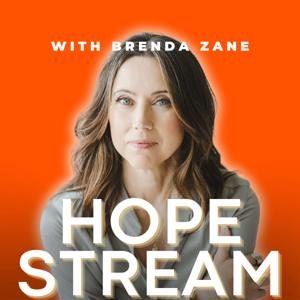
When your teen or young adult is misusing drugs or alcohol, you need more than just tactics—you need hope, healing, and a path forward for your entire family.
Hopestream delivers expert…
Episodes features:
Whether you're dealing with a teen or young adult's drug use, alcohol misuse, or co-occurring mental health challenges, Hopestream offers the comprehensive support other parenting and addiction podcasts miss. This is your safe space to heal, learn, and discover you're not alone.
New episodes weekly. Join us between the episodes at hopestreamcommunity.org.
Ranked by our users in the last 21 days
2,589 Listeners
3,326 Listeners
1,604 Listeners

12,681 Listeners

2,509 Listeners

2,020 Listeners

1,533 Listeners

1,999 Listeners

31,774 Listeners

5,105 Listeners

132 Listeners

85 Listeners

1,107 Listeners

18,949 Listeners

2,095 Listeners