
Sign up to save your podcasts
Or

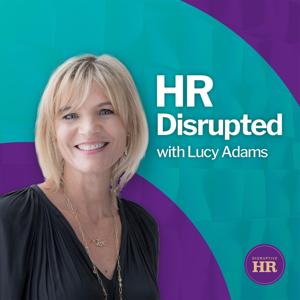


HR may have moved beyond its traditional role, is it really ready to become something bigger?
For organisations to succeed, they need engaged people working in high-performing teams. But creating that kind of workplace requires HR to think differently about how we align purpose, values, strategy, processes and behaviour, and how we create cultures that are not only high-performing, but fair, kind, inclusive and sustainable.
Join Lucy and David Liddle as they discuss replacing adversarial grievance and disciplinary procedures with a resolution-first approach, why compliance and compassion aren’t opposites, how traditional processes can destroy trust and relationships, and what becomes possible when we assume that adults are capable of resolving many workplace issues themselves.
They also look at the future role of HR: spending less time managing bureaucracy and more time listening, interpreting people data and helping leaders anticipate what may happen next. Finally, they explore why AI is fundamentally a people and culture issue and the opportunity for HR to shape its adoption so that it augments human capability without diminishing judgement or connection.
David is CEO of the TCM Group and President of the People and Culture Institute. For more than 25 years, he and his team have worked with organisations around the world on conflict resolution, leadership development and cultural change.
Chapters
In this episode of HR Disrupted, Lucy Adams is joined by Andy Doyle, Chief People and Agent Officer at Kantar. While much of the conversation around AI focuses on hype or fear, Andy shares a grounded, practical perspective on how Kantar has embedded AI agents into the heart of its HR operations.
Lucy and Andy dig into why Kantar chose to take this path and how their ambitions evolved along the way. What started as a cost and efficiency conversation quickly expanded into something far more strategic – rethinking how work gets done and what HR’s role should be in that shift. Andy shares the realities behind building AI capability in-house, the importance of leadership courage, and why HR professionals need to get comfortable owning technology, not just responding to it.
The discussion also tackles the implications for the HR function itself. As AI agents take on more transactional work, what’s left for HR? Andy offers a clear view: this is an opportunity for HR to become more impactful, not less – but only if it’s willing to step up, experiment, and lead from the front. This episode is a practical look at what it really takes to move from AI curiosity to meaningful transformation.
Chapters
About Andy Doyle
Useful Links
n this episode, Lucy Adams is joined by Eva Murciano to explore one of the biggest challenges facing organisations today: how to keep careers moving in environments where people stay for a long time. Drawing on Eva’s experience at the European Central Bank, they unpack the tension between having a highly committed, purpose-driven workforce and the unintended consequences of low turnover; stagnation, limited progression, and skills that risk becoming outdated.
Their conversation challenges the traditional idea of career progression as a ladder to climb. Instead, Lucy and Eva discuss the need to reframe careers around growth, skills, and experiences. They explore why both employees and managers often resist internal mobility, and what organisations can do to shift mindsets. From redefining success to making movement the norm rather than the exception, this episode offers practical insight into what it really takes to future-proof careers.
Eva also shares how the ECB is experimenting with a structured approach to mobility through its “3–5–8 model,” encouraging employees to think proactively about their next move. It’s an honest discussion about what works, what’s still evolving, and why HR has a critical role to play in nudging both individuals and leaders towards more dynamic, flexible career paths.
Chapters
About Eva Murciano
Contact Eva https://www.linkedin.com/in/eva-murciano-831a5a13/
Useful Links
In this episode, Lucy Adams and Karen Moran take stock of the people and work trends that are likely to shape 2026. Drawing on what they’re seeing across organisations right now, they focus on the changes that genuinely matter for HR and leaders, from shifting employee expectations to the growing pressure on organisations to operate with greater trust and transparency.
They explore how ideas about leadership, performance and culture are continuing to evolve, why traditional HR models are being stretched, and what this means for areas such as hybrid working, capability building and organisational design. The discussion highlights where HR can add the most value over the next few years, and where it may need to step back from long-established but increasingly unhelpful practices.
Lucy and Karen also reflect on what this moment means for HR more broadly, and how teams can prepare for 2026 in a way that is pragmatic, human and grounded in reality.
The HR Disrupted podcast will be taking a break due to other commitments but the conversation very much continues! For more insights from Lucy and the team at Disruptive HR, check out the website at www.disruptivehr.com.
Chapters
00:00 – Looking ahead: Why 2026 is a turning point for work
Find out more about Disruptive HR: www.disruptivehr.com
HR doesn’t struggle with not having enough data - we’ve got tons of it. Engagement scores, churn and absenteeism rates, performance ratings, DEI metrics - the works. But can we honestly say we’re brilliant at using that data to drive our people strategies? The answer is probably, “not yet.” So, this episode explores how we can get better at turning data into real insight and how that insight can help us build more trust, better performance, and stronger cultures. Lucy is joined by Jenny Deaborn who’s spent her career helping organisations do exactly that. Her new book, The Insight-Driven Leader, is a practical roadmap for HR teams and leaders who want to make analytics genuinely useful and human.
Drawing on over 100 one-to-one interviews with CEOs, CHROs and board members, Jenny explains why the best organisations aren’t using “magic” HR metrics – they’re just using familiar ones with far more rigour. She unpacks why “regrettable attrition of top performers in critical roles” beats a single company-wide turnover number every time, how to define “top performer” and “critical role” with real fidelity, and why every good HR metric should be in service of a small handful of measures the board genuinely cares about.
They then dig into what it really means to be an insight-driven leader rather than just “data-informed”: connecting people data with customer metrics to show where revenue, risk and growth are truly sitting in your workforce. Jenny shares practical examples of using AI to join up disparate data sources, warning that technology is no longer the barrier – mindset and culture are.
Chapters
02:15 – Jenny’s story: neurodiversity, quotas and the credibility that comes with numbers
08:35 – Business-first HR: the tiny set of people metrics CEOs and boards really care about
16:50 – From data-informed to insight-driven: joining HR, CRM and ERP data (and where AI helps)
25:20 – Is your culture ready for analytics? Plus practical first steps for aspiring insight-driven CHROs
Disruptive HR
Find out more about Disruptive HR: www.disruptivehr.com
Contact Jenny https://www.linkedin.com/in/jennydearborn/
Lucy and Karen get honest about one of HR’s toughest challenges: helping leaders and managers actually change how they behave. Drawing on their own “humiliations” as former HR Directors, they unpack why influencing senior leaders can feel so hard – from fear of getting it wrong, to loss of status, to simple overload – and introduce four familiar resistance types: the Defiant, the Intellectual, the Busy Operator and the Reluctant.
They share ten practical ways to shift behaviour without a 50-slide deck. You’ll hear how to start with sharp, leader-focused questions instead of programmes, use commercial numbers to earn attention, set clear people outcomes rather than more process, offer genuine choice, and make change feel tiny and doable through simple nudges. They also explore how to swap “HR as trainer” for peer-to-peer learning, use more human language, and tailor your message to different decision-making styles – from fast-moving Drivers to cautious “steady hands”.
Finally, Lucy and Karen show how to stop pouring energy into the hardest resistors and instead “go with the energy” – working first with early adopters, then using their success to win over results-focused pragmatists.
Find out more about Disruptive HR: www.disruptivehr.com
One of the biggest challenges facing HR is the perennial challenge of leadership capability. Despite years of investment in programmes, frameworks, and workshops, many organisations still struggle to see real behavioural change. The world around us is moving faster, the expectations on leaders are higher, and yet our development approaches can still feel generic, theoretical, and removed from the realities of day-to-day work.
But what if technology - and specifically, AI - could help us do it differently? Instead of a one-size-fits-all course, what if every manager could have a personalised coach in their pocket that gives them real-time, practical guidance in the moment they need it most? To explore the benefits and risks of AI coaching, Lucy is joined by Anand Chopra-McGowan, Managing Director, Europe at Valence.
Anand explains how Nadia, Valence’s AI coach, learns your context (company principles, programmes, your team) and supports both the “small moments” such as a tricky feedback chat, and the “big moments” like onboarding and performance reviews. He shares a live example of using Nadia minutes before a meeting, why perfect memory beats good intentions, and how the tool integrates where managers already are .
We dig into trust and ethics, what data Nadia uses, and how clients are measuring value - from time saved on reviews to uplift in leadership effectiveness scores and store-level customer outcomes. Anand’s deployment advice is refreshingly practical: point the coach at high-friction moments in your HR calendar, customise to your ways of working, and use early wins to convert sceptics.
00:29 — Why traditional leadership development stalls
Discover more about Disruptive HR
Contact Anand: https://www.linkedin.com/in/achopramcgowan/
As we know - AI isn’t something that’s coming in the future — it’s already here, and it’s already reshaping how we hire, develop and engage our people. The pace of change can feel daunting at times, but the big challenge for us in HR is how we shift from dabbling with new tools to really using AI as a strategic enabler. In this episode, Lucy explores the key opportunities and risks — from ethics and trust, through to leadership development, talent management and employee engagement with the help of one of the leading voices in people analytics and digital HR David Green.
David shares research showing more companies now have dedicated AI governance for HR, and why moving from “jobs” to “tasks and skills” matters if we want technology to augment work rather than trigger blunt headcount cuts. The conversation explores what great employee listening looks like when you blend surveys with collaboration and behavioral signals (at aggregate level), plus the implications for hybrid work, org design, and keeping the human experience at the centre.
For HR professionals wondering where to start, David’s advice is simple: build AI literacy, experiment hands-on, identify a few high-value use cases tied to business priorities, and iterate with a sponsor. The capability stack HR needs now ranges from data/AI literacy and stakeholder influence to human-centred design, storytelling, and emotional intelligence—so we can automate the repetitive, personalise the meaningful, and lead the transformation with credibility.
Chapters
00:03 — Meet David Green
07:04 — What’s actually being used
Contact David: www.insight222.com
Discover more about Disruptive HR
In HR we have always tended to prefer standardisation. The instinct to make everything and to treat everyone in the same way comes from a mixture of practicality, compliance, and tradition. Standardisation makes processes easier to administer at scale, creates the appearance of fairness, and reduces the risks of inconsistency. For HR teams under pressure to manage large workforces efficiently, there is comfort in producing a set of policies or frameworks that apply equally to all. However in recent years there has been an increasing demand for the personalisation of HR, to counteract the limitations of having standard, universally applied processes. In this episode Lucy is joined by her co-founder of Disruptive HR, Karen Moran to consider when HR should be customised or personalised – and when it should be a standard, consistent approach for all.
They look at when it makes sense to have standardisation and the risks are of being too rigid in your uniformity. They give three practical examples of customisation in action, how AI helps to personalise and they also discuss how to personalise without adding complexity, by using “employee personas” to design around real people.
Discover more about Disruptive HR
Chapters
00:03 – Why HR Loves Standardisation
In this episode, Lucy digs into one of the big questions right now: if most organisations have landed on hybrid, why does it still feel so clunky? Ranya Nehmeh, senior HR strategist, lecturer and co-author of In Praise of the Office: The Limits to Hybrid and Remote Work - joins to unpack why many hybrid set-ups deliver the “messy middle”: full calendars, half-empty offices and confused norms. She makes the case that the office still offers something distinctive: spontaneous interactions, faster trust-building and the sort of collaboration you can’t schedule into a diary.
Lucy and Ranya explore the long-term culture risks of ineffective hybrid working such as lower discretionary effort, individualism over collaboration, and promotion decisions skewed by proximity bias. They look at practical ways to make hybrid better including designing anchor days around activities that need co-location, fixing meeting hygiene and measuring outcomes not optics. They also discuss a divide many miss - pre- versus post-pandemic hires—and how HR can act as “architect of connection” through extended onboarding, mentoring across cohorts, and rituals that make everyone visible.
This episode looks at how you build flexibility and a healthy culture. The answer isn’t blanket policies; it’s clarity and intention. Think presence with purpose, flexibility with structure, and leaders equipped to have grown-up team conversations about what works now—for the work, the customer and the people involved.
Chapters
(00:03) The Future of Hybrid Work
(15:24) Optimizing Hybrid Work Strategies for Success
(21:54) Bridging Pre & Post-Pandemic Workplace Gap
(26:15) Hybrid Work Flexibility and Structure
(31:17) Importance of Office Relationships
(34:53) Exploring Hybrid Work Strategies
Contact Rayna https://www.linkedin.com/in/ranyanehmeh/
Discover more about Disruptive HR
From the publisher's feed
58 Listeners

912 Listeners
1,541 Listeners
2,663 Listeners

1,160 Listeners
563 Listeners

921 Listeners

843 Listeners

821 Listeners
238 Listeners
174 Listeners
249 Listeners
210 Listeners

623 Listeners
1 Listeners