
Sign up to save your podcasts
Or

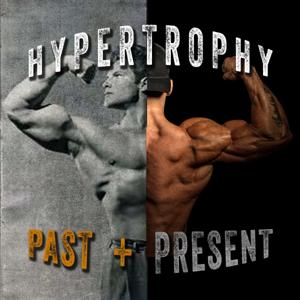


In this episode of Hypertrophy Past & Present, Jake and Chris break down the resurgence of “advanced” training techniques like clusters, supersets, giant sets, pre-exhaust, drop sets, and rest-pause. Using an early Chuck Sipes “heavy-light” split as an example of early bodybuilding plans that incorporated some advanced methods, the conversation then explains why most of these methods are at best time-saving rather than stimulus enhancing.
The episode finishes with Jake and Chris discussing a “physiological drop set” concept, which may increase recruitment levels without suffering from the same fatigue problems as other advanced methods.
Key topics include:
-Chuck Sipes’ early “heavy-light” superset program
-Why most supersets (agonist or antagonist) reduce stimulus rather than increase it
-Why pre-exhaustion methods don't work
-Why classic drop sets tend to be the worst “advanced technique”
-Rest-pause vs clusters
-A “physiological drop set” idea
In this episode of Hypertrophy Past & Present, Jake and Chris analyse a Golden Era training plan attributed to Larry Scott and Vince Gironda, using it as a lens to explore how hypertrophy programming evolved after the introduction of anabolic drugs. From there, the conversation pivots into a deeper examination of modern debates around exercise selection, “redundant” movements, single vs multi joint training, and the current discussions around form. Chris introduces voluntary activation deficits as the unifying physiological principle.
Key topics include:
In this episode of Hypertrophy Past & Present, Jake and Chris kick off 2026 with a Part 2 follow-up aimed at coaches. Last episode was about the mistakes lifters make when they return to the gym, this week is about the mistakes coaches make when they design and deliver programs to clients. The conversation starts with Bob Hoffman’s time-efficient “working man” full-body routine and why the plan made sense for its context, while also pointing out where it falls short. From there, the episode pivots into the two main problems coaches have to solve today: time constraints and novelty expectations, plus practical strategies that can be used to solve these problems and deliver effective sessions.
Key topics include:
-Bob Hoffman’s minimalist full-body routine for busy lifters
-Simple exercise swaps that improve full-body development with limited equipment
-The two constraints coaches must solve: novelty and time
-How to give the illusion of novelty without compromising programming efficacy
-Time efficiency: avoiding cardiovascular-limited sets, smarter exercise order, and exercise structuring
-Using rest periods to add value instead of feeling like dead time
-A better approach to 30-minute PT sessions
In this episode of Hypertrophy Past & Present, Jake and Chris take a practical, end-of-year look at the most common mistakes people make when returning to the gym, whether they’re starting fresh in January or jumping back in after time off. Using a pre-steroid era full-body routine attributed to George Eiferman the discussion highlights what earlier bodybuilders consistently got right.
From there, the conversation expands into current gym programming trends, including unstable exercise selection, cardio-driven exercises, excercise novelty, poor progress tracking, and misguided injury-prevention strategies.
Key topics include:
-George Eiferman's "favourite" 1952 full-body routine
-Why unstable exercises reduce motor unit recruitment
-The problem with excessive cardiovascular demand
-Why changing exercises too often prevents meaningful hypertrophy
-Progressive overload as a tracking tool
-Muscle damage, repeated bout effect, and the risks of rushing back after time off
-Why warm-up sets aren't the same as 'warming up'
In this episode of Hypertrophy Past & Present, Jake and Chris break down Mike Mentzer’s “most productive” routine and use it as a turning point to discuss how training trends shifted across the Golden Era. From there, the conversation shifts to how anabolic steroid use increases tendon and ligament rupture risk and whether the rise of higher-rep training, shorter rest periods, machines, slower eccentrics, and lower frequency in the post-steroid bodybuilding era might partly reflect an unconscious attempt to manage connective tissue risk as drug use escalated.
Key topics include:
In this episode of Hypertrophy Past & Present, Jake and Chris shift from the Silver Era into the early anabolic era by analysing a Golden Era training plan from Ken Waller. Using Waller’s 1975 routine as a case study, they explore how bodybuilding training changed as anabolic use became more common. The discussion then transitions into a deep dive on the Weekly Net Stimulus model and why hypertrophy must be understood at the muscle fibre level.
Key topics include:
In this episode of Hypertrophy Past & Present, Jake and Chris revisit the Silver Era through one of the most iconic Silver Era bodybuilders, John Grimek, and his bulking plan. They then discuss what muscle protein synthesis (MPS) and muscle protein breakdown (MPB) really mean, dismantling the idea that “elevated MPS = muscle growth”.
Key topics include:
-John Grimek’s full-body gaining routine and the practical logic of Silver Era plans
-MPS vs MPB and net protein balance
-Why you can’t assume elevated MPS always reflects hypertrophy or protection from atrophy
-How steroids physiologically make dieting and comp prep "easier"
In this episode of Hypertrophy Past & Present, Jake and Chris go back to 1945 and break down Clancy Ross’ pre-contest “definition” routine to show how Silver Era lifters tried to get lean using their gym programming. From there they pivot into dieting and how caloric restriction, stress, glycogen, and glucocorticoids actually affect muscle protein synthesis and muscle protein breakdown.
Key topics include:
In this episode of Hypertrophy: Past & Present, Jake and Chris use a 1967 Bill Pearl program to jump from the silver era into the early steroid era, showing how training volume exploded once anabolics entered the picture. They contrast Bill Pearl’s high-volume, six-day split and contrast it with his earlier natural-era programming, before diving into a new study comparing heavy versus light loads in trained lifters and what it really means for stimulating reps, volume load, and rep range choices.
Key topics include:
In this episode of Hypertrophy: Past & Present, Jake and Chris dive into a Bill Pearl full-body routine, using it as a bridge between the pre-steroid silver era and the early anabolic era. From there, they shift into part two of their sleep series, unpacking how sleep loss influences muscle atrophy and recovery in natural lifters.
Key topics include:
From the publisher's feed

12,099 Listeners

389 Listeners

1,424 Listeners

1,261 Listeners
344 Listeners
375 Listeners

372 Listeners
1,194 Listeners
1,563 Listeners
738 Listeners
211 Listeners

227 Listeners

66 Listeners

76 Listeners

306 Listeners