
Sign up to save your podcasts
Or

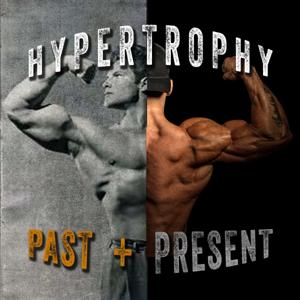


In this episode of Hypertrophy: Past & Present, Jake and Chris break down Bob Hoffman’s basic athletic program through a modern physiology lens and unpack how insufficient sleep impacts training performance.
Key topics include:
In this episode of Hypertrophy: Past & Present, Jake and Chris discuss Silver-Era author Peary Rader’s “training as you get older” guidelines and dive into how to construct a modern, physiology-led template for older lifters.
Key topics include:
In this episode of Hypertrophy: Past and Present, Jake and Chris unpack a Silver-Era routine passed from 1950 Mr America John Farbotnik to Gene Mozee at a time where high volume plans were taking over bodybuilding. From there they go deep into accumulating fatigue, how excitation–contraction coupling failure, muscle damage, and supraspinal CNS fatigue interact across sessions, why exercise novelty and split design can make this worse, and how to calculate and clear your “fatigue debt” without losing muscle.
Key topics include:
In this episode of Hypertrophy: Past and Present, Jake and Chris unpack Steve Reeves’ 1947 pre-competition full-body routine, then dive into why the Silver-Era were such advocates of orange juice + honey during training. We assess the building research on carbohydrate mouth-rinsing, what this tells us about supraspinal CNS fatigue, and how the performance increase from carbohydrate mouth-rinsing differs from the performance increase from creatine supplementation.
Key topics include:
In this episode of Hypertrophy: Past and Present, Jake and Chris break down Dick DuBois’ 1954 full-body routine (and we finally have some pull-ups!). They then tackle the “half-set” myth, why counting half sets for secondary muscles doesn't make any sense and how to adjust multi joint exercises to bias growth in a particular muscle.
Key topics include:
• Dick DuBois’ 1954 full-body plan
• The “Half-Set” problem
• Damage in secondary muscles
• Using multi joint exercises in beginner vs advanced lifters
In this episode of Hypertrophy: Past and Present, Jake and Chris use Peary Rader’s leg routine to outline a practical, physiology-led blueprint for muscle specialisation.
Key topics include:
In this episode of Hypertrophy: Past and Present, Jake and Chris start by discussing one of the most widely used methods of the Silver Era; the 20 rep squat. They then dive into the physiology of cluster sets: what they are, how they differ from rest-pause and drop sets, and how cluster sets can be programmed to offer benefits over traditional straight sets.
Key topics include:
• Reg Park chest specialisation phase (including the classic 20-rep breathing squat method)
• Fatigue mechanisms in clusters explained: metabolite, calcium-ion, spinal, and supraspinal fatigue
• Clusters vs rest-pause vs drop sets
• Practical guidelines for programming clusters
In this episode of Hypertrophy: Past and Present, Jake and Chris unpack Reg Park’s calf-specialisation phase before discussing the physiology of pauses: when they work, when they don’t, and how they compare to partial reps.
Key topics include:
• Reg Park’s 1952 calf-specialisation program
• Straight-leg vs bent-leg calf work and how they bias gastroc vs soleus
• The physiology of pause fatigue: metabolite vs calcium-related mechanisms
• Why static “passive” stretching isn’t the same as active pause contractions
• How to assess whether a given exercise will actually benefit from pauses
In this episode of Hypertrophy: Past and Present, Jake and Chris discuss Sig Klein’s extensive routine and use it as a springboard to tackle one of the biggest programming questions: how much exercise variety do you really need for maximal growth?
Key topics include:
In this episode of Hypertrophy: Past and Present, Jake and Chris revisit Joe Weider’s early 1940 full-body program before breaking down the central problem that all split routines face: supraspinal CNS fatigue.
Key topics include:
• How calcium-ion–related fatigue and inflammation create global CNS fatigue
• Why back-to-back training days reduce recruitment, even for unrelated muscles
• Why full-body AAA and AB formats avoid these issues
From the publisher's feed

12,099 Listeners

389 Listeners

1,424 Listeners

1,261 Listeners
344 Listeners
375 Listeners

372 Listeners
1,194 Listeners
1,563 Listeners
738 Listeners
211 Listeners

227 Listeners

66 Listeners

76 Listeners
306 Listeners