
Sign up to save your podcasts
Or

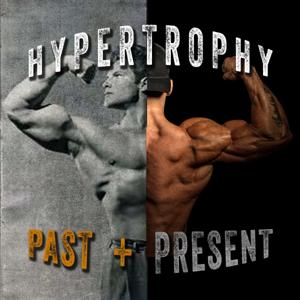


In this episode of Hypertrophy Past & Present, Jake and Chris break down an often misunderstood programming question: how does full body training twice per week compare to an upper/lower split performed four times per week? The episode begins with a deep dive into a late 1960s program from Chuck Sipes, before discussing the key differences between full body and upper/lower when frequency is equated.
Key topics include:
• Why full body twice per week is one of the most underrated training splits
• A breakdown of a classic Chuck Sipes program
• The difference between within-session fatigue vs post-workout fatigue
• Why back-to-back training days may reduce motor unit recruitment
• Why doing more volume per session can actually limit long-term progress
• The trade-off between rate of growth vs ceiling of growth
• Practical considerations (time, lifestyle, gym access) that influence split selection
In this episode of Hypertrophy Past & Present, Jake and Chris break down how to structure a training program during a dieting phase. The episode begins with a deep dive into how Silver Era bodybuilders approached “definition” training, including a reconstructed Reg Park program, before moving into the physiological realities of training in a calorie deficit.
Key topics include:
• Why Silver Era bodybuilders didn’t drastically change their training when dieting
• Reg Park’s “definition” routine
• Why exercise variety may help prevent atrophy during a calorie deficit
• Why high volume and excessive fatigue are counterproductive when cutting
• How to adjust reps, load, and exercise selection based on equipment and fatigue
• Practical programming strategies
• Why most modern “evidence-based” takes on programming miss key physiological details
In this episode of Hypertrophy Past & Present, Jake and Chris discuss how to build the biggest glutes possible. The episode begins with a rare Silver Era lower-body routine from a female 1940s strength athlete Abby “Pudgy” Stockton, before breaking down the most effective modern exercises for glute development.
Key topics include:
• Abby Stockton’s 1940s lower body routine
• The difference between upper and lower regions of the gluteus maximus
• Why seated hip abduction is one of the best exercises for the upper glutes
• Hip thrust vs glute bridge
• Why squats and leg presses can still stimulate glute growth in the stretched position
• Why glutes can often tolerate more training volume than upper body muscles
• A simple three exercise framework for maximizing glute development
In this episode of Hypertrophy Past & Present, Jake and Chris discuss how to build the biggest arms possible. The episode begins with a Golden Era arm routine from Chuck Sipes, before assessing the best exercises for both minimalist and maximalist arm programming.
Key topics include:
In this episode of Hypertrophy Past & Present, Jake and Chris dive into whether more volume is always better. The episode opens in the late Silver Era with Sergio Oliva’s high-volume split, then pivots into a brand-new study that compares “high” vs “super high” volumes in trained lifters.
Key topics include:
In this episode of Hypertrophy Past & Present, Jake and Chris unpack a new hypertrophy study that illustrates how fatigue doesn’t just make training harder but can directly reduce the hypertrophic stimulus by lowering single-fibre mechanical tension. The episode opens in the Silver Era again with Henry Paschal’s 1950 “busy person” program then pivots into the core discussion: why fatigue mechanisms (CNS and calcium-ion related) dampen muscle growth, and what this implies for exercise order, rep ranges, and advanced training methods.
Key topics include:
In this episode of Hypertrophy Past & Present, Jake and Chris break down how you can become stronger immediately - not by changing your program, but by changing your motivation. The conversation starts in the Silver Era again, comparing Clarence Ross’ 1949/50 routine to his 1952 “favourite routine”, and why the small adjustments he made make physiological sense. From there, Chris connects motivation to motor unit recruitment through Marcora’s Psychobiological Model of Fatigue.
Key topics include:
In this episode of Hypertrophy Past & Present, Jake and Chris unpack periodisation for hypertrophy, including what it actually is (and isn’t), why most “periodised” bodybuilding programs end up adding complexity without adding results, and which variables you can change over time without accidentally driving atrophy or accumulating a fatigue debt. The episode opens in 1952 with Clarence Ross’ pre-steroid full-body AAA “favourite routine”. From there, Jake and Chris break down the three main variables people try to periodise in hypertrophy training: volume, rep range, and exercise selection.
Key topics include:
-Why Clarence Ross’ 1952 full-body plan is a great 'non periodised' template
-What is training 'periodisation'
-The 3 variables people periodise for hypertrophy: volume, rep range, exercise selection
-Why escalating volume blocks can reduce stimulus
-Why light-load blocks for 'capillarisation' doesn't potentiate future hypertrophy
-The only phase potentiation effect that really makes sense for hypertrophy
In this episode of Hypertrophy Past & Present, Jake and Chris tackle a surprisingly common question: what if you can only train once per week? Beginning with an early-1960s two-way split from John McCallum to discuss exercise sequencing, why multi-joint lifts paired with single-joint “finishers” can preserve recruitment better than simply adding more straight sets, and what older routines got right (and missed) due to equipment constraints. The episode then breaks down why once-weekly training is uniquely difficult for hypertrophy, how maintenance literature informs minimum set targets, and what a realistic once-per-week template actually looks like.
Key topics include:
-John McCallum's silver era two-way split and how we would modify it today
-Why very high reps don't cause the same muscle growth as moderate reps
-Training once per week: when it’s a real constraint vs avoidable
-Why every 5 days is a massive upgrade over every 7
-Different once per week program ideas
-Posing as a mid-week stimulus
In this episode of Hypertrophy Past & Present, Jake and Chris analyse one of Dorian Yates’ early pre-Olympia training programs, breaking down the structure of his torso-limbs split and the intuitive exercise sequencing.
From there, the conversation expands into a deeper discussion on exercise selection within a workout, why multiple exercises for the same muscle in a single session can produce a superior stimulus to rotating single exercises across sessions, and how this ties into neuromechanical matching and motor unit recruitment. The episode finishes with Chris addressing common criticisms of neuromechanical matching, explaining why alternative theories fail to explain motor control, efficiency-driven muscle recruitment, and sarcomere adaptation during strength training.
Key topics include:
From the publisher's feed

12,099 Listeners

389 Listeners

1,424 Listeners

1,261 Listeners
344 Listeners
375 Listeners

372 Listeners
1,194 Listeners
1,563 Listeners
738 Listeners
211 Listeners

227 Listeners

66 Listeners

76 Listeners
306 Listeners