
Sign up to save your podcasts
Or



Joining me today for Episode #329 of the podcast is Mike Eisenberg, the director, editor, and producer of the film “To Err is Human,” a documentary about the incredibly important issue of patient safety. The film shares a title with the groundbreaking 1999 report from the Institute of Medicine.
The film is available on as a digital download (through iTunes and other platforms) and a Blu-ray or DVD (through Amazon) and there also screenings taking place around the country (and you can arrange one at your organization).
In our conversation, Mike and I talk about the scale and breadth of patient safety problems, some of the systemic causes, and some of the solutions that are being tried and used in healthcare. The term “Lean” is not a part of the film, but Mike said he's become aware of the alignment between Lean and systemic patient safety improvement, but there are limitations to what could be put into a 77-minute film. But, there are common themes including not blaming “bad apples” and improving the way care is delivered in a systematic way.
I had the opportunity to watch the film before the interview — it's very powerful and well produced. I hope you'll check out the film, whether you are a patient or a healthcare professional (or leader). It's important that we help the public understand that patient safety can't be taken for granted… and it's important that hospitals step up their efforts on this front.
My guests for Episode #328 are Bette Gardner and Jeff Heil, of the company Breakthrough Learning. Bette is the creator of a fantastic simulation called "Friday Night at the ER" -- which I've blogged about. When we recorded the webinar, Bette was CEO and Jeff was COO, but recently Jeff took over the CEO role. They are also, as they mention, mother and son... which will be followed by an upcoming podcast with a father and son team (two of the authors of this book). In this episode, we talk about Bette's inspiration for the simulation, systems thinking, and healthcare improvement. We'll also talk about how the simulation is used by organizations in many industries as a way of teaching systems thinking principles.
My guest for Episode #327 of the podcast is Marc Rouppe van der Voort, Ph.D., who is joining me from Utrecht in the Netherlands. We first met back in 2009 when he invited me to come speak at a Dutch Lean Healthcare conference (which I blogged about here). We've crossed paths many times, as Marc has frequently visited the U.S. for the annual Lean Healthcare Transformation Summit, coming with a large group of Dutch Lean healthcare practitioners from many organizations (they collaborate through an organization he chairs called Lidz, which has 60 organizations as members). I've also had the chance to go back to visit and teach at Marc's current employer, St. Antonius Hospital, where he is vice president of operations management and leads the application of Lean principles and several supporting teams. He has also written three practical books on the application of Lean in healthcare. Today, we'll be talking about his learning and his experience with Lean in Dutch healthcare organizations -- what are the differences in the Dutch system and what are the ways in which it's similar to the American system? We'll also discuss the connections between Value Based Healthcare and Lean, with the focus on patient outcomes and quality of life... and other topics related to Lean and leadership.
Joining me for the fourth time, here for Episode #326 of the podcast, is my friend and colleague Katie Anderson, a leadership coach, Lean consultant, speaker and writer from the San Francisco area. Hear our previous podcasts about visiting and living in Japan.
Today, we're talking about a number of topics related to learning and collaboration: Her upcoming book with Isao Yoshino, the local San Francisco Bay area AME consortium that she is leading, her next trip to Japan (which you can join), and more.
I hope you enjoy our conversation as much as we did. For some other resources, and to enter to win a copy of my book Lean Hospitals (and a copy of Measures of Success) that Katie is giving away, visit kbjanderson.com/mark. Thanks, Katie!
Joining me for Episode #325 of the podcast is Andrea Hardaway, an operational leader and the executive director of the Association for Vocal Disorders. Andrea and I first crossed paths through LinkedIn, seeing what she shares there and vice versa. We also had a chance to visit a hospital together in Florida last year to learn about their Lean improvement work. We have enough professional interests in common, I thought it made sense to record a conversation and share it here with the listeners. Andrea has worked in manufacturing, healthcare, and other parts of the service sector and has seen common themes across industries. This includes the opportunity to better use metrics in a way that resonates with staff and is connected to improvement work, something I'm also very interested in. So, we talk about that and more in this episode.
My guest for Episode #324 of the podcast is Art Smalley. Art was one of the first Americans to work for Toyota Motor Corporation in Japan and, since then, has been helping other organizations with the Toyota Production System (a.k.a. “Lean”) methods and approaches. You can also visit his website to learn more, www.ArtOfLean.com.
Episode page: http://leanblog.org/324
Art is a fellow faculty member at the Lean Enterprise Institute. He has written two Shingo Publication Award-winning books: Creating Level Pull and (co-authored with Durward Sobek) Understanding A3 Thinking. Art later wrote Toyota's Kaizen Methods: Six Steps to Improvement with Isao Kato.
I own all of these books and have only met Art briefly in the past, so I'm happy to finally have him here as a guest. Today, we'll talk about Art's career and his most recent book, Four Types of Problems, published by the Lean Enterprise Institute (note: LEI provided me a free electronic copy of the book).
I hope you enjoy the conversation as much as I did.
From the publisher's feed
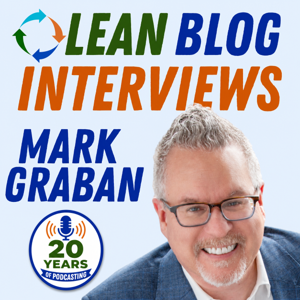
Lean Blog Interviews: Real-World Lean Leadership Conversations features thoughtful, in-depth discussions with leaders, authors, executives, and practitioners who are applying Lean thinking in the real world.
Hosted by Mark Graban—author of Lean Hospitals, Measures of Success, and The Mistakes That Make Us—the podcast explores Lean as a management system, a leadership philosophy, and a people-centered approach to continuous improvement.
Episodes span healthcare, manufacturing, startups, technology, and professional services. Guests share candid stories about what actually works—and what doesn’t—when organizations try to improve.
This is not a podcast about chasing tools, jargon, or “Lean theater.” Instead, you’ll hear honest conversations about leadership behaviors, culture, psychological safety, learning from mistakes, and building systems that help people do their best work.
If you believe improvement starts with respect for people—and that better systems beat blaming individuals—this podcast is for you.
Find show notes and all episodes at LeanCast.org.
Learn more about Mark Graban at MarkGraban.com.

32,058 Listeners
452 Listeners
1,461 Listeners

198 Listeners
15 Listeners

27 Listeners
8,564 Listeners

9,063 Listeners

20 Listeners
377 Listeners
2,438 Listeners

9 Listeners
2,204 Listeners

40 Listeners
19 Listeners
152 Listeners

1,620 Listeners

28 Listeners