
Sign up to save your podcasts
Or

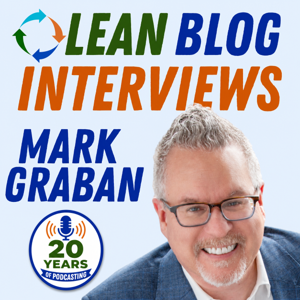


My guest for episode #171 is Chad Walters, a friend and a Lean consultant. He is owner of Lean Blitz Consulting in Augusta, Georgia, a firm focused on continuous improvement for small businesses and sports organizations. I'm a big fan (and frequent commenter) on Chad's blog and he's contributed guest posts here on my blog. He has been cited and mentioned on ESPN.com and CNBC.com.
Today, we talk about how Lean principles can apply to sports operations, including the stadiums and events you attend. We'll talk about concepts of value and waste from the sports fan perspective, specific challenges in the sports and entertainment fields and some examples related to baseball (play ball!, the season just started) and The Masters, which starts Thursday.
For a link to this episode, refer people to www.leanblog.org/171.
More about Chad Walters:
He has run projects for the Atlanta Braves, the Salvation Army, Automatic Data Processing (ADP), Eaton Corporation, The Dannon Company, and the South Bend Silver Hawks among other companies. He has been practicing Lean and continuous improvement for over eight years, is a Six Sigma Black Belt certified by the American Society for Quality, and received his MBA from Indiana University's Kelley School of Business, where he was a member of the Kelley MBA Sports & Entertainment Academy.
Posts of his we talk about:
For earlier episodes, visit the main Podcast page, which includes information on how to subscribe via RSS or via Apple Podcasts.
My guest for episode #170 is Stephen Parry, joining us from England. He is a keynote speaker at the upcoming Lean Kanban North America conference in late April. I will also be a main stage speaker at the event. Parry has experience leading Lean transformation efforts in industries ranging from telecommunications, IT, shared services, financial services, and the public sector.
He is the author of the book Sense and Respond: The Journey to Customer Purpose. In this episode, we talk about his experience, how Lean engages employees to provide value to customers, and the differences between LINO (Lean In Name Only) and Real Lean.
For a link to this episode, refer people to www.leanblog.org/170.
For earlier episodes, visit the main Podcast page, which includes information on how to subscribe via RSS or via Apple Podcasts.
Joining me for Episode #169 is Leonard L. Berry, PhD, Distinguished Professor of Marketing in the Mays Business School at Texas A&M University. We are talking about his article that he co-authored with John Toussaint, MD Mayo Clinic Proceedings: 201CThe Promise of Lean in Health Care201D (PDF) - which I blogged about earlier. In this podcast, Len talks about his time being embedded in ThedaCare and the lessons he learned there... for example, why is it incorrect to assume that "standardized work" means something stifling? This episode is produced in partnership with the Healthcare Value Network. To point others to this, use the simple URL: www.leanblog.org/169. You can find links to posts related to this podcast there, as well. Please leave a comment and join the discussion about the podcast episode. For earlier episodes of the Lean Blog Podcast, visit the main Podcast page at www.leanpodcast.org, which includes information on how to subscribe via RSS or via Apple iTunes. You can also listen to streaming episodes of the podcast via Stitcher: http://landing.stitcher.com/?vurl=leanblog If you have feedback on the podcast, or any questions for me or my guests, you can email me at [email protected] or you can call and leave a voicemail by calling the "Lean Line" at (817) 776-LEAN (817-776-5326) or contact me via Skype id "mgraban". Please give your location and your first name. Any comments (email or voicemail) might be used in follow ups to the podcast.
My guest for episode #168 is Carolyn McCulley, from CityGate Films, and she is a co-director and producer of the upcoming documentary called "Breaking the Wall of Silence." Through March 31, you can sponsor this project through the Kickstarter website (with a minimum contribution of $15) and I hope you'll join me as a supporter of this important work. Learn more at www.leanblog.org/168. As Carolyn discusses with me, the film does not just focus on the problems of patient safety and poor healthcare quality... it focuses on the positive steps that MedStar Health (a large system in the Washington DC area) is taking to transform its culture to reduce systemic patient harm. This focus is why she calls this a "hopeful film" as opposed to being alarmist. To point others to this, use the simple URL: www.leanblog.org/168. You can find links to posts related to this podcast there, as well. Please leave a comment and join the discussion about the podcast episode. For earlier episodes of the Lean Blog Podcast, visit the main Podcast page at www.leanpodcast.org, which includes information on how to subscribe via RSS or via Apple iTunes. You can also listen to streaming episodes of the podcast via Stitcher: http://landing.stitcher.com/?vurl=leanblog If you have feedback on the podcast, or any questions for me or my guests, you can email me at [email protected] or you can call and leave a voicemail by calling the "Lean Line" at (817) 776-LEAN (817-776-5326) or contact me via Skype id "mgraban". Please give your location and your first name. Any comments (email or voicemail) might be used in follow ups to the podcast.
My guest for episode #167 is Clare Crawford-Mason, the producer of the landmark 1980 NBC documentary that featured W. Edwards Deming, “If Japan Can Do It, Why Can't We?” You can view the documentary here.
I was fortunate to meet Clare and her husband Bob back in 2007 or so when I was teaching a Lean healthcare seminar near their home in Washington, DC. Clare and Bob led the efforts to create the “Deming Library” video series. They also created the PBS special “Good News: How Hospitals Heal Themselves” and the companion book The Nun and the Bureaucrat.
We've talked for years about doing this podcast and I'm glad to finally being able to share this with you. Early in the podcast, Clare talks about meeting Dr. Deming and the production of documentary, which is a fascinating story and glimpse into his personality and work.
Show notes and links:
For a link to this episode, refer people to www.leanblog.org/167.
My guest for episode #166 is Julie Bartels, Executive Vice President, National Healthcare Information at the ThedaCare Center for Healthcare Value. In this episode, we are talking about their new program, the Healthcare Clinical Business Intelligence Network (CBIN). Julie tells us about “business intelligence” and how data and transparency relate to Lean improvement efforts. Why is “the devil in the details” in making more data available to payers and patients? Listen to find out.
Read an FAQ document about the CBIN or see this PDF document. You can also learn more on the Center's transparency page.
For a link to this episode, refer people to www.leanblog.org/166.
Learn more about the Healthcare Value Network, the ThedaCare Center for Healthcare Value, and their annual Lean Healthcare Transformation Summit (registration now open).
For earlier episodes, visit the main Podcast page, which includes information on how to subscribe via RSS or via Apple Podcasts.
From the publisher's feed
Lean Blog Interviews: Real-World Lean Leadership Conversations features thoughtful, in-depth discussions with leaders, authors, executives, and practitioners who are applying Lean thinking in the real world.
Hosted by Mark Graban—author of Lean Hospitals, Measures of Success, and The Mistakes That Make Us—the podcast explores Lean as a management system, a leadership philosophy, and a people-centered approach to continuous improvement.
Episodes span healthcare, manufacturing, startups, technology, and professional services. Guests share candid stories about what actually works—and what doesn’t—when organizations try to improve.
This is not a podcast about chasing tools, jargon, or “Lean theater.” Instead, you’ll hear honest conversations about leadership behaviors, culture, psychological safety, learning from mistakes, and building systems that help people do their best work.
If you believe improvement starts with respect for people—and that better systems beat blaming individuals—this podcast is for you.
Find show notes and all episodes at LeanCast.org.
Learn more about Mark Graban at MarkGraban.com.

32,056 Listeners
452 Listeners
1,462 Listeners

198 Listeners
15 Listeners

27 Listeners
8,554 Listeners
9,066 Listeners

20 Listeners
376 Listeners
2,432 Listeners

9 Listeners
2,204 Listeners

40 Listeners
19 Listeners
153 Listeners
1,619 Listeners
28 Listeners