
Sign up to save your podcasts
Or

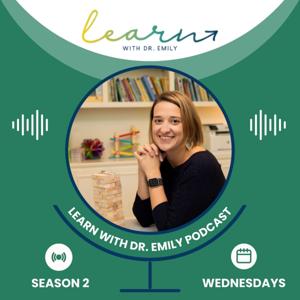


When a child is first identified as autistic or receives a diagnosis of ADHD, a learning disability, or sensory processing differences, parents can feel both overwhelmed by the information and relieved to have a plan. Yet, sometimes the plan is even overwhelming. As a former school psychologist, I was trained to identify concerns and recommend solutions. The more solutions the better, right? Not always.
---
Sign up for Dr. Emily's weekly newsletter at www.learnwithdremily.com
This is a public episode. If you would like to discuss this with other subscribers or get access to bonus episodes, visit learnwithdremily.substack.com.
Learn with Dr. Emily is edited by Earfluence.
Helpful Resources
Parent Workshops - https://learnwithdremily.substack.com/s/parent-workshops
Professional Development - Bring Dr. Emily to Your School - https://www.learnwithdremily.com/schools
Our children are growing up in schools filled with neurodiverse learners. While this gives me hope for normalizing the presence of neurodiversity, inclusive mindsets don’t just appear out of thin air; they evolve when we stay open to learn about our differences. We make this evolution of inclusivity possible when we teach ALL children how they learn best, not just those who need something extra.
For some children, they already know they are a visual learner or that they are great at reading. For others, we have to rely on educators and psychologists to help us figure out how our kids learn best. Either way, we need to teach all kids about their brain so they can understand that there is no one best way for everyone to learn. The best way to learn is the way that works best for YOU. Once children understand themselves, they begin to realize that everyone has their own constellation of abilities, and when we work together as a group, classroom, or community, we can accomplish things we cannot do alone.
---
Sign up for Dr. Emily's weekly newsletter at www.learnwithdremily.com
This is a public episode. If you would like to discuss this with other subscribers or get access to bonus episodes, visit learnwithdremily.substack.com.
Learn with Dr. Emily is edited by Earfluence.
Helpful Resources
Parent Workshops - https://learnwithdremily.substack.com/s/parent-workshops
Professional Development - Bring Dr. Emily to Your School - https://www.learnwithdremily.com/schools
In my work with parents of young children, many come to me after noticing some concerns with their child’s developmental milestones. While all children develop at their own pace, some young children experience challenges with emotional regulation, language and motor milestones, and/or sensory processing that leave their parents wondering if an evaluation is needed.
Most parents already know that children need an evaluation to receive support services at school or a clinical diagnosis for insurance to cover therapeutic services. But some parents who pay “out-of-pocket” for therapy services or enroll their child in private school wonder: Is a diagnostic evaluation really necessary?
---
Sign up for Dr. Emily's weekly newsletter at www.learnwithdremily.com
This is a public episode. If you would like to discuss this with other subscribers or get access to bonus episodes, visit learnwithdremily.substack.com.
Learn with Dr. Emily is edited by Earfluence.
Helpful Resources
Parent Workshops - https://learnwithdremily.substack.com/s/parent-workshops
Professional Development - Bring Dr. Emily to Your School - https://www.learnwithdremily.com/schools
Parents, we’re in the thick of it. Summer.
I don’t know about you, but this summer is already feeling more hectic than any in recent memory. Is this the first full-out summer since the pandemic? Am I just running low on parent stamina? Or is it just that driving my kids to activities feels like an additional part-time job? Whatever the reason, I’m here to commiserate with you. I’m also here to encourage you to do less. Yep, less. Do less and teach your kid what to do with that free time.
If you are raising a child with ADHD and have to plan every second of their summer for them, you’re already getting tired of hearing, “but I’m so bored!” And, if you are raising a child who hates playing outside and is happy as a clam inside the house, you might be worried about their vitamin D levels. Summer is about balance.
Let’s build some social and independence skills but not wear ourselves out so much that we don’t reap the rewards of rest.
---
Sign up for Dr. Emily's weekly newsletter at www.learnwithdremily.com
This is a public episode. If you would like to discuss this with other subscribers or get access to bonus episodes, visit learnwithdremily.substack.com.
Learn with Dr. Emily is edited by Earfluence.
Helpful Resources
Parent Workshops - https://learnwithdremily.substack.com/s/parent-workshops
Professional Development - Bring Dr. Emily to Your School - https://www.learnwithdremily.com/schools
When I talk to parents and teachers of neurodivergent kids and teens, especially those raising and teaching autistic children, I often hear, “I can’t figure out what motivates her,” or “He only cares about video games” or even, “I can’t get them to care about anything.”
Here’s the thing: I’ve never met a kid without interests. As the trusted adults raising and teaching neurodivergent kids, we may have to listen a little harder and look a bit closer, especially if a child’s interest doesn’t fit into society’s norm of “expected.”
---
Sign up for Dr. Emily's weekly newsletter at www.learnwithdremily.com
This is a public episode. If you would like to discuss this with other subscribers or get access to bonus episodes, visit learnwithdremily.substack.com.
Learn with Dr. Emily is edited by Earfluence.
Helpful Resources
Parent Workshops - https://learnwithdremily.substack.com/s/parent-workshops
Professional Development - Bring Dr. Emily to Your School - https://www.learnwithdremily.com/schools
Simply put, children don’t do everything we ask them to do when we ask them to do it. As adults, we often assume this is because they are not understanding what we said so we try communicating the same expectation again by repeating ourselves, sometimes in a louder and more frustrated voice. If that doesn’t work, our own frustration grows, which can stop us from remaining emotionally regulated and problem-solve what to do next.
We are never our best selves when stressed. Yet, the way we respond in the moment a child doesn’t do what we have asked them to do can do one of two things: either it creates a safe connection for the child to trust us as we align with them to solve the problem or we trigger a defense response in the child if we inadvertently disregard their need for more support.
So, what does this look like in a classroom?
---
Sign up for Dr. Emily's weekly newsletter at www.learnwithdremily.com
This is a public episode. If you would like to discuss this with other subscribers or get access to bonus episodes, visit learnwithdremily.substack.com.
Learn with Dr. Emily is edited by Earfluence.
Helpful Resources
Parent Workshops - https://learnwithdremily.substack.com/s/parent-workshops
Professional Development - Bring Dr. Emily to Your School - https://www.learnwithdremily.com/schools
Teachers, you made it. It’s summer! As you pause to take a breath and recenter yourself, I want you to know that I see all you are doing. You are asked to do so many things with too little time and energy.
This week, I’m here to remind you that you CAN find time for yourself, even during a busy school year. The most important thing to know is that a little bit of time will go a long way. As you reflect on this past school year, I’m here to share some new ideas for setting yourself up for resiliency in the fall.
A few months ago, I created a FREE video series for elementary educators to learn how to beat burnout during the school year. You’ll only need to set aside about 15 minutes a day to watch the four videos full of actionable ways to radically take care of yourself. Today’s episode is a sneak peek. Let’s get started!
---
Sign up for Dr. Emily's weekly newsletter at www.learnwithdremily.com
This is a public episode. If you would like to discuss this with other subscribers or get access to bonus episodes, visit learnwithdremily.substack.com.
Learn with Dr. Emily is edited by Earfluence.
Helpful Resources
Parent Workshops - https://learnwithdremily.substack.com/s/parent-workshops
Professional Development - Bring Dr. Emily to Your School - https://www.learnwithdremily.com/schools
If you are an elementary educator, you are already teaching a neurodiverse group of learners. So there are gonna be things that come up that you feel like you don't know how to do, or you need to consult with colleagues.
So, I want you to know you don't have to have a special education degree, but there are three things that I do believe are key to your mindset as an educator of neurodiverse learners.
---
Sign up for Dr. Emily's weekly newsletter at www.learnwithdremily.com
This is a public episode. If you would like to discuss this with other subscribers or get access to bonus episodes, visit learnwithdremily.substack.com.
Learn with Dr. Emily is edited by Earfluence.
Helpful Resources
Parent Workshops - https://learnwithdremily.substack.com/s/parent-workshops
Professional Development - Bring Dr. Emily to Your School - https://www.learnwithdremily.com/schools
Today we dive into why school is so hard for neurodivergent students, and the messages and feedback that I get from teachers on what they need to make school better for our students.
This topic is always on my mind this time of year as we go into testing season, which as we all know, if you're listening to this podcast, you have a child in your life that testing probably does not work for.
---
Sign up for Dr. Emily's weekly newsletter at www.learnwithdremily.com
This is a public episode. If you would like to discuss this with other subscribers or get access to bonus episodes, visit learnwithdremily.substack.com.
Learn with Dr. Emily is edited by Earfluence.
Helpful Resources
Parent Workshops - https://learnwithdremily.substack.com/s/parent-workshops
Professional Development - Bring Dr. Emily to Your School - https://www.learnwithdremily.com/schools
Educators, it's time to shift our mindset by understanding what polyvagal theory, the importance of brain-body connection, and how we can better support our children.
We all know that the fields of psychology and education still haven’t fully integrated the wisdom we’re learning from research and neuroscience, and often rely on methods that seek to alter kids behavior through rewards and consequences. Once we acknowledge that behaviors, though, are meaningful and protective adaptations to a child’s internal experience, we can create a whole new range of compassionate and individually tailored options that surpass just managing behaviors.
So today, Dr. Mona Delahooke explains polyvagal theory and the paradigm shift that could be so helpful for parents and educators to make.
About Our Guest
Dr. Mona Delahooke is a best-selling author and child psychologist who aims to reduce suffering and increase resilience for children and families. Her paradigm-shifting model offers a new way of understanding emotional and behavioral challenges, incorporating the latest neuroscience and resilience research to support relationships. Dr. Delahooke is challenging the education system to update its practices from focusing on behavior to promoting relational safety.
---
Sign up for Dr. Emily's weekly newsletter at www.learnwithdremily.com
This is a public episode. If you would like to discuss this with other subscribers or get access to bonus episodes, visit learnwithdremily.substack.com.
Learn with Dr. Emily is edited by Earfluence.
Helpful Resources
Parent Workshops - https://learnwithdremily.substack.com/s/parent-workshops
Professional Development - Bring Dr. Emily to Your School - https://www.learnwithdremily.com/schools
From the publisher's feed

1,328 Listeners

963 Listeners

14,916 Listeners

1,425 Listeners

412 Listeners

69,510 Listeners

3,384 Listeners

164,468 Listeners

1,901 Listeners

57,614 Listeners
425 Listeners

29,185 Listeners

4,507 Listeners

19,148 Listeners

2,117 Listeners