
Sign up to save your podcasts
Or

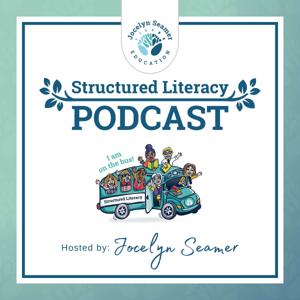

Today, I want to talk to you about an issue that has had me with a bee in my bonnet for a little while now, and that is the large amount of time that many children spend in independent silent reading during literacy instruction.
Now, my challenge with this is not that it is bad for children to read on their own; in fact, we know that there are positive impacts. Professor Pam Snow from La Trobe University often says that once children become proficient decoders, their independent reading has much to add to their vocabulary and language development. So I'm not here to tell you that reading is bad for kids. Quite the opposite.
But I will suggest that there are more efficient and effective ways that students can spend time during that block of the school day that is allocated as literacy instruction time.
Has something in this episode resonated with you? Get in touch!
Are your students good readers, but poor spellers? If so, you are not alone. Spelling Success in Action addresses phonics, orthography, and morphology to give students a well-rounded understanding of how our language system works.
Find out how you can help your students move beyond guessing and memorisation at https://www.jocelynseamereducation.com/spelling2
Quick Links
Jocelyn Seamer Education Homepage
The Resource Room
Youtube channel
Facebook Page
#jocelynseamereducation #literacy #bestpractice #earlyprimaryyears #primaryschool #primaryschools #primaryschoolteacher #earlyyearseducation #earlyyearseducator #structuredliteracy #scienceofreading #classroom #learning #learningisfun #studentsuccess #studentsupport #teacherlife #theresourceroom #theevergreenteacher #upperprimary #upperprimaryteacher #thestructuredliteracypodcast #phoneme #grapheme #phonics #syntheticphonics
 View all episodes
 By Jocelyn Seamer

4.2
55 ratings
Today, I want to talk to you about an issue that has had me with a bee in my bonnet for a little while now, and that is the large amount of time that many children spend in independent silent reading during literacy instruction.
Now, my challenge with this is not that it is bad for children to read on their own; in fact, we know that there are positive impacts. Professor Pam Snow from La Trobe University often says that once children become proficient decoders, their independent reading has much to add to their vocabulary and language development. So I'm not here to tell you that reading is bad for kids. Quite the opposite.
But I will suggest that there are more efficient and effective ways that students can spend time during that block of the school day that is allocated as literacy instruction time.
Has something in this episode resonated with you? Get in touch!
Are your students good readers, but poor spellers? If so, you are not alone. Spelling Success in Action addresses phonics, orthography, and morphology to give students a well-rounded understanding of how our language system works.
Find out how you can help your students move beyond guessing and memorisation at https://www.jocelynseamereducation.com/spelling2
Quick Links
Jocelyn Seamer Education Homepage
The Resource Room
Youtube channel
Facebook Page
#jocelynseamereducation #literacy #bestpractice #earlyprimaryyears #primaryschool #primaryschools #primaryschoolteacher #earlyyearseducation #earlyyearseducator #structuredliteracy #scienceofreading #classroom #learning #learningisfun #studentsuccess #studentsupport #teacherlife #theresourceroom #theevergreenteacher #upperprimary #upperprimaryteacher #thestructuredliteracypodcast #phoneme #grapheme #phonics #syntheticphonics
158 Listeners
426 Listeners
388 Listeners
650 Listeners
211 Listeners

52 Listeners
206 Listeners

63 Listeners
61 Listeners
179 Listeners
63 Listeners
42 Listeners
4 Listeners
76 Listeners
9 Listeners