
Sign up to save your podcasts
Or




Micro media is a somewhat new term we can use to describe media created by companies, brands and individuals housed (mainly) online. Personal blogs and corporate sites that invite fans and industry leaders to contribute, are two other examples.
In the olden days (circa 1980) the most common way to promote your business was to buy advertising in macro media outlines – usually via a big PR firm. But technology and social trends have changed.
Micro media outlets are gaining significance as they grow larger and larger audiences. Podcasts are a perfect example. There are 120 million podcast listeners in the United States but according to the podcast index there are barely 300,000 podcasts with new episodes in the last month. So, micro media outlets are beginning to sway the narrative of public opinion away from the traditional media gatekeepers.
And micro media sources give the best opportunity to drill down into niche audiences which have always been extremely valuable.
In this episode, how to hone your pitch to micro media sources.
Guest: Shelby Janner, Zilker Media
Zilker Media website
Sign up for Zilker Media’s Podcast Guest Insider
Use the Stories and Strategies Coupon Code with the Podcast Guest Insider: @Stories10
Email Shelby [email protected].
Share your Halloween story via https://www.speakpipe.com/StoriesandStrategies
Stories and Strategies Website
Do you want to podcast? Book a meeting with Doug Downs to talk about it.
Email Doug directly [email protected]
Follow us on:
Send us a note about this episode. We'll reply and thank you on a future episode
Support the show
Within Public Relations and Marketing we often use what are considered to be best practices for our strategies. It’s natural. If a methodology, including survey and analysis, has worked in a similar situation previously, that’s the one to use. The challenge with surveys or polls is they’re often unreliable. They’re unreliable because we, humans, often don’t answer in a way that matches our true intentions – because our answers are clouded with aspirational intent, or even more simply, we don’t know our true intentions which are probably based more in habit than we’d like to acknowledge.
Enter Behavioural Science, which is an umbrella term capturing economics, anthropology, cognitive neuroscience, sociology, psychology, and political science. It’s the study of when and why individuals engage in specific behaviours by experimentally examining the impact of factors such as conscious thoughts, motivation, social influences, contextual effects and habits.
Taking a BS approach to challenges can really begin to move the dial.
There are hundreds of firms exploring in this field now, working for clients trying to convince people to buy the right soap, vote for the preferred candidate, or choose the right behaviour. It’s a shift away from just best practices and intuition – to seek an understanding of human behaviour as best we can. One is standing out from the field and the industry has noticed. Lynn, in Wales. It’s won dozens of awards including “Fastest Growing Communications Business in the World.”
In this episode we meet the founder, Shayoni Lynn.
Guest: Shayoni Lynn, Lynn
Lynn website https://lynn.global/
Email [email protected]
Twitter
Instagram
LinkedIn
Stories and Strategies Website
Do you want to podcast? Book a meeting with Doug Downs to talk about it.
Email Doug directly [email protected]
Follow us on:
Send us a note about this episode. We'll reply and thank you on a future episode
Support the show
Stephen Krempl believes if you want to get noticed the right way by your senior leaders you must recognize there are only five situations in which those leaders will see or hear you. And when those situations arise, if you can master the art of turning a negative into either a neutral or a positive, you’ll get much further ahead.”
To use a metaphor, does that mean candy coating everything? And to stretch the metaphor, won’t that make us a little sick?
Stephen Krempl doesn’t think so. He notes there are really only five key situations our senior leaders really see or hear us. Five stages with limited stage time for each. We need to make those opportunities count.
Guest: Stephen Krempl
Stephen has worked for and with numerous Fortune 500 companies in training or corporate training and development roles. Companies such as Pepsico, Starbucks, Motorola, Visa, BNP Paribas, Schneider Electric, and Barclay’s Bank.
Amazon Link to Stephen’s book Positively Negative: How to Turn Negative Messages into Positive Ones
Stephen’s other book, The 5% Zone: Visibility Strategies That Get You Recognized and Rewarded in Any Organization
Stephen’s website
Email Stephen [email protected]
Stephen on Twitter: @krempl
Stephen on LinkedIn: https://www.linkedin.com/in/stephen-krempl/
Do you want to podcast? Book a meeting with Doug Downs to talk about it.
Email Doug directly [email protected]
Follow us on:
Send us a note about this episode. We'll reply and thank you on a future episode
Support the show
The World’s intelligence agencies have long suffered from a perspective they’re too secretive. That’s not just the stuff of Hollywood movies and books, these are real perceptions backed by studies and reviews critical of the communications in those agencies. They all conclude there’s a need to be more intelligent about Intelligence.
The degree of secrecy in these Agencies has always been a delicate balance. But there are many today who say the level of secrecy in intelligence is a symptom of increasing obsolescence as well as an obstacle to reform.
In this episode we talk with a former analyst at two of Canada’s intelligence agencies, The Communications Security Establishment (CSE) and Canadian Security Intelligence Service (CSIS) to get his perspective on how a refreshed view of communication practice might make a world of difference.
Guest: Phil Gurski
Borealis Threat and Risk Consulting
Website https://borealisthreatandrisk.com/
Email [email protected]
Check out any of Phil’s books
Phil’s Podcast Canadian Intelligence Eh?
Stories and Strategies website
Do you want to podcast? Book a meeting with Doug Downs to talk about it.
Email Doug directly [email protected]
Follow us on:
LinkedIn
Twitter
Instagram
Facebook
Send us a note about this episode. We'll reply and thank you on a future episode
Support the show
Worldwide Karen Jacobsen is known for her voice – the voice of female Australian SIRI or GPS Karen. She’s been heard on 400 million GPS and smart-enabled devices and today she’s a successful motivational speaker, singer/songwriter, and author.
But the road to success was trickier than you might image shortly after Karen’s voice began appearing on our smartphones she ran into her own, real-life “Recalculating,” moment and needed to find her way back. In her own words, “It’s never too late to recalculate.”
Guest: Karen Jacobsen
Connect with Karen:
Website The GPS Girl
On Twitter
On LinkedIn
On Instagram
YouTube
Karen’s music can be heard here - karenjacobsen.com
Have a listen to Karen’s new single THE SLIPSTREAM
Karen’s book The GPS Girl’s Road Map for Your Future: Put Yourself in the Driver’s Seat
Karen’s book Recalculate: Directions for Driving Performance Success
Do you want to podcast? Book a meeting with Doug Downs to talk about it.
Email Doug directly [email protected]
Stories and Strategies Website
Follow us on:
LinkedIn
Twitter
Instagram
Facebook
Send us a note about this episode. We'll reply and thank you on a future episode
Support the show
In the work world the true generalist is very different from the specialist.
The specialist tends to have a deep understanding of a certain content area while the generalist has a broader scope of the work landscape. The pros of being a generalist are understanding connections between departments and, theoretically, the ability to adapt to handling many different tasks. The cons include exhaustion from doing too many tasks over time (we tend to reward good workers with more work).
The benefits to being a specialist include having a deep knowledge with less competition, but the cons include the need to avoid becoming obsolete as technology continually changes.
The school of thought has always been that there are more opportunities for the Generalist. Are there? Has that started to change? As the Gig Economy begins to grow, and the work atmosphere is forever changed by COVID, it’s becoming increasingly clear we are living in a Specialized World.
Guest: Talia Beckett Davis
Pink Pearl PR
Founder Women in PR
Contact Talia
[email protected]
[email protected]
publicrelationsacademy.com
https://womeninpr.com/
Listen to Talia’s previous episode on Stories and Strategies
On Apple
On Spotify
Do you want to podcast?
Book a meeting with Doug Downs to talk about it.
Register for the FREE July 13, 2022 Webinar Event "Getting Started With Your Podcast"
Email Doug directly [email protected]
Follow us on:
Send us a note about this episode. We'll reply and thank you on a future episode
Support the show
So, you’re graduating with a Communications or Marketing degree? Congratulations. It’s a growing industry and there are plenty of opportunities.
The US Bureau of Labor Statistics forecasts employment of PR specialists to grow 11 percent from 2020 to 2030 with 29,000 new jobs every year.
One Canadian study (McGill University in Montreal) predicts more than 36,000 job openings to become available in the PR Industry in Canada by 2026.
In general, a PR pro is responsible for managing the relationship between an organization and its various audiences, including stakeholders, investors, the media, the government, and the general public. Each audience has different needs and an organization’s objectives with regards to each audience differ. So PR pros are tasked with creating and implementing communication strategies to:
If you’re graduating now and entering the workforce, it’s an exciting time – with new technologies daily but accompanied by ever escalating audience expectations for engagement and openness.
In this episode, Communications vet Michelle Garrett offers her thoughts for those starting out to help them navigate the inevitable bumpy roads and choppy waters.
Guest: Michelle Garrett
Email [email protected]
Website https://michellegarrett.com/
Follow Michelle on Twitter @PRisUs
Listen to Michelle’s other episodes on Stories and Strategies
Snake Oil on Apple Podcasts – on Spotify
PR Trends on Apple Podcasts – on Spotify
Read Michelle's article in Muck Rack on this topic
PR Associations
The Canadian Public Relations Society
The Canadian Association of Communicators in Education
The Chartered Institute of Public Relations
The Global Alliance for Public Relations and Communication Management
The International Communications Consultancy Organisation
The Institute for Public Relations
The International Association of Business Communicators
The Public Relations and Communications Association
The Public Relations Institute of Australia
The Public Relations Society of America
The Public Relations Society of India
Women in PR
Do you want to podcast? Book a meeting with Doug Downs to talk about it.
Email Doug directly [email protected]
Follow us on:
LinkedIn
Twitter
Instagram
Send us a note about this episode. We'll reply and thank you on a future episode
Support the show
Our new trailer for Summer 2022
Send us a note about this episode. We'll reply and thank you on a future episode
Support the show
A new survey by Brunswick Group makes it clear executive leaders today are not only expected to be online, but to be active and connected.
2,800 readers of financial publications and 3,600 employees in large companies were surveyed worldwide and in-depth interviews were conducted with more than a dozen leaders and their teams at various companies.
Link to the Study
Guest: Craig Mullaney, Partner Brunswick Group
Craig Mullaney is a Brunswick partner in Washington, DC. Craig advises clients on a broad range of critical issues, with a specialist focus on leadership communications and US-Japan cross-border issues. He is one of the leading authorities on executives’ use of digital media and pioneered Brunswick Group’s Connected Leadership research. He joined Brunswick from Facebook where he led strategic partnerships and founded Facebook’s Global Executive Program. Craig has provided strategic counsel to leaders ranging from former heads of state and Fortune 50 CEOs to presidents of major charitable foundations, scientific luminaries, and numerous TED speakers. He is a New York Times bestselling author, and a decorated Army combat veteran.
Salutatorian / BS, History at United States Military Academy at West Point
Rhodes Scholar / MSt. / MSc. Diplomatic History / Economic History at University of Oxford.
Follow Craig on Twitter @craigmmullaney and on LinkedIn
Craig’s New York Times Bestseller “The Unforgiving Minute, a Soldier’s Education”
Connect with Stories and Strategies on Twitter @stories_strats. We follow back.
Let’s talk about the podcast idea [email protected]
Send us a note about this episode. We'll reply and thank you on a future episode
Support the show
In today’s world a social media influencer is one who has the power to affect purchasing decisions of others because of their authority, their knowledge, their title, or their relationship with their audience. Often that means they have a large social following, but it can also mean they just have the right people following them in a position to take action.
But influence isn’t new. All through history there have been influencers – those who used their positions to make the world a better place and definitely those who used their influence in bad ways.
In this episode we study the influence of people such as Abraham Lincoln; Diana, Princess of Wales; Mother Theresa, Henry the VIII, Adolph Hitler and more…
What was it about their personalities that gave them rise to influence?
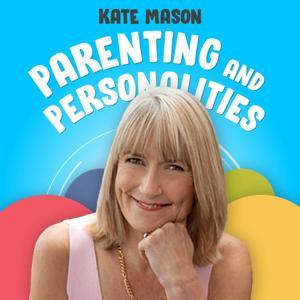
Guest: Kate Mason, Australia’s personality coach
Check out Kate’s book “Who is this Monster (or Treasure) in my House?”
Listen to Kate’s podcast Personalities, Parenting, and Partners
Connect with Stories and Strategies on Twitter @stories_strats. We follow back.
Let’s talk about the podcast idea [email protected]
Send us a note about this episode. We'll reply and thank you on a future episode
Support the show
From the publisher's feed
Every organization has a story people believe about it. Most leaders didn't choose that story. They inherited it, stumbled into it, or lost control of it somewhere along the…
Stories and Strategies is the Public Relations podcast that changes that.
Host Doug Downs talks with the communicators, executives, and strategists who understand that narrative isn't a marketing function. It's a leadership one. Each episode unpacks what actually shapes reputation, trust, and public perception at the highest levels, drawing on behavioral science, media intelligence, and the ethics that keep persuasion honest.
This is public relations at the level serious leaders need it. Not tactics and press releases. The thinking behind why some stories win and others disappear.
Ranked among the most listened-to public relations podcasts in the world, Stories and Strategies reaches leaders and communicators across six continents every week.
If you are responsible for the story people believe about your organization, you cannot afford to guess. Follow Stories and Strategies wherever you listen to your public relations content.

78,303 Listeners

43,363 Listeners

30,112 Listeners

111,864 Listeners

56,391 Listeners

14,905 Listeners

68 Listeners

430 Listeners

27,895 Listeners

248 Listeners
24 Listeners
40 Listeners

0 Listeners

15 Listeners

0 Listeners

0 Listeners
39 Listeners
7 Listeners

18,907 Listeners

38 Listeners

10 Listeners
0 Listeners

0 Listeners

0 Listeners

0 Listeners