
Sign up to save your podcasts
Or



Based on Podcast App listening data
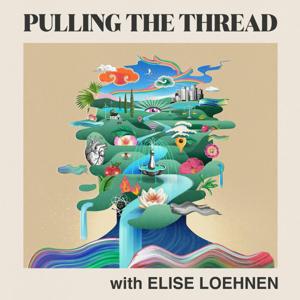
Yes, it’s a Monday and not a Thursday, but today, I’m announcing something special. Kicking off next week, we’re going to host occasional, short series that are focused on a tangly or complicated theme—big concepts that require multiple voices and perspectives to put them into proper context. We’re kicking off next Monday with a look at Mystical Systems, or you could call them Personality Systems: Enneagram, Astrology, Tarot, and Human Design. Some people might think of these ways of understanding the world as silly, while others will stake their lives—and sometimes every big decision—on them. I’m somewhere in between: I think there’s nothing more powerful than hearing about yourself, and how your life likely unfolded, from someone who knows nothing more about you than your birth sign. To me, it signals that there’s a much deeper plan at play. I’ll see you next week, meanwhile you can get started with the two episodes below.
ASTROLOGY: Jennifer Freed “A Map To Your Soul”
ENNEAGRAM: Susan Olesek “The Power of the Enneagram”
Learn more about your ad choices. Visit podcastchoices.com/adchoices
See omnystudio.com/listener for privacy information.
Learn more about your ad choices. Visit megaphone.fm/adchoices
“I just think that never being the one to say no to yourself is so powerful for so many reasons. One, the amount of yeses that you get will shock and surprise you. The idea behind the philosophy is that somebody else can absolutely say no to you. Like, you can go try to get a literary agent, you can get a million rejections, you can go try to get a job, you can ask for a raise, you can get a million rejections. But the amount of people, especially since I've shared this online, who write to me and say that they got yeses is so cool. Like yeses they never dreamed of. There's so many people I know who've gotten raises, who've gotten their dream homes, who've gotten their dream jobs, who've moved across the country, who've asked out people that they're now married to, which is so cool. And it's because they went out in search of the no.”
For the past decade, Liz Moody has been building a steady foothold in the world of wellness—first, for her work developing recipes. In recent years, her empire has expanded rapidly as she’s become a point of distillation for many of us who want to know…what’s what in a sea of overwhelm. Liz has a genius point for simplifying an onslaught of information to a few salient points—easy shifts that can lead to meaningful change. She does this on The Liz Moody Podcast, and also in her new book, 100 Ways to Change Your Life: The Science of Leveling Up Health, Happiness, Relationships & Success. She was only half-joking when she offered that this is an old-school bathroom book—the sort of guide you can pick up for a few minutes at a time and gain some insight, or return to time again, like why temptation bundling is wise, or it’s good to talk with your hands. Okay, let’s get to our conversation.
MORE FROM LIZ MOODY:
100 Ways to Change Your Life: The Science of Leveling Up Health, Happiness, Relationships & Success
The Liz Moody Podcast
Healthier Together: Recipes for Two
Liz Moody’s Website
Follow Liz on Instagram and TikTok
Learn more about your ad choices. Visit podcastchoices.com/adchoices
See omnystudio.com/listener for privacy information.
Learn more about your ad choices. Visit megaphone.fm/adchoices
“We think that money is just going to solve the problem. We think that we can get rid of the fear by making more money. We can get rid of the fear by having more money. If only someone just gave me a million dollars, well, I mean, I wish that for everybody, but I would be lying if I said that that's going to solve everything. You have to also recognize some of the other resources that you have that I think are equally quantifiable as richness. These are rich things, things like your health, the measure of your health, the measure of your relationships, the measure of your time, the measure of your ambition. All of these things are assets and when you can remember that and start to put those things into play again and leverage them, that's when you realize that you've been focused on this fear of money of not enoughness and you've been focusing maybe too much on the actual money and not so much on everything else that plays a big role in your ability to say I'm wealthy.”
So says Farnoosh Torabi, host of the podcast So Money, and the author of numerous books, including the just-released A Healthy State of Panic: Follow Your Fears to Build Wealth, Crush Your Career, and Win at Life. Farnoosh got her start as a financial journalist, though she quickly came to understand that understanding money and investing was really just a cover for a desire to understand life…and all the animating impulses that drive us toward safety and security. When we talk about money, we’re talking about so much more than dollars and cents. Money is one of the most essential energies alive in our culture: It says a lot about who we are, collectively and individually, and what we value. It’s these types of underlying emotional states that are at the root of Farnoosh’s work, including her just released book, which is an exploration of all the different types of fear that guide and refine our days, whether it’s Fear of Failure or Fear of Exposure or Fear of Loss. Okay, let’s get to our conversation.
MORE FROM FARNOOSH TORABI:
A Healthy State of Panic: Follow Your Fears to Build Wealth, Crush Your Career, and Win at Life
When She Makes More: The Truth About Navigating Love and Life for a New Generation of Women
You’re So Money: Live Rich Even When You’re Not
So Money Podcast
Elise’s Conversation on Farnoosh’s Podcast
Farnoosh’s Website
Follow Farnoosh on Instagram
Subscribe to Farnoosh’s Newsletter
Learn more about your ad choices. Visit podcastchoices.com/adchoices
See omnystudio.com/listener for privacy information.
Learn more about your ad choices. Visit megaphone.fm/adchoices
“Everything we heal, we mature, we develop in ourselves, is never just for ourselves only. It's always also eco-systemically relevant. So if somebody becomes more open, it will affect all the relationships that person has in life. So all the relationships will begin to enjoy or benefit from the fact that I grow, everybody that knows me benefits from my growth because it will nourish all those relationships. So we are always ecosystemic and individual at the same time.”
So Says Thomas Hübl, who I’m thrilled to welcome back to Pulling the Thread—our first conversation, entitled “Processing Our Collective Past,” is one of my favorites to date, although today’s conversation doesn’t disappoint either. In Thomas’s new book Attuned: Practicing Interdepence to Heal Our Trauma—and Our World he explores the idea of being present, or creating the internal capacity to host the experiences of others. He mentions this line from Fares Boustanji which sums it up: “To get in contact with the other, you have to be in contact with yourself.”
Thomas Hübl is a spiritual teacher, but his particular genius point is holding space for large groups, groups that can then begin to process and transmute dark, dense energy—energy that’s often held by traumatized culture and places. He has worked all over the world, because this stuck energy is…everywhere: And when we fail to acknowledge and move it, we’re stuck, repeating karmic cycles.
In Attuned, Hubl explains what we can all gain from getting in touch with our ability to host the experiences of others. As he writes: “When I speak to groups or before an audience at an event, it is not enough that I show up knowing what I wish to say. To be effective, I must be in dialogue with the whole, and therefore aware of the group or the audience as a dynamic system. Only noticing what is happening for me is not enough; I must be able to accurately feel with and adapt to the needs of my listeners. I need to clearly sense my participants’ degree of availability and curiosity. I also need to perceive whether and when I am being heard and received—or what else might be needed or present. The clarifying of the relational matrix comes with expanded awareness and offers an acceleration of our coming-into-relation. This is the leading edge of communication and leadership, and it requires deeper awareness of the intersubjective space from all.” This sounds like something we all need.
MORE FROM THOMAS HÜBL:
Thomas’s First Pulling the Thread Conversation: Processing Our Collective Past
Attuned: Practicing Interdepence to Heal Our Trauma—and Our World
Healing Collective Trauma: A Process for Integrating Our Intergenerational and Cultural Wounds
Thomas Hübl’s Website
Follow Thomas on Instagram
Learn more about your ad choices. Visit podcastchoices.com/adchoices
See omnystudio.com/listener for privacy information.
Learn more about your ad choices. Visit megaphone.fm/adchoices
“But it's also okay not to get it right. You know, people mistakenly think that they want perfection, say you're playing golf and you wish you could get a hole in one every time you swung the golf club. Well, no. There'd be no game there. You know, that if you want to do something where you're always winning, play tic tac toe against a five year old, four year old. So on some level we know we don't want that. And the problem is that much of school teaches us these absolute answers. We're graded. Most tests are designed to find out what you don't know rather than what you do know, which I think is a big mistake. So, we end up with a world where we think there are winners and losers.”
If you’ve heard about a fascinating study that explores the power of the mind over the body, most likely it emerged out of the lab of Harvard Professor Ellen Langer—in fact, in 1981, Langer became the first woman ever to be tenured in psychology at Harvard. There, she studies the illusion of control, decision-making, aging, and mindfulness theory. She’s responsible for the Counterclockwise study, published in 2009, where aging men recovered their youth, and Alia Crum’s famous study on chambermaids and their understanding of their own health and wellness, got its start with Langer as well. She has a fascinating mind, in part because she is always, always willing to question our underlying assumptions about where we have control and where we don’t. Now here’s an important caveat: Ellen Langer is the mother of modern mindfulness—but she is not talking about meditation. No disrespect to meditators, but Langer is focused instead on attention and the power of thought on the physical body, not so much on controlling or emptying the mind. She is a force, and I was so honored to invite her onto Pulling the Thread. Let’s get to our conversation.
MORE FROM ELLEN LANGER:
The Mindful Body: Thinking Our Way to Chronic Health
Mindfulness
Counter Clockwise: Mindful Health and the Power of Possibility
On Becoming an Artist: Reinventing Yourself Through Mindful Creativity
The Power of Mindful Learning
Ellen Langer’s Website
Follow Ellen on Instagram
Learn more about your ad choices. Visit podcastchoices.com/adchoices
See omnystudio.com/listener for privacy information.
Learn more about your ad choices. Visit megaphone.fm/adchoices
“I think a lot of us embody this, what I call the paradox of the courageous coward, right? Like, we're capable of doing these things that are bonkers. Like they take a tremendous amount of courage or maybe experience, you could call it, but we'll call it courage, speaking in front of a panel, going live on television, you know, with me, swimming with sharks, going into the eyes of hurricanes, going to war many times, marooning myself in weird places. And yet we have this other side that is so fragile, so gossamer thin and on our level to tolerate anxiety that, you know, it can break and then snap at any moment.”
So says Matt Gutman, ABC Chief National Correspondent and the author of No Time to Panic: How I Curbed My Anxiety and Conquered a Lifetime of Panic Attacks. Matt is a new friend, and I’ve loved getting to know him and his deeply feeling heart, as well as the way he so perfectly captures this idea of being a “courageous coward.” He’s not afraid to step into a war zone, and yet he’s felt incapacitated by anxiety—taken out at the knees by panic—which makes him the perfect encapsulation of the binary of modern masculinity. Quite simply, the world is too much for any of us to confidently swashbuckle our way through. I commend Matt for saying it. He wrote this book because he suffered a panic attack on air during a heightened moment of news—one of those moments where all of our eyes were turned toward our TVs—and he ended up being put on a temporary leave. It was in that moment that he recognized he needed help and healing, as this panic attack—though public—was not a solitary event. It was happening to him all the time. In No Time to Panic he explains how hard he went to work at healing, at uncovering what was at the heart of his anxiety, which is at the center of our conversation today.
MORE FROM MATT GUTMAN:
No Time to Panic: How I Curbed My Anxiety and Conquered a Lifetime of Panic Attacks
Matt Gutman’s Stories at ABC
Follow Matt on Instagram
Learn more about your ad choices. Visit podcastchoices.com/adchoices
See omnystudio.com/listener for privacy information.
Learn more about your ad choices. Visit megaphone.fm/adchoices
“It’s, you know, all but hardwired to resist failure, to not want to be blamed. You know, it's an instinct that's very, very powerful because we don't want to be rejected. We don't want to be thought less well of, which is why, you know, the things that I write about and let's face it, organizations that are truly world class, whether it's a scientific laboratory or, you know, an innovation department, or you know, a perfectly running assembly line, they are not natural places, right? They're not just left to their own devices, humans will create places like that. No, they're really hard work, good design, good leadership, kind of daily willingness to kind of stretch and grow independently and together. And the short way to put that is it takes effort to create a learning environment. It really does, but it can be done.”
So says Amy Edmonson, the Novartis Professor of Leadership and Management at the Harvard Business School. Early in her career, she worked as the Chief Engineer for architect and inventor Buckminster Fuller, which started her on the road to reimagining how we’re all impacted by the world around us. She then became the Director of Research at Pecos River Learning Centers, where she designed change programs in large companies. Now she’s an academic, where she focuses on how teams function and evolve, along with the essential dynamics of collaboration required in environments that are informed by uncertainty and ambiguity. What sort of environments are those? Almost all work environments. A significant point of her research and focus is the necessity of psychological safety in teamwork and innovation—effectively, how do you create an environment where people feel like they can fail in the right direction, where they’re learning and taking risks toward evolution and growth even when they might not get it right the first few—or few hundred—times? This is the focus of her latest book, Right Kind of Wrong: The Science of Failing Well.
MORE FROM AMY EDMONSON:
Right Kind of Wrong: The Science of Failing Well
Learn more about your ad choices. Visit podcastchoices.com/adchoices
See omnystudio.com/listener for privacy information.
Learn more about your ad choices. Visit megaphone.fm/adchoices
“I’m really hopeful that we're evolving past our very hyper individualistic understanding of like, my health, wealth and happiness is the great goal. And that we're trying to fold in a more collective, and I hope, generous sense that like our lives will require love. Our lives will require courage and interdependence, you know, and it's probably going to never fall along any of our demographic, political, religious, sociocultural dreams that advertising companies have for us, but instead it's gonna require a very collective sense of what can we become?”
It is not without a dose of irony that professor Kate Bowler—a prolific historian and author about the Prosperity Gospel—was diagnosed with Stage IV cancer at the age of 35. After all, her work had revolved around parsing a spiritual point-of-view that if you were a good person, a good Christian, good things would invariably happen…like wealth and health. From her diagnosis, she wrote a bestselling book: Everything Happens for a Reason—and Other Lies I’ve Loved and added an entirely new dimension to her scholarship at Duke. She’s now in remission and the host of the Everything Happens podcast, and has written several more bestsellers, including books of devotionals like The Lives We Actually Have and Good Enough. In today’s conversation, we covered a lot of ground—the inherent goodness of people, when we rise to the occasion, and whether evil as an absolute exists. Okay, let’s get to our conversation.
MORE FROM KATE BOWLER:
The Everything Happens Podcast
The Lives We Actually Have
No Cure for Being Human
Everything Happens for a Reason—and Other Lies I’ve Loved
Good Enough
Kate Bowler’s Website
Follow Kate on Instagram
Learn more about your ad choices. Visit podcastchoices.com/adchoices
See omnystudio.com/listener for privacy information.
Learn more about your ad choices. Visit megaphone.fm/adchoices
“Sometimes it feels like empathy, sympathy, sorrow, grief are scarce resources, because we certainly treat them like that. And if someone is feeling too much for you, they are not feeling enough for me. If somebody is comforting this person at the funeral because they are weeping the loudest, not because they were closest to this person, but because funerals bring up all kinds of feelings about ourselves, our relationships to other people. I was unhinged at a funeral for my mom's friend's husband. I was supposed to be on my second date with Aaron. This man died of brain cancer and I was choking, crying, imagining my own dad dying, not knowing that this same disease is growing in the man I'm about to go on a second date with. Not knowing that in four years I will be at my dad's funeral. And then we're always checking up on each other. Just this is a human thing, right? To check up on each other, to see how other people are doing it, to take your eyes off your own paper to see how you are doing and what kind of attention you're getting or all these things, all these comparisons, they all come down to like, does mine count? Yeah. Does mine count? The thing is they all count and they're all completely different.”
So says Nora McInerny, one of the brightest lights in my life, and a guide to many, many others, thanks to her hit podcast, “Terrible, Thanks for Asking.” Nora is quick to point out one of the deep and painful ironies in her life, which is that she wouldn’t be our guide if she hadn’t really been through it—and lost so much. In the span of a few months, Nora miscarried, her father died from cancer, and her first husband, Aaron, died from glioblastoma when he was 35. Alone with their baby, Nora began the journey back to life, using this new, deeply unwanted reality, as the ground from which to plow a path for the rest of us—a path that’s often sad, sometimes hilarious, and always wise. In the early days of her loss, she founded a Facebook group called “The Hot Young Widows Club” and started a podcast called “Terrible, Thanks for Asking” as a meeting ground for other travelers who also found themselves improbably devastated and lost. She also gave an incredible TED Talk: “We don’t ‘move on’ from grief. We move forward with it.” In the intervening years, she remarried, birthed another child, and written a roster of hilarious and moving books—It’s Okay to Laugh: (Crying is Okay, Too), No Happy Endings, Bad Vibes Only, and more. She also started a company called Feelings & Co., where she attends to all of our messy emotions: Besides the main podcast, she now produces a short, daily show—”It’s Going To Be Okay,” and “The Terrible Reading Club.” Shameless plug, but she featured On Our Best Behavior and interviewed me on her show. Nora is one of my favorite conversation partners because she’s not afraid to go there—and make jokes while doing it. Okay, let’s get to our conversation.
MORE FROM NORA MCINERNY
Terrible, Thanks for Asking
It’s Going To Be Okay
The Terrible Reading Club
Bad Vibes Only
No Happy Endings
It’s Okay to Laugh: (Crying is Okay, Too)
Feelings & Co.
Nora’s Website
Follow Nora on Instagram and TikTok
Nora’s Substack
Nora’s TED Talk
Learn more about your ad choices. Visit podcastchoices.com/adchoices
See omnystudio.com/listener for privacy information.
Learn more about your ad choices. Visit megaphone.fm/adchoices
“It's okay to not be perfect. I don't wanna be judging myself for my imperfections. I actually wanna be accepting myself for my imperfections. And that was really liberating actually. You know, I think so many women, we grow up thinking we are supposed to be perfect. And we internalize, you know, excelling at everything and being good at everything curating our appearance and, you know, being the perfect mom and doing everything right and doing everything right and doing everything right. And just the realization that I was like so over that and feeling like it was actually getting in the way of me having a more authentic understanding of who I was. That’s when I think a corner really started to be turned.”
So Says Florence Williams, the author of The Nature Fix and Heartbreak: A Personal and Scientific Journey, which is a beautiful exploration of the end of her marriage—and its impact on her health and her soul. Florence met her husband in college and had never lived alone—much less alone as a middle-aged woman. Their divorce and her resulting heartbreak turned her upside-down, and filled her with an incapacitating amount of anxiety and fear. The resulting memoir offers a map as she returns to herself. Ever the science writer, this isn’t just a treatise on her feelings of rejection and loss—this is also a thoroughly researched guide to the implications of heartbreak on our hearts, full of learnings for all of us.
MORE FROM FLORENCE WILLIAMS:
Heartbreak: A Personal and Scientific Journey
The Nature Fix: Why Nature Makes Us Happier, Healthier, and More Creative
Florence’s Website
Follow Florence on Instagram
Learn more about your ad choices. Visit podcastchoices.com/adchoices
See omnystudio.com/listener for privacy information.
Learn more about your ad choices. Visit megaphone.fm/adchoices
From the publisher's feed
Ranked by our users in the last 21 days

2,581 Listeners

10,534 Listeners
815 Listeners

3,332 Listeners

1,851 Listeners

10,199 Listeners

12,682 Listeners

2,519 Listeners

5,090 Listeners

6,603 Listeners

1,661 Listeners
3,301 Listeners

320 Listeners

1,257 Listeners

5,110 Listeners

749 Listeners

596 Listeners
674 Listeners

3,480 Listeners

41,316 Listeners

387 Listeners

244 Listeners

88 Listeners

118 Listeners

1,889 Listeners

1,188 Listeners

611 Listeners

87 Listeners

479 Listeners

46 Listeners

144 Listeners
76 Listeners

24 Listeners

188 Listeners