
Sign up to save your podcasts
Or



Jean Piaget said that “play is the work of childhood,” and he was definitely right about that. Play is literally your child’s most important job. We often place more importance on academics, but the truth is that kids learn SO much more through play than through structured learning, especially when they’re really little.
In this week’s episode, I dive into why play is so important and give examples of how you can support your child’s need to explore the world through play. I talk about how to prioritize play, how to respect your child’s need to play, and how to use play to support your child during tough moments.
Here’s the thing: Play truly is your child’s most important work. And in order to truly support that work, we need to understand, respect, and allow space for it to happen regularly – all of which you’ll be totally prepared to do after listening to this week’s episode!
FREE Mindset Shifts: https://www.raisedresilient.com/mindset
Connect with me on Instagram: https://www.instagram.com/raisedresilient/
Is your child a picky eater? Are mealtimes the most stressful part of the day? Do you worry about whether your child’s nutrition is adequate or whether they’re getting enough veggies? If this is you, you’re not alone! Feeding kids can feel really stressful sometimes … and that’s even more true if you’ve got your own issues with food.
In this week’s episode, I interview Bekah Groop – fellow peaceful parenting educator / content creator, mom of 3, and eating disorder survivor – on how to ditch the mealtime stress and instead teach our kids to be intuitive eaters who tune into & listen to their bodies when they eat. Bekah’s insight will have you stressing less about meals and feeling empowered to feed your child in a simpler, more joyful way.
Here’s the thing: Most of us carry our own food struggles – influenced heavily by diet culture – into parenting, and that can make feeding our kids feel heavier & more difficult than it needs to be. But we can heal our own food trauma and nourish our kids at the same time by tuning into our bodies and embracing intuitive eating.
FREE Mindset Shifts: https://www.raisedresilient.com/mindset
Connect with me on Instagram: https://www.instagram.com/raisedresilient/
Book a virtual coaching session with me! www.raisedresilient.com/coaching
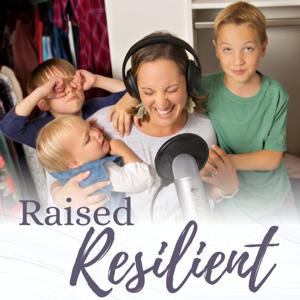
Raised Resilient with Dr. Hilary officially turns ONE this week! This means that it’s been a full year since I started this podcast. I wasn’t sure where this journey would take me (and I had no idea what I was doing), but I trudged ahead anyway, with a makeshift recording studio in my closet, a mic, and some serious passion for parenting & supporting parents.
In this week’s episode, I reflect on the journey that creating this podcast has been, and I share 3 invaluable parenting truths that I’ve learned along the way. I also give a preview of what you can expect from season two, including the introduction of guest episodes (and I’ve got some good ones lined up, so stay tuned!).
Creating this podcast has been one of my proudest accomplishments and favorite things I’ve done to date, and I’m so grateful that you’ve been a part of it! At the time of this writing, the podcast has already amassed 30,000 downloads and counting. And best of all, making this podcast each week has made me a better mom and a better person. So thanks for being here, and stay tuned for season 2, which starts next week!
FREE Mindset Shifts: https://www.raisedresilient.com/mindset
Connect with me on Instagram: https://www.instagram.com/raisedresilient/
Book a virtual coaching session with me! www.raisedresilient.com/coaching
I get so many questions about challenging behaviors – not wanting to share, hitting and kicking, “clingy” behaviors, refusing to listen – that occur in the days, months, and years after a child becomes a big sibling. And while most parents acknowledge that getting a sibling is a big deal, we often don’t realize that our child’s challenging behaviors are connected to this major life shift.
In this week’s episode, I answer a listener who wants to know how to help her young daughter, who’s struggling on play dates. She doesn’t want her peers to play with any of her toys, and that often causes friction. I offer thoughts on how to handle these tough moments – and I also offer some perspective and thoughts about how our listener can reconnect with her older daughter.
Here’s the thing: Getting a sibling is a really big deal for kids, and it’s a big deal for a lot longer than most of us think it should be a big deal. Many, many times, challenging behaviors are connected to this huge life transition, and we can best support our kids by reconnecting with them and helping them process and regulate the tough emotions that come with being a big sibling.
FREE Mindset Shifts: https://www.raisedresilient.com/mindset
Connect with me on Instagram: https://www.instagram.com/raisedresilient/
Book a virtual coaching session with me! www.raisedresilient.com/coaching
Meeting your child’s social needs can feel confusing. Parents often feel pressured to create a full schedule of play dates starting in babyhood … and then we feel frustrated when our older kids – especially our teens – only want to spend time with their friends. So what do our kids *actually* need in terms of social development and peer interactions, especially as they grow and change?
In this week’s episode, I give an overview of healthy social development from toddlerhood through the teen years. I talk about why young kids don’t actually need playdates (and what we need to focus on instead!) and help you think about your child’s most pressing social needs, no matter their age.
Here’s the thing: Social development starts from birth – but what our kids need most depends on their developmental stage. After listening to today’s episode, you’ll know what YOUR child needs most right now (and in the future!) to support healthy social development.
FREE Mindset Shifts: https://www.raisedresilient.com/mindset
Connect with me on Instagram: https://www.instagram.com/raisedresilient/
Book a virtual coaching session with me! www.raisedresilient.com/coaching
Your child is a star student – literally a teacher’s dream. But then she comes home from school, and it’s a totally different story; it’s meltdowns and tantrums and refusing to cooperate from carpool until bedtime. If this sounds familiar, you’re not alone, and you’re probably wondering why on earth your child only has meltdowns at home.
In this week’s episode, I answer a listener’s question about the huge difference between her child’s behavior at school versus at home. I unpack this super common dynamic, explain why it happens (and why it’s actually a good thing!), and give you strategies to better support your child when they’re struggling at home.
Here’s the thing: It’s super normal and actually healthy for our kids to hold it together at school and then fall apart at home. And once we understand WHY this happens, we will be so much better able to effectively support our kids in managing tough emotions and challenging behaviors after school.
FREE Mindset Shifts: https://www.raisedresilient.com/mindset
Connect with me on Instagram: https://www.instagram.com/raisedresilient/
Book a virtual coaching session with me! www.raisedresilient.com/coaching
If you’ve got more than one child, you already know how infuriating it can be when one kid starts picking on the other, seemingly out of nowhere. It might seem purposeful and mean, and it can be super tricky to meet both kids’ needs in these tough parenting moments.
In this week’s episode, I answer a listener’s question about how to stop sibling teasing. I dive into the many reasons and complicated dynamics that cause one child to seemingly intentionally provoke the other, and I share both strategies to intervene in the moment and to help you feel prepared before things ever get to that point.
Here’s the thing: It’s super normal for siblings to fight, tease each other, and otherwise struggle sometimes. The conflict we see on the outside is just the manifestation of how our kids are feeling – both in general and towards each other – on the inside. Understanding what’s really going on in these moments is key to supporting our kids effectively.
FREE Mindset Shifts: https://www.raisedresilient.com/mindset
Connect with me on Instagram: https://www.instagram.com/raisedresilient/
Book a virtual coaching session with me! www.raisedresilient.com/coaching
“All I do all day is go from room to room cleaning up the messes my kids make!” Sound familiar? If it does, you’re not alone! The constant tidying we do as parents is exhausting. It makes so much sense that you’d want your child to start cleaning up their own toys & messes as soon as humanly possible.
In this week’s episode, I talk about how to actually get your child to clean up after themselves (I promise you it IS doable!). I share what to do (& what not to do) and what to expect as you teach your child the important skill of cleaning up what they’re not using.
Here’s the thing: Children can absolutely learn to clean up, but like most things in parenting, this isn’t something we can force, and it’s definitely a process that doesn’t happen overnight. After listening to today’s episode, you’ll feel prepared to teach your child the art of cleaning up (without all the stress!).
FREE Mindset Shifts: https://www.raisedresilient.com/mindset
Connect with me on Instagram: https://www.instagram.com/raisedresilient/
Book a virtual coaching session with me! www.raisedresilient.com/coaching
Most of us arrive at gentle / respectful / conscious parenting for a reason: We want to do things differently than they were done when we were kids. And the parts of our own childhoods that we leave behind as we become parents ourselves – the punishments, developmentally inappropriate expectations, criticisms, etc. – have often left us with unmet needs & unhealed wounds.
In this week’s episode, I answer a listener who wonders how to deal with guilt around not having fully healed her childhood trauma before becoming a parent. I talk about how and why we can let go of that guilt, share my own story of recognizing childhood wounds through becoming a parent, and give you concrete ideas of how to heal that trauma – to reparent & heal your inner child! – WHILE also parenting your own kids.
Y’all, this is a powerful episode. We ALL have unhealed wounds coming into parenthood, and it can be freaking painful to parent with what can feel like gaping, vulnerable holes where our inner child peeks through when it’s least convenient. Here’s the thing, though: You will NEVER be fully healed; healing is a PROCESS – it’s ongoing. And when you listen to this episode & hear all the ways (big and small) that you’re healing as you go, you’ll realize that you are already DOING the work. And that’s what truly matters.
FREE Mindset Shifts: https://www.raisedresilient.com/mindset
Connect with me on Instagram: https://www.instagram.com/raisedresilient/
Book a virtual coaching session with me! www.raisedresilient.com/coaching
"Parenting is the hardest job we’ll ever do." It's literally the first line of my podcast intro, and that’s because it’s the truth. But we often make parenting even harder than it needs to be; we take on responsibilities that were never ours to begin with … and then we feel like failures when we’re unsuccessful.
In this week’s episode, I share three common but unnecessary “jobs” we take on as parents …. and I encourage you to LET THEM GO! You’re probably working harder than you need to, friend.
Here’s the thing: While I can’t make parenting easy for you (no one can!), I CAN help you parent in a way that feels *lighter*. And after listening to today’s episode, you’ll have 3 things you can stop doing TODAY to lighten your load and feel better about how you’re parenting.
FREE Mindset Shifts: https://www.raisedresilient.com/mindset
Connect with me on Instagram: https://www.instagram.com/raisedresilient/
Book a virtual coaching session with me! www.raisedresilient.com/coaching
From the publisher's feed

3,634 Listeners

1,527 Listeners

1,427 Listeners

175 Listeners

1,902 Listeners

1,733 Listeners

1,493 Listeners

470 Listeners

85 Listeners

4,535 Listeners

6,444 Listeners

260 Listeners

905 Listeners

334 Listeners

293 Listeners