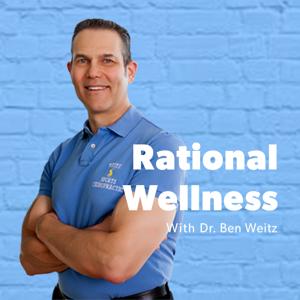
Dr. Susanne Bennett discusses the benefits of eating Kimchi including strengthening the immune system and we also discuss the coronavirus pandemic with Dr. Ben Weitz.
[If you enjoy this podcast, please give us a rating and review on Apple Podcasts, so more people will find The Rational Wellness Podcast. Also check out the video version on YouTube at https://www.youtube.com/user/weitzchiro/]
Podcast Highlights
6:05 Kimchi is a traditional food that everyone eats in South Korea. Kimchi consists of fermented vegetables, such as greens, cucumbers, radishes, and cabbage and it is a way that vegetables were preserved long before refrigeration. Vegetables are brined with salt, which increases the lactic acid bacteria content, and it is the live bacterial cultures that make Kimchi so healthy. In Korea there are over 250 different varieties of kimchi. Prior to refrigeration, the Koreans would place large earthenware pots with Kimchi under the ground, which freezes over in the winter and then they would be able to have vegetables all year round.
8:12 Dr. Bennett went back to Korea for the first time since her childhood when she was age 50 and she discovered that Koreans were eating tons of unhealthy noodles, white rice, and sugar. But the obesity rate in Korea is only 5.8% compared to 35% in the US! And rates of other chronic diseases like diabetes and heart disease are equally low despite such a poor diet. It is because Koreans eat kimchi with virtually every meal that they maintain their health. Kimchi with burgers. Kimchi with tacos. Kimchi with pizza.
11:17 The intro to Dr. Bennett’s Kimchi Diet book, which was published a year ago, talks about the SARS epidemic in Asia, which was also caused by a slightly different coronavirus than our current pandemic. The South Koreans did so well with that pandemic because of the benefits of kimchi for their immune system that it almost appeared that SARS bypassed Korea. Eating Kimchi contains lactic acid bacteria cause the body to produce immunoglobulins in the gut, which turns into IgG, which helps fight viral infections. Here is a video from Arirang News on how Kimchi Combats MERS.
17:07 Lactic acid bacteria contained in Kimchi, including Lactobacillus acidophilus, Leuconostoc, and Weissella, are the main bacteria responsible for its health promoting properties. These probiotic strains have a number of powerful health promoting properties, including improving cardiometabolic health. They help to manage cholesterol and triglyceride levels and improve insulin sensitivity. And you get approximately 300 billions CFUs in a daily serving, which is a lot more than you can get in a probiotic supplement. And you get a larger diversity of bacteria than you get in a supplement. Dr. Bennett recommends that if you are just starting to eat fermented foods like Kimchi that you start with cucumber Kimchi, since cucumber is not a FODMAP food. Cucumber does not contain fermentable carbohydrates. If you start with cabbage Kimchi you might end up getting a lot of gas and bloating and some additional bowel movements. So you want slowly innoculate your gut. Then after doing the cucumber kimchi daily, you switch to bok choi or mustard greens kimchi, and then you go to radish kimchi, and finally after about 6 weeks you go to Napa cabbage kimchi. Kimchi simulates your gut to produce short chain fatty acids like buyrate and propionic acid. Propionic acid has been studied a lot in Korea and it has anti-inflammatory, antioxidant, and lipid lowering properties. It also raises nitric acid levels. It has even been shown to reduce fatty streaks in the aorta. And kimchi also have anti-bacterial and anti-viral properties. You should start with one tablespoon twice per day and ramp it up ...