
Sign up to save your podcasts
Or



Steven spent five months in a hotel room smoking crack, accepting he'd die there. Then his mother asked a judge if he had children — and two cops knocked. The story of one last day.
Six and a half years ago, Steven was sitting in a hotel room he hadn't left in five months, smoking crack cocaine in the same clothes he'd been wearing since July. He'd accepted he was going to die there.
Two weeks before the end, in a sober moment, he whispered, "Please make this stop." He didn't know who he was talking to. Then his mother sat down with a Justice of the Peace and asked the judge one question: "Do you have children?"
Twelve hours after the cops knocked, Steven was in rehab. He's been sober since December 14, 2019.
In this episode, Steven walks Anthony through the last day, the Form 2, the divine intervention timeline, and the turning points inside treatment — including the two women who walked in taking responsibility while everyone else played victim, and the counselor who put his hand on Steven's shoulder and said, "I believe you kid, because I tried to quit too."
Anthony shares his own relapse map after seven and a half years sober — how it started with body image, became ADHD pills, then cocaine, then benzos. The slow drip. The line: "I emotionally relapsed long before I picked up."
They close on current unmanageability — financial insecurity, body image at 52 — and a closing line that does the work of the whole episode.
No clinical voice. No experts. Two guys in recovery telling the truth about what it actually took.
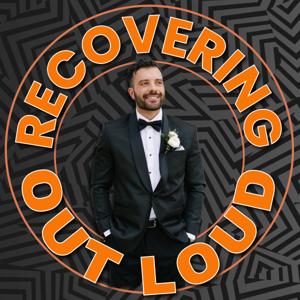
🎙️ Recovering Out Loud — peer-led recovery media built on lived experience.
Most people don't relapse because they wanted to drink. They relapse because they were still chasing pleasure — just in a legal package.
Anthony had 7.5 years of sober time before he picked up. In this episode, he breaks down the real reason long-term sobriety unravels: the war between pleasure and meaning, and why the recovery world is full of people white-knuckling a life they were never trained to actually want.
Covered in this episode: – The hedonic treadmill and why every "high" eventually feels like baseline – Anna Lembke's pleasure-pain balance (from Dopamine Nation) – Bruce Alexander's Rat Park study and why connection beats the lever – Cross-addiction: gym, golf, Instagram, work, achievement — the "ism swap" – Viktor Frankl, Dr. Joseph Lee, and the iPhone-vs-house metaphor that changed how Anthony sees addiction – Why "I don't need to feel good. I need to do good." is the line he comes back to
If you're newly sober and bored, or years in and quietly restless — this one's for you.
New episodes Tuesdays. Recovering Out Loud — real stories of addiction and recovery, no clinical voice, no guru energy.
Is alcohol the problem, or is the person holding the glass? Anthony breaks down the science, the shame, and the honest answer most people in recovery won't say out loud.
Full description:
Is alcohol the problem — or is the person drinking it? It's one of the most argued questions in addiction recovery, and how you answer it changes everything about how you get sober and stay sober.
In this solo episode of Recovering Out Loud, host Anthony — alcoholic, addict, and addiction counselor in training — pushes back on the growing "alcohol is the villain" movement on social media and asks the harder question: if alcohol were really the problem, why do most drinkers never develop alcohol use disorder? And why did rehab alone never keep him sober?
Anthony walks through the neuroscience (GABA, dopamine, why alcohol withdrawal can kill you), the genetics (50–60% heritability, AMA's 1956 disease classification), the 12-step "allergy" model, and the critical difference between guilt and shame in recovery. Then he lands on the answer most camps refuse to hold: both are true. Alcohol is genuinely addictive AND the person has the capacity to change.
If you've ever wondered whether you're "broken," whether you can ever drink normally again, or why the just-drink-like-a-normal-person advice feels so damaging — this one's for you.
Topics covered:
Mentioned in this episode:
Connect:
Emily returns to Recovering Out Loud mid-relapse to announce she's ending her own sobriety podcast. This is by far The most raw and vunerable conversation we've had on chronic relapse, identity in recovery, and what happens when "sober Sally" disappears.
Emily came on the first season of Recovering Out Loud almost two years sober, running her own recovery podcast Talks on the Rocks. She's back — and she's fighting addiction demons every day.
In this episode, Emily opens up about chronically relapsing on cocaine and alcohol, why she's putting her sobriety podcast on pause, and what it feels like to be the "sober girl" online while crying in the bathroom rolling up a bill she doesn't want to use. We talk about the Mother's Day relapse, the overdose from fentanyl-laced cocaine that nearly killed her, the hole in her septum, dating apps as a relapse trigger, isolation, and the identity crisis of taking a new sales job that puts her in clubs and at open bars for a living.
Anthony shares his own seven-and-a-half-year relapse and why "the obsession of every addict is that one day they'll control it again." If you've ever relapsed after long-term sobriety, struggled with chronic relapse, or felt like a fraud in your own recovery — this one is for you.
Topics covered:
If you or someone you love is struggling with addiction, please reach out to a local recovery resource. In the US: SAMHSA National Helpline 1-800-662-4357. In Canada: Wellness Together 1-866-585-0445.
Recovering Out Loud is hosted by Anthony. New episodes weekly.
Struggling to move forward in recovery — even when you're "doing everything right"? That might be resistance. And it probably doesn't look the way you think it does.
In this episode of Recovering Out Loud, Anthony breaks down 5 forms of resistance that hide in plain sight in addiction recovery — the ones that feel like growth, look like progress, and get socially rewarded, but are quietly keeping you stuck.
Whether you're newly sober, years into recovery, or struggling to get back after a relapse — this episode is for you.
Topics covered:
If you've ever felt stuck in sobriety, struggled with self-sabotage, or wondered why you can't seem to follow through — this one hits different.
Recovering Out Loud is peer-led recovery media built on lived experience. No clinical voice. No guru energy. Real stories of addiction and sobriety from someone still in it.
🎙 Follow the podcast on Spotify, Apple Podcasts, and YouTube. New episodes weekly.
In this episode:
Notes:
People in recovery are being deliberately targeted by the peptide industry — and most of us don't even realize it.
In this episode, Anthony breaks down how the influencer ecosystem profits from the exact vulnerability that early recovery creates: the desperate need to feel better, faster. Post-acute withdrawal syndrome is real, the brain genuinely takes time to heal, and predatory actors are filling that gap with products instead of solutions.
He covers what most peptide promoters won't tell you — the regulatory status, the evidence gap, the relapse risk hidden in the behaviors around self-injection and secrecy, and the questions you should be asking before anyone sells you anything in recovery.
This isn't anti-peptide. It's pro-honesty.
Three questions to ask before you try anything being sold in recovery spaces — and what actually worked for Anthony when nothing external did.
---
Topics covered:
• Why people in early recovery are the easiest people to sell to
• How the influencer affiliate model works — and who profits from your discount code
• The regulatory and evidence reality behind the most-promoted peptide compounds
• The relapse risk nobody in the wellness space is talking about
• What peer-reviewed evidence actually requires vs. what's being passed off as proof
• Three questions to ask before anything in recovery gets sold to you
---
If this episode resonated, share it with someone in recovery who's exploring this space. Like, follow, and subscribe — and recovery is simple, not easy.
Mentioned Studies:
BPC-157 — FDA status (unapproved drug, Category 2)
BPC-157 — WADA prohibited substance
The human trials problem — only 1 human study out of 544 articles reviewed
The single research group problem
NAD therapy — not approved for addiction, evidence is small studies only
PAWS — Post-Acute Withdrawal Syndrome
Everyone expects sobriety to reveal the real you — calmer, freer, finally yourself. What nobody warns you about is that the first thing sobriety does is introduce you to a version of yourself you don't recognize. And you might not like what you see.
In this episode, Anthony gets into the personality change that happens when you get sober — not the inspirational version, the actual version. Why early recovery can feel like becoming a worse, more uncomfortable, harder-to-be-around person. Why that disorientation is the process, not a problem. And how the agreeableness you're losing wasn't your personality — it was your armor.
This one is for two groups: the newly sober who are noticing their real personality emerging and don't like what they're seeing, and the long-term sober — especially the dry drunks — who white-knuckled past this step and never did the identity work.
In this episode:
Recovery is personal. Take what helps and leave the rest.
Predatory behavior in recovery spaces is real, and most people refuse to name it. In this solo episode, I share what 13th stepping is, why it puts newcomers — especially women — at serious risk, the manipulation tactics to watch for (love bombing, trauma bonding, isolation, fake "I can keep you sober" dependency), and what people with more time owe the people walking in scared.
This isn't clinical advice. It's what I've seen, what I do in my own groups, and what helped me stay safe and stay sober.
Chapters: 00:00 — Cold open 01:34 — What 13th stepping actually is 02:45 — Why newcomers are vulnerable 04:27 — Why rehab makes it worse 06:28 — Manipulation tactics (love bombing, trauma bonding) 08:01 — Red flags 09:11 — The consequences nobody talks about 11:56 — How to protect yourself 13:24 — Practical boundaries 14:40 — If you have time: your responsibility 17:09 — If you're new: you deserve safety 19:39 — Close
If this hit, follow Recovering Out Loud so the next one finds you.
In this episode of Recovering Out Loud, Anthony introduces a framework he calls Member, Attender, Pretender — the three roles people cycle through in recovery — and makes the case that knowing which one you're in right now could be the most important question you ask yourself this week.
This isn't about shame. It's about awareness.
The Three Roles:
The Pretender The Pretender isn't lying about drinking — they're lying about how they're doing. They might have years of sobriety on paper. They might chair meetings. They might be the person everyone else looks up to. But internally, they've stopped surrendering. They've stopped telling the truth. They're managing an image, not an addiction.
Anthony shares what this looked like in his own life: the ADHD medication he didn't fully disclose, the secrets he was keeping while standing in recovery spaces, the chest-weight of maintaining a sober identity when the reality was far messier. The pretender's environment, he says, is exactly where relapse grows and thrives.
The Attender The Attender isn't lying. They're just... not in it. They're showing up, checking the box, sitting at the back. No sponsor calls, stalled step work, surface-level conversation. Nothing is actively going wrong — which is what makes this role a trap. When you're attending, you're not building. And when you're not building, you're eroding.
Anthony explains why the Attender is the softest, most comfortable, and most dangerous place to be in recovery — because nobody pulls you out except you.
The Member The Member isn't someone who has it figured out. It's a current state of action. Small, boring, unsexy choices. Calling someone when you don't feel like it. Staying after the meeting. Getting a newcomer's number. Doing the step work nobody claps for. Anthony's three markers of membership: reachability, honesty with one person, and contribution.
The Self-Checklist (5 Questions):
Anthony walks through five honest questions to figure out which role you're in right now:
Anthony has been all three. He drifted from Member to Attender to Pretender across the final years of his first recovery, and he didn't break out in time. Today, he says, he can't promise he'll be a member tomorrow — he just knows what it takes to stay in the middle.
Because you only fall off the sides of recovery. You can't fall off the middle.
Anthony is a person in recovery sharing lived experience. This podcast is not a substitute for professional medical or clinical advice. If you or someone you love is struggling with addiction, please reach out to a qualified professional or call SAMHSA's National Helpline: 1-800-662-4357 (free, confidential, 24/7).
Subscribe to Recovering Out Loud on Spotify, Apple Podcasts, and YouTube. If this hit you, send it to someone who needs to hear it.
Is addiction a disease… or a choice?
For decades, psychologists, doctors, and people in recovery have debated this question.
Some experts argue addiction is a chronic brain disease.
Others believe addiction develops through learned behavior, trauma, or environment.
In this episode of Recovering Out Loud, Anthony breaks down the major psychological models used to explain addiction and how they influence recovery.
We explore:
• The Disease Model of addiction
• The Learning / Behavioral Model
• The Trauma & Self-Medication Model
• The Biopsychosocial Model used in modern science
• Why different recovery programs emphasize different approaches
• Why addiction treatment looks different depending on the model you believe
Anthony also shares personal insights from his own recovery journey and explains why many experts now believe addiction is multilayered, involving biology, psychology, environment, and life experience.
Understanding these models can help reduce stigma, increase compassion, and open the door to more effective recovery.
Because the more we understand addiction…
the better we can help people heal.
If you found value in this episode, follow the podcast and share it with someone who might need to hear it.
From the publisher's feed
1,704 Listeners

21,054 Listeners

12,706 Listeners
2,014 Listeners

111,809 Listeners

2,548 Listeners

69,492 Listeners

46,884 Listeners

108 Listeners

10,711 Listeners

19,061 Listeners
618 Listeners

8,803 Listeners

1,804 Listeners