
Sign up to save your podcasts
Or

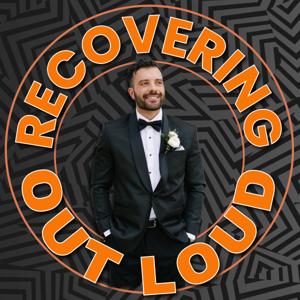


This is the first in a new series — Borrowed Wisdom — where I share the greatest recovery speaker tapes that saved my life. Every resentment I've ever had came from fear, and a speaker named Bob D broke that wide open for me.
In this solo episode I pull the highlights from a speaker tape that's saved my ass more times than I can count, and I reflect on what each line means in my own recovery. We get into why we lie out of fear instead of malice, why the voice in your head projects the worst-case every time (and is almost always wrong), the difference between faith and trust — the wheelbarrow on the tightrope — and why every character defect comes with a "cookie" attached. We close on the paradox that the longer I stay sober, the more help I actually need.
If you've ever stayed stuck in a resentment, talked yourself out of something before you even tried, or wondered why "letting go" feels impossible — this one's for you.
If no one's told you today: I love you. Recovery is simple, not easy.
▶ Follow the show so you don't miss the next one. 📩 Want the full talks? DM me on Instagram @recoveringoutloudpod — I'll send them over.
I said "I'm sorry" so many times in my addiction that the word stopped meaning anything. All words, no action — guilt with a better vocabulary. In this solo episode I get into the difference between a verbal amends and a living amends: not the conversation, but the daily commitment to behave differently and become someone who doesn't repeat the harm.
I talk about cleaning up my side of the street, moving from taker to giver, making amends to myself, and the trap of using "I'll just live differently" as an escape hatch to avoid the hard conversations. I also tell the story of running into my old drug dealer at the gym five years sober — and what I did next.
This one's about rebuilding trust after addiction, forgiving yourself first, and why your family doesn't owe you forgiveness — but your actions, over time, speak louder than any apology.
Recovery is simple, not easy.
🎧 New episodes twice a week. If this helped, follow the show — it genuinely helps it grow.
0:00 Guilt with a better vocabulary
0:34 What this episode is really about
1:11 "How do I pay my parents back?"
1:29 Welcome to Recovering Out Loud
2:12 What a living amends actually is
2:49 Verbal amends vs. living amends
3:19 Moving from taker to giver
4:02 My purpose is to be of service
4:19 When living amends is the right path
5:21 Amends is for you, not for them
5:46 The trap: amends as an escape hatch
6:32 Making amends to yourself
7:11 The long game — there's no finish line
7:47 What it feels like with family
8:28 You cannot heal anyone
9:18 Why your worst comes out at home
10:26 Nobody owes you forgiveness
11:16 Integrity when nobody's watching
12:03 The drug dealer at the gym
13:31 Don't put yourself in danger
13:46 If an amends pops into your head
15:06 Disturbed, discontent, disconnected
15:34 It's a process — progress not perfection
16:10 Don't use being high as an excuse
16:32 How to actually make the amends
17:22 Forgive yourself first
18:09 The nightly inventory
18:31 Outro
10 unfiltered thoughts from my morning journal on staying sober, comparison, peace over happiness, and the war that's really with myself.
At a year and a half sober again, I sat down with my morning journal and pulled out 10 thoughts that are keeping me in recovery right now — then talked them through, raw and unscripted.
This one's about comparison and jealousy in the recovery and creator space ("why not me?"), getting through hard times one day at a time, building a morning routine when your old life had no structure, beating boredom by reconnecting with friends, and why I show up to meetings for what happens before and after the meeting. We get into believing in the sober version of yourself, chasing peace instead of happiness, the power of journaling, and the reframe that changed everything for me: moving from a war on drugs to a war on myself.
If you're early in substance abuse recovery, navigating life after drug addiction, or just trying to stay sober through a rough patch — I hope one of these helps. Recovery is simple, not easy.
Timestamps 00:00 — Morning Pages & why I journal 02:21 — #1 Competitors as hope, not jealousy 06:23 — #2 Staying sober through hard times 08:03 — #3 The morning routine 09:46 — #4 Boredom & reconnecting with friends 11:46 — #5 Meetings: the before & after 13:36 — #6 Believing in the sober you 15:13 — #7 Peace over happiness 16:32 — #8 Journaling 17:19 — #9 Everything isn't as it seems 21:35 — #10 War on drugs → war on me
Mentioned • The Artist's Way by Julia Cameron — the Morning Pages practice • Past episode with Jessie (loss & staying sober through grief) • Past episode: Pleasure vs. Meaning • My recovery journal — https://linktr.ee/Recoveringoutloudpod
Is it okay to admit you miss drinking? Psychotherapist Eryl returns to Recovering Out Loud for an honest conversation about the grief almost nobody talks about in early sobriety — and why pretending "it was all bad" can leave you feeling more ashamed and isolated than the truth ever would.
Anthony and Eryl get into the alcohol addiction recovery experience as it really is: substances as an "escape hatch," the abusive-relationship analogy that didn't start out abusive, and the "parts work" idea that you can be grateful to the part of you that helped you survive — without ever going back to it.
They also dig into why we keep reaching outside ourselves for a fix (the car, the body, the next purchase), how attachment and self-regulation sit underneath addiction, the cross-addiction "whack-a-mole," and a hard look at the predatory wellness and peptide marketing showing up in recovery spaces right now. It closes on emotional regulation, money, and what it means to build a life you don't need to escape from.
A peer + therapist conversation about substance abuse recovery, grief, and emotional sobriety — real stories, no guru energy.
This episode discusses body image and eating-disorder recovery. Support resources are in the show notes.
Find Eryl on instagram here: https://www.instagram.com/erylmccaffrey/
00:00 Eryl's last 30 days — and the day she said "I need help"
03:07 Why your "failed attempts" weren't failures
05:09 Is it okay to miss drinking? The grief no one warns you about
07:05 The escape hatch: avoiding discomfort at all costs
09:42 Avoiding people, places & things (and why it's temporary)
11:52 What you were really chasing was connection
13:22 Grieving the old you — and being grateful to it (parts work)
14:50 When the craving hits: delay, distract, cope ahead
18:30 Self-regulation, co-regulation & where addiction starts
20:00 Attachment styles, gender & the substance you reach for
23:52 Whack-a-mole: trading one substance for another
24:48 Everything can become a drug — nicotine, scrolling, shopping
25:07 Peptides, Ozempic & predatory marketing in recovery spaces
31:00 Honesty about TRT and the rabbit hole
32:45 "Be curious, not judgmental"
34:01 The real question: WHY am I reaching for a fix?
35:01 Financial sobriety and your relationship with money
37:55 How alcohol gets marketed to keep women small
41:44 Selling escape: the beach, the Corona, the lie
44:25 Building a life you don't need to escape from
46:41 Waiting for the other shoe to drop
48:30 Emotional regulation, in one elevator pitch
49:56 You are not your thoughts — meditation & the observer
Everyone talks about what you lose when you get sober. Nobody talks about what you get back.
Not the big stuff — career, family, health. Those are real, but they're slow. They're not what keeps you sober at 11 p.m. on a Tuesday.
In this episode, Anthony breaks down the unexpected, small, sometimes weird gifts that sobriety actually delivers — the ones that sneak up on you, that nobody puts in their inspirational reels, and that are quietly building the proof your brain needs to stay sober long-term.
What's covered:
Anthony also covers the honest caveats — PAWS (Post-Acute Withdrawal Syndrome), the gifts that require active work, and the ones that don't show up on schedule.
And for the person who can't feel anything yet: your timeline is real, even if it's slower than the posts.
Recovering Out Loud is peer-led recovery media — real stories of addiction and sobriety, no clinical voice, no guru energy.
You're allowed to miss it. Nobody tells you that.
Most recovery content tells you your using days were all bad. But if that were true, you wouldn't have kept going back. In this episode, Anthony gets honest about the parts of his drinking and using days he actually misses — the escape, the ritual, the identity, the connection — and why admitting that out loud might be the most important thing you do in your recovery.
In this episode:
Key takeaway: The thoughts you can talk about are the thoughts you control. The ones you can't are the ones that control you.
This episode is a permission slip.
Recovering Out Loud is peer-led recovery media built on lived experience — real stories of addiction and sobriety, no clinical voice, no guru energy.
If you found this helpful, please leave a rating and review — it helps more people find the show.
Everyone says weed isn't addictive. Alex is eight years sober and almost didn't make it out.
This is the first time he's told the whole thing start to finish. We get into the last 30 days of his using — when he was so deep he couldn't even get high anymore, just chasing a feeling that was already gone. He takes us to his last day: an ice storm, a long drive for weed that wasn't there, and waking up passed out half in a toilet bowl, ribs smashed, realizing how close it got.
The part that stuck with me is what came after the drugs stopped: "The war on drugs is over. Now it's the war on self." We talk about the stuff nobody warns you about in long sobriety — isolation that feels safe, cross-addiction (food, work, gaming), men white-knuckling their mental health, and why "it's just weed" is the sentence he trusts the least.
If you've ever wondered whether weed can really be a problem — or you're years in and still fighting yourself — this one's for you.
What we get into:
Recovering Out Loud is peer-led recovery media built on lived experience — real stories of addiction and sobriety. No clinical voice, no guru energy.
Nobody told me that getting sober wasn't the hard part. The hard part was realizing the version of myself I'd been dragging around for years — the beliefs, the patterns, the way I saw the world — most of it wasn't even mine.
In this episode, I'm breaking down one of the most important phrases in my recovery: Uncover, Discover, Discard. This isn't a clinical framework — it's how I actually learned to stop being run by ideas I picked up before I ever touched a substance. We're talking about the subconscious operating systems that keep us sick, where they came from, and how to actually let them go — not just white-knuckle through them.
I get into the old ideas that still show up in my own life: tying my self-worth to money, earning love through making people laugh, needing everything to be okay on the outside before I can feel okay on the inside. I also talk honestly about how stopping those patterns is exactly what I wasn't doing before I relapsed — and how "Anthony 3.0" is something I'm actively building, not looking back from.
In this episode:
Listener reflection prompts:
Recovery is simple. Not easy.
Jesse stayed sober after losing her 1-year-old son. A mother's story of recovery, grief, and faith.
In December 2022, Jesse hit her rock bottom — a night of drinking and cocaine that ended in an ER waiting room, where she prayed for the first time and asked for help. Four months later, she found out she was pregnant. Her son Jacob — what she calls her miracle baby — became the reason she stayed clean.
Last September, Jacob was rushed to the Emergency room. He didn't come home from the hospital. Against every odd, Jesse stayed sober through it.
In this conversation, she opens up about what nobody warns you about — the brutal month and a half of Suboxone withdrawal, finding leftover drugs in her home days after the funeral, the moment anger (not strength) saved her from relapsing, and why she now believes recovery was training for grief.
In this episode of Recovering Out Loud, Jesse opens up about:
– The last 30 days of her addiction and the night she prayed in an ER waiting room
– Coming off Suboxone (a month and a half of withdrawal she calls worse than cocaine)
– Why pregnancy became her head start in recovery – Losing Jacob, and the moment she found leftover drugs in her home days after the funeral
– How recovery turned out to be training for grief — both are one day at a time
– Faith, anger at the funeral, and praying for "just a little relief"
– What real support looks like (the neighbour who didn't ask, she just showed up)
– Her honest answer to "worst day sober vs best day drinking" — and why it's not the one you expect
FOLLOW JESSIES JOURNEY HERE ON INSTAGRAM
📸 INSTAGRAM: @recoveringoutloudpod
🌐 WEBSITE: https://linktr.ee/Recoveringoutloudpod
—
ABOUT RECOVERING OUT LOUD
Recovering Out Loud is a peer-led recovery podcast hosted by Anthony — a social work student and person in long-term recovery sharing real stories of addiction and sobriety. No clinical voice. No guru energy. Just lived experience.
—
If you or someone you love is struggling with addiction or grief, please reach out to a local support resource. This podcast is for peer support and storytelling — not a substitute for clinical care.
#RecoveryPodcast #SoberStories #AddictionRecovery
Self-forgiveness in addiction recovery is the work nobody markets — because nobody wants to buy it. In this solo episode, Anthony shares why shame is a stronger predictor of relapse than a deterrent, why guilt and shame are not the same emotion, and the 5-step practice he uses to forgive himself one day at a time.
After 7.5 years sober, Anthony relapsed in 2024. He came back January 12, 2025. This episode is about what kept him stuck on the way back — and what finally got him off the hook.
In this episode:
- Why "I'll just feel bad enough to never do it again" doesn't work
- Brené Brown's guilt vs. shame distinction — and why it matters for relapse risk
- June Tangney's research on shame-proneness and substance misuse
- Kristin Neff's three pillars of self-compassion, adapted for recovery
- A 5-step self-forgiveness practice you can start today
- The "cookie jar" — using your own hardest experiences as proof you can do this
Chapter markers:
00:00 Cold Open: The Day I Stopped Trying to Forgive Myself
02:55 Resentment Is Poison: Forgiving Others First
04:55 Welcome to Recovering Out Loud
06:30 Real Check-In: My Struggle With Patience This Week
09:55 Why Self-Forgiveness Is the Hardest Step
12:44 Story 1: Blowing the Money & Relapsing After 7.5 Years
17:47 Guilt vs. Shame — The Distinction That Changes Everything
20:32 The Relapse Reckoning
22:00 What Self-Forgiveness Actually Is (and Isn't)
24:21 The 5-Step Self-Forgiveness Practice
29:17 You Are Not the Worst Thing You Did
31:16 The Cookie Jar: Drawing on Past Wins
If you got something out of this, please follow, rate, and share with one person who needs it.
— Anthony
Host of Recovering Out Loud · Real stories of addiction and recovery, no clinical voice, no guru energy.
#RecoveringOutLoud #SoberPodcast #Recovery #SelfForgiveness #Shame
From the publisher's feed
1,704 Listeners

21,054 Listeners

12,706 Listeners

2,014 Listeners

111,809 Listeners
2,548 Listeners

69,492 Listeners

46,884 Listeners

108 Listeners

10,711 Listeners

19,061 Listeners
618 Listeners

8,803 Listeners

1,804 Listeners