
Sign up to save your podcasts
Or

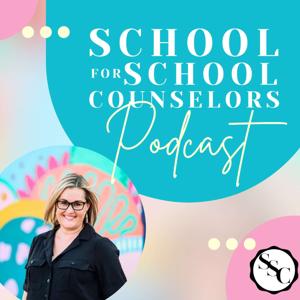
By School for School Counselors
Ready to cut through the noise and get to the heart of what it really means to be a school counselor today? Welcome to The School for School Counselors Podcast! Let’s be honest: this job is
... more

4.8
220220 ratings


The podcast currently has 214 episodes available.
The most played episodes among Podcast App listeners.
Whodunit? It's time to open the case file, y'all. We’ve got a student who keeps leaving class, a behavior plan that is NOT working, and a school counselor whose fingerprints are all over it. So... who’s actually responsible for the mayhem? Because when campuses start talking about behavior plans, the details get complicated fast: Should the school counselor be involved? Are you actually qualified to write the plan? And if you do write it, does that make you responsible for whether or not it works? We’ve got a whole lineup of possible suspects: the student, the staff, and the school counselor. And by the time we close the case, you may be surprised to learn that “Who wrote the behavior plan?” is the least important question of all. Grab the companion guide at schoolforschoolcounselors.com/plan ******** Want support with real-world strategies that actually work on your campus? We’re doing that every day in the School for School Counselors Mastermind. Come join us! ******** All names, stories, and case studies in this episode are fictionalized composites drawn from real-world circumstances. Any resemblance to actual students, families, or school personnel is coincidental. Details have been altered to protect privacy. ******** This work is part of the School for School Counselors body of work developed by Steph Johnson, LPC, CSC, which centers role authority over role drift, consultative practice over fix-it culture, adult-designed systems and environments as primary drivers of student behavior, clinical judgment over compliance, and school counselor identity as leadership within complex systems.

When a student is struggling, school counselors often hear, “Can you talk to them?” But in determining if a student needs counseling, we tend to skip some very important steps. In this episode, I'm talking about a common jump everyone on campus tends to make (and nobody ever questions)- and why it's such a big deal. You’ll hear why context matters more than the referral itself, how easily schools move from observation to interpretation to prescription, and the one question that can keep you from taking on student problems that may not belong in your office in the first place. (Also- there’s also a huge plot twist here for experienced school counselors.) If your caseload is exploding, teachers are constantly asking you to “check on” students, or you’re trying to make smarter decisions about behavior, anxiety, coping skills, and other student concerns, this one is for you. Listen before you add one more student to your list. ******** Want support with real-world strategies that actually work on your campus? We’re doing that every day in the School for School Counselors Mastermind. Come join us! ******** All names, stories, and case studies in this episode are fictionalized composites drawn from real-world circumstances. Any resemblance to actual students, families, or school personnel is coincidental. Details have been altered to protect privacy. ******** This work is part of the School for School Counselors body of work developed by Steph Johnson, LPC, CSC, which centers role authority over role drift, consultative practice over fix-it culture, adult-designed systems and environments as primary drivers of student behavior, clinical judgment over compliance, and school counselor identity as leadership within complex systems.
It doesn’t work. And if you’ve tried it, you know it's true. The school counseling advocacy model most of us were taught was supposed to be simple: explain your role, show your data, cite the standards, make the case. THEN we were supposed to be able to MAKE THINGS HAPPEN. The problem is- information isn’t influence. So in this episode, we’ll talk about how school counselors can become influential long before "advocacy" meetings ever happen. We’ll talk about why your principal does NOT need to care about school counseling as much as you do, why constantly sharing information can keep you stuck, and how a little out-of-the-box school counseling thinking can completely change your situation. There’s a HUGE difference between being the school counselor who's always asked for more effort, and being the person they stop in the hallway to ask: “Hey- what do you think?” One is asking for your labor, but the other is asking for your judgment. THAT’S influence. ******** Want support with real-world strategies that actually work on your campus? We’re doing that every day in the School for School Counselors Mastermind. Come join us! ******** All names, stories, and case studies in this episode are fictionalized composites drawn from real-world circumstances. Any resemblance to actual students, families, or school personnel is coincidental. Details have been altered to protect privacy. ******** This work is part of the School for School Counselors body of work developed by Steph Johnson, LPC, CSC, which centers role authority over role drift, consultative practice over fix-it culture, adult-designed systems and environments as primary drivers of student behavior, clinical judgment over compliance, and school counselor identity as leadership within complex systems.
Most school counselors can describe what they do all day. Crisis response. Small groups. Student check-ins. Parent calls. Schedule changes. Behavior support. Data meetings. The fifty small things that happen before 9:00 a.m. But ask a school counselor what makes them remarkable, and things can get quiet fast. In this episode, Steph talks about why it can be so hard to name the specific instincts, patterns, and abilities that make you unusually effective in your role. This is not about generic compliments or personality quizzes. It is about learning to identify the thing you do in a way almost nobody else on your campus can. You’ll hear why confidence in your own ability actually changes what you do on campus, and why using what you’re good at is completely different from just knowing it exists. You’ll also hear how years of being second-guessed or undervalued can make you stop seeing what is remarkable about you at all. You'll hear three places your remarkable work may be hiding: interpersonal skill, data and pattern recognition, and the counseling approaches you naturally reach for when the work gets real. Because if you cannot name your value, the system will keep naming it for you. This episode will help you start answering a question most school counselors have never been asked directly: What makes you a remarkable school counselor? ******** "Best Year Ever!" happens July 21-24. Get your ticket today. ******** Want support with real-world strategies that actually work on your campus? We’re doing that every day in the School for School Counselors Mastermind. Come join us! ******** All names, stories, and case studies in this episode are fictionalized composites drawn from real-world circumstances. Any resemblance to actual students, families, or school personnel is coincidental. Details have been altered to protect privacy. ******** This work is part of the School for School Counselors body of work developed by Steph Johnson, LPC, CSC, which centers role authority over role drift, consultative practice over fix-it culture, adult-designed systems and environments as primary drivers of student behavior, clinical judgment over compliance, and school counselor identity as leadership within complex systems.
If somebody else could do exactly what you're doing after reading the same slide deck- Why did you go to grad school? That's the question that hit me after I reviewed a state-sponsored training that handed school counselors a watered-down counseling model and called it evidence-based. And once I saw it, I couldn't unsee it. But this episode isn't really about one training. It's about what happens when a profession starts confusing the appearance of counseling with counseling itself: the slides that look clinical, the activities that look like interventions, the worksheets that look like the real thing. I'll give you one simple question to tell the difference. And fair warning- a lot of your favorite materials won't survive it. [Part 1 of 2. This week, the rule. Next week, the test.] ------- Topics: solution-focused brief counseling (SFBC) in schools, evidence-based school counseling, treatment fidelity, the limits of printable counseling resources and TPT materials, and protecting the clinical role of the school counselor. ******** Join our new Skool for School Counselors community ******** Want support with real-world strategies that actually work on your campus? We’re doing that every day in the School for School Counselors Mastermind. Come join us! ******** All names, stories, and case studies in this episode are fictionalized composites drawn from real-world circumstances. Any resemblance to actual students, families, or school personnel is coincidental. Details have been altered to protect privacy. ******** This work is part of the School for School Counselors body of work developed by Steph Johnson, LPC, CSC, which centers role authority over role drift, consultative practice over fix-it culture, adult-designed systems and environments as primary drivers of student behavior, clinical judgment over compliance, and school counselor identity as leadership within complex systems.
The podcast currently has 214 episodes available.

9,196 Listeners

13,493 Listeners

11,827 Listeners
4,750 Listeners

369,791 Listeners

1,908 Listeners

27,714 Listeners

1,260 Listeners
84 Listeners
101 Listeners
2,379 Listeners

2,112 Listeners

19,289 Listeners

64 Listeners

2,646 Listeners
25 Listeners