
Sign up to save your podcasts
Or

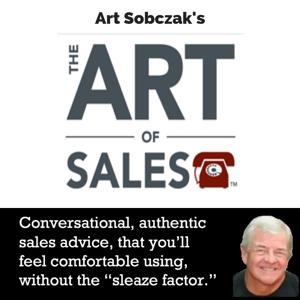


Closing is not, and should not be about techniques or hard sell manipulative tactics. When done professionally, it is a natural next step in a natural conversation.
James Muir has developed two simple questions that have been proven to be the most effective steps to take to get prospects to move forward in the sales process, and buy. You'll hear the exact words, and how to use them.
The people who directly interact with prospects and customers ARE the company to those buyers. One screw up by one person can cause them to never buy there again.
And most of these people who interact with buyers don't realize the true lifetime value of a customer. Such was the case of the pizza shop owner Art had tried to order from.
This will get you thinking about the real value of your customers, how important every interaction is, and what you can do to maximize them.
Old school, cheesy sales advice suggests you should always assume the sale, and use "assumptive" closing techniques.
Part of that is partially true, and the other part can either make the sales rep look like a fool, or be the exact thing to do. It depends on the situation.
All of this is explained in this episode so you will have a clear plan as to when to assume and what to do, and when to never to do it.
Too many sales are lost because the salesperson uses weak language. They wish for the business or next step, instead of directly asking for it.
And, this is NOT being pushy when used correctly.
You'll hear lots of tips and word-for-word closes and commitment questions you can use right now.
If the title of this episode got your attention, you will be listening for the word "wine" when you hit "play." And you will hear it.
The sales point of this episode is that we look for what we expect. And you should do the same thing when you send anything to a prospect or customer after a sales call. Then, there's a greater chance they will actually pay attention to what you send.
You'll hear Art's wine story, and how he got what he expected at a wine tasting.
Some sales training goes overboard on its insistence that you use or don't use certain words. The words we use in sales CAN make all of the difference. But WHERE they are used is much more important.
You'll hear this explained using the "feel" vs. "thinking" example.
Almost all of the locals are salespeople in Cabo San Lucas, Mexico, as Art observed on vacation this week.
Beach vendors, kids working in jewelry stores, and more all provided valuable sales lessons--including how to deal with rejection--that we all can use.
Often, using the most simple, conversational replies are the best ways to deal with mild resistance.
If someone doesn't have a good reason for their resistance, simply asking them to repeat it can help them to open up more to your offer. You'll hear how to do that in this very brief episode.
One of the best sales questions Art has ever heard was from the old TV show, Ally McBeal.
You can use this simple question to get people off of the fence, and either tell you they are not a prospect, or get them to move forward. Both of which are better than a "maybe."
Sometimes prospects ask salespeople extremely technical, or outrageous questions that catch them off-guard, and cause them to respond with a long string of nonsense.
We can avoid that, and it involves actually NOT answering the question immediately. You'll hear how to respond, and why.
From the publisher's feed

3,837 Listeners

3,896 Listeners
580 Listeners
1,113 Listeners

16,842 Listeners

3,825 Listeners

13,975 Listeners
580 Listeners

4,456 Listeners

70 Listeners
395 Listeners

913 Listeners

962 Listeners

165 Listeners

930 Listeners