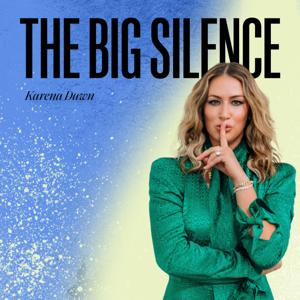
The Big Silence
Download on the App Store

The Big Silence episodes

  • Dr. Nadine Macaluso on Trauma Bonds: How to Spot Love-Bombing, Set Boundaries, and Heal
    *Have a message for Karena? She'd love to hear from you and share your comment or question on air!*
    Leave Karena a voicemail: https://www.speakpipe.com/KarenaDawn
    *What happens when the “perfect” relationship is powered by control, confusion, and intermittent kindness?*
    In this powerful conversation, Dr. Nadine Macaluso, somatic psychologist and author of Run Like Hell, breaks down trauma bonds. She explains why love-bombing feels so intoxicating at first, and how to rebuild trust in yourself after leaving a toxic dynamic. We cover red flags, green flags, co-parenting with a difficult ex, and why “boring” can actually mean safe, steady, and good.
    *How do you recognize when love turns into control, and find the courage to walk away from a trauma bond?*
    Escaping toxic cycles isn’t just about leaving the situation. It’s about relearning safety, trusting your own signals, and choosing peace over chaos.
    *(00:26) Origin Story & Reinvention at Any Age*
    ● Going back to school at 39 and finishing a doctorate at 45 proves reinvention is possible at any age
    ● How early exposure to feelings and psychology sparked Nadine’s path
    ● Therapy as a lifeline when chaos became overwhelming
    *(04:03) Love-Bombing & Early Red Flags*
    ● The intoxicating “soulmate” language and excessive attention of love-bombing
    ● Why mismatched words and actions are an early signal to notice
    ● Tuning into your body’s warning signs when something feels off
    *(07:09) What a Trauma Bond Really Is*
    ● Two defining conditions: intermittent abuse and a power imbalance
    ● How Nadine’s Trauma Bonds Assessment and the Big Five test can offer clarity
    ● Why it’s critical to drop self-blame and focus on prevention
    *(11:20) Healing Timeline, Boundaries & Green Flags*
    ● Why healing from a trauma bond takes about two years
    ● The relief of “I hear you” as a sign of safety
    ● Quick red flags to avoid: boundary-plowing, sudden rage, and chronic inconsistency
    *(21:50) Co-Parenting, Somatic Tools & Choosing Peace*
    ● Co-parenting from authenticity instead of rebellion or people-pleasing
    ● How to track emotions somatically—where feelings live in the body
    ● Reframing “boring” as safe, steady, and priceless for long-term peace
    *Thanks for the support from our partners:*
    Let our sponsor BetterHelp connect you to a therapist who can support you - all from the comfort of your own home. Visit https://betterhelp.com/thebigsilence and enjoy a special discount on your first month.If you have any questions about the brand relating to how the therapists are licensed, their privacy policy, or therapist compensation model, check out this FAQ: https://www.betterhelp.com/your-questions-answered/
    *Guest Resources*
    https://drnae.com/
    https://www.instagram.com/therealdrnadine/?hl=en
    https://drnae.com/product/run-like-hell-book-bundle/
    https://drnae.com/brainmanager-big-5-personality-quiz/
    If this episode moved you, please consider supporting The Big Silence Foundation and exploring our resources:
    *Connect with The Big Silence Community*
    https://thebigsilence.com/pages/audiobook
    https://thebigsilence.com/collections/shop-all
    https://www.youtube.com/channel/UCaL3RrbvDLuTTGFN4VYzEpw
    https://thebigsilence.com/donate
    45 min
  • From Panic to Peace: Gabby Bernstein’s Playbook for Healing, Reparenting & Real Talk on Meds
    *Have a message for Karena? She'd love to hear from you and share your comment or question on air!*
    Leave Karena a voicemail: https://www.speakpipe.com/KarenaDawn
    *What if the breakdown you feared was actually the doorway to your greatest sense of peace?*
    In this transformative episode of The Big Silence, Karena sits down with #1 New York Times bestselling author, spiritual teacher, and Dear Gabby podcast host Gabby Bernstein. From uncovering repressed childhood trauma in her mid-30s to navigating postpartum depression with courage and honesty, Gabby shares the tools that helped her move from chaos to calm. She opens up about EMDR therapy, medication without shame, reparenting the inner child, and finding relief one step at a time. Whether you’re in the depths of anxiety, grieving a loss, or simply craving a gentler way to heal, Gabby’s wisdom offers both compassion and practical next steps.
    *How do you combine spiritual tools and evidence-based therapy to heal trauma without shame, guilt, or overwhelm?*
    Healing isn’t about being “fixed.” It’s about creating safety, awareness, and compassion so you can finally live in peace.
    *(02:06) Naming the Why Behind Patterns*
    Spirituality and sobriety can plant seeds, but trauma will still surface in anxiety, addiction, or control.
    Memory of trauma can return much later in life; healing doesn’t require forcing recall.
    Recognizing “what happened to me” instead of “what’s wrong with me” reframes the path forward.
    *(05:09) EMDR, Demystified*
    Bilateral stimulation (eye movement, tapping, sounds) opens a safe “window of tolerance.”
    Starting with a present trigger often links back to earlier wounds.
    Small issues may shift quickly; deeper trauma requires more time but reduces triggers steadily.
    *(09:02) Postpartum Depression: When Meditation Isn’t Enough*
    Signs include panic attacks, insomnia, and suicidal thoughts. This is biochemical, not a personal failing.
    Antidepressants can create a baseline of safety so therapy becomes effective.
    Meds are not a shortcut but a foundation; Gabby paired them with three therapy sessions a week.
    *(14:37) Grief Without Guilt*
    Approach grief in doses: feel some, then step back before re-engaging.
    Notice when numbing shows up; honor it as a protective strategy.
    Relief through TV, rest, or joy is part of healthy grieving, not a failure.
    *(18:51) Getting Unstuck: The 3-Question Inventory*
    After each trigger, ask: 1) What triggered me? 2) What do I feel? 3) How do I run from it?
    Recognize patterns as protective, not personality flaws.
    Writing it down builds compassion and creates room for change.
    *(20:30) Reparenting Yourself with the 4 S’s*
    Safe: Breathwork, sleep, and grounding to calm your nervous system.
    Seen: Validate your wins and speak to yourself with compassion.
    Soothed: Make therapy and support part of your routine.
    Secure: Consistency builds an inner foundation of trust and resilience.
    *(24:54) Psychedelic-Assisted Therapy: Proceed with Care*
    Should only be done with trained clinicians under clinical guidelines.
    Medication conflicts exist; research protocols carefully.
    Curiosity is valid, but sobriety and safety must guide decisions.
    *(28:57) Resources & Next Steps*
    Read Gabby’s book Happy Days for deeper practices.
    Tune into Dear Gabby for live coaching and tools you can try right away.
    *Guest Resources*
    Follow Gabby on Instagram: @gabbybernstein
    Visit her website: gabbybernstein.com
    Listen to her podcast: Dear Gabby https://gabbybernstein.com/podcast/
    Explore her NYT bestseller book: Happy Days
    https://gabbybernstein.com/books/
    If this episode moved you, please consider supporting The Big Silence Foundation and exploring our resources:
    *Connect with The Big Silence Community*
    Order: The Big Silence Memoir audiobook
    https://thebigsilence.com/pages/audiobook
    Shop The Big Silence Self Love Collection
    https://thebigsilence.com/collections/shop-all
    Subscribe on YouTube
    https://www.youtube.com/channel/UCaL3RrbvDLuTTGFN4VYzEpw
    Donate to The Big Silence Foundation
    https://thebigsilence.com/donate
    38 min
  • The End of Mental Illness? Dr. Daniel Amen on Brainhealth, Tiny Habits & Hope
    *Have a message for Karena? She'd love to hear from you and share your comment or question on air!*
    Leave Karena a voicemail: https://www.speakpipe.com/KarenaDawn
    *Could the secret to mental health be linked to brain health rather than what’s inside a pill bottle?*
    In this illuminating episode of The Big Silence, Karena sits down with world-renowned psychiatrist, brain health expert, and bestselling author Dr. Daniel Amen. With over 200,000 brain scans and decades of research, Dr. Amen is on a mission to end the stigma around mental illness by reframing it as brain health. Together, they dive into the real causes of depression, the daily habits that heal your brain, and the tiny shifts that can transform your life. If you’ve ever struggled with anxiety, negative thoughts, or burnout, this conversation will change how you see yourself—and your future.
    *Is Mental Illness Really a Brain Health Issue?*
    Dr. Amen challenges the outdated way psychiatry diagnoses mental illness and shows us how brain scans, nutrition, movement, and mindset can unlock the healing we’ve been searching for.
    *(00:00:00) Rethinking Mental Illness: It Starts with the Brain*
    ● Why psychiatric diagnoses haven’t evolved since the 1800s and what needs to change
    ● Depression is like “chest pain”: why we must ask why before we treat
    ● How Dr. Amen divides depression and anxiety into seven different types
    ● The four “circles” of health: biological, psychological, social, and spiritual
    *(00:05:28) What Brain Scans Reveal That Doctors Miss*
    ● The difference between brain structure scans (MRI, CT) and SPECT scans
    ● Why PTSD and traumatic brain injury need different treatments, and how scans show the difference
    ● The danger of misdiagnosing a “busy brain” vs. a “sleepy brain”
    ● Why more information is always better when it comes to treatment
    *(00:08:22) Brain Health Habits Anyone Can Start Today*
    ● Dr. Amen’s three essentials: brain envy, avoiding what hurts, and doing what helps
    ● Why alcohol and marijuana are not brain-friendly, despite cultural messaging
    ● The shocking truth about body weight and brain size/function
    ● How media and marketing feed mental illness
    *(00:13:37) Social Media, Sleep & The Digital Brain Drain*
    ● How social media thins your brain’s cortex and lowers self-esteem
    ● Why more online “connection” often leads to greater loneliness
    ● Sleep as one of the most underrated brain health tools
    ● How Dr. Amen balances his social media presence with mental wellness
    *(00:15:59) Tiny Habits, Big Shifts: Healing Your Brain Daily*
    ● The simple nightly practice that rewires your brain for positivity
    ● Why accurate self-talk beats blind positivity
    ● The “ANTs”: automatic negative thoughts and how to kill them
    ● Meditation and chanting as proven brain boosters
    *(00:24:56) Hydration, Food & Loving What Loves You Back*
    ● Why just 2% dehydration can wreck your focus and coordination
    ● The story of Nancy, who transformed her life by starting with hydration
    ● No more fruit juice, and what to do instead
    ● Secret #4 from You, Happier: Love food that loves you back
    *(00:30:11) A Mission Too Big for One Person*
    ● Dr. Amen on founding the Change Your Brain Foundation
    ● Why infectious diseases like Lyme may play a role in schizophrenia
    ● Karena shares how changing her mother’s diet extended her life by five years
    ● Why the fight for brain health is a mission for all of us
    *Guest Resources*
    ● Dr. Amen’s Change Your Brain Foundation: https://www.changeyourbrain.org/
    ● Take the Brain Health Assessment: https://www.brainhealthassessment.com/
    ● Explore his book: You, Happier
    https://danielamenmd.com/you-happier/
    If this episode moved you, please consider supporting The Big Silence Foundation and exploring our resources:
    *Connect with The Big Silence Community*
    ● Order: The Big Silence Memoir audiobook
    https://thebigsilence.com/pages/audiobook
    ● Shop The Big Silence Self Love Collection
    https://thebigsilence.com/collections/shop-all
    ● Donate to The Big Silence Foundation
    https://thebigsilence.com/donate
    43 min
  • Love, Loss & Looking IRL: Stephanie Fischer on Resilience, Humor & Finding Your Person
    *What if modern dating wasn’t done with your thumb?*
    In this refreshing episode of The Big Silence, Karena sits down with Stephanie Fisher, attorney-turned-tech CEO of NeverMissed, a proximity-based dating app designed to get you off your phone and into real life, safely.
    From a hilariously infamous childhood story to caregiving through cancer, and building a women-led tech company, Stephanie serves up honest, witty, and deeply practical wisdom on love, boundaries, burnout, and choosing yourself.
    *What if the healthiest way to date is to close the app and look up?*
    By stripping away the endless swipes and curated profiles, Stephanie argues that confidence, clarity, and community are built in person, one real conversation at a time.
    *(00:00:00) Why “in‑person first” dating matters*
    ● NeverMissed’s premise: check in at your current location and only see others who’ve opted in there. Meet IRL, then put the phone down.
    ● Control & safety: you decide when you’re visible, you can check out anytime, and profiles are photo‑verified to be the real you.
    ● The point isn’t more messaging. It’s better matching energy in the room, not just in the feed.
    *(00:01:58) Only‑Child Resilience & a Sense of Humor *
    ● Early chaos taught self‑advocacy: “Being ‘so mature’ was a response to chaos, not a compliment.”
    ● Humor as a coping tool: the infamous urologist‑dad pool becomes a lifelong icebreaker and puts a lens on embarrassment and identity.
    ● Takeaway: Name the chaos, keep the humor, and own your story—it stops owning you.
    *(00:09:04) Reinvention at 30: Leaving the Comfort Zone*
    ● Left Dallas for DC to break stagnant patterns: if your environment doesn’t support growth, change the room.
    ● Dating “decades” shift: bars → questionnaires → intentionality.
    ● Action: Audit your current circle & city: Do they match who you’re becoming? If not, move or shake up routines.
    *(00:16:31) How NeverMissed Works (and Why It’s Different)*
    ● Opt‑in visibility only when you check in at a venue; no searchable database.
    ● “Fleeting Moments”: post a sighting (“saw you at…”) to reconnect; uses simple descriptors to help find the person.
    ● Goal: to complement other apps, not replace them. Meet people doing what you already love (gym, tennis, concerts).
    *(00:20:40) Female CEO in Tech: Owning Assertiveness*
    ● Navigating “men are talking” energy with receipts: you pay the bills, you set the tone.
    ● Reframe “bitchy” → clear, paid, and prepared; assertiveness ≠ aggression.
    ● Tip: Put decisions and boundaries in writing; lead with outcomes and timelines.
    *(00:31:49) Caregiving Without Losing Yourself*
    ● Cared for mom and now dad: same love, different game plan.
    ● Labs don’t lie: cortisol, hormones, sleep. If you don’t delegate, your body will.
    ● Action: Create a care team (siblings, friends, hospital resources); schedule your appointments first each month.
    *(00:40:56) Dating‑App Burnout: Getting Your Hope Back*
    ● Ditch the artificial timeline (“married by 28”); Stephanie married at 39; right person, right time.
    ● Know yourself → know your filter. Less noise = better choices.
    ● Micro‑goal: 1 real‑life conversation per week (bookstore, class, coffee line). Momentum beats swiping.
    *(00:43:59) First‑Date Playbook: Safety + Chemistry*
    ● Meet in public somewhere you already know; tell a friend your plan and exit time.
    ● Keep it short & expandable: coffee/happy hour → appetizer if it’s vibing.
    ● Look for energy match and humor in real time, not clever texts.
    *(00:50:46) Red Flags & Why IRL Wins*
    ● People lie online (age, height, income…); in person, height and vibe don’t Photoshop.
    ● NeverMissed’s opt‑in visibility reduces lurking and encourages direct, respectful approach.
    ● Gut check /profile banter: trust what you feel in the room.
    *(00:54:14) What to Wear (and What Not To)*
    ● Be you: comfort + context over costume. Plan for the activity (Texas heat, walking, etc.).
    ● Guys: skip the hat; everyone: pick something that lets you focus on connection, not fidgeting.
    ● Consider a simple “date capsule” outfit to reduce decision fatigue.
    *(00:56:58) Try NeverMissed (It’s Free)*
    ● Available on Apple App Store and Google Play; free with all features.
    ● Designed to nudge you off the couch and into community. Check in, look up, say hi.
    ● Feedback welcome: the team iterates from real user input.
    Thanks for the support from our partners, including:
    *Have a message for Karena? She'd love to hear from you and share your comment or question on air!*
    Leave Karena a voicemail: https://www.speakpipe.com/KarenaDawn
    *Guest Resources*
    ● https://never-missed.com/
    ● https://www.instagram.com/goldfisch5ssf/
    If this episode moved you, please consider supporting The Big Silence Foundation and exploring our resources:
    *Connect with The Big Silence Community*
    ● https://thebigsilence.com/pages/audiobook
    ● https://thebigsilence.com/collections/shop-all
    ● https://thebigsilence.com/donate
    1 hr 4 min
  • It’s Time to End the Cycle of Self-Abandonment: How to Set Boundaries, Heal Shame, and Reclaim Your Aliveness with Vanessa Bennett
    *What if the guilt and shame you carry as a mother or caretaker weren’t yours to begin with?*
    In this episode, Karena Dawn sits down with Vanessa Bennett, LMFT, Licensed Depth Therapist, and author of the new book, The Motherhood Myth, to unpack her new book.
    From growing up as a “parentified child” to raising her daughter with intention, Vanessa shares how generational wounds, from the “witch wound” to the “mother wound”, shape our lives in ways we may not realize. Together, they explore self-abandonment, the myth of perfection, codependency in relationships, and how to reclaim your identity through micro moments of self-choosing. Whether you’re a mother, daughter, partner, or friend, this conversation offers tangible ways to break cycles, set boundaries, and follow the breadcrumbs back to yourself.
    *How Do We Heal Generational Wounds Without Losing Ourselves?*
    Vanessa reveals how recognizing inherited patterns and our part in them is the first step to breaking free.
    *(00:00:22) Depth Psychology and the Path to Individuation*
    Vanessa explains depth psychology as the “psychology of the soul,” focusing on the whole being and the unconscious.
    Her upbringing as a parentified child and how it shaped her initial decision not to have children.
    The importance of holding your upbringing objectively to heal. “They're not all bad. And also, they're not all good.”
    *(00:06:11) The Trinity Wound: Witch, Sister, and Mother*
    The witch wound: epigenetic trauma silencing women’s power, sexuality, and individuality.
    The sister wound: competition among women fueled by scarcity thinking.
    The mother wound: how women unconsciously uphold patriarchy and pass down harmful narratives.
    Why ending these cycles starts with self-awareness and modeling change for the next generation.
    *(00:12:30) Self-Abandonment, Guilt, and Rebuilding Your Sense of Self*
    Guilt and shame are by design. They are tools of societal control, not signs you’re broken.
    Accept guilt as part of the process, then act anyway.
    Use “micro moments” (like saying no when you mean it) as bricks in the foundation of self-trust.
    Following breadcrumbs: orienting toward what makes you feel alive, even if it’s small or scary.
    *(00:22:09) Codependency, Resentment, and Healthy Boundaries*
    We live in a codependent culture that teaches us to outsource our emotional regulation.
    Resentment as a diagnostic tool: a signal that a boundary is being crossed or unspoken.
    Attachment styles are fluid and change depending on the relationship dynamic.
    The link between resentment and projection and how awareness can stop the cycle.
    Why attraction often fades when relationships take on a parental dynamic, and how both partners can reclaim responsibility for their own happiness.
    *(00:32:50) Friendships, Attachment Styles, and Communication*
    Vanessa and her co-host model conflict resolution through a commitment to talk about issues openly.
    The cultural trap of expecting a partner to “reparent” us and why it can kill romantic attraction.
    Building safety without losing mystery or eros in long-term relationships.
    *(00:40:17) Therapy, Accessibility, and the Power of Group Work*
    Why therapists need therapists, and the stigma that still exists around seeking help.
    Alternative paths to healing: coaches, low-cost group programs, and community support.
    Vanessa’s Inner Compass Collective: a “class pass” of wellness with multiple therapists, coaches, and modalities.
    *(00:46:25) Breaking Shame with Conversation*
    Group work and shared experiences dissolve the isolation of shame.
    Why talking openly about mental health creates collective healing.
    Vanessa’s call to reject constructed shame and choose to live without it.
    Thanks for the support from our partners:
    Let our sponsor BetterHelp connect you to a therapist who can support you - all from the comfort of your own home. Visit https://betterhelp.com/thebigsilence and enjoy a special discount on your first month.If you have any questions about the brand relating to how the therapists are licensed, their privacy policy, or therapist compensation model, check out this FAQ: https://www.betterhelp.com/your-questions-answered/
    *Have a message for Karena? She'd love to hear from you and share your comment or question on air!*
    Leave Karena a voicemail: https://www.speakpipe.com/KarenaDawn
    Guest Resources
    Follow Vanessa on Instagram: https://www.instagram.com/vanessasbennett/
    Join: The Inner Compass Collective: https://www.vanessabennett.com/inner-compass-collective
    Order: The Motherhood Myth
    https://www.vanessabennett.com/books
    Listen: Cheaper Than Therapy the Podcast: https://www.vanessabennett.com/podcast-cheaper-than-therapy
    If this episode moved you, please consider supporting The Big Silence Foundation and exploring our resources:
    *Connect with The Big Silence Community*
    https://thebigsilence.com/pages/audiobook
    https://thebigsilence.com/collections/shop-all
    https://thebigsilence.com/donate
    56 min
  • Dream Bigger Than Your Trauma: Natalia Kholodenko on Resilience, War & Reclaiming Joy

    What if the path to healing wasn’t in returning to the life you had, but in dreaming up an even better one?


    In this powerful episode of The Big Silence, Karena Dawn sits down with Ukrainian psychologist and motivational speaker Natalia Kholodenko. Once a TV star living a glamorous life in Kyiv, Natalia lost everything in an instant when war broke out. Forced to flee, she faced displacement, trauma, and the collapse of her identity, but she refused to give up. Now rebuilding her life while helping others do the same, Natalia opens up about finding meaning in pain, rebuilding self-worth, and the daily practices that anchor her through the darkest moments.

    Can Your Dreams Be Stronger Than Your Trauma?

    Natalia shares how she went from surviving bombings to speaking on international stages, rebuilding her life through imagination, purpose, and healing. Her story is a blueprint for how to find meaning after loss.


    (00:01:00) Fame to Flight: Losing It All and Starting Over
    • Natalia reflects on her life before the war: fame, wealth, and red carpets, and how it all vanished overnight.
    • The hardest part wasn’t losing material things, but losing the belief in herself.
    • “You are not alive when you are just surviving,” she says—describing how she knew she had to make a change.

    (00:08:00) The Steps to Rebuilding: From Despair to Dreaming
    • She shares how survivor’s guilt set in and how she found meaning by choosing to live in honor of those who didn’t make it.
    • “Dream is more powerful than trauma.” Natalia explains how imagining a “huge future” helped her begin again.
    • From dreams came plans, and from plans came people to help. She shares the importance of turning imagination into action.
    • Her philosophy: never stop dreaming, because good dreams create good plans, and good plans can fuel a good future.
    • “We are marketologists for our lives,” she says. Speak bad things, and you’ll believe them. Speak dreams, and your brain follows.

    (00:14:00) Leading While Healing: How Helping Others Helped Herself
    • Even while navigating her own trauma, Natalia started speaking online to women in pain, discovering healing in connection.
    • She shares how her live streams helped survivors practice joy and laughter, turning them into tools for survival.
    • “I only found myself again in this life.” Viewing what happened as a gift that helped her discover her life’s work

    (00:17:00) Biohacks for the Soul: Daily Rituals That Anchor Her
    • Every morning, Natalia visualizes giving an interview about her dream life. “I talk to the future me,” she explains.
    • Cold water immersion is her go-to anti-stress tool
    • Singing is a daily practice. Even silly made-up songs rewire the brain for joy.
    • She’s even sung with Gloria Gaynor in support of Ukraine, proof that big dreams can come true.


    Guest Resources

    • Follow Natalia on Instagram + @kholodenkon 
    • Visit her website
    • Help Ukrainians in need


    If this episode moved you, please consider supporting The Big Silence Foundation and exploring our resources:

    Connect with The Big Silence Community

    • Order: The Big Silence Memoir audiobook
    • Shop The Big Silence Self Love Collection
    • Subscribe on YouTube
    • Donate to The Big Silence Foundation

    30 min
  • “You Have to Become the Boss of Your Biology” — Dr. Darshan Shah on Mental Health, Longevity & Healing from the Inside Out

    What if your doctor was the one who needed saving?

    In this eye-opening episode of The Big Silence, Karena Dawn sits down with Dr. Darshan Shah, a surgeon, longevity expert, and founder of Next Health. After decades in medicine and a career spent helping others, Dr. Shah found himself battling chronic disease, obesity, depression, and burnout. But it wasn’t pills or procedures that saved him. It was a radical shift toward root-cause healing and functional medicine. This episode dives deep into the science behind metabolic health, food and mood, hormones, inflammation, and even Alzheimer’s prevention. If you’ve ever felt like your health was spiraling or your mind was foggy beyond repair, this conversation is your invitation to start again from a smarter, stronger, and more self-aware place.

    What’s the Real Cause of Chronic Illness, and Can We Reverse It Without Medication?

    Dr. Shah explains why most health advice treats symptoms, not causes, and how root-cause medicine, nutrition, and tracking your biomarkers can change everything.

    (00:03:15) When the Doctor Becomes the Patient: Dr. Shah’s Wake-Up Call
    • At 42, Dr. Shah was 50 pounds overweight, had high blood pressure, prediabetes, and depression — despite being a leading surgeon.
    • He realized that traditional medicine taught him how to treat disease, but not how to prevent or reverse it.
    • His journey into functional medicine began with uncovering the root causes of mental and physical illness.
    • The experience made him rethink everything he thought he knew about health — and launched his mission to transform care from reactive to proactive.

    (00:11:05) Food, Mood & Metabolic Disease: What Your Grocery Cart Isn’t Telling You
    • Ultra-processed foods cause nutrient deficiencies, inflammation, and metabolic chaos — and often trigger depression and anxiety.
    • Reducing sugar and refined carbs (like bread, pasta, and pastries) is critical to brain and body health.
    • Dr. Shah recommends key books:
    • Good Energy by Dr. Casey Means
    • Brain Energy by Dr. Christopher Palmer
    • Glucose Revolution by Jessie Inchauspé
    • Metabolic health is deeply connected to mental health — you can’t treat one without addressing the other.

    (00:14:19) Hormones, Bloodwork & Becoming the Boss of Your Own Biology
    • Most doctors don’t check thyroid, testosterone, or estrogen levels — even though these regulate nearly every cell in your body.
    • Annual (or even quarterly) bloodwork is essential to catch changes before they become diagnoses.
    • At home, you can track body composition with a bioimpedance scale and sleep/stress with wearables.
    • Knowing your health data empowers you to take action before symptoms spiral.


    (00:18:44) Fitness for Longevity: Why “Exercise Snacks” Work Better Than the Gym
    • Dr. Shah encourages 3–5 minute movement breaks throughout the day — called “exercise snacks” — to counteract sedentary behavior.
    • Research shows that every 45 minutes of sitting increases your risk of disease. Breaking it up adds up fast.
    • Karena shares how she intuitively built strength this way with small workout breaks.
    • Your genome is malleable, based 95% on your day-to-day habits and 5 % genetics.


    (00:24:22) Alzheimer’s, Genes & How to Take Control of Your Brain’s Future
    • Having the APOE gene doesn’t guarantee Alzheimer’s, but lifestyle factors like poor sleep, sugar consuption, and inflammation increase risk.
    • Dr. Shah outlines 15 modifiable root causes of cognitive decline, from toxins to sedentary behavior.
    • Healing your gut, balancing blood sugar, and protecting your mitochondria can dramatically reduce your risk.
    • Recommended read: The End of Alzheimer’s by Dr. Dale Bredesen.


    (00:32:49) Inflammation, Gut Health & the Truth About Probiotics
    • The #1 inflammation marker to know is HSCRP: it should be as close to zero as possible.
    • Gut health is foundational! 90% of inflammation starts there. That means less sugar, more fiber, fermented foods, and even bone broth.
    • Oral hygiene matters too: gum disease can lead to systemic inflammation.
    • Probiotic picks:
    • Foods first (fermented foods, yogurt, fiber)
    • Supplements for gut/metabolic health


    (00:38:00) Supplements That Work (and the Ones Dr. Shah Takes)
    • His daily must-haves:

    • Vitamin D3 + K2
    • Omega-3s
    • Methylated B vitamins (especially if you have MTHFR mutation)
    • Creatine (great for muscle + brain)
    • Thoughts on stem cell therapy, NAD, and the best forms to use


    (00:42:00) Next Health & The Future of Wellness Access
    • Dr. Shah’s clinics are nationwide (L.A., NYC, Nashville, Austin, Miami), offering biomarker testing, cryotherapy, IVs, and more.
    • Big Silence listeners can mention the show to receive a complimentary experience at any location.
    • Download Dr. Shah’s free biomarker guide at https://www.drshah.com/biomarkers to take your first step toward data-driven health.


    Guest Resources
    • Check out his website: https://www.drshah.com/
    • Get Your FREE Biomarker Guide: https://www.drshah.com/biomarkers
    • Follow on Instagram: https://www.instagram.com/darshanshahmd/


    If this episode moved you, please consider supporting The Big Silence Foundation and exploring our resources:

    Connect with The Big Silence Community

    • Order: The Big Silence Memoir audiobook
    • Shop The Big Silence Self Love Collection
    • Subscribe on YouTube
    • Donate to The Big Silence Foundation

    51 min
  • Trading Toxic Positivity for Mental Optimism: Dr. Deepika Chopra on What Actually Fosters Wellbeing

    What does it really mean to be optimistic?

    In this Flow Space edition of The Big Silence, Karena Dawn sits down with Dr. Deepika Chopra, known as the “Optimism Doctor”, live from the Women’s Health Summit in LA. Drawing from her background in psychology, neuroscience, and lived experience, Dr. Chopra debunks the myth that optimism is about “being positive.” Instead, she offers science-backed tools to build mental resilience, process worry, and shift your brain toward the future you want to create. From dancing first thing in the morning to scheduling daily “worry time,” this episode is packed with small, powerful rituals to help you feel more joy, no matter where your mind is now.

    Could resilience be the true foundation of optimism? 

    Dr. Chopra shares why optimism isn’t a constant state of happiness; it’s a mindset that acknowledges life’s challenges while staying open to growth, healing, and future possibility.

    (00:02:00) Reframing Optimism: It’s Not About Being Positive All the Time
    • Dr. Chopra defines real optimism as rooted in resiliency and curiosity, not blind positivity.
    • Being an optimist means recognizing life’s setbacks, but seeing them as temporary and surmountable.
    • She shares that optimism is a learnable skill, not just a personality trait.
    • The science shows optimists live longer, thrive more, and have deeper connections.

    (00:07:30) From Emo Journaling to Neuroscience: Her Unexpected Path to Optimism
    • Deepika’s childhood emotional diaries foreshadowed her fascination with human behavior.
    • Learning that the brain thinks in the future tense.
    • Helping people anticipate good things and how to train your brain to do it.
    • Research shows only about 25% of optimism is genetic—the rest is learned.

    (00:09:40) Awe, Music, and Movement: Tools to Interrupt Anxiety
    • Spending just two hours a week in nature significantly lowers stress and improves clarity.
    • She starts every morning with her “wake-up and dance” routine to set a positive tone.
    • Feelings of awe: How art, nature, and nostalgia help reset the brain and reduce anxiety.
    • Happiness hack: Holding onto a positive thought for at least 12 seconds helps the brain create more of them.

    (00:12:30) Feel It to Heal It: Why Optimism Starts With Honesty
    • True optimism requires sitting with hard emotions, not bypassing them.
    • Dr. Chopra explains the power of curiosity when you can’t access joy.
    • Being neutral or open, even when in pain, is still progress.
    • Staying present and inquisitive with where you are in the moment

    (00:13:55) Schedule Your Worry: How Boundaries Can Free Your Mind
    • Dr. Chopra shares her practice of “worry time”—a scheduled slot to process anxious thoughts.
    • Throughout the day, she defers worries to that time, writing them down or mentally shelving them.
    • Setting a clear boundary gives worries space without you being consumed by them.
    • Surprisingly, the best solutions often arise when you’re feeling joy or calm.

    (00:16:45) End Your Day With a To-DA! List (Not a To-Do List)
    • Instead of an anxiety triggering nighttime to-do list, write down daily accomplishments.
    • Even small wins count. Celebrating them boosts a sense of empowerment and self-worth.
    • Gratitude can lose impact over time; the To-DA list keeps things specific and fresh.
    • She emphasizes the power of feeling accomplished before bed.

    Thanks for the support from our partners, including:

    Guest Resources
    • Explore her website
    • Follow her on Instagram
    • Listen to the Looking Up podcast

    If this episode moved you, please consider supporting The Big Silence Foundation and exploring our resources:

    Connect with The Big Silence Community

    • Order: The Big Silence Memoir audiobook
    • Shop The Big Silence Self Love Collection
    • Subscribe on YouTube
    • Donate to The Big Silence Foundation


    4 min
  • Let Us Age: Constance Zimmer & Abby Epstein on Midlife Monologues, Menopause Truths & Women Rewriting the Narrative

    What if midlife wasn’t something to fear, but something to own?

    In this empowering episode recorded live at the Women’s Health Summit in LA, Karena sits down with actor and activist Constance Zimmer and filmmaker Abby Epstein to talk about aging, hormones, Hollywood, and how women are finally telling the truth about what it means to grow older. From the early days of the Vagina Monologues to the debut of their new project Midlife Monologues, Constance and Abby are lighting up taboo topics with humor, vulnerability, and a whole lot of truth-telling. This episode will leave you inspired to embrace your story; wrinkles, wisdom, hot flashes, and all.

    What happens when women finally speak the unspeakable?

    Reframing aging, menopause, and midlife not as an ending, but a power-filled beginning.


    (00:00) The Midlife Glow-Up: Why Aging Is the New Prime
    • Why the TikTok trend on women thriving in their 30s, 40s, and 50s is a needed cultural shift
    • Ditching the age stigma and embracing confidence in midlife
    • How storytelling has the power to normalize the aging experience


    (03:50) Hormones, Trauma & the Real Talk Around Perimenopause
    • Karena opens up about early menopause symptoms and trauma-related health shifts
    • Abby shares insights from her certification as a midlife menopause coach
    • Why we need to stop associating menopause with a number — and start listening to our bodies
    • The double-edged sword of hormone therapy and wellness marketing: empowerment vs. exploitation


    (08:45) From Hollywood to Hormones: Women's Stories on Stage
    • Constance reflects on strong female roles and the scarcity of opportunities for women over 50
    • How UnREAL and Entourage helped shift her career into meaningful, unapologetic characters
    • Abby shares how directing The Vagina Monologues uncovered deep stories from performers and audiences alike
    • The emotional labor behind directing: holding space for women’s hidden truths


    (12:45) The Birth of the Midlife Monologues
    • How a casual email turned into a groundbreaking collaboration between Constance and Abby
    • Collecting personal stories from peers and actors about aging, change, and identity
    • Why 2026 — the 30th anniversary of The Vagina Monologues — is the perfect time to launch
    • Their goal: create a theatrical space for stories that ripple into collective healing


    (14:45) Redefining Beauty, Power & Purpose as We Age
    • Why aging women in Europe are revered — and how the U.S. is catching up (slowly)
    • Constance’s motto: “Just let us age” — and why that’s still a radical statement
    • The cultural cost of ignoring women's health and midlife experience
    • Abby and Constance call for more visibility, celebration, and truth in women’s media


    Guest Resources
    • Follow Constance on Instagram
    • Follow Abby on Instagram
    • See the Midlife Monologues


    If this episode moved you, please consider supporting The Big Silence Foundation and exploring our resources:


    Connect with The Big Silence Community

    • Order: The Big Silence Memoir audiobook
    • Shop The Big Silence Self Love Collection
    • Subscribe on YouTube
    • Donate to The Big Silence Foundation

    20 min
  • Media, Micro Workouts, and Owning Midlife with Samantha Skey

    What if you were leading a major wellness media company while quietly struggling to follow the very advice you publish?


    In this refreshingly candid episode of The Big Silence, Karena Dawn sits down with Samantha Skey, CEO of SheMedia and founder of Flowspace. Together, they dive into what it really means to age out loud, from the invisible weight of midlife caregiving to the truth about impostor syndrome, mental load, and why self-care often feels like another item on the to-do list. With humor, honesty, and a few clever fitness hacks, Samantha opens up about reclaiming space, not just in media, but in her own life.

    Is prioritizing your well-being selfish? Or is it the secret to aging and leading with power?


    Redefining success in your 40s and beyond means unlearning hustle culture, normalizing midlife health conversations, and building wellness into the moments you already have, even if it’s just five squats at a time.


    (00:00:30) Women’s Health & the Third Chapter: Why Flowspace Matters

    • Samantha shares how Flowspace was born out of a need to address midlife health, not just motherhood.
    • “This is not about moms. This is about women prioritizing themselves so that they can have a lifelong experience of wellbeing.”
    • Perimenopause, caregiving, career shifts: it’s about the stage, not the age.
    • Flowspace focuses on destigmatizing menopause and spotlighting underused innovations in wellness.


    (00:07:09) Finding Strength When You Have None to Spare

    • Samantha admits: “All the healthy advice on stage? I don’t really do most of it because I’m running the business.”
    • How “bathing in gratitude” with friendships fuels her resilience
    • Being mindful about whether she’s mindful is her starting point.


    (00:08:40) Impostor Phenomenon in the Boardroom

    • Samantha challenges the term “impostor syndrome,” calling it a “societal phenomenon” instead.
    • “In many rooms… the other eight people at the table don’t really want you there.”
    • She overcomes self-doubt by preparing thoroughly, using handwritten cards as her power tool.
    • Confidence is built through practice, movement, and strong community.


    (00:11:52) Confidence Hacks & Micro-Workouts You’ll Actually Try

    • Samantha swears by working out before big moments — even if it’s just a few jumping jacks.
    • Her trick? “I put a set of weights on my kitchen counter… curl, press, curl, press.”
    • Five squats every bathroom break. “You’ve got the trigger…it’s like cognitive behavioral therapy.”
    • Can we change our behavior? “I literally publish a platform about making the time for ourselves and changing our behaviors to prioritize ourselves. And yet I don't do it.”


    (00:18:56) What’s Next: Flowspace Expansion & Listening to Gen Z

    • Flowspace is growing: hiring writers, editors, and building community events.
    • SheMedia is evolving beyond parenting — investing in research around teens, AI, and identity.
    • Their Gen Z Teen Council keeps them honest (and humble).
    • “They’re like… that is a trend from like 11 years ago. And you're just finding out about it because you're middle-aged white ladies.”


    Guest Resources:
    • Follow Samantha on Instagram
    • Get into the Flow Space
    • Connect with SHEMedia
    • Listen to her podcast, Finding Flow


    If this episode moved you, please consider supporting The Big Silence Foundation and exploring our resources:

    Connect with The Big Silence Community

    • Order: The Big Silence Memoir audiobook
    • Shop The Big Silence Self Love Collection
    • Subscribe on YouTube
    • Donate to The Big Silence Foundation

    27 min

About The Big Silence

From the publisher's feed

The Big Silence is a top-rated mental health and self-development podcast for anyone ready to build resilience, heal deeply, and grow with intention.

More shows like The Big Silence

The Bossticks by Lauryn Bosstick and Michael Bosstick / Dear Media

The Bossticks

14,888 Listeners

LadyGang by PodcastOne

LadyGang

11,200 Listeners

The Rachel Hollis Podcast by Three Percent Chance

The Rachel Hollis Podcast

16,625 Listeners

The Liz Moody Podcast by Liz Moody

The Liz Moody Podcast

3,135 Listeners

Call Her Daddy by Alex Cooper

Call Her Daddy

164,564 Listeners

The Dream Bigger Podcast by Siffat Haider

The Dream Bigger Podcast

611 Listeners

Not Skinny But Not Fat by Dear Media, Amanda Hirsch

Not Skinny But Not Fat

6,240 Listeners

Well with Arielle Lorre by Dear Media, Arielle Lorre

Well with Arielle Lorre

4,091 Listeners

Inner Childish by Inner Childish

Inner Childish

3,419 Listeners

The Art of Being Well by Dear Media, Will Cole

The Art of Being Well

1,472 Listeners

Lipstick on the Rim by Sony Music Entertainment

Lipstick on the Rim

1,032 Listeners

The Dr. Shannon Show by Dr. Shannon Ritchey, PT, DPT

The Dr. Shannon Show

1,101 Listeners

The Mel Robbins Podcast by Mel Robbins

The Mel Robbins Podcast

18,833 Listeners

Let's Be Honest with Kristin Cavallari by Dear Media

Let's Be Honest with Kristin Cavallari

3,429 Listeners

Khloé in Wonder Land by Khloé Kardashian

Khloé in Wonder Land

3,013 Listeners