
Sign up to save your podcasts
Or

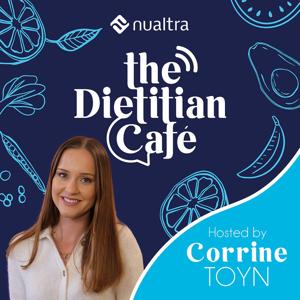


If you haven’t yet caught our last episode, you’ve probably noticed it’s a new voice introducing The Dietitian Cafe today so allow me to quickly introduce myself.
My name is Kate Hilton and I am a Freelance Registered Dietitian at Diets Debunked, and your new host of The Dietitian Café, proudly recognised as CN Nutrition Resource of the Year. I’m really excited to be stepping into the role and continuing the brilliant conversations this podcast is known for.
Before we start- if you enjoy The Dietitian Café podcast, how about giving us a like and hitting that follow button? The more support we receive the more exciting guests we can bring on to have even more in-depth and interesting discussions for you, our listeners.
Thank you so much for your support! Without further ado, let’s dive straight into our topic for today….
Conversations about meat can quickly become polarising. Health versus environment, reduction versus production, plants versus protein. But the reality is far more nuanced.
We’re told to limit meat intake, and while many already do, global targets like EAT-Lancet push for more change, not just in how much meat we eat, but how it’s produced.
So, should dietitians recommend against meat consumption? And if not, what does a balanced, evidence-based approach really look like?
To explore that, we’re joined by two experts approaching the issue from very different, but equally evidence-based perspectives.
Rebecca Tobi is Head of Food Business Transformation at The Food Foundation. A Registered Nutritionist with an MSc in Nutrition for Global Health, Rebecca leads initiatives like Peas Please and
Plating Up Progress, working with businesses and investors to create structural change towards more plant-rich, sustainable diets.
Kate Arthur is a Registered Dietitian with over 25 years of experience and Head of Nutrition and Health at the Agriculture and Horticulture Development Board, AHDB and the daughter of a dairy and beef farmer. Kate brings insight into how nutrition and sustainability connect across the supply chain, from farm to table.
Both Rebecca and Kate share a passion for making evidence-based healthy, sustainable eating accessible to everyone, but they approach it from different angles, bringing two sides of the same story to the table.
Show Notes
The Food Foundation: MEAT FACTS What meat is the UK eating and why does it matter?
https://foodfoundation.org.uk/publication/meat-facts
The Food Foundation: Beans Campaign
https://foodfoundation.org.uk/initiatives/campaign-launched-double-bean-consumption
AHDB Role of Red Meat Report: https://ahdb.org.uk/role-of-red-meat-report
Impact of consuming an environmentally protective diet on micronutrients: a systematic literature review: https://doi.org/10.1016/j.ajcnut.2024.01.014
Adherence to the Healthy Eating Guidelines in the MyPlanetDiet study is associated with healthier and more sustainable diets: https://doi.org/10.1017/S0007114525000662
Modelling the impact of reduction in meat and dairy consumption on nutrient intakes and greenhouse gas emissions in children and young people living in Scotland: https://www.foodstandards.gov.scot/document-web-version/modelling-the-impact-of-reduction-in-meat-and-dairy-consumption-on-nutrient-intakes-and-greenhouse-gas-emissions-in-children-and-young-people-living-in-scotland
Disclaimer: As of February 2026, Kate Hilton is part of the AHDB Health & Nutrition Advisory Panel, however, all thoughts, opinions and views expressed in this episode are her own and not influenced by the AHDB.
Is digital deception fuelling a new wave of nutrition misinformation? That’s the big question we’re unpacking today, and the answer might be more complex than you think.
From AI-generated deepfakes to impersonation and identity misuse, digital deception is becoming more common, and more convincing, across health and nutrition platforms. These tools are being used to spread false claims, mimic trusted professionals, and blur the line between fact and fiction online. And in a field where credibility is everything, that kind of manipulation can have real-world consequences.
To help us make sense of it all, we’re joined by Kate Hilton.
Kate is a Registered Dietitian who has worked across the NHS, private sector, and freelance practice, with specialist experience in weight management, learning disabilities, and neurological rehabilitation. Under the name Diets Debunked, she’s built a growing presence on TikTok, LinkedIn, and her blog, where she shares practical, evidence-based advice and challenges nutrition misinformation in an accessible, engaging way.
She’s also part of TikTok’s Clinician Creator Network, an initiative that amplifies trustworthy health content on social media. But even Kate hasn’t been immune to digital deception, having experienced online impersonation herself.
In this episode, we’ll explore how these tactics are being used in the nutrition space, who’s behind them, what the impact can be for healthcare professionals, and what you can do if you or a colleague are targeted.
Show Notes
LinkedIn: https://www.linkedin.com/in/kate-hilton-rd/
Instagram: https://www.instagram.com/dietsdebunked?utm_source=ig_web_button_share_sheet&igsh=ZDNlZDc0MzIxNw==
TikTok: https://www.tiktok.com/@dietsdebunked
Website: https://dietsdebunked.co.uk/
When the first EAT-Lancet Commission launched in 2019, it put the “Planetary Health Diet” on the global agenda, uniting nutrition and sustainability in one set of global scientific targets and sparking one of the most influential food conversations of the decade.
Six years on, the 2025 update has arrived and this time, the report broadens the agenda. Alongside health and the environment, justice is brought centre stage: asking how food systems can uphold the right to food and the right to a healthy environment. It’s a recognition that sustainability alone isn’t enough if diets aren’t also fair and accessible to everyone.
For dietitians, this isn’t just about global goals it’s about the realities we face every day. Whether it’s helping patients access affordable healthy food, shaping healthier menus in institutions, or contributing to national guidelines, the call for justice and sustainability is increasingly part of our professional landscape.
Fresh back from the Stockholm Food Forum and the launch of the 2025 EAT–Lancet report, I’m joined by Ellen Cecilie Wright, Senior Science Officer at EAT.
Ellen has more than a decade of experience working with UN agencies and international organisations, with her early career focused on nutrition and food security in emergency contexts around the world. Today, her work centres on healthy, sustainable food systems, and alongside her role at EAT she is completing a PhD at the University of Oslo, focusing on sustainable diets.
Show Notes
The 2025 EAT-Lancet Commission Report Launches: https://eatforum.org/update/the-2025-eat-lancet-commission-report-launches/
The 2025 EAT-Lancet Commission Livestream: https://eatforum.org/event/2025-eat-lancet-commission-livestream/
EAT Communities for Action: https://eatforum.org/communities-for-action/
Remission of type 2 diabetes was once thought impossible. But the landmark DiRECT trial showed it can be achieved, and it taught us that a cornerstone of remission is weight loss. The true challenge comes after: maintaining that progress in an environment that doesn’t always make it easy.
Since then, the NHS Path to Remission programme has taken this approach into routine care, offering real-world evidence of what works at scale. And now, GLP-1 medications are dominating headlines, promising rapid weight loss on a scale we’ve never seen before. But while the evidence is growing, so are the questions about long-term maintenance, about support, about access, and about what all this means for dietitians.
To help us navigate it, we’re joined by two experts at the forefront of remission care.
Dr George Thom works in Public Health at NHS Tayside, leading the type 2 diabetes prevention and remission service. He was part of the DiRECT research team and his PhD explored the challenges of weight loss maintenance.
Keren Miller is Clinical Expert Dietitian at Oviva, where she helped establish the national Type 2 Diabetes Path to Remission programme. With more than 20 years’ experience across NHS and digital health services, she’s played a key role in making remission support available at scale.
In this episode, we’ll explore what the evidence tells us about weight loss maintenance, how remission programmes are working in the real world, and where GLP-1s fit into the picture. We’ll also ask what this means for dietitians from supporting diet quality, to navigating patient expectations, to sustaining progress long term and what the future holds for obesity and remission care.
Show Notes
DiRECT Clinical Trial: https://www.directclinicaltrial.org.uk/
Oviva: https://oviva.com/uk/en/
Early findings from the NHS Type 2 Diabetes Path to Remission Programme: https://www.thelancet.com/journals/landia/article/PIIS2213-8587(24)00194-3/fulltext
Dr George Thom: https://www.linkedin.com/in/george-thom/
Keren Miller: https://www.linkedin.com/in/keren-miller-232756193/
Today, we’re diving into the fascinating world of space nutrition. While fuelling astronauts in microgravity might sound worlds away from everyday dietetic practice, the science behind it offers surprising and valuable insights for clinical care, recovery, and public health here on Earth.
I’m joined by three brilliant guests: Kristine Atienza, Christina-Ariadni Valagkouti & Stavroula Chaloulakou.
Together, they bring expertise spanning public health, emergency food security, clinical nutrition, and even preparing for the future of commercial space travel. They also share a passion for making space science accessible to everyone so whether you work in clinical practice, research, or are simply curious about the future of nutrition, this is a conversation that might just change the way you think about inactivity, metabolism, and the role of dietitians in some of the most extreme environments imaginable.
Show Notes
Space Nutrition Network https://www.linkedin.com/company/space-nutrition-network
Space Generation Congress: https://spacegeneration.org/sgc2025
International Astronautical Congress: https://www.iafastro.org/events/iac/
Space Generation Advisory Council: https://spacegeneration.org/
European Space Agency Academy: https://www.esa.int/Education/ESA_Academy
Space Careers UK: https://spacecareers.uk/
Today, we’re peeling back the lid on the commercial baby food industry. A sector that’s been thrust into the spotlight after recent media investigations questioned the nutritional quality and marketing of commercial baby food.
For many parents and health professionals, navigating the early years food landscape has never felt more complicated. Are these products helping to build healthy eating habits from the start, or are high sugar levels, nutrient gaps, and confusing marketing messages making things harder? And how can dietitians and healthcare professionals cut through the noise to empower families with clear, evidence-based advice?
To help us break down the facts, and the fiction, we’re joined by two brilliant guests Dr Diane Threapleton and Dayna Brackley.
Dr Diane Threapleton is a Senior Research Fellow in Nutritional Epidemiology at the University of Leeds, and Co-Principal Investigator of the Growing Well Study, which explores diet and health in young children. Diane specialises in maternal and child nutrition and public health policy. Her recent research, featured on BBC Panorama earlier this year, has taken a closer look at commercial baby foods and what really matters to families when it comes to infant feeding. Diane’s work is all about improving food systems and supporting healthier outcomes for children and families.
And Dayna Brackley is a food policy expert and Partner at Bremner & Co, an independent consultancy specialising in food policy and systems change. She works across the whole life course,
from early years and infant feeding, right through to school food and further education, with a focus on nutrition, child food policy, and shaping the wider food environment. With a master's in food policy, Dayna specialises in turning evidence into practical, system-level changes that make healthier choices easier for children and families.
Show Notes
Today, we’re opening up an important conversation about complementary therapies in cancer care, and how dietitians can support patient choice without compromising safety or outcomes.
The release of the Netflix documentary Apple Cider Vinegar earlier this year has reignited concerns about misinformation in this space. But beyond the headlines, many people affected by cancer are simply trying to feel better and that often includes exploring dietary changes, supplements, or holistic therapies.
So how can dietitians respond with empathy and clarity, especially when the evidence is limited or the risk is high?
Joining me today is Dove Yu, a Senior Specialist Dietitian in oncology and palliative care at South Tees Hospitals NHS Foundation Trust. Dove supports patients across both hospital and community settings and brings over five years of experience in cancer care.
She’s also on the committee of not one but two BDA Specialist Groups and she shares valuable and engaging insights on her own social media account.
Show Notes
Instagram: @doveyu_dietitian / @bda_oncology / @bda_olderpeople
BDA Oncology Group ‘Cancer Diets: Myths and More:’ https://www.bda.uk.com/resource/cancerdiets-myths-and-more.html
CRUK Diet and Cancer Myths webinar: https://www.youtube.com/watch?v=r_A6eb8w4sw
Memorial Sloan Kettering (MSK) About Herbs database: https://www.mskcc.org/cancercare/diagnosis-treatment/symptom-management/integrative-medicine/herbs/search
World Cancer Research Fund (WCRF): https://www.wcrf.org/
Cancer Research UK: https://www.cancerresearchuk.org/
Practice-based Evidence in Nutrition: https://www.pennutrition.com/index.aspx
NHS: https://www.nhs.uk/tests-and-treatments/complementary-and-alternative-medicine/
Penny Brohn: https://pennybrohn.org.uk/
The Dietitian Cafe Podcast has been shortlisted for Nutrition Resource of the Year at the 2025 CN Awards. If you’ve found value in the podcast, we’d be incredibly grateful for your vote. Just head to CN Magazine’s Nutrition2Me website to cast your vote. You’ll also find the link in the show notes.
Today, we’re talking about opportunity, and how dietitians can think differently about where it comes from and how to make the most of it. Whether you’re just starting out or looking to take your career in a new direction, this conversation is all about sparking ideas and seeing what’s possible.
We're joined by Sarah Danaher, a UK Registered Dietitian whose career shows just how versatile and creative dietetic practice can be. Over the past 23 years, Sarah has worked across clinical care, public health, academia, research, and digital innovation, with special interests in gastroenterology, probiotics, hormone health, and neurodiversity like ADHD and autism.
She’s currently the UK Team Lead for AEProbio, collaborating with researchers from the Universities of Reading and Leeds on the newly launched Clinical Guide to Probiotic Products in the UK.
From the NHS to Sure Start, university lecturing to private practice, Sarah’s journey is a brilliant reminder that there’s no one way to build a meaningful career in dietetics.
Show Notes
Website:
SRD Nutrition: https://www.srdnutrition.co.uk/
AEProbio Guide UK: https://probioticguide.uk
The Dietitian Cafe Podcast has been shortlisted for Nutrition Resource of the Year at the 2025 CN Awards. If you’ve found value in the podcast, we’d be incredibly grateful for your vote. Just head to CN Magazine’s Nutrition2Me website to cast your vote. You’ll also find the link in the show notes.
Today, we’re talking about how dietitians and other healthcare professionals can feel more confident and capable when having inclusive, person-centred conversations with LGBTQ+ individuals.
While awareness of diversity and inclusion has grown in recent years, many professionals still feel unsure about the language to use, how to avoid saying the wrong thing, or how to create a truly welcoming environment. This episode is all about supporting those professionals to move past fear and uncertainty and towards more open, respectful, and informed conversations.
We’ll explore why language matters, what inclusive communication looks like in practice, and how understanding concepts like gender identity, pronouns, and lived experience can help us meet people where they are.
And we’ll look at the bigger picture, too: how education, structural barriers, and generational experiences shape the way people access and engage with healthcare today.
Joining me for this conversation is Dr. Sarah Hillier, a Registered Nutritionist and Senior Lecturer in Nutrition at Bournemouth University. Sarah’s research explores the intersections of minority and
underrepresented populations in nutrition, health, and higher education. Her work focuses on structural barriers to healthcare, nutrition, and education, with a particular emphasis on menopause, pregnancy, and reproductive health.
Beyond her research, Sarah is a strong advocate for inclusivity, serving as Chair of the Bournemouth University PRIDE Network, where she works to promote LGBTQ+ visibility within academia.
Show Notes
Dr Sarah Hillier (she/her)
LinkedIn: Dr Sarah Hillier
Instagram: @DrSarahHillIer
Bournemouth University
Instagram: @NutritionBU / @bournemouthuni
LinkedIn: Bournemouth University
Facebook: @JoinBournemouthUni
X: @bournemouthuni
Stonewall
Bournemouth University
Research Papers and Charity Links
Support Services
Vote for The Dietitian Cafe at the 2025 CN Awards: https://nutrition2me.com/cn-awards/voting/
The Dietitian Cafe Podcast has been shortlisted for Nutrition Resource of the Year at the 2025 CN Awards. If you’ve found value in the podcast, we’d be incredibly grateful for your vote. Just head to CN Magazine’s Nutrition2Me website to cast your vote. You’ll also find the link in the show notes.
Thank you so much for your support!
Today, we’re talking about something that many dietitians find a little daunting - the HCPC CPD audit. Whether you've been selected before or you’re wondering what it might involve, today’s episode is here to demystify the process and answer your most pressing questions.
We’ll explore what counts as CPD, how often you should be doing it, and what really happens when you’re selected for audit. We'll also bust some common myths, like whether renewing your registration early puts you at risk, or if informal learning can actually count towards your CPD record.
And it couldn’t be a better time to have this conversation, the HCPC held its first-ever CPD Week earlier this year, highlighting just how important continuing professional development is across all registered professions.
To guide us through all of this, we're joined by someone who knows the process inside and out.
Natalie Berrie is the Registration Manager at the Health and Care Professions Council, AKA the HCPC, which is the UK regulator responsible for safeguarding the public through professional standards. Natalie has overseen the CPD process for several years and now also manages renewals. She leads a
team of Registration Advisors and oversees the Partners who carry out CPD assessments across the professions, including dietetics.
Show Notes
The Health and Care Professional Council (HCPC): https://www.hcpc-uk.org/
CPD Resources: https://www.hcpc-uk.org/cpd/cpd-resources/
What activities count as CPD?: https://www.hcpc-uk.org/cpd/carrying-out-and-recording-cpd/what-activities-count-as-cpd/
Vote for The Dietitian Cafe at the 2025 CN Awards: https://nutrition2me.com/cn-awards/voting/
From the publisher's feed
Welcome to The Dietitian Café, a podcast from Nualtra for dietitians, nutritionists, and healthcare professionals, bringing honest conversations and fresh perspectives on important topics shaping…
From clinical practice and public health to the food industry and beyond, each episode blends expert insight with real-world experience.
389 Listeners
570 Listeners

3,595 Listeners

883 Listeners
1,312 Listeners

131 Listeners

1,220 Listeners
238 Listeners
19 Listeners
58 Listeners

2,062 Listeners

775 Listeners

18,920 Listeners

599 Listeners