
Sign up to save your podcasts
Or



Today, we're thrilled to welcome back Dr Megan Rossi, one of the world’s leading gut health experts and founder of The Gut Health Doctor®. Megan joined us previously to talk about gut health fundamentals, and today she’s back to focus on one of the most talked-about topics in the wellness world: probiotics.
We’ll be diving into:
Whether you’re a healthcare professional or just gut-curious, this episode is packed with science-backed advice and practical takeaways.
Show Notes:
Website
The Gut Health Doctor: https://www.theguthealthdoctor.com/
Products:
Smart Strains: https://smartstrains.com/
Bio & Me: https://bioandme.co.uk/
Books:
Eat Yourself Healthy
Eat More, Live Well
Social Media:
Instagram: @theguthealthdoctor
Facebook: Dr Megan Rossi
X: @TheGutHealthDoc
TikTok: @theguthealthdoctor
Episode resources discussed:
Smart Strains Infographic: https://smartstrains.com/pages/for-healthcare-professionals
World Gastroenterology Organisation Global Guidelines Probiotics and prebiotics: https://www.worldgastroenterology.org/guidelines/probiotics-and-prebiotics/probiotics-and-prebiotics-english
Obesity management is evolving, and with new insights from The Lancet's Clinical Obesity Commission and NICE guidelines, there’s growing recognition that BMI alone is not enough. While BMI has long been used as a quick and convenient screening tool, it does not account for factors like body composition, metabolic health, and fat distribution. Measures such as waist-to-height ratio and other metabolic markers are gaining attention as more accurate indicators of health risks.
To help us navigate this shift, we’re joined by Professor Giles Yeo, a leading expert in the genetics of obesity and feeding behaviour. He is a Professor of Molecular Neuroendocrinology at the University of Cambridge and Programme Leader at the MRC Metabolic Diseases Unit, where his research explores how our genes influence body weight and appetite regulation.
Beyond the lab, Giles is passionate about making science accessible. He serves as Honorary President of the British Dietetic Association, presents science documentaries for the BBC, and hosts the podcast Dr Giles Yeo Chews The Fat. He’s also the author of Gene Eating and Why Calories Don’t Count, offering evidence-based insights into nutrition and metabolism. His contributions to research and public engagement have earned him multiple honours, including an MBE.
Show Notes
X/Instagram: @gilesyeo
Facebook: Giles Yeo
Books:
For too long, weight management has been framed as a choice — surgery or nutrition, medication or lifestyle changes. But we know the most effective, sustainable results come when these approaches work together.
In today’s episode, we’ll be discussing how dietitians, surgeons, clinicians, and the wider healthcare team can break down silos, collaborate more effectively, and ultimately improve outcomes for people living with obesity. We’ll also explore how clearer communication — both between healthcare professionals and with patients — can help everyone better understand the value of collaborative care.
Joining Corrine for this important conversation are Dafydd Wilson-Evans, a Registered Dietitian with extensive experience in weight management, and Dimitri Pournaras, a Consultant Upper Gastrointestinal and Bariatric Surgeon who specialises in obesity care.
Show Notes
Verve Health Group: https://www.vervehealthgroup.co.uk/
Island life might seem idyllic, but when it comes to nutrition and healthcare, working in remote settings presents a unique set of challenges. Food security, supply chain disruptions, and the impact of climate change all influence how dietitians practice in these environments. So, what does it take to be a dietitian on an island in the middle of the Atlantic?
To help us explore this, we’re joined by Sarah-Jane Mattinson, a registered dietitian whose career has taken her from the UK’s NHS to some of the most isolated places in the world. After a decade working in Oxford across a range of specialties, she took on the role of the sole dietitian on St Helena, a British Overseas Territory with just over 4,000 residents. Now based in Bermuda, she continues to navigate the complexities of island dietetics, from managing food availability challenges to addressing the unique health needs of local populations.
Sarah’s experience offers a fascinating insight into how dietitians adapt their skills to remote settings, balancing clinical care, public health initiatives, and the realities of food supply limitations. From running pop-up cafés to support people with chronic conditions to working within small healthcare teams, she has had to be resourceful in ways that many dietitians never encounter.
Show Notes
Sarah-Jane Mattinson:
Instagram: @dietitian_in_the_triangle
Island Nutrition:
Website: https://www.islandnutrition.bm/
Instagram: @islandnutritionbda
Facebook: Island Nutrition
Bermuda Dietitians Association: Website: https://www.bermudadietitians.com/
Instagram: @bermudadietitians
Facebook: Bermuda Dietitians Association
Today, we’re diving into a very timely and important debate: Should dietitians play a more active role in breastfeeding support?
With the British Dietetic Association now offering courses to help dietitians build confidence in discussing breastfeeding with patients, it raises an important question: Should dietitians be more involved in supporting breastfeeding?
On one hand, dietitians have extensive knowledge in maternal nutrition, milk production, and dietary choices that can support breastfeeding success. On the other hand, some believe breastfeeding support should remain the responsibility of lactation consultants and other infant care specialists. With the right training, could they become a valuable resource for new mothers, working alongside midwives and health visitors?
Joining us to explore this topic is Lucy Upton, a leading UK Paediatric Dietitian and founder of The Children’s Dietitian, with over 14 years of experience in child nutrition and feeding challenges. Lucy is also a respected author and media spokesperson, helping parents navigate complex feeding issues.
Show Notes
Website: www.thechildrensdietitian.co.uk
Instagram: @childrensdietitian
Facebook: The Children’s Dietitian
Lactation Consultants of Great Britain: https://lcgb.org/
International Board of Lactation Consultants: http://www.iblce.org/
Sustainability is an increasingly vital conversation in the world of nutrition, yet it often falls short when it comes to practical application. Finding the balance between what’s good for our health and what’s good for the planet requires a nuanced approach one that considers accessibility, ethics, and long-term impact. Today, we’re diving deep into this important topic, exploring how dietitians can reshape eating habits to support both personal well-being and environmental sustainability.
Joining us are two experts from distinct yet complementary backgrounds. First, we have Rosie Martin, a registered dietitian whose career spans both the NHS and private practice. Rosie specialises in plant-based nutrition, advocating for dietary changes that promote human, animal, and planetary health.
Our second guest is James Collier, a Registered Nutritionist with over 30 years of experience and co-founder of Huel. As Huel’s Chief Sustainable Nutrition Officer, James has been instrumental in developing innovative products that align health and sustainability.
Today, we’ll explore the transformative potential of sustainable diets, and how dietitians can lead the charge in building a healthier, more sustainable future.
Show Notes
Rosie Martin
Instagram/Facebook: @plantdietitianrosie
Website: www.rosemarynutrition.co.uk
James Collier
Instagram/Facebook/TikTok: @jamescollierrnutr
X: @JamesCollierMT
Book: Well-Fed: How modern diets are failing us (and what we can do about it)
Nutrition plays a vital role in managing chronic illnesses, but when it comes to sickle cell disease, the conversation often falls short. This complex condition requires a nuanced approach to care, and today, we’re exploring how nutrition can address some of the unique challenges faced by those living with sickle cell disease.
Joining us is Dr Claudine Matthews, a registered Consultant Dietitian and the founder of the Sickle Cell Nutrition Academy. With over a decade of groundbreaking work in this area, Dr Matthews has dedicated her career to integrating nutrition into standard care for sickle cell disease. Her contributions include authoring national nutrition standards, pioneering educational resources, and developing frameworks to empower both patients and healthcare professionals.
Dr Matthews’ exceptional work has been widely recognised. She received the Dame Barbara Clayton Award in 2024 from the British Dietetic Association for her innovative contributions to dietetic policy and practice. She has also been an invited speaker at numerous international conferences and seminars, sharing her expertise on advancing nutritional care for individuals with sickle cell disease.
Show Notes
Sickle Cell Nutrition Academy: https://sicklecellnutritionacademy.com/
LinkedIn: Dr Claudine Matthews
Instagram:
@drclaudinematthews
@sicklecellnutritionacademy
Social media has revolutionised how we access information, with platforms like TikTok, Instagram, and YouTube becoming key sources for everything from lifestyle tips to health advice. While this accessibility has opened up new opportunities for education, it has also raised concerns about the reliability of the information being shared. In today’s episode, we’re asking an important question: Is TikTok’s Clinician Creator Network the future of nutrition education?
To guide us in this conversation and join us today is Dr. Ally Jaffee, a multi-award-winning NHS Resident Doctor specialising in Psychiatry, as well as an advocate for mental health and preventative healthcare. She’s also a transformational life coach, a social media content creator with over 30,000 followers, and co-founder of Nutritank, a not-for-profit organisation promoting nutrition and lifestyle medicine education for healthcare professionals.
Show Notes
Website: www.drallyjaffee.com
Instagram: @drallyjaffee
X: @drallyjaffee
TikTok: @drallyjaffee
YouTube: @drallyjaffee
LinkedIn: https://www.linkedin.com/in/drally-jaffee/
NutriTank
The NutriTank Podcast on Spotify
X: @nutritank
Facebook: Nutritank
Instagram: @nutritank_official
YouTube Health: https://health.youtube/
Lately, food additives have been a topic of growing interest and debate, with questions about their roles, benefits, and potential health impacts. Today, we’ll dig into these questions and shed light on what food additives really are, why they’re used, and the standards that regulate them. We’ll also explore the role additives play in food security, food waste and food taste.
To guide us in this conversation, we’re thrilled to welcome two exceptional guests. First, we have Anthony Warner, a highly experienced chef known not only for his work in high-end kitchens and culinary innovation but also for his expertise in nutrition and food science. Joining him is Kate Halliwell, the Chief Scientific Officer at the Food and Drink Federation, who brings an in-depth understanding of food safety, regulations, and nutrition science.
Together, Anthony and Kate will help us unpack the complexities of food additives and processed foods, clarifying the real science behind them and addressing the misconceptions.
Show Notes
Anthony Warner
Website: www.the-angry-chef.com
Facebook: Angry Chef
X: @One_Angry_Chef
Books:
The Angry Chef: Bad Science and the Truth About Healthy Eating
The Truth About Fat
Ending Hunger
Kate Halliwell
LinkedIn: Kate Halliwell
Food and Drink Federation: www.fdf.org.uk
You may have noticed the buzz surrounding personalised nutrition lately, with various programs and apps claiming to tailor dietary advice specifically to your unique biology. But what does personalised nutrition really entail, and how can it impact individual and population health?
Today, we’re delighted to welcome a true leader in the field of nutritional science: Professor Sarah Berry. Sarah has made substantial contributions to our understanding of personalised nutrition, both as a Professor at King’s College London and Chief Scientist at ZOE, the science and nutrition company. An academic leader in Nutrition Science, Sarah has run more than 35 human nutrition studies and currently leads the world's largest in-depth nutrition research program, the ZOE PREDICT study. Her research is at the forefront of personalised nutrition, our understanding of fats and the food structure. Sarah’s recent studies explore topics such as menopause, snacking and cardiometabolic health.
She’s often featured as an expert on ZOE's own podcast, ZOE Science and Nutrition, and regularly appears on television and radio to translate complex science into useful advice.
In this episode, we’ll be tackling YOUR questions, diving into the latest research on personalised nutrition, discussing why people respond differently to the same foods, and considering how personalised approaches can complement existing dietary guidelines. Whether you’re a dietitian aiming to refine your practice or someone keen to optimise your own nutrition, this episode offers valuable insights you won’t want to miss.
Show Notes:
Instagram: @drsarahberry
From the publisher's feed
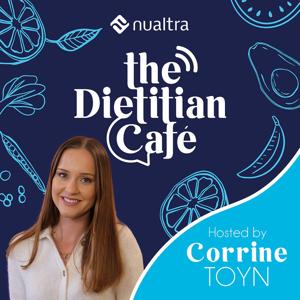
Welcome to The Dietitian Café, a podcast from Nualtra for dietitians, nutritionists, and healthcare professionals, bringing honest conversations and fresh perspectives on important topics shaping…
From clinical practice and public health to the food industry and beyond, each episode blends expert insight with real-world experience.
389 Listeners
570 Listeners

3,595 Listeners

883 Listeners
1,312 Listeners

131 Listeners

1,220 Listeners
238 Listeners
19 Listeners
58 Listeners

2,062 Listeners
775 Listeners

18,920 Listeners

599 Listeners