
Sign up to save your podcasts
Or



Based on Podcast App listening data
What if the spinach in your salad, the berries in your smoothie, and the caffeine in your coffee aren’t “fuel” at all — but evolved plant defense chemicals that can directly modify your mitochondria? In this deep dive, we unpack a 2025 paper from the International Journal of Molecular Sciences (“Plant Secondary Metabolites as Modulators of Mitochondrial Health”) and follow the mechanisms step-by-step: how mitochondria maintain themselves through biogenesis, fusion/fission, and mitophagy; how compounds like berberine can trigger a controlled “fake energy crisis” to induce cleanup + rebuilding; how caffeine can interrupt apoptosis signaling under UV stress; why astaxanthin can reducemitophagy during acute oxidative panic to prevent cellular self-cannibalism; and why some “plant” benefits (like urolithin A) depend entirely on your gut microbiome. Finally, we hit the paradox: these same metabolites can become selectively cytotoxic to cancer cells—or become dangerous when isolated into high-dose supplements, with real toxicity and drug-interaction risk. The takeaway: food isn’t just calories — it’s environmental code.
(Educational content only, not medical advice.)
-
Article Discussed in Episode:
Plant Secondary Metabolites as Modulators of Mitochondrial Health: An Overview of Their Anti-Oxidant, Anti-Apoptotic, and Mitophagic Mechanisms
-
Key Quotes From Dr. Mike:
“The spinach in your salad… the berries in your smoothie… and even the caffeine in your morning coffee were actually highly evolved chemical weapons.”
“We really have to stop thinking of plants just as vitamins and start looking at them as complex chemical defense systems.”
“Berberine… creates a fake crisis to force an upgrade.”
“Caffeine… effectively jams the self-destruct button.”
“Think of the plant compounds you consume as environmental software updates.”
-
Key Points
-
Episode timeline
Dr. Mike's #1 recommendations:
Deuterium depleted water: Litewater (code: DRMIKE)
-
Stay up-to-date on social media:
Dr. Mike Belkowski:
BioLight:
Website
YouTube
Photobiomodulation therapy (PBMT) is marketed like universal biology: shine the right wavelength, hit cytochrome c oxidase, boost ATP, accelerate healing. But this Deep Dive unpacks a hidden variable that can make “standard dosing” either ineffective or unsafe: melanin. Using a 2026 narrative review from researchers at the University of São Paulo, we trace the physics of a photon entering the body, how melanin’s absorption overlaps the therapeutic “optical window,” and why simply “turning up the laser” can backfire — creating heat and reactive species in the epidermis while deeper target tissues get little benefit. We also confront a data problem: trials may include darker phototypes, but too often outcomes aren’t analyzed by skin type, creating a misleading “average” that masks risk. Finally, we outline practical fixes — wavelength selection, spot size adjustments, and pigmentation-sensitive, feedback-guided dosimetry — so PBMT can become truly personalized and equitable.
(Educational content only, not medical advice.)
-
Article Discussed in Episode:
Is photobiomodulation therapy free from racial bias?: a narrative review of skin pigmentation
-
Key Quotes From Dr. Mike:
Regarding melanin: “It literally absorbs the photons before they can ever reach the deeper tissues.”
“For individuals with darker skin tones, this can result in totally subtherapeutic treatments.”
“They currently do not differentiate dosing parameters based on skin pigmentation.”
“The physics of a photon is constant. But the biological filter it’s passing through is wildly diverse.”
“At 660 nm… 21 mm in lighter skin… but in darker skin it drops to 14 mm.”
“We need to stop treating light therapy like a one-size-fits-all t-shirt… and treat it like a custom tailored suit.”
-
Key Points
-
Episode timeline
Dr. Mike's #1 recommendations:
Deuterium depleted water: Litewater (code: DRMIKE)
-
Stay up-to-date on social media:
Dr. Mike Belkowski:
BioLight:
Website
YouTube
Upon Don Bailey's return to the Deep Dive episodes, he and Dr. Mike reframe fatigue, aging, and neurodegeneration through one core process: mitophagy — the cell’s highly selective mitochondrial recycling program. The episode starts with a hard truth: “engineering-style” diagnoses feel comforting, but chronic fatigue and cognitive decline live in a murky zone standard tests rarely capture. From there, the conversation builds a vivid model of mitochondrial energy production (OXPHOS), the unavoidable “exhaust” of ROS, and the multi-tiered quality control stack that keeps your cellular power grid from collapsing: biogenesis (PGC-1α), dynamics (fusion/fission), and mitophagy (the scrapyard).
Then it goes deeper — showing how mitophagy failure can turn mitochondrial damage into neuroinflammation (via leaked bacterial-like mtDNA and the NLRP3 inflammasome) and even “cellular rust” (ferroptosis) when iron-driven lipid peroxidation spirals out of control. The episode also tackles the paradox: mitophagy is protective — until extreme stress pushes it into overdrive, potentially tipping into ferroptosis. Finally, it translates the research into real levers: exercise as hormetic signaling (MICT vs HIIT), the AMPK↔mTOR seesaw, and biohacking tools like urolithin A, spermidine, resveratrol, and adaptogens — not as exercise replacements, but as precision amplifiers that help you stay in the “Goldilocks zone.”
(Educational content only, not medical advice.)
-
References From Episode:
Mechanistic Modulation of Autophagy by Bioactive Natural Products: Implications for Human Aging and Longevity
Early mitophagy activation by Urolithin A prevents, but late activation does not reverse, age-related cognitive impairment
Mitophagy as a therapeutic target for exercise-induced fatigue: modulation by natural compounds and mechanistic insights
Mitophagy in Alzheimer’s disease and its potential as a therapeutic target
-
Key Quotes From Episode:
“Mitophagy is the scrapyard.”
“If the trash isn’t being collected, your cells become crowded with clunker mitochondria.”
“We are fundamentally as young as our mitochondrial recycling program.”
Regarding Urolithin A: “The supplement isn’t a replacement for the gym. It’s an amplifier.”
“You cannot supplement your way out of a sedentary lifestyle.”
-
Key Points
-
Episode timeline
00:00–03:30 — Why “engineering-style” diagnoses fail for fatigue/aging/brain fog
Dr. Mike's #1 recommendations:
Deuterium depleted water: Litewater (code: DRMIKE)
-
Stay up-to-date on social media:
Dr. Mike Belkowski:
BioLight:
Website
YouTube
In this Energy Code Deep Dive episode, Dr. Mike breaks down a modern (and slightly unsettling) obesity paper: blue light exposure worsened obesity in high-fat diet–fed mice — not just through “sleep/circadian disruption” in the abstract, but via signals consistent with mitochondrial dysfunction and oxidative stress in subcutaneous white fat. The study compares normal vs high-fat diet mice under white light vs blue light and finds that blue light, in the high-fat context, is associated with more weight/fat gain, worse glucose handling, lower whole-body energy expenditure, and a strong tissue-specific signal in inguinal white adipose tissue (iWAT) — a depot closer to the surface that may be more vulnerable to light penetration. Mechanistically, the paper points toward suppressed oxidative phosphorylation gene expression plus higher ROS/lipid peroxidation and weaker antioxidant defenses in iWAT. The key takeaway: in a high-fat environment, blue light may act like a metabolic amplifier — increasing load while weakening the machinery that should burn fuel cleanly.
(Educational content only, not medical advice.)
-
Article Discussed in Episode:
Blue light exposure exacerbates obesity in high-fat diet-fed mice by inducing mitochondrial dysfunction in the white adipose tissue
-
Key Quotes From Dr. Mike:
“Blue light, obesity, fat tissue, and mitochondrial dysfunction… modern and a little unsettling.”
“Could the kind of light we are increasingly surrounded by actually make metabolic dysfunction worse… by directly damaging the way fat tissue handles energy?”
“In mice eating a high-fat diet, blue light exposure led to more weight gain and more body fat than white light exposure.”
“Blue light exposed high-fat mice had lower oxygen consumption, lower carbon dioxide production, and lower heat production.”
“Light is not just visual information, it is metabolic information.”
-
Key Points
-
Episode timeline
0:19–0:47 — Intro + why this paper is “modern and unsettling”
Dr. Mike's #1 recommendations:
Deuterium depleted water: Litewater (code: DRMIKE)
-
Stay up-to-date on social media:
Dr. Mike Belkowski:
BioLight:
Website
YouTube
In this Energy Code Deep Dive episode, Dr. Mike unpacks a paper that reframes ALS at a deeper level: ALS may begin as an energy regulation failure, starting in the hypothalamus, before it becomes an obvious motor neuron story.The hypothalamus isn’t just “another brain region”; it’s the body’s metabolic control room — governing hunger, energy expenditure, hormones, and fuel signaling. The paper shows that in ALS mouse models, the hypothalamus develops early mitochondrial bioenergetic impairment (including reduced spare respiratory capacity) alongside neuroimmune activation (astrocytes and microglia) and melanocortin circuit disruption (POMC/AgRP imbalance) that could help explain early hypermetabolism and weight loss seen in ALS. Most provocatively, early metabolic modulation (TMZ) restored hypothalamic bioenergetics, reduced glial activation, normalized aspects of circuit signaling, delayed onset, and extended survival — suggesting the “first domino” may be a failing energy command center, not just downstream motor collapse.
(Educational content only, not medical advice.)
-
Article Discussed in Episode:
The hypothalamus is an early site of mitochondrial failure and neuro-immune circuit disruption in amyotrophic lateral sclerosis
-
Key Quotes From Dr. Mike:
“ALS may not begin only as a motor neuron story. It may also begin as an energy regulation story.”
“Mitochondrial dysfunction shows up in the hypothalamus before symptoms begin.”
“If that is true, then ALS is not just a disease of movement. It is also a disease of failed energy coordination.”
“These hypothalamic mitochondrial changes… happened before major motor symptoms.”
“…if you intervene early at the level of hypothalamic energy failure, you may be able to change the trajectory of disease.”
-
Key Points
-
Episode timeline
0:19–0:34 — Intro + why this paper could change how we think about ALS
Dr. Mike's #1 recommendations:
Deuterium depleted water: Litewater (code: DRMIKE)
-
Stay up-to-date on social media:
Dr. Mike Belkowski:
BioLight:
Website
YouTube
In this Energy Code Deep Dive episode, Dr. Mike breaks down a provocative neuroprotection review: low-dose methylene blue and near-infrared (NIR) light may look like totally different therapies — one is a molecule, one is photons — but the paper argues they converge on the same core target: mitochondrial respiration. You’ll hear a simple “neurons as cities / mitochondria as power plants” model for neurodegeneration, why methylene blue can function like an alternate electron shuttle in the electron transport chain, how NIR light can energize cytochrome oxidase, and why both approaches may widen the neuron’s “energy margin” during stress. The takeaway isn’t “magic cures.” It’s a disciplined mitochondrial lens: improving the power supply may give repair, plasticity, and survival systems the bandwidth to work.
(Educational content only, not medical advice.)
-
Article Discussed in Episode:
Protection against neurodegeneration with low-dose methylene blue and near-infrared light
-
Key Quotes From Dr. Mike:
“Two very different therapies (methylene blue & NIR light) may be helping the brain in basically the same way.”
“Methylene blue, at low doses, appears to help by acting like an alternate electron shuttle.”
“This paper makes the point that methylene blue has a hormetic dose response…”
“…near infrared light is more like directly energizing one of the key turbines in the mitochondrial power plant.”
“Different tools, same target, and that target is mitochondrial respiration.”
“…if you can stabilize mitochondrial respiration, you may be able to widen that energy margin and make neurons harder to kill.”
-
Key Points
-
Episode timeline
0:19–0:34 — Show open + why this paper matters
Dr. Mike's #1 recommendations:
Deuterium depleted water: Litewater (code: DRMIKE)
-
Stay up-to-date on social media:
Dr. Mike Belkowski:
BioLight:
Website
YouTube
In this Energy Code Deep Dive episode, Dr. Mike breaks down a practical 8-week human study on shilajit and performance where it actually matters: after fatigue sets in. Recreationally active young men took placebo, 250 mg/day, or 500 mg/day, then got pushed through a brutal leg-extension fatigue protocol to see how much strength they lost — not just how strong they were fresh. The standout finding: in the stronger half of subjects, the 500 mg group preserved significantly more maximal isometric strength post-fatigue — and showed a quieter signal on serum hydroxyproline, a marker often used to reflect collagen/connective-tissue turnover. Bottom line: this paper doesn’t claim “instant strength.” It suggests shilajit may be more interesting as a fatigue-resistance + tissue-support tool — at the right dose, in the right population.
(Educational content only, not medical advice.)
-
Article Discussed in Episode:
The effects of Shilajit supplementation on fatigue-induced decreases in muscular strength and serum hydroxyproline levels
-
Key Quotes From Dr. Mike:
“In that stronger subgroup, the high dose shilait group lost significantly less maximal isometric strength after the fatiguing protocol…”
“So in simple terms, the men taking 500 mg per day of Sheelajit held on to their strength better once fatigue hit.”
“This was not a study showing Shilait magically blocks exercise damage… It is more a study suggesting that over time, the higher dose may support the tissue environment…”
“The strongest and cleanest finding is this… 500 mg per day… helped preserve maximal strength better after fatigue…”
“Sometimes performance support is not about creating more force at the start. Sometimes it is about losing less force when fatigue tries to take it away.”
-
Key Points
The study asks a real-world question: how much strength do you lose when you’re tired?
Design: recreationally active young men; placebo vs 250 mg/day vs 500 mg/day for 8 weeks.
Test: maximal isometric strength pre-fatigue, then 2×50 maximal concentric isokinetic leg extensions, then post-fatigue testing.
Primary performance signal showed up in the upper 50% (stronger subjects): 500 mg/day = less post-fatigue strength loss.
The lower dose (250 mg/day) did not clearly separate from placebo in that stronger subgroup.
Hydroxyproline (HYP) was used as an indirect marker of collagen/connective-tissue breakdown.
In the stronger subgroup, the 500 mg/day group had lower baseline HYP vs low dose and placebo after supplementation.
No big claims of “massive strength gain,” “weight change,” or “muscle growth.” The story is fatigue-retention, not “overnight PRs.”
Mechanistic framing is suggestive (ATP/mitochondrial support is discussed), but the study itself is performance + serum marker, not deep mitochondrial assays.
Limitations: young men only, specific fatigue model (concentric-dominant), and funding/source considerations.
-
Episode timeline
0:19–0:34 — Show open + setup for a shilajit performance Deep Dive
0:34–1:30 — The question: 8 weeks of shilajit—does it help strength retention under fatigue + connective tissue signals?
1:38–2:14 — What shilajit is (Ayurvedic mineral-rich exudate; fulvic acids, DBPs, minerals)
2:14–2:58 — Study design: placebo vs 250 mg/day vs 500 mg/day; 8-week supplementation
2:40–3:22 — The fatigue protocol + why “strength loss under fatigue” is the real-world metric
3:27–4:14 — Hydroxyproline explained as a collagen/connective-tissue breakdown signal
4:15–5:01 — Main finding: overall modest, but stronger subgroup shows a clearer effect
4:29–5:36 — Headline: 500 mg/day group lost less maximal isometric strength post-fatigue (in stronger half)
5:36–6:09 — Dose specificity: 250 mg/day didn’t separate clearly; possible threshold effect at 500 mg
6:13–7:38 — Hydroxyproline results + why the concentric-only protocol matters for interpretation
7:59–9:04 — Mechanistic framing (ATP/mitochondria discussion as a plausible lens)
9:04–10:31 — What the study did not show + disciplined interpretation
10:35–11:15 — Limitations + conflict-of-interest note
11:19–13:49 — Synthesis: shilajit as “hold the line under fatigue” support + wrap
Dr. Mike's #1 recommendations:
Deuterium depleted water: Litewater (code: DRMIKE)
-
Stay up-to-date on social media:
Dr. Mike Belkowski:
BioLight:
Website
YouTube
Dr. Mike unveils BioShilajit — a “trio stack” built for mitochondrial performance: shilajit for ionic minerals + fulvic/humic support, PQQ to signal mitochondrial biogenesis (PGC-1α), and pharmaceutical-grade methylene blue as a low-dose electron-cycling “failsafe” for the respiratory chain.
Along the way, he breaks down why chronic fatigue and brain fog often evade standard labs, walks through the origin story and chemistry of shilajit, highlights ATP and endurance data, explains PQQ’s unique role in building new “cellular engines,” and tells the bizarre history of methylene blue — from textile dye to essential emergency medicine — before tying it all together as structure + supply + backup mechanics for cellular energy. He closes with launch details, the first-week discount code, and where to find the full resource library on the BioLight product page.
(Educational content only, not medical advice.)
-
Article Discussed in Episode:
Fullerenes as Anti-Aging Antioxidants
-
Key Quotes From Dr. Mike:
Regarding BioShilajit: "A mountain resin, a bacterium, and a clothing dye… sounds like quite the trio.”
“Shilajit roughly translates to: the conqueror of mountains and destroyer of weakness.”
“Shilajit contains over 85 distinct trace minerals — and the key word is bioavailable.”
“Shilajit is the pharmacological opposite of a stimulant — it doesn’t tape over the check-engine light; it helps the cell produce more of its own ATP.”
“A microscopic picomolar concentration of PQQ can execute thousands — sometimes tens of thousands — of redox cycles without breaking down.”
“PQQ triggers this exact same genetic alarm bell (PGC-1α -> mitogenesis) — but without the ten-mile run.”
“Inside damaged mitochondria, methylene blue’s mechanism is bypassing the blockade (blockages in the ETC).”
-
Key Points
-
Episode timeline
00:01:07–00:03:37 — Beyond Conference (Austin, May 27–29): booth location + product teases
Dr. Mike's #1 recommendations:
Deuterium depleted water: Litewater (code: DRMIKE)
-
Stay up-to-date on social media:
Dr. Mike Belkowski:
BioLight:
Website
YouTube
What if one of the strangest molecules in biology — the carbon “nanoball” known as C60 — could meaningfully influence aging? In this Energy Code Deep Dive, Dr. Mike breaks down the paper “Fullerenes as Anti-Aging Antioxidants” and explores why fullerenes have become a lightning-rod topic in longevity.
You’ll learn what fullerenes are, why their electron-handling chemistry makes them different from typical antioxidants, and how the review frames their potential role in oxidative stress and mitochondrial function. We unpack the famous C60-in-olive-oil lifespan study, the proposed mechanisms (from “radical sponge” behavior to a more strategic mitochondrial ROS-reduction hypothesis), and the most important caveat: context and formulation can flip the biology. Preparation, dose, impurities, and even light exposure can shift fullerenes from promising to problematic—so this episode is about the science, the signal, and the safety questions that still need answers.
(Educational content only, not medical advice.)
-
Article Discussed in Episode:
Fullerenes as Anti-Aging Antioxidants
-
Key Quotes From Dr. Mike:
“These molecules (Carbon 60) can accept electrons… interact with free radicals… and move through lipid membranes.”
“ROS are like sparks coming off a machine… a few sparks are normal, too many sparks start causing damage.”
“Fullerenes can accumulate in mitochondria… placing a fire extinguisher inside the power plant itself.”
“Now the fullerene is not just cleaning up sparks after they happen, it may be reducing how many sparks the mitochondrial power plant throws off in the first place.”
“Sometimes the most interesting ideas in anti-aging science are not the ones that sound familiar.”
-
Key Points
What fullerenes are: spherical carbon cages; C60 = 60 carbon atoms in a “soccer-ball” structure.
Why the hype exists: they can accept electrons, interact with free radicals, and move through lipid membranes.
Aging framework: ties into the free radical/mitochondrial oxidative stress model of aging.
The headline animal finding: C60 dissolved in olive oil was associated with a large lifespan increase in rats (not a human claim).
How they may work: not only scavenging ROS, but possibly triggering protective pathways.
Mitochondria angle: evidence suggests mitochondrial accumulation, potentially changing ROS “at the source.”
Provocative mechanism hypothesis: fullerenes may behave like a mild “pressure release valve” (uncoupler-like behavior) in mitochondria.
Critical caution: biology is context-dependent — prep, dose, surface chemistry, impurities, and light can shift effects.
Safety reality: mixed findings across studies; the review treats this as a platform with variable outcomes.
Bottom line: compelling early signals, but not a validated human anti-aging therapy.
-
Episode timeline
0:47–1:41 — What fullerenes are: C60, the carbon “soccer ball”
1:41–2:18 — Why longevity cares: electrons, radicals, membranes, mitochondria
2:19–3:35 — Free-radical theory → mitochondria as the “spark source”
3:46–4:16 — The non-simple story: beneficial vs harmful effects
4:23–5:30 — Anti-aging evidence overview + the famous C60/olive-oil rat study (with realism)
5:54–6:33 — “Radical sponge” concept + SOD-mimic derivatives
6:42–7:31 — City analogy + the idea that fullerenes may also trigger endogenous defenses
7:40–9:38 — Mitochondria deep dive: accumulation + mild “uncoupler/pressure-valve” hypothesis
10:03–11:23 — Toxicity + why formulation and context can flip outcomes
11:24–12:11 — Broad application claims + why that’s both exciting and cautionary
12:11–15:21 — The real takeaway: promise, limits, unanswered questions + closing
Dr. Mike's #1 recommendations:
Deuterium depleted water: Litewater (code: DRMIKE)
-
Stay up-to-date on social media:
Dr. Mike Belkowski:
BioLight:
Website
YouTube
In this Deep Dive episode, Dr. Mike breaks down a landmark first-in-human study on urolithin A — one of the most important translational steps yet in mitochondrial longevity science. The paper asks the question the field has been waiting for: when you target mitophagy (the selective cleanup of damaged mitochondria) in real humans, does it appear safe, does it reach the bloodstream and tissue, and does it actually shift biology in the direction of healthier mitochondrial function?
You’ll learn why urolithin A is different from typical “mitochondria boosters,” how the study tested safety, tolerability, and bioavailability, and why it matters that urolithin A was detected in skeletal muscle. Dr. Mike also explains the key biomarker signals—like reductions in plasma acylcarnitines — and the muscle gene-expression changes that suggest a coordinated mitochondrial health signature, including comparisons to patterns seen in healthier, more active older adults. The takeaway: this study doesn’t prove performance gains yet — but it strongly supports that mitochondrial quality control is a targetable human biology, and it opens the door for larger efficacy trials.
(Educational content only, not medical advice.)
-
Article Discussed in Episode:
The mitophagy activator urolithin A is safe and induces a molecular signature of improved mitochondrial and cellular health in humans
-
Key Quotes From Dr. Mike:
“Aging is also the progressive failure of mitochondrial quality control.”
“Instead of just trying to stimulate mitochondria harder… (with urolithin A) you are trying to improve the quality of the mitochondrial population itself.”
“Urolithin A was detectable in skeletal muscle after oral dosing…”
“This is not just a paper saying urolithin A is present in blood… the muscle is responding with a transcriptional program consistent with improved mitochondrial health.”
“The molecular signature induced by urolithin A resembles aspects of what is seen with regular exercise.”
-
Key Points
Why it matters: A “mitophagy-first” intervention is tested in humans, not just cells or animals.
Study design: Randomized, double-blind, placebo-controlled Phase 1 in healthy sedentary older adults, with single- and multiple-ascending dose arms (28 days).
Safety: Favorable profile, no serious adverse events reported; no major lab/ECG concerns noted in the transcript.
Bioavailability: Detectable in plasma across doses; dose-dependent exposure from 250–1000 mg.
Tissue access: Detectable in skeletal muscle, which is critical for the aging-muscle thesis.
Metabolic signal: Reduced plasma acylcarnitines, consistent with improved mitochondrial fuel handling.
Muscle response: Dose-dependent upregulation of mitochondrial/mitophagy-related gene programs; examples mentioned include GABARAPL1 and FABP3.
Systems-level finding: Gene-set patterns shift toward a profile more consistent with healthier muscle biology.
Exercise resemblance: The molecular signature overlaps with aspects of exercise adaptation — without claiming equivalence.
Limitation: No functional endpoints (strength, walking speed) due to short duration — this is a foundational mechanistic/PK/biomarker study.
-
Episode timeline
0:51–1:34 — Why this paper is a “turning point” (from mice to humans)
1:34–2:38 — What urolithin A is + why mitophagy is the target
2:38–3:47 — Aging as mitochondrial quality-control failure; why muscle is the proving ground
3:47–4:46 — Trial design: randomized, double-blind, placebo-controlled Phase 1; single vs multiple ascending dose
4:46–5:39 — Safety & tolerability overview
5:39–6:57 — Pharmacokinetics: plasma exposure, dose-dependence, conjugates, and skeletal muscle detection
6:57–7:36 — Practical translational detail: minimal food effect (yogurt matrix)
7:36–9:14 — Biomarker signal: acylcarnitines as a window into fatty-acid oxidation efficiency
9:14–10:57 — Muscle biopsy findings: gene expression shifts (mitophagy/mitochondrial programs)
10:57–12:29 — Transcriptomics + “directional rescue” vs pre-frail sedentary signatures
12:29–13:53 — Exercise-like signature (with explicit caveats)
13:53–14:57 — Limitations: no performance outcomes yet; why that’s expected in 4 weeks
14:57–16:25 — Evidence hierarchy: safety → PK → biomarkers → then larger trials
16:25–17:07 — Why supplementation matters: microbiome variability makes food-derived production inconsistent
17:07–19:31 — Final synthesis: mitophagy/quality control as a targetable human pathway + closing
Dr. Mike's #1 recommendations:
Deuterium depleted water: Litewater (code: DRMIKE)
-
Stay up-to-date on social media:
Dr. Mike Belkowski:
BioLight:
Website
YouTube
From the publisher's feed
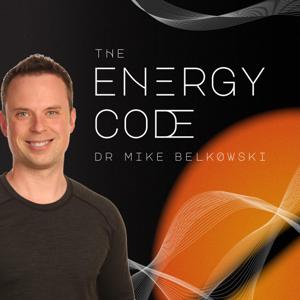
The Energy Code is your blueprint for unlocking limitless vitality at the cellular level. Hosted by Dr. Mike Belkowski, this podcast dives deep into the science of your mitochondria—the true…
765 Listeners
370 Listeners
7,185 Listeners

4,982 Listeners
718 Listeners
1,697 Listeners
4,870 Listeners
3,418 Listeners
9,148 Listeners

129 Listeners
1,089 Listeners
1,777 Listeners
846 Listeners
507 Listeners
296 Listeners