
Sign up to save your podcasts
Or

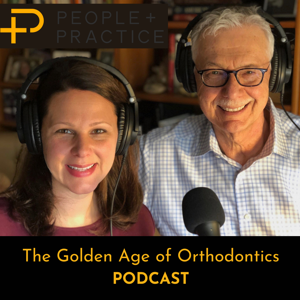


Welcome to The Golden Age of Orthodontics, the podcast that keeps orthodontists ahead of the curve in innovation and patient care. Join hosts Dr. Leon Klempner and Amy Epstein as they explore groundbreaking advancements shaping the future of orthodontics. In today’s episode, they welcome Dr. Neil Warshawsky, founder of Get It Straight Orthodontics, to discuss the transformative impact of direct 3D printing and digital workflows. Together, they delve into the revolutionary changes brought by this technology, from producing pre-polished clear aligners and nightguards to the role of teledentistry in enhancing patient care. The discussion highlights the environmental necessity of reducing waste through direct printing and recycling practices. There has never been a better time to be an orthodontist.
IN THIS EPISODE:
KEY TAKEAWAYS:
RESOURCE LINKS
People + Practice - Website
Leon - Email
Amy - Email
People + Practice - Email
Dr. Neal - Email
Dr. Neal - LinkedIn
Welcome to The Golden Age of Orthodontics, the podcast that keeps orthodontists ahead of the curve in innovation and patient care. In today’s episode, hosts Dr. Leon Klempner and Amy Epstein are joined by Jose Hogan, President and CEO of Align Technology They delve into how Align is reshaping the future of orthodontics with breakthrough technologies and digital solutions. Joe shares insights on how orthodontists can embrace the digital shift, addressing the challenges and benefits of transitioning to digital workflows. From AI and 3D printing advancements to reducing treatment times and minimizing office visits, this conversation looks into the transformative power of digital orthodontics and Align’s ongoing commitment to supporting orthodontic practices worldwide. Tune in to learn how these innovations reshape patient care and practice efficiency in the orthodontic industry. Remember, there has never been a better time to be an orthodontist.
IN THIS EPISODE:
KEY TAKEAWAYS:
RESOURCE LINKS
People + Practice - Website
Leon - Email
Amy - Email
People + Practice - Email
Align Technology - Website
BIOGRAPHY:
Joseph Hogan, President and CEO of Align Technology, has led the company to significant financial success over the past eight years. With extensive leadership experience from ABB and GE Healthcare, where he increased revenues by 25% and doubled them from $7 billion to $16 billion, Hogan brings a wealth of expertise in business strategy, market development, and operational management.
In this episode of The Golden Age of Orthodontics Podcast, Dr. Leon Klempner and Amy Epstein are joined by Dr. Shankar Rengasamy Venugopalan, Chair of the Department of Orthodontics at Tufts University. Together, they discuss the transformative impact of AI on orthodontics and digital treatment plans. They’ll explore AI's role in treatment planning, emphasizing the need for transparency in AI algorithms and the importance of orthodontists' clinical judgment, as well as some of the limitations of AI. Dr. Venugopalan highlights the biological factors influencing tooth movement and reassures that AI cannot replace human expertise and patient-doctor relationship. Now is the time for orthodontists to embrace, rather than fear, technological advancements to enhance patient care through innovative approaches.
IN THIS EPISODE:
KEY TAKEAWAYS:
RESOURCE LINKS
People + Practice - Website
Dr. Leon - Email
Amy - Email
People + Practice - Email
Welcome to The Golden Age of Orthodontics, the podcast for orthodontic professionals eager to stay at the forefront of innovation and patient care. Today, hosts Dr. Leon Klempner and Amy Epstein are joined by the esteemed Dr. Luis Carriere, member of the Editorial Review Board for the American Journal of Orthodontics and Dentofacial Orthopedics (AJODO) and contributing editor of the Journal of Clinical Orthodontics (JCO). Dr. Carriere will share his expertise on improving patient and parent communication, particularly with young patients, to foster a sense of responsibility in their orthodontic journey. This approach boosts compliance and eases anxiety, transforming the patient experience. Plus, we'll dive into the mechanics and advantages of the motion appliance, including its role in dental alveolar movement and its long-term impact on growth. Get ready to explore practical tips, insights on the latest orthodontic tools, and a vision of future innovations—because there has never been a better time to be an orthodontist.
IN THIS EPISODE:
KEY TAKEAWAYS:
RESOURCE LINKS
People + Practice - Website
Dr. Leon's - Email
Amy Epstein's - Email
People + Practice - Email
Carriere System - Website
Dr. Luis Carriere - Facebook
Dr. Luis Carriere - LinkedIn
BIOGRAPHY: Luis Carriere DDS. MSD. PhD.
Dr. Luis Carrière obtained his dental degree from the University of Complutense in Madrid in 1991. He then attended the University of Barcelona, where he completed his Orthodontic training and received his Master of Science in Orthodontics in 1994. In 2006, he received his Doctorate in Orthodontics, Cum Laude, from the University of Barcelona.
Dr. Carrière won the “Joseph E. Johnson Award” in 1995 and the International Design Award Delta Gold ADI-FAD 2009 for the “Carriere Distalizer MB.” Dr. Carrière is a Member of the Editorial Review Board for the American Journal of Orthodontics and Dentofacial Orthopedics (AJODO) and a contributing editor of the Journal of Clinical Orthodontics (JCO).
Welcome to The Golden Age of Orthodontics, hosted by Dr. Leon Klempner and Amy Epstein. In today’s episode, we're thrilled to be joined by Dr. Maz Moshiri, a faculty member of Align Technology since 2013 and co-founder of the Aligner Intensive Fellowship. This online residency has helped nearly 5,000 orthodontists worldwide master the art of clear aligners. Dr. Maz dives deep into the future of orthodontics, sharing his insights on the latest innovations in aligner technology, the integration of AI and CBCT, and the critical role of balancing clear aligners with fixed appliances. He also provides a thoughtful discussion on Orthodontic Service Organizations (OSOs), weighing the pros and cons of joining one and highlighting the importance of choosing the right OSO for long-term success. Whether you're an industry veteran or a newcomer, this episode offers invaluable perspectives on staying ahead in the rapidly evolving world of orthodontics. Remember, there has never been a better time to be an orthodontist.
IN THIS EPISODE:
KEY TAKEAWAYS:
RESOURCE LINKS
Dr. Mazyar Moshiri - Email
Aligner Intensive Fellowship - Website
People + Practice - Website
Dr. Leon - Email
Amy Epstein - Email
People + Practice - Email
BIOGRAPHY:
Dr. Maz Moshiri has been a faculty member of Align Technology since 2013. He co-founded the Aligner Intensive Fellowship, an online residency that has educated nearly five thousand orthodontists worldwide on the proper treatment planning and use of clear aligners. He is a Clinical Assistant Professor in the orthodontic residency program at the Center for Advanced Dental Education at Saint Louis University, focusing on clear aligners. He serves on the clinical advisory boards of Orthodontic Partners and as an Associate Editor for the Voice of an Expert column for the AJODO Clinical Companion. Dr. Moshiri is a Diplomate of the American Board of Orthodontics and a Fellow of the American College of Dentists, the International College of Dentists, and the Pierre Fauchard Academy.
QUOTES:
“I think that the future of clear aligners is direct printing of the aligner and material science, changing the aligners' materials at different treatment phases for different reasons. That may be the case now with clear aligners moving forward. So I think that's extremely exciting to kind of see the evolution of that.” Mazyar Moshiri DMD, MS, FICD
“I use Invisalign, I'm a speaker for them, and I get compensated as a speaker but, I also use ULAB in my office to make in-house aligners. I get zero compensation from them. They could not be further apart as far as I'm concerned, in what they offer in terms of tools, but I use them both because it's better for my patients.” Mazyar Moshiri DMD, MS, FICD
Welcome to the Golden Age of Orthodontics with Dr. Leon Klempner and co-host Amy Epstein. In this episode, we dive into a crucial yet often overlooked issue in dental and orthodontic practices—embezzlement. Today’s guest is David Harris, CEO of Prosperident, the world’s largest firm investigating financial crimes committed against dentists, who shares eye-opening statistics on how pervasive embezzlement is in orthodontic practices. David sheds light on the behaviors of those who steal, the fine line between delegation and abdication, and the essential steps your HR department must take to protect your practice, including rigorous pre-employment screening. The key takeaway? More orthodontists will be embezzled than won't, making vigilance and proactive measures essential to safeguarding your business. Don’t miss out on this information-packed episode.
IN THIS EPISODE:
KEY TAKEAWAYS:
RESOURCE LINKS
People + Practice - Website
Dr. Leon - Email
Amy - Email
People + Practice - Email
Prosperident - Website
Prosperident Phone Number: 888-398-2327
BIOGRAPHY:
David Harris may have the coolest job in dentistry - he gets to chase and catch those who steal from dentists. A rule-breaker in his youth, David changed his direction and has spent much of his adult life in the world of investigation and
Enforcement, where he uses his unrivaled ability to understand the criminal thought process to help educate and protect dentists. David is the Chief Executive Officer of Prosperident, the world’s largest firm investigating financial crimes committed against dentists. David is a licensed private investigator, a Forensic
Certified Public Accountant and a Certified Fraud Examiner. He is the author of the definitive book on embezzlement, the most recent Healers versus Stealers: How to Outsmart the Thief in Your Dental Practice. In addition to being a prolific author, David is a frequent presenter at regional, national, and international dental conferences, and his vast wealth of experience, coupled with his keen sense of humor, makes David both an engaging and entertaining speaker.
In recognition of his long and distinguished service to the dental profession, David is one of a handful of non-clinicians to be honored with a Fellowship in the International Academy of Dental Facial Esthetics.
Welcome to the Golden Age of Orthodontics with Dr. Leon Klempner and co-host Amy Epstein. In today's episode, we're excited to visit with a dear friend, Dr. Chris Cetta, the co-inventor of the precision aligner button and host of the Illuminate Orthodontic Podcast. Dr. Cetta will share the story behind licensing the precision aligner button and offer valuable advice for anyone with a product idea. We'll also dive into the latest trends in orthodontic technology. Since we're all old friends, we'll wrap up the podcast with a fun discussion about music, concerts, and our favorite bands and singers. Remember, there's never been a better time to be an orthodontist!
IN THIS EPISODE:
KEY TAKEAWAYS:
RESOURCE LINKS
People + Practice - Website
Leon - Email
Amy - Email
People + Practice - Email
Dr. Chris Cetta - Email
Dr. Chris Cetta - LinkedIn
QUOTES:
“Taking the licensing model was an interesting process. I learned a lot. I think it's a great modality for orthodontists to take. The biggest lesson I learned is to get very comfortable with the word no and embrace the word no, because if you are trying to license your product to another company, you're going to hear no a lot. And you can't let that discourage you; you can't let that break your spirit and throw in the towel. Another important thing to learn is that, when you get that no, ask for feedback from people because, if you get people to give you honest answers, you can get a lot of valuable insight into how you might be able to change your product or service to make it better along the way.” Dr. Chris Cetta
“I think the licensing model is ideal for orthodontic entrepreneurs. You will see a number of successful orthodontic entrepreneurs out there. We talked about John Pham, Adam Shulhoff, Brandon Owen, and Alfred Griffin; they've done wonderful things with their products. But not every orthodontist wants to quit being a clinician. Being a company CEO is a full-time job, which any of them can certainly tell you. I would suggest keeping the day job. Licensing is much less of a financial risk, than putting yourself out there. Another big thing is why not tap into the company's expertise in manufacturing the products, rather than trying to learn this all on your own.” Dr. Chris Cetta
Welcome to the Golden Age of Orthodontics, where innovation meets expertise. Join host Dr. Leon Klempner and co-host Amy Epstein as they delve into the cutting-edge advancements shaping the world of orthodontics. In today's episode, we're excited to welcome April Lowry, the Director of Product at Aura and Dental Product Management at PracticeTek. April shares her insights on selecting the right software for your orthodontic practice, emphasizing the critical need for systems that prioritize both patients and staff. From essential questions to ask when evaluating new software to the impact of patient-centric solutions, this discussion is packed with valuable advice for modern orthodontic practices. If you're looking to enhance your practice with the latest technology, this episode is a must-listen. Remember: there’s never been a better time to be an orthodontist. Tune in and stay ahead of the curve!
IN THIS EPISODE:
KEY TAKEAWAYS:
RESOURCE LINKS
People + Practice - Website
Leon - Email
Amy - Email
People + Practice - Email
April Lowry - Email
PracticeTek - LinkedIn
PracticeTek - Website
Welcome to the Golden Age of Orthodontics, where we dive into the future of orthodontic care. Today, we're excited to have Kelly Riedel, the CEO of LightForce Orthodontics, as our special guest. Join us as we explore how LightForce is reshaping the industry with its revolutionary custom bracket technology. Imagine measuring and enhancing your protocols' effectiveness, all while setting a new standard in patient experience and practice efficiency. With LightForce, orthodontists can now create personalized digital treatment plans that are fast, precise, and uniquely tailored to each patient's needs. Kelly emphasizes the need to be customer-obsessed! There’s never been a better time to be an Orthodontist.
IN THIS EPISODE:
KEY TAKEAWAYS:
RESOURCE LINKS
People + Practice - Website
Dr. Leon - Email
Amy Epstein - Email
People + Practice - Email
Kelly Riedel - Email
BIOGRAPHY:
Kelly Riedel is the Chief Operating Officer at LightForce, provider of the world's first and only fully customized 3d printed orthodontic system. Prior to joining LightForce, Kelly was Director of Global Robotics Operations for Amazon, leading a cross-functional organization delivering all robotics technology into Amazon buildings worldwide. In this role, she managed operations across five different product design centers, coordinated with 100+ suppliers across four continents, and launched Amazon’s state-of-the-art, 350,000-square-foot Innovation Hub. An attorney by trade, she previously led the legal team for Amazon Robotics as a member of its executive team, and before that, was Senior Counsel at HMH Publishing Company, focused on technology transactions, and a member of the IP Transactions team at Skadden, Arps. She holds a B.A. from Middlebury College, a J.D. from Berkeley Law School, and was a member of the 2016 Harvard Business School Women’s Leadership Forum. Kelly resides in Massachusetts with her husband and two children. Over her desk, she has a print that reads, “Here’s to Strong Women: May we know them. May we be them. May we raise them.” She’s striving to do all three.
QUOTES:
“Amazon has a lot of leadership principles. If you Google Amazon Leadership Principles, in my view, they are the best way to be a leader and a successful worker. The unique part about how Amazon uses them is they don't just have them; they read them and teach them. They live them. It is how they hire, evaluate themselves and how they evaluate others and choose what to invest in.” Kelly Riedel
“LightForce has three core values. The most important thing is customer obsession: focus on your customers. People say if the practice down the street offers X, should we offer X or if our competitors are doing X, why shouldn’t we do Y? I firmly believe that the best companies don't do that. They start with their customers and their customer's needs, problems, challenges, and desires and work backward from there, and LightForce 100 percent does this.” Kelly Riedel
We always look forward to conversations with Chris Bentson, Partner of Bentson Copple & Associates and President of the American Association of Orthodontists Foundation. In this episode, Chris delves into his past predictions while casting a visionary gaze into the future of the field. Throughout the episode, he illuminates the transformative impact of technology on orthodontic practices, stressing the paramount importance of embracing digital braces in today's landscape. Chris advocates for a forward-thinking approach, asserting that the future belongs to those willing to adapt. He confronts the reluctance of some older practitioners to embrace digital innovations, debunking notions of expense and investment hesitancy.
Chris also underscores the significance of crafting tailored treatment plans and leveraging communication and technology to meet the diverse needs of adult patients. The conversation extends to strategies for reconnecting with former patients and speculates on the future trajectory of OSOs and DSOs. Remember: There’s never been a better time to be an Orthodontist.
IN THIS EPISODE:
KEY TAKEAWAYS:
RESOURCE LINKS
People + Practice - Website
Leon - Email
Amy - Email
People + Practice - Email
Bentson Copple - Website
BIOGRAPHY:
Chris Bentson is a partner of Bentson Copple & Associates in Greensboro, North Carolina. The company serves the orthodontic community by performing practice valuations, providing recruiting services, and negotiating transactions with both buyers and sellers. Chris has been working with orthodontists regarding the business aspects of their practices for over thirty years, and was recently awarded the "Outstanding Contribution to the Specialty Award by a Non-Orthodontist" from the AAO. He currently serves as President of the American Association of Orthodontists Foundation (AAOF, he’s a contributing lecturer to the Wharton-AAO Mastering the Business of Orthodontics program and a frequent guest lecturer at AAO meetings, regional orthodontic society meetings, orthodontic resident programs, study clubs, and orthodontic user meetings. Chris has authored dozens of articles published on the business of orthodontics in numerous orthodontic trade publications. Chris has personally visited over one thousand orthodontic practices in the United States, Canada, and Australia during his career.
QUOTES:
“My charge to the industry is when you've got inflation, even though it's coming down, I think we ended up at 3.8 percent last year, and we were at 7 percent the year before. If you haven't raised your fees in the last few years, do that tomorrow. Because if we’re going to be down a percent or two this year, if you raise your fees two or 3%, you will be flat, and I think flat is the new up in 2024.” Chris Bentson
“The good news is we always bounce out of these things positively. So, while it's lagging and taking a little bit longer than any of us would like, 2025, 2026, and 2027 will be killer good ortho years. What do you do between now and then? It's time to invest.” Christ Bentson
From the publisher's feed
7,689 Listeners
18 Listeners
35 Listeners

7,986 Listeners
44 Listeners
76 Listeners
84 Listeners

58 Listeners

29,191 Listeners

15,942 Listeners

38 Listeners
4 Listeners
18 Listeners
22 Listeners
7 Listeners