
Sign up to save your podcasts
Or

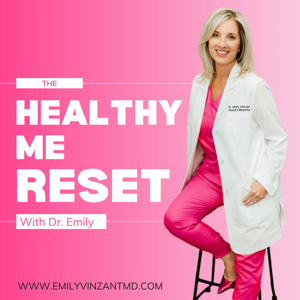


Warning: this episode comes with a powerful tool, learned through decades of pain chasing perfection.
In this episode, Dr. Emily talks about one of the most important mindset shifts for real healing and growth: progress over perfection.
So many of us delay change because we think we need the perfect plan, perfect motivation, or perfect execution before we begin.
But real growth doesn't work that way. Healing your body, mind, relationships, and spiritual life happens one imperfect step at a time.
Dr. Emily shares why perfectionism often keeps us stuck, how shame and fear can block progress, and why learning to embrace the "work in progress" version of ourselves is where true transformation begins.
She also opens up about personal stories involving health struggles, mindset shifts, marriage growth, stress, faith, and learning to let go of the pressure to "have it all together."
In this episode, Dr. Emily talks about:You do not need to become perfect to become healthier, stronger, or more whole.
You just need to keep moving forward.
One small step at a time.
Ready for more guidance and support? Head to www.emilyvinzantmd.com or follow Dr. Emily on Facebook and Instagram for more science-backed common-sense health.
This episode feels different.
Not because it's episode 100… But because of what it took to get here.
In this conversation, Dr. Emily is not just reflecting on the journey of this podcast.
She's reflecting on the journey of her life over the past few years. The lessons, the pivots, the unlearning, and the deep personal resets that shaped not just her work… but who she is.
After hundreds of conversations around health, she wanted to simplify everything into what truly matters.
Because sometimes… we get lost in all the noise.
All the "experts." All the advice. All the information.
And what we actually need… is clarity.
So today, she breaks it down into three core truths—three sentences—that have guided her evolution in physical, mental, and spiritual health.
💡 WHAT YOU'LL LEARN IN THIS EPISODEWe've been taught to rely heavily on research, studies, and protocols.
And while those matter… they're only as good as how they're interpreted.
2. Mental Health: There's More Beneath the BehaviorFor many of us, the struggle isn't just physical.
It's emotional patterns. Stress. Identity. Unprocessed experiences.
And sometimes, the answer isn't another prescription— it's deeper awareness.
3. Spiritual Health: The Missing FoundationThis is the part we often avoid.
But the truth is— without spiritual alignment, everything else feels off.
There's a kind of peace… a grounding… that you can't replace with productivity, success, or even physical health.
If there's one thing I hope you take from this episode, it's this:
You don't need to follow someone else's exact path to be healthy.
You need to understand your own.
And sometimes… the most powerful thing you can do is pause, reset, and listen.
Ready for more guidance and support? Head to www.emilyvinzantmd.com or follow Dr. Emily on Facebook and Instagram for more science-backed common-sense health.
As I'm approaching episode 100, I've been doing a lot of reflecting.
Not just on this podcast… but on health, on medicine, and on what I've seen in my own life and in so many of yours.
Because if I'm honest, a lot of us feel like we have 99 health problems.
And when you're in that place, it's overwhelming. It's exhausting. And it's confusing.
We live in a time where:
And yet somehow… we feel worse.
In this episode, Dr. Emily wants to bring you back to something simple.
Because we don't need to solve everything. We need to know where to start.
What This Episode Is Really AboutThis is not just about weight loss. This is not just about one symptom.
This is about understanding that:
…are all connected.
And if we ignore that connection, we miss the bigger picture.
That's really why this podcast became The Healthy Me Reset.
Because what she has learned over time is that health isn't just about fixing one thing—it's about looking deeper.
The Truth About Modern HealthHere's something she wants you to really hear:
We don't have all the answers yet.
Medicine is often:
We're often reacting… not leading.
And at the same time, we're living in a culture where:
We're seeing rising risks in things like:
And yes… even things like dementia conversations are now being tied into lifestyle.
It's a confusing time.
A Warning About "Quick Fix" CultureYou're going to hear a lot of noise out there.
Especially around things like:
And she wants you to be thoughtful here.
Because sometimes:
And that's where confusion starts.
Just because something works in one context… doesn't mean it applies everywhere.
You deserve better than surface-level advice.
The Core Message of This EpisodeIf you feel like you have 99 problems…
You don't need 99 solutions.
You need one starting point.
Because when you try to fix everything:
But when you choose one:
When you take one step, the dominoes do start to fall.
The 3-Step Reset1. Get clear on your goal What is bothering you the most right now?
2. Choose one starting point Not everything—just one.
3. Accept the discomfort of change Growth happens when you move through discomfort, not avoid it.
In this episode, Dr. Emily also shares about the "sandwich generation"—that season of life where you're caring for both your children and your parents.
It's one of the hardest phases… but also one of the most meaningful.
And it reminds us that health isn't just about numbers—it's about how we live, love, and show up for the people around us.
This Week's ChallengeIf you're feeling overwhelmed:
👉 Pick ONE health problem 👉 Take ONE step this week
That's where your reset begins.
We may not have all the answers yet.
But you have more control than you think.
Start where you are. And let the rest unfold.
Ready for more guidance and support? Head to www.emilyvinzantmd.com or follow Dr. Emily on Facebook and Instagram for more science-backed common-sense health.
This week, I'm joined by someone very special to me—writer, educator, speaker, and my friend, Ashley Martin.
You know I don't bring guests on often. It takes someone who has truly walked the walk—and Ashley is one of those people.
In this episode, Ashley shares her powerful journey through over-drinking, marital infidelity, depression, and the moment that brought her to complete surrender. From that rock-bottom place, she found a path to spiritual, mental, and physical healing—and now helps other women do the same.
We talk about:
This conversation is for any woman who feels overwhelmed, stuck in unhealthy patterns, or just knows something needs to change—even if you can't fully explain it yet.
Ashley's message is simple but powerful: You don't need a perfect life—you need a path.
Her new book, Lost No More, offers exactly that—a clear, practical guide to building a daily relationship with God and finding real peace in the middle of a busy, messy life.
You can get Lost No More on Amazon.
For more details, visit her website: 👉 https://ashleymartinministry.com/
All her information is there, including the Amazon link to grab your copy.
Holiday weight gain can be frustrating.
Yet, for most of us, some regain at the holidays is inevitable.
It's not the few pounds that matters most: it's what we do with that information.
In this episode, we're gently reframing that story.
Dr. Emily explains why the weight you see after a holiday isn't what you think. Most of it isn't fat—it's fluid. Your body is simply responding to changes in sugar, salt, and processed foods.
Instead of reacting with guilt or extreme dieting, this episode is about slowing down, understanding your body, and choosing a smarter reset.
Through a personal story (yes, even something as simple as Girl Scout registration 😅), she shows how rushing, forcing, and repeating old patterns can create unnecessary stress—not just in life, but in our health too.
The goal isn't perfection. It's awareness.
What Matters Most:Instead of: "I ruined everything."
Think: "I learned something—and I move forward."
You'll be eating for life.
This isn't about restriction—it's about better choices, one step at a time.
Ready for more guidance and support? Head to www.emilyvinzantmd.com or follow Dr. Emily on Facebook and Instagram for more science-backed common-sense health.
What if the problem isn't Monday… but the pressure we attach to it?
In this episode, Dr. Emily talks about the quiet weight many of us carry into Mondays—especially after a meaningful weekend, holiday, or season like Easter. We come in with good intentions: "This is the week I'll finally do it right." But when real life hits—work, home, responsibilities—that pressure quickly turns into overwhelm.
💭 Why We StruggleWe focus so much on what to do, but not on our thoughts and feelings.
So when our mind says:
We feel overwhelmed… and do nothing—or fall back into old habits.
🔁 A Simple ShiftInstead of: "I need to get this right"
Try: "I can make one decent decision today."
This removes pressure and helps you take action.
🧠 When Overwhelm HitsPause and ask:
Then take one small step forward.
🌿 Final ReminderYou don't need a perfect Monday. You need a possible Monday.
If today feels messy, you're not behind—you're human. Just move forward, one calm decision at a time.
Ready for more guidance and support? Head to www.emilyvinzantmd.com or follow Dr. Emily on Facebook and Instagram for more science-backed common-sense health.
I don't know about you… but lately, I feel like I'm scared more often than I used to be.
Not always in a big, obvious way. Sometimes it just shows up as worry… or feeling a little on edge… or that quiet fear sitting in the background.
And when you look at the world right now, it makes sense.
A lot is coming at us—social media, constant information, big global changes, questions about our kids, our future… it can feel like we're always in this low-level state of fear.
But here's what I've been thinking about…
What if fear isn't actually the problem?
What if fear is doing exactly what it was designed to do—to protect us—but somewhere along the way, it started showing up in places it doesn't need to be?
In this episode, Dr. Emily is sharing some personal reflections on fear—where it comes from, how it's evolved in her own life, and why so many of us feel like we're "scared all the time."
We'll talk about:
I don't think the goal is to eliminate fear.
I think the goal is to understand it… So it doesn't run the show.
If you've been feeling this too, you're not alone.
Ready for more guidance and support? Head to www.emilyvinzantmd.com or follow Dr. Emily on Facebook and Instagram for more science-backed common-sense health.
Fasting is something many of us have practiced in different ways—whether for health, faith, or discipline. But the question we don't often stop to ask is… are we actually doing it in a way that's healthy?
In this episode, Dr. Emily walks you through a more intentional way to look at fasting. Not just the act itself—but the heart, the purpose, and the impact it has on your body and mind.
Because fasting isn't just about removing something… it's about understanding why you're doing it and how it's shaping you.
What (What are you fasting from?)For many of us, fasting immediately means food. But it can also be so much more than that.
You might be fasting from sugar, snacks, or processed foods. You might be stepping away from social media, distractions, or habits that take up mental space.
The important part is this: You're choosing something that matters.
Not something easy. Not something convenient. But something that helps you become more aware of your patterns—and creates space for something better.
When (When should you fast?)There's no one-size-fits-all answer here.
For some, fasting looks like a simple overnight fast. For others, it might be a 24-hour reset once or twice a week. And for many, it's tied to seasons—like Lent—or moments where you're seeking clarity, direction, or a reset.
What matters most is that your timing is intentional.
You're not just doing it because someone else is doing it. You're doing it because it serves a purpose in your life right now.
How Much (How far should you go?)This is where I see a lot of people get tripped up.
We tend to think that more is better. Longer is better. Harder is better.
But that's not always true.
For physical health, many of the benefits of fasting can happen within 16 to 24 hours. You don't need to push your body to extremes to see results.
And when fasting becomes too long or too intense, we often see the opposite effect—overeating, burnout, or feeling worse instead of better.
So the goal isn't to go as far as possible. The goal is to go as far as is helpful.
Fasting is not about punishment. It's not about restriction for the sake of restriction.
It's about creating space.
Space for clarity. Space for discipline. Space to reconnect—with your body, your mind, and your purpose.
And sometimes, the most powerful part of fasting isn't even the fast itself… It's what you learn when you sit in the discomfort instead of immediately trying to escape it.
Ready for more guidance and support? Head to www.emilyvinzantmd.com or follow Dr. Emily on Facebook and Instagram for more science-backed common-sense health.
In this episode, Dr. Emily breaks down surprising NEW trends in women's health and why the future of women's health may depend more on lifestyle than medication.
She walks through the biggest drivers behind rising heart disease risk—high blood pressure, diabetes, and obesity—and explains how modern diet and daily habits are fueling these trends.
Dr. Emily also talks about the role of medications, including weight-loss drugs, and why they are tools but not the long-term solutions we need.
This episode is a call to health. It starts with a simple step you can take today. Knowing your numbers, seeing your doctor regularly, and making small changes in your daily life can have a powerful impact not only on your health, but on the generations that follow your example.
In this episode, we discuss:
Why heart disease rates are projected to increase
The three biggest risk factors affecting women's health
How diet, weight, and lifestyle influence blood pressure and diabetes
The truth about weight-loss medications and long-term results
Why sustainable habits matter more than quick fixes
How knowing your health numbers can change your future
Small changes today can shape the health of the next generation.
Ready for more guidance and support? Head to www.emilyvinzantmd.com or follow Dr. Emily on Facebook and Instagram for more science-backed common-sense health.
Did you know that there's a specific day of the year when the risk of heart attack and stroke suddenly increases?
In this episode, Dr. Emily dives into the science behind this phenomenon and explains why even a slight disruption in our sleep can affect our heart, hormones, and overall health.
Our bodies operate on something called a circadian rhythm—our natural internal clock that tells us when to sleep, wake, eat, and repair. When that rhythm gets disrupted, even by just an hour, it can throw several systems off balance.
Sleep isn't just rest. It's when the body performs critical repair processes. During sleep:
Heart rate and breathing slow down
Metabolism shifts into recovery mode
The brain organizes and clears information from the day
Hormones rebalance to prepare the body for the next day
When sleep is disrupted, these systems don't reset properly.
One of the biggest factors involved is cortisol, often called the body's stress hormone.
When we are sleep-deprived or stressed, cortisol remains elevated longer than it should. This creates a cascade of effects, including:
Increased blood pressure
Higher stress on the cardiovascular system
Disrupted blood sugar regulation
Increased inflammation
All of these can contribute to an increased risk of heart attack or stroke—especially when layered on top of chronic sleep deprivation.
Sleep deprivation also affects behavior and decision-making.
Research shows that when people are sleep deprived, they are more likely to:
Crave sugary or highly processed foods
Experience bigger energy crashes
Make poorer food choices
Eat more frequently throughout the day
This combination of poor sleep, stress hormones, and unhealthy eating patterns creates a cycle that can negatively impact long-term health.
Sleep plays a powerful role in regulating metabolism, hormone balance, and brain health. During sleep, the brain essentially performs a "cleanup" process—strengthening neural connections, organizing memories, and clearing out metabolic waste.
It's also when the body resets insulin responses and gives the digestive system a break.
Without adequate sleep, these processes become disrupted, increasing the risk for issues like:
Obesity
Diabetes
Cardiovascular disease
Chronic stress
While we can't eliminate daylight saving time ourselves, we can take steps to support our bodies during these transitions.
A few simple strategies include:
Prioritizing consistent sleep schedules
Reducing evening screen time and technology use
Supporting healthy nighttime routines
Managing stress levels
Being mindful of food choices when tired
These lifestyle habits help support your circadian rhythm and give your body the recovery time it needs.
Sometimes the biggest health risks aren't obvious—they're hidden in our daily habits. Understanding how sleep impacts your body can help you make simple changes that support better health.
Ready for more guidance and support? Head to www.emilyvinzantmd.com or follow Dr. Emily on Facebook and Instagram for more science-backed common-sense health.
From the publisher's feed

12,838 Listeners

1,980 Listeners
8,791 Listeners
2,080 Listeners
7,481 Listeners

16,625 Listeners

9,141 Listeners
1,503 Listeners
61 Listeners
109 Listeners

28,985 Listeners

17,594 Listeners

18,833 Listeners

1,222 Listeners
347 Listeners