
Sign up to save your podcasts
Or

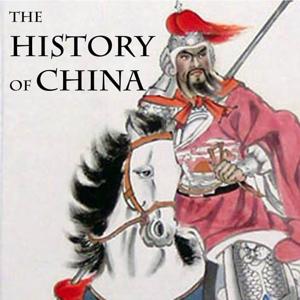
By Chris Stewart


4.6
10841,084 ratings


The podcast currently has 404 episodes available.
The most played episodes among Podcast App listeners.
The stealth troops successfully sneak past the enemy lines in dead men's coats. The false flags planted on the hillside fool the city guard. The front gate assault diverts, while the sappers around back bring the walls down. I love it when a plan comes together, every single piece locking in like perfect clockwork... Except… it wasn't really the plan. The city that fell was never the objective – it was merely a diversion… a diversion that would leave 60,000 dead within a week. Time Period Covered: 1860 CE Major Historical Figures: The Taiping Heavenly Kingdom: Hong Xiuquan, the Heavenly King [1814–1864] Hong Rengan, the Shield King (Gan Wang), Prime Minister [1822–1864] Li Xiucheng, the Loyal King (Zhong Wang) [1823–1864] Li Shixian, the Attending King (Shi Wang) [1834–1865] Chen Yucheng, the Brave King (Ying Wang) [1837–1862] The Qing: The Xianfeng Emperor [1831–1861] He Chun, Imperial Commissioner, Jiangnan Daying [d. 1860] Zeng Guofan, acting Governor-General of Liangjiang; commander, Hunan Army [1811–1872] Zhang Guoliang, commander, Jiangnan Daying [1822–1860] Zhang Yuliang, commander of the Hangzhou relief column Xu Yuren, Governor of Jiangsu Major Works Cited: Jen, Yu-wen. The Taiping Revolutionary Movement. Michael, Franz, and Chung-li Chang. The Taiping Rebellion: History and Documents, Vols. I–III. Platt, Stephen R. Autumn in the Heavenly Kingdom: China, the West, and the Epic Story of the Taiping Civil War. Spence, Jonathan D. God's Chinese Son: The Taiping Heavenly Kingdom of Hong Xiuquan. Learn more about your ad choices. Visit megaphone.fm/adchoices

For a thousand years, Suzhou and Hangzhou stood as synonyms for the next best thing to Heaven itself. Well... that was before 1860. As of now, Hangzhou is a fire-gutted ruin, and Suzhou is next on the target list. But the army that does the most damage… is not the invader. The Taiping arrive to find the dirty work done ahead of them, by the very Qing forces assigned to defend the great southern city, and a vast number of the city having decided to "take matters into their own hands." As such, when a party of missionaries sails upriver from Shanghai to find out just what happened to Suzhou, they'll have to wade through a literal riverful of the dead. Time Period Covered: May-Aug. 1860 CE Major Historical Figures: The Taiping Heavenly Kingdom: Hong Xiuquan, the Heavenly King [1814–1864] Hong Rengan, the Shield King (Gan Wang), Prime Minister [1822–1864] Li Xiucheng, the Loyal King (Zhong Wang) [1823–1864] The Qing: The Xianfeng Emperor [1831–1861] He Guiqing, Governor-General of Liangjiang [1816–1862] Xu Youren, Governor of Jiangsu [d. 1860] Zeng Guofan, Governor-General of Liangjiang (from June 8, 1860); commander, Hunan Army [1811–1872] Ma Dezhao, Qing commander The Foreign Missionaries: Joseph Edkins, London Missionary Society [1823–1905] Jane Edkins, his wife [1841-1863] Griffith John, Welsh Congregationalist missionary [1831–1912] James Legge, London Missionary Society, Hong Kong [1815–1897] Major Works Cited: Jen, Yu-wen. The Taiping Revolutionary Movement. Michael, Franz, and Chung-li Chang. The Taiping Rebellion: History and Documents, Vols. I–III. Platt, Stephen R. Autumn in the Heavenly Kingdom: China, the West, and the Epic Story of the Taiping Civil War. Spence, Jonathan D. God's Chinese Son: The Taiping Heavenly Kingdom of Hong Xiuquan. Learn more about your ad choices. Visit megaphone.fm/adchoices
In episode 1, we begin with an introduction to this podcast, followed by a brief overview of what we’ve come to know about early human migration and settlement in the region that will eventually become China. Finally, we’ll delve into the mythological origin story that purports to tell of the three divine Sovereigns who would create and then rule over the Han people. I’m very excited to be getting this journey underway! Once again welcome, and thank you for listening. UPDATE: As of 08/28/2016, this episode has been completely rebooted from the ground-up. Enjoy! Transcript Available (paywalled): Transcript Donate to Help the Show!: https://www.patreon.com/thehistoryofchina Learn more about your ad choices. Visit megaphone.fm/adchoices
This episode, we enter the second half of our gaze into the Chinese origins mythos. Focusing on the Five Emperors descended from the Yellow Emperor, this period marks the beginning of the transformation of the Huaxia People from settled tribe, to dynastic feudal kingdom. There will be betrayal, cataclysmic flooding, bird kingdoms, the Vietnamese, magical earth, and – of course – dragons. UPDATE: as of 08/28/2016, this episode has been fully rebooted from the ground up. Enjoy! Transcript Available (paywalled): Transcript Become a Patron: Click Here Learn more about your ad choices. Visit megaphone.fm/adchoices
Even in the fallout of the Opium War, dreams endure—but what happens to a dream deferred? In Canton, one young man’s starry-eyed visions of success run headlong into the brutal wall of the Imperial Examination system. And when that dream finally shatters, it neither dries up, nor festers.... it explodes into prophetic visions so awesome and so terrible that they will shake the very foundations of Heaven itself. Time Period Covered: 1827 – 1844 Major Historical Figures: The Daoguang Emperor (Aisin-Gioro Minning) [r. 1820–1850] Hong Xiuquan (Hong Huoxiu), failed examination candidate, Second Son of God[1814–1864] Li Jingfang, friend, relative, first convert [fl. 1840s] Hong Rengan [1822–1864] Feng Yunshan [1815–1852] Liang Fa (Liang Afa), author of Good Words to Exhort the Age [1789–1855] Major Sources Cited: Hong Xiuquan. Taiping Heavenly Chronicle (Taiping Tianri). Kuhn, Philip A. "Ch. 6, The Taiping Rebellion” in The Cambridge History of China, Vol. 10. Liang Fa. Good Words to Exhort the Age (Quanshi Liangyan) Platt, Stephen R. Autumn in the Heavenly Kingdom. Spence, Jonathan D. God's Chinese Son: The Taiping Heavenly Kingdom of Hong Xiuquan. Learn more about your ad choices. Visit megaphone.fm/adchoices
The podcast currently has 404 episodes available.

5,626 Listeners

12,038 Listeners

5,376 Listeners

3,968 Listeners
4,276 Listeners

4,401 Listeners
1,876 Listeners

1,859 Listeners
678 Listeners

1,143 Listeners
3,474 Listeners

1,506 Listeners

843 Listeners
1,405 Listeners

2,082 Listeners

6,231 Listeners

447 Listeners
1,495 Listeners

2,885 Listeners

1,037 Listeners
5,252 Listeners

359 Listeners

350 Listeners

577 Listeners
3,379 Listeners

475 Listeners

318 Listeners
706 Listeners

154 Listeners

110 Listeners