
Sign up to save your podcasts
Or

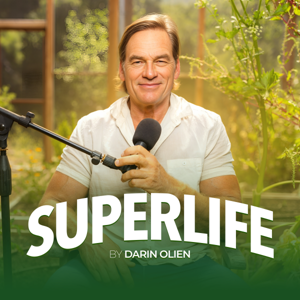

What if loneliness isn't just an emotion… but one of the most dangerous biological threats to your health?
In this deeply personal and scientifically explosive solo episode, Darin opens up about something he recently realized in his own life: despite being surrounded by people, he was lonely. But what began as an emotional realization quickly became a deep dive into some of the most shocking research he's ever uncovered, showing that chronic loneliness may increase the risk of heart disease, dementia, cancer, autoimmune dysfunction, accelerated aging, and early death.
From inflammatory gene expression and cortisol dysregulation to oxytocin, vulnerability, and the collapse of real human connection in the digital age, this episode reveals why loneliness may be the most overlooked "fatal convenience" of modern life, and how vulnerability may be the medicine.
What You'll Learn00:00:33 – Sponsor: the truth about the exploding NAD supplement market
00:01:04 – Why supplement verification and transparency matter
00:02:17 – Opening: Darin admits something deeply personal
00:02:30 – "I realized recently… I'm lonely"
00:02:37 – The difference between being surrounded by people vs being truly known
00:03:06 – Loneliness as a biological experience, not just an emotional one
00:03:27 – The hidden risks: heart disease, dementia, cancer, early death
00:03:45 – Why this is not fringe science
00:04:13 – The most important predictor of long-term health
00:04:34 – Why relationship QUALITY matters more than quantity
00:05:06 – The global loneliness epidemic
00:05:11 – U.S. Surgeon General advisory on loneliness
00:05:39 – Loneliness declared a public health crisis
00:06:02 – 50% of Americans report measurable loneliness
00:06:22 – "A generational collapse of connection"
00:06:30 – 29% of adults have no close friends
00:06:40 – Face-to-face interactions dramatically declining
00:07:01 – The UK, Japan, and Australia loneliness crisis initiatives
00:07:32 – The paradox: hyperconnected but deeply isolated
00:08:04 – Loneliness as a biological alarm signal
00:08:31 – What loneliness actually looks like in modern life
00:08:42 – The lonely CEO, the unseen mother, the isolated social media addict
00:09:31 – "Perceived social isolation" and why the brain can't tell the difference
00:10:21 – Meta-analysis of 3.4 million people
00:10:55 – Loneliness vs obesity and smoking risk comparisons
00:11:18 – The biology of loneliness begins
00:11:50 – NF-kB: inflammatory gene activation explained
00:12:33 – How loneliness changes gene expression
00:13:02 – Chronic inflammation and disease pathways
00:13:21 – Cortisol, sleep disruption, and immune dysfunction
00:14:00 – How loneliness affects brain repair and amyloid plaque clearing
00:14:21 – Sponsor: Fatty15 and cellular health
00:18:02 – The Alzheimer's and dementia connection
00:18:25 – Loneliness as a major modifiable dementia risk factor
00:18:57 – Cortisol, neuroinflammation, and brain degeneration
00:19:16 – The hippocampus physically shrinking in lonely people
00:19:27 – Social media as a "fatal convenience"
00:19:57 – The oxytocin economy: connection as medicine
00:20:15 – Oxytocin as one of the body's strongest anti-inflammatory molecules
00:20:30 – HeartMath research: emotional synchronization between people
00:20:48 – "You regulate each other's biology"
00:21:07 – The real barrier: vulnerability
00:21:32 – Darin's recent experiences with radical vulnerability
00:21:54 – Conversations with family, ex-partners, and loved ones
00:22:35 – Brené Brown's research on connection and worthiness
00:23:14 – The "depth audit" exercise
00:23:42 – Reaching out, expressing appreciation, and owning your emotions
00:24:01 – Sacred hours: spending time without phones
00:24:13 – Questions that create real intimacy
00:24:30 – Darin's emotional conversation with his brother
00:25:03 – Protecting yourself from social media disconnection
00:25:20 – Becoming a source of joy and connection in everyday life
00:25:25 – Darin reflects on seven years of subtle loneliness
00:25:48 – The shift from surface conversations to meaningful connection
00:26:01 – "If you want love, give love"
00:26:19 – Final message: generate the connection you want to receive
00:26:22 – Closing thoughts and outro
Thank You to Our SponsorsTruniagen: Go to www.truniagen.com and use code DARIN20 at checkout for 20% off
Fatty15: Get an additional 15% off their 90-day subscription Starter Kit by going to fatty15.com/DARIN and using code DARIN at checkout.
Get Darin's deeper wellness breakdowns — beyond social media restrictions:
Weekly voice notes
Ingredient deep dives
Wellness challenges
Energy + consciousness tools
Community accountability
Extended episodes
Join for $7.49/month → https://patreon.com/darinolien
Connect with Darin Olien:Website: darinolien.com
Instagram: @darinolien
Book: Fatal Conveniences
Platform & Products: superlife.com
New Show: Roadmap to Happiness
"Loneliness isn't weakness. It isn't failure. It's a biological signal telling you that something essential is missing. And in a world addicted to surface-level connection, the real medicine may simply be this: vulnerability, presence, eye contact, honesty, and the courage to let yourself truly be seen."
Bibliography/Sources The Loneliness Epidemic & Public Health DataBureau of Labor Statistics. (2023). American time use survey. U.S. Department of Labor.
https://www.bls.gov/tus/
Cigna. (2023). Cigna U.S. loneliness index. Evernorth Health Services.
https://newsroom.cigna.com/loneliness-epidemic-continues-to-rise-cigna-study
Murthy, V. H. (2023). Our epidemic of loneliness and isolation: The U.S. Surgeon General's advisory on the healing effects of social connection and community. U.S. Department of Health and Human Services.
https://www.hhs.gov/sites/default/files/surgeon-general-social-connection-advisory.pdf
Survey Center on American Life. (2021). The state of American friendship: Change, challenges, and loss. American Enterprise Institute.
https://www.americansurveycenter.org/research/the-state-of-american-friendship-change-challenges-and-loss/
Mortality & Systemic Health RiskCohen, S., Doyle, W. J., Skoner, D. P., Rabin, B. S., & Gwaltney, J. M. (1997). Social ties and susceptibility to the common cold. JAMA, 277(24), 1940–1944.
https://pubmed.ncbi.nlm.nih.gov/9200634/
Hawkley, L. C., & Cacioppo, J. T. (2010). Loneliness matters: A theoretical and empirical review of consequences and mechanisms. Annals of Behavioral Medicine, 40(2), 218–227.
https://pubmed.ncbi.nlm.nih.gov/20396846/
Holt-Lunstad, J., Smith, T. B., Baker, M., Harris, T., & Stephenson, D. (2015). Loneliness and social isolation as risk factors for mortality: A meta-analytic review. Perspectives on Psychological Science, 10(2), 227–237.
https://doi.org/10.1177/1745691614568352
Valtorta, N. K., Kanaan, M., Gilbody, S., Ronzi, S., & Hanratty, B. (2016). Loneliness and social isolation as risk factors for coronary heart disease and stroke. Heart, 102(13), 1009–1016.
https://heart.bmj.com/content/102/13/1009
Genetics, Inflammation & The Immune SystemCole, S. W. (2013). Social regulation of human gene expression: Mechanisms and implications for public health. American Journal of Public Health, 103(S1), S84–S92.
https://pmc.ncbi.nlm.nih.gov/articles/PMC3786756/
Cole, S. W., Hawkley, L. C., Arevalo, J. M. G., Sung, C. Y., Rose, R. M., & Cacioppo, J. T. (2007). Social regulation of gene expression in human leukocytes. Genome Biology, 8(9), Article R189.
https://pmc.ncbi.nlm.nih.gov/articles/PMC2375027/
Sleep & Cognitive DeclineCacioppo, J. T., Hawkley, L. C., Berntson, G. G., Ernst, J. M., Gibbs, A. C., Stickgold, R., & Hobson, J. A. (2002). Do lonely days invade the nights? Potential social modulation of sleep efficiency. Psychological Science, 13(4), 384–387.
https://pubmed.ncbi.nlm.nih.gov/12137144/
Holwerda, T. J., Deeg, D. J. H., Beekman, A. T. F., et al. (2014). Feelings of loneliness, but not social isolation, predict dementia onset. Journal of Neurology, Neurosurgery & Psychiatry, 85(2), 135–142.
https://jnnp.bmj.com/content/85/2/135
Oxytocin & The Biology of ConnectionSzeto, A., Sun-Suslow, N., Mendez, A. J., Hernandez, R. I., Wagner, K. V., & McCabe, P. M. (2017). Regulation of the macrophage oxytocin receptor in response to inflammation. American Journal of Physiology—Endocrinology and Metabolism, 312(2), E183–E189.
https://journals.physiology.org/doi/full/10.1152/ajpendo.00424.2016
Uvnas-Moberg, K. (2003). The oxytocin factor: Tapping the hormone of calm, love, and healing. Da Capo Press.
https://books.google.com/books?id=b-aKjQoB_nQC
Psychology, Vulnerability & Relationship ScienceAron, A., Melinat, E., Aron, E. N., Vallone, R. D., & Bator, R. J. (1997). The experimental generation of interpersonal closeness. Personality and Social Psychology Bulletin, 23(4), 363–377.
https://doi.org/10.1177/0146167297234003
Brown, B. (2010). The gifts of imperfection: Let go of who you think you're supposed to be and embrace who you are. Hazelden Publishing.
https://brenebrown.com/book/the-gifts-of-imperfection/
Cacioppo, J. T., & Patrick, W. (2008). Loneliness: Human nature and the need for social connection. W. W. Norton & Company.
https://wwnorton.com/books/9780393335286
Dunbar, R. I. M. (2012). Bridging evolutionary approaches to the social brain and social bonding. In F. B. M. de Waal & P. F. Ferrari (Eds.), The primate mind. Harvard University Press.
https://www.hup.harvard.edu/books/9780674063104
Dunbar, R. I. M. (2021). Friends: Understanding the power of our most important relationships. Little, Brown and Company.
https://www.hachettebookgroup.com/titles/robin-dunbar/friends/9781408711736/
Waldinger, R., & Schulz, M. (2023). The good life: Lessons from the world's longest scientific study on happiness. Simon & Schuster.
https://www.simonandschuster.com/books/The-Good-Life/Robert-Waldinger/9781982166694
 View all episodes
 By Darin Olien

4.8
12431,243 ratings
What if loneliness isn't just an emotion… but one of the most dangerous biological threats to your health?
In this deeply personal and scientifically explosive solo episode, Darin opens up about something he recently realized in his own life: despite being surrounded by people, he was lonely. But what began as an emotional realization quickly became a deep dive into some of the most shocking research he's ever uncovered, showing that chronic loneliness may increase the risk of heart disease, dementia, cancer, autoimmune dysfunction, accelerated aging, and early death.
From inflammatory gene expression and cortisol dysregulation to oxytocin, vulnerability, and the collapse of real human connection in the digital age, this episode reveals why loneliness may be the most overlooked "fatal convenience" of modern life, and how vulnerability may be the medicine.
What You'll Learn00:00:33 – Sponsor: the truth about the exploding NAD supplement market
00:01:04 – Why supplement verification and transparency matter
00:02:17 – Opening: Darin admits something deeply personal
00:02:30 – "I realized recently… I'm lonely"
00:02:37 – The difference between being surrounded by people vs being truly known
00:03:06 – Loneliness as a biological experience, not just an emotional one
00:03:27 – The hidden risks: heart disease, dementia, cancer, early death
00:03:45 – Why this is not fringe science
00:04:13 – The most important predictor of long-term health
00:04:34 – Why relationship QUALITY matters more than quantity
00:05:06 – The global loneliness epidemic
00:05:11 – U.S. Surgeon General advisory on loneliness
00:05:39 – Loneliness declared a public health crisis
00:06:02 – 50% of Americans report measurable loneliness
00:06:22 – "A generational collapse of connection"
00:06:30 – 29% of adults have no close friends
00:06:40 – Face-to-face interactions dramatically declining
00:07:01 – The UK, Japan, and Australia loneliness crisis initiatives
00:07:32 – The paradox: hyperconnected but deeply isolated
00:08:04 – Loneliness as a biological alarm signal
00:08:31 – What loneliness actually looks like in modern life
00:08:42 – The lonely CEO, the unseen mother, the isolated social media addict
00:09:31 – "Perceived social isolation" and why the brain can't tell the difference
00:10:21 – Meta-analysis of 3.4 million people
00:10:55 – Loneliness vs obesity and smoking risk comparisons
00:11:18 – The biology of loneliness begins
00:11:50 – NF-kB: inflammatory gene activation explained
00:12:33 – How loneliness changes gene expression
00:13:02 – Chronic inflammation and disease pathways
00:13:21 – Cortisol, sleep disruption, and immune dysfunction
00:14:00 – How loneliness affects brain repair and amyloid plaque clearing
00:14:21 – Sponsor: Fatty15 and cellular health
00:18:02 – The Alzheimer's and dementia connection
00:18:25 – Loneliness as a major modifiable dementia risk factor
00:18:57 – Cortisol, neuroinflammation, and brain degeneration
00:19:16 – The hippocampus physically shrinking in lonely people
00:19:27 – Social media as a "fatal convenience"
00:19:57 – The oxytocin economy: connection as medicine
00:20:15 – Oxytocin as one of the body's strongest anti-inflammatory molecules
00:20:30 – HeartMath research: emotional synchronization between people
00:20:48 – "You regulate each other's biology"
00:21:07 – The real barrier: vulnerability
00:21:32 – Darin's recent experiences with radical vulnerability
00:21:54 – Conversations with family, ex-partners, and loved ones
00:22:35 – Brené Brown's research on connection and worthiness
00:23:14 – The "depth audit" exercise
00:23:42 – Reaching out, expressing appreciation, and owning your emotions
00:24:01 – Sacred hours: spending time without phones
00:24:13 – Questions that create real intimacy
00:24:30 – Darin's emotional conversation with his brother
00:25:03 – Protecting yourself from social media disconnection
00:25:20 – Becoming a source of joy and connection in everyday life
00:25:25 – Darin reflects on seven years of subtle loneliness
00:25:48 – The shift from surface conversations to meaningful connection
00:26:01 – "If you want love, give love"
00:26:19 – Final message: generate the connection you want to receive
00:26:22 – Closing thoughts and outro
Thank You to Our SponsorsTruniagen: Go to www.truniagen.com and use code DARIN20 at checkout for 20% off
Fatty15: Get an additional 15% off their 90-day subscription Starter Kit by going to fatty15.com/DARIN and using code DARIN at checkout.
Get Darin's deeper wellness breakdowns — beyond social media restrictions:
Weekly voice notes
Ingredient deep dives
Wellness challenges
Energy + consciousness tools
Community accountability
Extended episodes
Join for $7.49/month → https://patreon.com/darinolien
Connect with Darin Olien:Website: darinolien.com
Instagram: @darinolien
Book: Fatal Conveniences
Platform & Products: superlife.com
New Show: Roadmap to Happiness
"Loneliness isn't weakness. It isn't failure. It's a biological signal telling you that something essential is missing. And in a world addicted to surface-level connection, the real medicine may simply be this: vulnerability, presence, eye contact, honesty, and the courage to let yourself truly be seen."
Bibliography/Sources The Loneliness Epidemic & Public Health DataBureau of Labor Statistics. (2023). American time use survey. U.S. Department of Labor.
https://www.bls.gov/tus/
Cigna. (2023). Cigna U.S. loneliness index. Evernorth Health Services.
https://newsroom.cigna.com/loneliness-epidemic-continues-to-rise-cigna-study
Murthy, V. H. (2023). Our epidemic of loneliness and isolation: The U.S. Surgeon General's advisory on the healing effects of social connection and community. U.S. Department of Health and Human Services.
https://www.hhs.gov/sites/default/files/surgeon-general-social-connection-advisory.pdf
Survey Center on American Life. (2021). The state of American friendship: Change, challenges, and loss. American Enterprise Institute.
https://www.americansurveycenter.org/research/the-state-of-american-friendship-change-challenges-and-loss/
Mortality & Systemic Health RiskCohen, S., Doyle, W. J., Skoner, D. P., Rabin, B. S., & Gwaltney, J. M. (1997). Social ties and susceptibility to the common cold. JAMA, 277(24), 1940–1944.
https://pubmed.ncbi.nlm.nih.gov/9200634/
Hawkley, L. C., & Cacioppo, J. T. (2010). Loneliness matters: A theoretical and empirical review of consequences and mechanisms. Annals of Behavioral Medicine, 40(2), 218–227.
https://pubmed.ncbi.nlm.nih.gov/20396846/
Holt-Lunstad, J., Smith, T. B., Baker, M., Harris, T., & Stephenson, D. (2015). Loneliness and social isolation as risk factors for mortality: A meta-analytic review. Perspectives on Psychological Science, 10(2), 227–237.
https://doi.org/10.1177/1745691614568352
Valtorta, N. K., Kanaan, M., Gilbody, S., Ronzi, S., & Hanratty, B. (2016). Loneliness and social isolation as risk factors for coronary heart disease and stroke. Heart, 102(13), 1009–1016.
https://heart.bmj.com/content/102/13/1009
Genetics, Inflammation & The Immune SystemCole, S. W. (2013). Social regulation of human gene expression: Mechanisms and implications for public health. American Journal of Public Health, 103(S1), S84–S92.
https://pmc.ncbi.nlm.nih.gov/articles/PMC3786756/
Cole, S. W., Hawkley, L. C., Arevalo, J. M. G., Sung, C. Y., Rose, R. M., & Cacioppo, J. T. (2007). Social regulation of gene expression in human leukocytes. Genome Biology, 8(9), Article R189.
https://pmc.ncbi.nlm.nih.gov/articles/PMC2375027/
Sleep & Cognitive DeclineCacioppo, J. T., Hawkley, L. C., Berntson, G. G., Ernst, J. M., Gibbs, A. C., Stickgold, R., & Hobson, J. A. (2002). Do lonely days invade the nights? Potential social modulation of sleep efficiency. Psychological Science, 13(4), 384–387.
https://pubmed.ncbi.nlm.nih.gov/12137144/
Holwerda, T. J., Deeg, D. J. H., Beekman, A. T. F., et al. (2014). Feelings of loneliness, but not social isolation, predict dementia onset. Journal of Neurology, Neurosurgery & Psychiatry, 85(2), 135–142.
https://jnnp.bmj.com/content/85/2/135
Oxytocin & The Biology of ConnectionSzeto, A., Sun-Suslow, N., Mendez, A. J., Hernandez, R. I., Wagner, K. V., & McCabe, P. M. (2017). Regulation of the macrophage oxytocin receptor in response to inflammation. American Journal of Physiology—Endocrinology and Metabolism, 312(2), E183–E189.
https://journals.physiology.org/doi/full/10.1152/ajpendo.00424.2016
Uvnas-Moberg, K. (2003). The oxytocin factor: Tapping the hormone of calm, love, and healing. Da Capo Press.
https://books.google.com/books?id=b-aKjQoB_nQC
Psychology, Vulnerability & Relationship ScienceAron, A., Melinat, E., Aron, E. N., Vallone, R. D., & Bator, R. J. (1997). The experimental generation of interpersonal closeness. Personality and Social Psychology Bulletin, 23(4), 363–377.
https://doi.org/10.1177/0146167297234003
Brown, B. (2010). The gifts of imperfection: Let go of who you think you're supposed to be and embrace who you are. Hazelden Publishing.
https://brenebrown.com/book/the-gifts-of-imperfection/
Cacioppo, J. T., & Patrick, W. (2008). Loneliness: Human nature and the need for social connection. W. W. Norton & Company.
https://wwnorton.com/books/9780393335286
Dunbar, R. I. M. (2012). Bridging evolutionary approaches to the social brain and social bonding. In F. B. M. de Waal & P. F. Ferrari (Eds.), The primate mind. Harvard University Press.
https://www.hup.harvard.edu/books/9780674063104
Dunbar, R. I. M. (2021). Friends: Understanding the power of our most important relationships. Little, Brown and Company.
https://www.hachettebookgroup.com/titles/robin-dunbar/friends/9781408711736/
Waldinger, R., & Schulz, M. (2023). The good life: Lessons from the world's longest scientific study on happiness. Simon & Schuster.
https://www.simonandschuster.com/books/The-Good-Life/Robert-Waldinger/9781982166694
7,216 Listeners

5,007 Listeners

11,904 Listeners
2,032 Listeners
2,638 Listeners

4,946 Listeners
3,470 Listeners
9,194 Listeners
2,322 Listeners
1,777 Listeners
847 Listeners

29,272 Listeners
1,472 Listeners
1,246 Listeners
3,131 Listeners