
Sign up to save your podcasts
Or

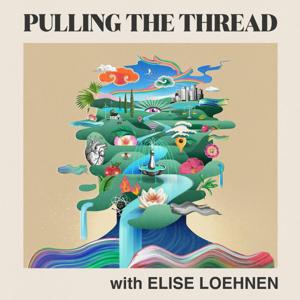

“As you grow older, your brain is able to keep rewiring all the time. And so we have this impression that the flexibility of the brain decreases as you get older. But in fact, it's just because your brain's job is just to figure out how to get by in the world and do a good job in the world. And once you've figured most things out, like, oh, these are different kinds of personalities, and this is how I need to do something at work, and this is how I use email and phone and whatever, then your brain does less changing only because it has successfully done its job, and it doesn't need to keep changing. The brain changes when there's surprise, when there's something that happened that it wasn't expecting, then it changes up. So, you still have plenty of plasticity even when you're 90 years old. It's just that most people aren't using it at that point because they say, Oh, I got it. I know how things work.”
So says David Eagleman, renowned neuroscientist, podcast host, and the author of many bestselling books about consciousness and the brain—along with more than 120 academic publications. Besides his perch as a neuroscientist at Stanford University, David is the co-founder of two venture-backed companies, including Neosensory, which is a pioneering wrist device that enables the deaf to hear. Yep, that’s right.
David is fascinating, and hopefully this conversation lives up to his capacity: We discuss the malleability of the brain to adjust to its inputs, the roots of synesthesia, how those who are born blind and deaf can now use touch to see and hear, and why we dream. Ultimately, we explore just how it happens that a brain trapped in a dark vault can create the vibrancy of our existence.
David is a TED speaker, a Guggenheim Fellow, and serves on several boards, including the American Brain Foundation and the The Long Now Foundation. He is the Chief Scientific Advisor for the Mind Science Foundation, and the winner of Claude Shannon Luminary Award from Bell Labs and the McGovern Award for Excellence in Biomedical Communication.
What’s cooler? He has served as the scientific advisor to several television shows (including Westworld and Perception).
Ironically—considering we both host podcasts and David is a neuroscientist—we had some technical difficulties during our conversation, but the hope is that this is not perceptible to you!
MORE FROM DAVID EAGLEMAN:
Livewired: The Inside Story of the Ever-Changing Brain
The Brain: The Story of You
Sum: Forty Tales from the Afterlives
David’s Podcast: “Inner Cosmos”
David’s Website
Follow David on Instagram
David’s Company: Neosensory
Learn more about your ad choices. Visit podcastchoices.com/adchoices
See omnystudio.com/listener for privacy information.
Learn more about your ad choices. Visit megaphone.fm/adchoices
 View all episodes
 By Elise Loehnen

4.8
10761,076 ratings
“As you grow older, your brain is able to keep rewiring all the time. And so we have this impression that the flexibility of the brain decreases as you get older. But in fact, it's just because your brain's job is just to figure out how to get by in the world and do a good job in the world. And once you've figured most things out, like, oh, these are different kinds of personalities, and this is how I need to do something at work, and this is how I use email and phone and whatever, then your brain does less changing only because it has successfully done its job, and it doesn't need to keep changing. The brain changes when there's surprise, when there's something that happened that it wasn't expecting, then it changes up. So, you still have plenty of plasticity even when you're 90 years old. It's just that most people aren't using it at that point because they say, Oh, I got it. I know how things work.”
So says David Eagleman, renowned neuroscientist, podcast host, and the author of many bestselling books about consciousness and the brain—along with more than 120 academic publications. Besides his perch as a neuroscientist at Stanford University, David is the co-founder of two venture-backed companies, including Neosensory, which is a pioneering wrist device that enables the deaf to hear. Yep, that’s right.
David is fascinating, and hopefully this conversation lives up to his capacity: We discuss the malleability of the brain to adjust to its inputs, the roots of synesthesia, how those who are born blind and deaf can now use touch to see and hear, and why we dream. Ultimately, we explore just how it happens that a brain trapped in a dark vault can create the vibrancy of our existence.
David is a TED speaker, a Guggenheim Fellow, and serves on several boards, including the American Brain Foundation and the The Long Now Foundation. He is the Chief Scientific Advisor for the Mind Science Foundation, and the winner of Claude Shannon Luminary Award from Bell Labs and the McGovern Award for Excellence in Biomedical Communication.
What’s cooler? He has served as the scientific advisor to several television shows (including Westworld and Perception).
Ironically—considering we both host podcasts and David is a neuroscientist—we had some technical difficulties during our conversation, but the hope is that this is not perceptible to you!
MORE FROM DAVID EAGLEMAN:
Livewired: The Inside Story of the Ever-Changing Brain
The Brain: The Story of You
Sum: Forty Tales from the Afterlives
David’s Podcast: “Inner Cosmos”
David’s Website
Follow David on Instagram
David’s Company: Neosensory
Learn more about your ad choices. Visit podcastchoices.com/adchoices
See omnystudio.com/listener for privacy information.
Learn more about your ad choices. Visit megaphone.fm/adchoices
2,555 Listeners
10,522 Listeners
845 Listeners
3,348 Listeners

1,876 Listeners
10,193 Listeners
12,754 Listeners
2,529 Listeners
5,067 Listeners
6,668 Listeners

1,665 Listeners
3,306 Listeners

319 Listeners
1,259 Listeners

5,115 Listeners

748 Listeners

598 Listeners
682 Listeners

3,486 Listeners

41,321 Listeners

387 Listeners
243 Listeners

88 Listeners
119 Listeners
1,890 Listeners

1,186 Listeners

614 Listeners

87 Listeners

473 Listeners
46 Listeners

144 Listeners

76 Listeners

23 Listeners

219 Listeners