
Sign up to save your podcasts
Or

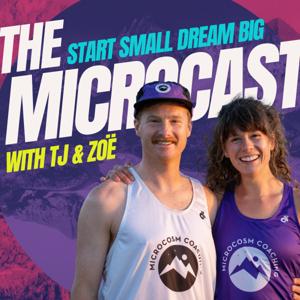


Your easy pace is slower than it was two months ago. Workouts feel harder. You're doing more volume than you've ever done — so shouldn't you be getting faster?
A listener wrote in with exactly that question, and it turned into a full episode. Coach TJ and Zoë unpack why feeling slower in a big block is usually the block working, not the block failing — and how to tell the difference when it isn't.
The core idea: fitness and performance are not the same thing. Fitness is the physiological capacity you've built. Performance is how much of it you can access on a given day. Every training stimulus produces both a fitness response (slow, cumulative, quiet) and a fatigue response (fast, temporary, extremely loud). Fatigue is louder than fitness — you don't wake up feeling your mitochondrial density, but you absolutely feel Tuesday's workout on top of Sunday's long run.
IN THIS EPISODE
- Why aerobic base and durability are the two slowest adaptations in endurance sport — and why that means you can't train for just one race
- The real sources of training fatigue: glycogen depletion, peripheral muscle fatigue, neuromuscular fatigue, connective tissue loading, and central/autonomic nervous system stress
- Why comparing today's run to the same route two years ago on Strava is apples to oranges
- Goodhart's Law in training: the moment easy pace becomes the metric you optimize, it stops being a useful proxy for fitness
- Progress signals that actually mean something: same pace at lower RPE, same RPE over more vert, better output late in long runs, tolerating back-to-back long runs, and — the most underrated one — recovering faster from the same load
- Can training make you less fit? The honest answer, plus why "worse at a 5K while training for a 100" isn't the same as losing fitness
- Normal acute fatigue vs. functional overreaching vs. non-functional overreaching vs. actual overtraining syndrome — and why most athletes who think they're overtrained are under-recovered
- The red-flag list: elevated easy RPE for days-to-weeks, repeated failure at previously manageable workouts, recovery that doesn't produce a rebound, sleep disruption, mood and motivation changes, recurrent illness, injury creep, menstrual cycle disruption
- What TJ's biggest-ever build actually looked like: 15-hour weeks, multiple 100-mile weeks, four (sometimes five) long runs a week, and running slower than he ever has
ALSO IN THIS EPISODE — HOT OR NOT
- The Leadville 100: no qualifiers to enter, aggressive early cutoffs, and where the competitive incentives are drifting
- Changing shoes mid-race (a caveated yes)
- Sitting down at aid stations (a hard no, and the physiology behind it)
- Listening to podcasts while racing (one yes, one very firm no)
BETTER QUESTIONS THAN "AM I GETTING FASTER?"
Am I tolerating more training? Am I recovering from it? Am I generally healthy and adequately fueled? Does performance return when fatigue comes down?
Don't confuse a temporary inability to express fitness with the absence of it.
- Zoë's UltraSignup article on Goodhart's Law: https://trailhead.ultrasignup.com/science-outdoors/data-for-runners/
GET IN TOUCH
Questions for a future episode: [email protected]
Coaching and community: https://microcosm-coaching.com
Email us your listener questions or hot or nots at [email protected].
Check us out online at microcosm-coaching.com
Downhill running is a technical skill, not a fitness problem, and this week Zoë Rom and TJ David break down the science of eccentric loading, the repeat bout effect, and how to descend faster without trashing your quads.
They go inside the muscle to explain what actually happens to your sarcomeres on a long descent, why delayed onset muscle soreness peaks a day or two later instead of immediately, and why force output can stay down for up to a week even after the soreness clears.
From there it's the practical stuff: how braking multiplies eccentric load, why sitting back is the single most common descending error, how to train your eyes on technical terrain, why fear itself makes descending harder, and where strength work genuinely helps versus where it can't replace actual practice.
Plus Hot or Not on blood donation for endurance athletes, the red blood cell and iron math every runner should understand before donating, and how to time it around a race build, and random race pacers. In the listener question, a runner training for their second 50 miler on seven hours a week asks whether elite ultra training is fundamentally different from everyone else's. Short answer: same recipe, different dose.
The episode opens with training through summer heat, racing amid wildfire uncertainty, and why holding your goal race lightly is a useful gut check.
Recovery is the ceiling on your training — not your mileage, not your workout schedule. Zoë Rom and TJ David break down the five places recovery falls apart for endurance athletes: not sleeping enough, chronic underfueling, easy days that drift into the gray zone, treating life stress like it doesn't count as training stress, and never taking a real down week. They walk through the physiology of why fitness is actually built between sessions — mitochondrial development, angiogenesis, muscle repair, glycogen refill — and why every one of those processes needs three non-negotiables: raw materials, a calm nervous system, and time. Plus an honest take on recovery gimmicks, including compression boots, massage guns, and cold plunges that may blunt the very adaptations you trained for.
Also in this episode: Zoë's report from Soft Rock, the four-day Hardrock loop, and why non-race adventures belong on your calendar; a Hot or Not round on Nike's Aeroflow cooling apparel, homeopathic remedies for Achilles tendinopathy, and wicket drills for trail runners; and a listener question from Foothills member Michael on how to debrief a first 100-miler — starting with feel, then heart rate decoupling and first-half/second-half slowdown.
Pick the one you're worst at. Set one committed action for the next five days.
Coaching inquiries: [email protected]
Join Foothills ($10/month): microcosmcoaching.com — code FOOTHILLS10
ou've built the fitness. Now what? This week we're digging into training specificity: how to shape your training around the actual demands of your goal race, whether that's a road marathon, a 50K, or a 100-miler like Leadville or Hardrock. Specificity is the sexy stuff athletes love to obsess over, but it's also where we see the most expensive mistakes. We break down what race-specific training actually means, when it belongs in your training calendar, and the traps that cost athletes their races.
What we cover:
Plus:
We're off for a two-week summer break and back in August.
Questions for a future episode? Email us at [email protected] or find us at microcosm-coaching.com.
What is fitness, really? VO2 max, lactate threshold, running economy, durability, and neuromuscular power — in this episode we break down the five distinct systems hiding inside that one word, how each one develops, which respond fastest to training, and which age best. If you've ever chased a watch number and wondered why your race results didn't follow, this framework explains why "getting fitter" is actually five separate questions — and how periodizing your training over years brings them together on race day.
We also answer a timely listener question about running in wildfire smoke: what PM2.5 actually does to your lungs, how to use AQI (and its limits), CDC guardrails for exercising outside, when to move to the treadmill, and how to set your line in the sand before race day — including what to do if smoke rolls in mid-race.
Plus Hot or Not: gravel running, Garmin's heat acclimation metric, photochromic lenses, and whether bells or eye patches actually deter mountain lions (spoiler: your voice works better).
Send us your Hot or Nots and listener questions: [email protected]
Curious about coaching? Join the Foothills tier — $10/month for twice-monthly Ask-A-Coach calls and our Slack community of 200+ athletes. Use code FOOTHILLS10 at microcosm-coaching.com
Heat training and altitude training are two of the most obsessed-over (and most misunderstood) tools in endurance running. In this episode, Zoë and TJ break down the actual science: what heat adaptation does to your blood plasma, why "poor man's altitude" is a myth, and how the EPO-to-hemoglobin response really works up high.
They cover who should bother with heat or altitude training at all, the two questions to ask before you start, and why fundamentals like consistency, sleep, and fueling beat every environmental hack.
You'll hear practical guidance on hot bath protocols, ferritin levels, live-high-train-low, and the 21-days-or-24-hours rule for racing at altitude.
Plus: coach spotlight with James Nance, a listener question on time-based training in the mountains (the body doesn't know miles, it knows stress), and hot-or-not takes on golden hour and probiotics.
Curious about coaching? Our Foothills tier is $10/month for twice-monthly Ask-A-Coach calls and a 200+ athlete Slack community. Use code FOOTHILLS25.
Join at microcosm-coaching.com or reach out at [email protected].
Durability is the word every endurance runner has latched onto — but what actually is it, and how do you build it? Zoë and TJ break down durability for marathon and ultra runners: the difference between aerobic durability (heart rate drift and cardiac decoupling over long efforts) and mechanical durability (the eccentric loading that blows up your quads on late-race descents), why a smaller engine that doesn't fade beats a bigger one that falls apart, and why the only real path is years of consistent, recoverable volume. There's no shortcut — you have to put in the time to get to the place where you can put in more time.
Before the main discussion, they take on three listener "hot or not" questions: whether antihistamines like Claritin really blunt training adaptations (the dose in that study matters more than you think), why swapping a strength session for yard work doesn't count, and the truth about chasing an "ultra bod" — energy availability, why underfueling undermines the adaptations you're working for, and why body composition is an output of training, not a lever to yank on. Plus downhill technique, easy volume, and TJ's three biggest coaching pet peeves.
Curious about coaching but not sure where to start? Join our Foothills tier for $10/month — twice-monthly Ask-A-Coach calls and a Slack community of 200+ athletes. Use code FOOTHILLS25 at microcosm-coaching.com.
—
microcosm-coaching.com | [email protected]
Sign up for our open house here!
https://docs.google.com/forms/d/e/1FAIpQLSc0KnmFGBxZNYqTAZDNFSRUL86UXK7gCIVDDlLtWJBp5WoVvQ/viewform?usp=header
AI vs. human coaching is the big question this week: can a chatbot really build your training plan, or is it a premium cookie cutter? Zoë and TJ break down what coaching actually is — the plan plus the relationship, communication, and buy-in that no model replicates — and dig into the research, including why studies lag behind the tools athletes are actually using, the 2025 analysis pointing toward hybrid human-plus-AI models, and why AI is a good summarizer but a poor authority. Before that, three rapid-fire segments: why you should hide the heart rate field while racing (and trust RPE instead of a signal that lags 30–90 seconds and gets polluted by heat, caffeine, and sleep debt), whether Hotshot actually fixes muscle cramps and side stitches or just floods your mouth with a sensory distraction, and how high humidity wrecks evaporative cooling, spikes your RPE, and slows your pace — plus why heat training isn't the biohack shortcut Instagram sells. Practical, evidence-based, and skeptical in the best way. Questions or hot takes? [email protected]. Join the community on the Foothills tier ($10/month, code FOOTHILLS10).
🏃 Microcosm Open House — Wednesday, June 11th at 5:30pm MT (virtual). Meet the coaches, ask anything, no pressure. Sign up: https://docs.google.com/forms/d/e/1FAIpQLSc0KnmFGBxZNYqTAZDNFSRUL86UXK7gCIVDDlLtWJBp5WoVvQ/viewform?usp=header
💪 Want coaching without the full 1:1 commitment? Join Foothills for twice-monthly Ask the Coaches sessions — $10/month with code Foothills10 at microcosmcoaching.com
Long runs, ultramarathon training, and fueling are at the heart of this all-time favorite episode, back by popular demand. Kristin Layne and Kyle break down how to actually build long run duration without breaking down — and why the biggest barrier to going long usually isn't fitness.
They cover the physiology and psychology of pushing into unfamiliar durations, why you should think in time rather than miles, and how to grow your long run gradually (a good rule of thumb: keeping it under about 30% of weekly volume). You'll learn why you don't need to run your full race distance in training, how back-to-back long runs build confidence and durability, and where RPE should sit so you're building fitness instead of digging a fatigue hole.
From dialing in 60–90g of carbs per hour and training your gut, to strength work for late-race durability, to mental tools like segmenting and telling the difference between uncomfortable and dangerous — this is a complete blueprint for stepping up to your first 50K, 50-miler, or 100. Give yourself the runway, and you can absolutely do it.
Sign up for our free open house here! (https://docs.google.com/forms/d/e/1FAIpQLSc0KnmFGBxZNYqTAZDNFSRUL86UXK7gCIVDDlLtWJBp5WoVvQ/viewform?usp=header)
How do you know if your training, supplements, or recovery hacks are actually working — or if you're just fooling yourself? Zoë and TJ break down the science of the N of 1 experiment and how to self-coach intelligently in a world flooded with biohacks, miracle protocols, and "this one weird trick" content. Borrowing Feynman's first principle — you must not fool yourself, and you are the easiest person to fool — they walk through six cognitive biases that trick endurance athletes into believing something works when it doesn't: regression to the mean, the placebo of the shiny new toy, confirmation bias, the novelty honeymoon, comparison traps, and sunk cost. Then they get practical: how to actually test an intervention, change one variable at a time, define success before you start, and ask the question that cuts through the noise — compared to what? Plus a coach spotlight on James Nance, TJ's road back to Leadville, and Zoë's day-by-day approach to managing an Achilles flare-up. If you've ever overhauled everything after one bad race or wondered whether your $80 ketones are doing anything at all, this one's for you. Reach out anytime: [email protected].
From the publisher's feed

1,167 Listeners

11,734 Listeners

1,340 Listeners

7,931 Listeners

779 Listeners

1,875 Listeners

28,971 Listeners
954 Listeners

291 Listeners
1,420 Listeners

163 Listeners

190 Listeners

174 Listeners

64 Listeners

157 Listeners