
Sign up to save your podcasts
Or

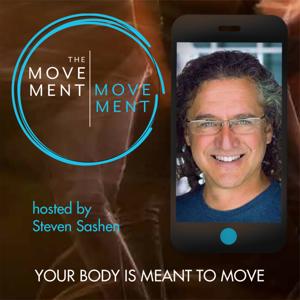


David went from rock bottom (what he called Ground Zero), at 320 pounds, struggling with bankruptcy and addiction, to becoming an accomplished athlete, completing everything from a 5k to the Leadville 100 mile race and a 48-hour treadmill run!
In this episode of The MOVEMENT Movement podcast, David talks about what inspired his change—his habits, his thinking, his actions—and the transition to becoming a record-setting endurance athlete.
Enjoy the podcast...then subscribe, like, friend, and share.
This is The MOVEMENT Movement podcast, and if you want to find out more, go to jointhemovementmovement.com, that's where you can find all the different places that you can interact with us on Facebook and on YouTube, on iTunes and on Instagram, and wherever else you can think of. And make sure you like share friend review.
You know, Vibram, the guys who made the FiveFinger shoes, there was a lawsuit against them because it showed that what they do is not good for you, that you get hurt wearing their shoes, right? Maybe not.
You know there's studies that show that if you run barefoot, you're going to get injured, right? Not so much.
Let's take a look at that in today's episode of The MOVEMENT Movement, the podcast for people who want to know the truth about how to have a happy, healthy, strong body.
We're going to cut, get rid of and cut through the mythology, that propaganda, and sometimes the outright lies about what it takes to have a happy, healthy, strong body, and to walk, run, hike, do yoga, do crossfit or whatever you want to do enjoyably, that's what we're here for.
My name is Steven Sashen. I'm the host of The MOVEMENT Movement podcast, and if you want to find out more, go to jointhemovementmovement.com, that's where you can find all the different places that you can interact with us on Facebook and on YouTube, on iTunes and on Instagram, and wherever else you can think of. And make sure you like share friend review.
Could getting a blister on your foot be the most important, valuable thing that ever happens to you as a runner. Crazy as that sounds.
I want to encourage you to ponder what your body is doing. Use that information as the appropriate feedback. Pay attention to the good side and if there's not a good side, just experiment. Just try something different.
Problems can actually help you figure out what really is going on and that might allow you to make the changes needed to correct them.
We're going to be taking a look today on today's episode of The MOVEMENT Movement podcast, the podcast for people who want to know the truth about having a happy, healthy, strong body.
Join us at jointhemovementmovement.com that's where you can find all the links to all the various places that we do, what we do, and you can like and subscribe and share and friend and follow and hit the bell on Youtube, all those different things. If you have any questions or any suggestions or anybody you think should be on The MOVEMENT Movement podcast, then you can just drop us an email at [email protected].
Until then, thank you so much and live life feet first.
Should you be running longer, slower, or shorter, faster, which is better for your health. Let's take a look today at high intensity interval training in The MOVEMENT Movement podcast.
People have been talking about it for a while but lately I've just been seeing more and more people coming out with courses on High Intensity Interval Training, and saying why doing high intensity intervals is better for you than running long, as doing long slow distance, whether you're running or on an elliptical or on a cycle, whatever it is.
Hi, I'm Steven Sashen and The MOVEMENT Movement podcast is for people who want to know the truth about what it takes to have a happy, healthy, strong body. We get rid of the mythology and the propaganda and while sometimes the outright lies that people tell you about what it takes to do that by moving naturally, you can follow us at www.jointhemovementmovement.com.
On today's episode, I have my friend, Dr. Bryan C. Heiderscheit, PT, PhD.
We will be exploring something interesting. One of the many things we'll be exploring is; Could you improve your running and get rid of your injuries by moving faster without running faster?
I know that sounds crazy, but we'll jump in and find out how that works.
I'm Steven Sashen from the movement movement podcast. You can find [email protected] or all the various places where you can think of where you'd find join The Movement Movement if you actually, if you go to jointhemovementmovement.com, you'll see Twitter and Facebook and youtube and iTunes and everywhere else, and this is a podcast for people who want to learn the truth about how to move healthily, happily strong, have healthy, happy, strong bodies, and to cut through the mythology that people have been propagating that might keep you from doing that.
Hi, Steven Sashen here, and in this video, you're going to learn how to pick a good running shoe. The information comes from, in large part, this paper from the American College of Sports Medicine. It's also coming from experience that I have, so I'll be adding my editorial, but most of this is coming from the ACSM and their recommendations. So, let's just jump right in. The ACSM says "Running shoes should be selected after careful consideration. With so many brands and styles of shoes on the marketing today, it is important to find the best fit for your feet and needs. There is no 'right shoe' that fits all runners. However, research and injury patterns have shown there are some general characteristics of a good, safe running shoe."
Now, before we get started, I want to warn you that what you're about to learn flies completely in the face of what you will hear from most people trying to sell you running shoes. You go to your average running shoe store; they will tell you the exact opposite of what you're about to hear. Remember, this is research coming from the American College of Sports Medicine, not someone who has been paid to say certain things from a running shoe company. Some may argue, "But you own a shoe company…" Trust me, you'll hear the difference between what I'm saying and what someone who's being paid to say things that are the opposite of what the American College of Sports Medicine is saying. Here we go.
Find us online, go to jointhemovementmovement.com. You can participate in the conversation there, or that will point you to the various social media channels where you can engage with us on Twitter, on Facebook, on Youtube, et cetera, et cetera, et cetera. And if you have any questions or comments, or you want to tell me about someone who should be on the podcast, drop me an email, send it to [email protected].
From the publisher's feed
613 Listeners

7,201 Listeners

1,344 Listeners

14,912 Listeners
3,367 Listeners

3,607 Listeners

4,868 Listeners

9,145 Listeners

46,071 Listeners

833 Listeners

16,025 Listeners

39,406 Listeners

29,156 Listeners

3,073 Listeners

3,345 Listeners