
Sign up to save your podcasts
Or

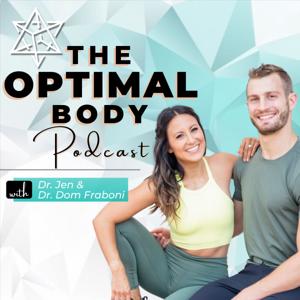


Abs vs Core? Is there a difference? DocJen & Dr. Dom dive into the anatomy of what we know as the abs and how that differs from the true core. They provide insight into the transverse abdominal activation, how it may relate to back pain, and where belts for lifting should be considered. Furthermore, they discuss the importance of midline stability, providing cues and descriptions of their 3 favorite ab and core exercises. Let’s dive in!
What You Will Learn In This PT Pearl:
01:09 - Anatomy of the abdominal region
02:04 - TV activation & core
03:22 - Anatomy of true core & midline stability
06:00 - Belts, the core, and lifting
07:33 - Fundamentals of ab exercises
14:40 - Core exercises
20:40 - Learn with Jen about the core!
Watch Episode 178 on Youtube
We think you’ll love:
For research and full show notes, visit the full website at: https://jen.health/podcast/178
Thank you so much for checking out this episode of The Optimal Body Podcast. If you haven’t done so already, please take a minute to subscribe and leave a quick rating and review of the show!
Hosted by Simplecast, an AdsWizz company. See pcm.adswizz.com for information about our collection and use of personal data for advertising.
Want to transition into barefoot shoes? Dr. Laura, doctor of physical therapy, preaches optimal foot functionality by spending time barefoot, but with safety and slow progression. As a gymnast, she spent much of her upbringing barefoot, however, with several foot fractures, she briefly speaks into how combining the use of the minimal shoe and conventional shoe can be beneficial in transitioning to going fully barefoot! She provides insight into why your feet may be in pain after wearing barefoot shoes, and how minimalist shoes differ from the conventional shoe. Furthermore, she speaks about how the physical therapy industry is evolving and becoming more popular amongst athletes, how in-clinic experiences differ from online physical therapy sessions, and whether physical therapy can be for everyone. She speaks about movement diets and the importance of introducing variety and reflection in approaching movement and health! Let’s dive into the world of optimal foot health and physical therapy with Dr. Laura!
VivoBarefoot Discount
How may VivoBarefoot shoes be beneficial? Through building strength in the foot and teaching the foot to accommodate your own body! A study showed a 60% increase in foot strength by wearing VivoBarefoot shoes for 6 months consistently, and you a little over 3 months to return your shoes. Try them out and invest in your health. Use code ‘TOB‘ to get 15% off!
**Vivo offers a 100-Day trial period. If you are not completely satisfied, you can send the shoes back and get a refund.
What You Will Learn in this Interview with Dr. Laura
3:00 - What drove Dr. Laura’s passion for physical therapy
4:13 - Is physical therapy becoming popular amongst athletes?
5:22 - Where does the “paradigm of perfection” come from?
6:48 - Physical therapy in clinic vs online
10:16 - Can physical therapy be for everyone?
12:24 - Conventional shoe vs minimalist shoes
15:30 - Why your feet may be hurting wearing barefoot shoes?
17:47 - Navigating the transition to barefoot shoes
20:06 - Explaining movement diets
21:13 - What exercise can look like for YOU
23:08 - How to add exercise to reduce aches/ injuries
24:14 - Starting movement assessments & maintaining consistency
26:14 - Differentiating between soreness & pain
27:27 - Improving range of motion vs reducing stress
28:20 - How do you know if you’re drinking enough water
30:30 - Do you need to self-assess?
32:57 - Learning more with Dr. Laura
Items mentioned:
To learn more about Dr. Laura and view full show notes, please visit the full website here: https://jen.health/podcast/177
Thank you so much for checking out this episode of The Optimal Body Podcast. If you haven’t done so already, please take a minute to subscribe and leave a quick rating and review of the show!
Hosted by Simplecast, an AdsWizz company. See pcm.adswizz.com for information about our collection and use of personal data for advertising.
Dealing with soreness? Concerned about your soreness? DocJen & Dr. Dom dive answer frequently asked questions about the science behind soreness. Diving into what delayed onset muscle awareness is, where you might feel it, and why soreness occurs, DocJen & Dr. Dom describe the types of exercises that might elicit a greater soreness response and what other factors could be contributing to the degree of soreness felt. As an adaptation mechanism, they provide insight into whether or not soreness is bad and how you can distinguish between pain and soreness. Finally, they provide their best tips for managing soreness and discuss soreness in relation to heat, ice, foam rolling, massage guns, and massages! Let’s dive in!
What You Will Learn In This PT Pearl:
02:21 - What are DOMS?
04:54 - Why we get DOMS
05:47 - Types of exercise that might
06:18 - Other factors contributing to the degree of DOMS
09:46 - Brain Protection: Are DOMS bad?
10:55 - Pain indicating damage vs pain indicating adaptation
14:19 - Management of DOMS
17:45 - Heat vs Cold for DOMS
20:47 - Foam rolling & massage guns for DOMS
Watch Episode 176 on Youtube
For research and full show notes, visit the full website at: https://jen.health/podcast/176
Thank you so much for checking out this episode of The Optimal Body Podcast. If you haven’t done so already, please take a minute to subscribe and leave a quick rating and review of the show!
Hosted by Simplecast, an AdsWizz company. See pcm.adswizz.com for information about our collection and use of personal data for advertising.
Struggling with back pain? Feel like your back pain is never getting better? Tim Reynolds and Bryan Guzksi, physical therapists, take you from PT school to clinical practice as they hone in on how their curiosity drove their career path. Then, they discuss the psychology behind back pain and how you can trust that your back pain will resolve. In the name of research and clinical experience, Tim & Bryan share how physical therapy can support back pain and the best ways in which you can address your back pain as you navigate the world of physical therapists to find your optimal one. As they provide tips in finding a physical therapist, they discuss the importance of shifting language around the medical diagnosis and how language plays a role in instilling fear in patients. As psychology plays an immense role in pain perception, they provide their best tips to navigating the fear around back pain, how to set yourself up for success at your medical appointments, and how education about pain science should be consensual and on the patient’s terms. Finally, they share the purpose behind their book and how practitioners and the general public get educated now! Let’s dive in!
PRX Gym Equipment Discount:
Looking for ways to work out at home or create your own at-home gym? DocJen & Dr. Dom used PRX performance to build their at-home gym. With innovative designs to t store and set up your gym to make a small space feed big, smash your next product with quality-conscious PRX Performance equipment! You can also grab and extra discount using code OPTIMAL at checkout!
What You Will Learn in this Interview with Tim Reynolds and Bryan Guzski
3:54 - How and why did Tim specialize in the spine?
5:08 - What is the benefit of residency?
10:58 - Did residency help imposter syndrome?
11:54 - How can you trust that your back pain will resolve
14:55 - How physical therapy supports back pain
18:05 - How to find YOUR PT?
22:29 - Shifting the language around medical diagnosis
24:46 - Navigating fear around back pain vs what’s really happening
30:21 - How to get the most out of your medical appointments
40:04 - Inspiration behind the book
43:36 - Purpose behind the book
39:57 - Is there an easy method to calculating caloric needs
47:13 - Where you can find the “Movers & Mentors” book
Items mentioned:
To learn more about Tim & Bryan and view full show notes, please visit the full website here: https://jen.health/podcast/175
Thank you so much for checking out this episode of The Optimal Body Podcast. If you haven’t done so already, please take a minute to subscribe and leave a quick rating and review of the show!
Hosted by Simplecast, an AdsWizz company. See pcm.adswizz.com for information about our collection and use of personal data for advertising.
Do you warm-up? Cooldown? At times, warm-ups and cool-downs feel unimportant or a waste of time, however, DocJen & Dr. Dom break the confusion in this episode. With a high emphasis on specificity, they explain the importance of strategically warming up the body to prepare for the upcoming movement and cool down to truly downregulate the system and facilitate recovery. After explaining the RAMP protocol, explaining neuromuscular coordination and proprioception, they provide examples of an optimal warm-up for running, lower body strength, and HIIT workouts. Then, they dive into how you can optimize your cooldowns, and Dr. Jen explains why she loves to use mobility flows and core at the end of her workouts to downregulate the system gradually. Let’s dive in!
VivoBarefoot Discount
Allow your toes to breathe, and give your foot the space and environment to move through its full range, gain mobility, and strength from within. Gain functionality back in your feet as you give back to the environment with VivoBarefoot Shoes! As a listener of the podcast, get 15% off using our code at checkout using code “TOB“.
**Vivo offers a 100-Day trial period. If you are not completely satisfied, you can send the shoes back and get a refund.
What You Will Learn In This PT Pearl:
03:36 - When are warm-ups important?
05:13 - RAMP Protocol
09:34 - Why do you need to warm-up
12:16 - Warming up for a run
14:47 - Warming up for the deadlift
17:47 - Warming up for HIIT workouts
19:10 - How to optimize your cooldowns?
22:30 - Mobility & core at the end of workouts
24;09 - What the research says.
Watch Episode 174 on Youtube
For research and full show notes, visit the full website at: https://jen.health/podcast/174
Thank you so much for checking out this episode of The Optimal Body Podcast. If you haven’t done so already, please take a minute to subscribe and leave a quick rating and review of the show!
Hosted by Simplecast, an AdsWizz company. See pcm.adswizz.com for information about our collection and use of personal data for advertising.
Lose weight by eating more or less? Jason Philips takes us back to his teens as he shares his perspective on dealing with Anorexia Nervosa. With his story inspiring his passion for nutrition education, he simplifies the rabbit hole of fat loss and nutrition, explaining caloric maintenance, restoring biofeedback, and true stress management. Through his triangle of awareness approach, he speaks about how you can set yourself up for your most optimal fitness journey and how to approach dieting according to your goals. Furthermore, he explains body signals that may arise when disordered habits have a physiological effect, clarifies the theory behind eating more to lose weight, the quality of nutrition and explains the nuances in physiological adaptations to caloric deficits for weight loss. Immerse in the simplified truths around our physiological adaptations!
Paleo Valley Discount:
Dr. Jen & Dr. Dom swear by Paleovalley because they know everything that is in their beef sticks and can trust the ingredients list. There’s no vague labeling or words they don’t understand on the packaging! Stack them up in your pantry using code ‘OPTIMAL’ to get a 15% discount at checkout.
What You Will Learn in this Interview with Jason Philips
4:13 - Why Jason is passionate about nutrition education
6:45 - Was Jason diagnosed with an eating disorder?
6:11 - How did Jason heal his relationship with food?
14:58 - Triangle of awareness and aligning your fitness journey
18:22 - Starting blocks to creating YOUR triangle of awareness
22:20 - Dieting for fat loss?
26:15 - How to set up yourself up
29:03 - Eat more to lose weight?
33:23 - Body signals that something may not be right
35:55 - Exercise & managing nutrition for fat loss
39:57 - Is there an easy method to calculating caloric needs
42:55 - Is the fast food calorie = whole food calorie
48:21 - Where can you learn more with Jason
Items mentioned:
To learn more about Jason and view full show notes, please visit the full website here: https://jen.health/podcast/173
Thank you so much for checking out this episode of The Optimal Body Podcast. If you haven’t done so already, please take a minute to subscribe and leave a quick rating and review of the show!
Hosted by Simplecast, an AdsWizz company. See pcm.adswizz.com for information about our collection and use of personal data for advertising.
Is a weak core giving you back pain? Feeling your low back during core exercises? Will core workouts rid your back pain? DocJen & Dr. Dom debunk common myths surrounding the relationship between core exercises and back pain. Clarifying the possible roots of back pain, they explain the how the biopsychosocial model in relation to expectations, mindsets, and beliefs surrounding interventions and pain perception. Furthermore, they dive into the anatomy of the core and what it encompasses, how movement can inhibit pain, the perks of strength training for overall back health, and how to begin and progress core exercises to truly optimize integrity and coordination throughout the body. Let’s get the fact straight about core & back pain!
Coba Board Discount:
Feeling your low back? Grab your Coba Board. We hear our community share their stories about how using the Coba Board has changed their low-back pain game. How? By truly activating your glutes. it’s time to feel something different. Work with different resistances and a specially shaped board to help you activate your glutes, safely load your spine, and prevent your low back or quads from overcompensating. Use code ‘OPTIMAL’ at checkout .
What You Will Learn In This PT Pearl:
02:32 - WIll core exercises cure your back pain?
05:00 - Is all back pain a consequence of a weak core?
08:04 - Why core exercise may be helpful for some individuals?
10:33 - Research on Strength training
13:55 - 4 Types of Core Movements
15:48 - Is there bad movement? Is it always correlated with pain?
16:36 - Move in different ways to build core integrity
17:56 - How the biopsychosocial model is related to pain
22:22 - How to start addressing the core
24:56 - How to progress core exercises
17:56 - Relieving symptoms to relieve symptoms
Watch Episode 172 on Youtube
For research and full show notes, visit the full website at: https://jen.health/podcast/172
Thank you so much for checking out this episode of The Optimal Body Podcast. If you haven’t done so already, please take a minute to subscribe and leave a quick rating and review of the show!
Hosted by Simplecast, an AdsWizz company. See pcm.adswizz.com for information about our collection and use of personal data for advertising.
Dealing with recurrent, current chronic pain? Is pain all in the mind? Wondering how different techniques are helping your pain? We have Dr. Alex Anderson, Board-Certified Clinical Specialist in Orthopaedic Physical Therapy, on to break down the shifts in pain science and why pain is important. Using the biopsychosocial model, Dr. Alex addresses pain through a biomedical perspective, and how psychosocial factors can affect pain perception too. Then, she dives into chronic pain and how pain is interpreted in the brain through inputs of threat stimuli. Discussing chronic pain modulation, she dives into the physiology of Fibromyalgia and how plasticity in the brain makes pain plastic too! Finally, she provides insight into how manual therapy techniques modulate pain, specifically looking at joint mobilizations, trigger points, and dry needling. Let's dive into the science of pain!
Coba Board Discount:
Feeling your low back? Grab your Coba Board. Get your glutes activated optimally during deadlifts and squat variations and get a great full-body resistance workout by activating the core activating and firing up the upper body. Load up the body effectively and safely with your very own lightweight and easily storable Coba Board, using code ‘OPTIMAL‘ to get 15% off at checkout.
What You Will Learn in this Interview with Dr Anderson:
4:07 - Consent on pain education
6:23 - Shifts in pain science & do we need to get rid of pain?
9:51 - Contributors to pain
12:35 - How the Central Nervous System works
14:46 - Brain & Physiology of Chronic Pain
18:54 - Fibromyalgia
20:21 - Plasticity of pain
23:39 - How do manual therapy techniques and tools help pain?
26:30 - What is manual therapy doing physiologically in the body?
32:18 - What are Joint Mobilizations?
33:47 - Dry Needling
39:27 - How do trigger points form?
43:03 - How does acupuncture differ from dry needling?
45:00 - How Dr. Alex is exploring her pain
49:58 - Learn more with Dr. Alex
Items mentioned:
To learn more about Dr. Alex and view full show notes, please visit the full website here: https://jen.health/podcast/171
Thank you so much for checking out this episode of The Optimal Body Podcast. If you haven’t done so already, please take a minute to subscribe and leave a quick rating and review of the show!
Hosted by Simplecast, an AdsWizz company. See pcm.adswizz.com for information about our collection and use of personal data for advertising.
Bloated often? Dr. Jen & Dr. Dom break down the anatomy and different components of the gut. After discussing their experiences with gut issues, they dive into how gut mobility and motility relate to fascial connections. By describing different manual techniques to help reduce that bloat, they hone in on the importance of diaphragmatic breathing and the role of the nervous system, as well as different movement patterns that can ease the pressure in the gut.
Free Week on Jen Health!
Are you someone who needs a plan to get going? Worried about accountability or the ability to stay consistent? Come join our Jen Health membership and we will remove the thinking for you! There are 12 plans that you get access to based on what your main painpoints or target areas are. The best part, you can get a FREE WEEK when you sign up! Come join the community today! You could even grab a special discount using code OPTIMAL at checkout.
What You Will Learn In This PT Pearl:
02:55 - What is Motility?
03:55 - Dr. Jen's twisted colon
08:20 - Dr. Dom's Inguinal Hernia
12:05 - Gut Fascia
14:15 - How Breath is a gamechanger for bloating
18:46 - Gut Massage for large intestine mobility
21:53 - Elongating abdomen in a relaxed position
23:27 - Going upside down
Watch Episode 170 on Youtube
For research and full show notes, visit the full website at: https://jen.health/podcast/170
Thank you so much for checking out this episode of The Optimal Body Podcast. If you haven’t done so already, please take a minute to subscribe and leave a quick rating and review of the show!
Hosted by Simplecast, an AdsWizz company. See pcm.adswizz.com for information about our collection and use of personal data for advertising.
Whether you are looking to get pregnant in the near future, are pregnant, or are due soon, Dr. Breanna covers it all in the interview. As a board certified physical therapist with post-doctorate training in obstetrics and pelvic health, and a mother of three, she dives into the lack of education about the birthing process and where you can find resources to get educated. As she rides the wave of her birthing experiences and the differences between them, she dives into the psychological and physical trauma she experienced. Explaining the roles of doula, the OBGYN, and the midwife in the birthing process, Dr. Breanna explains the importance of finding the most optimal birthing position for you. Then, she dives into tools to prepare the body for labour, what tears are normal and of concerns post-partum, diastasis and prolapse, as well as Episiotomy. In light of preventing pelvic floor and core dysfunction, she provides her best core cues and how you can prevent dysfunctional tears post-partum. Lean into how Dr. Breanna navigated her birthday and her expert advice!
What You Will Learn in this interview with Dr. Breanna Welsh
3:49 - Dr. Breanna identifies the differences between her 3 births
7:46 - Why is there lack of knowledge on how to birth
10:10 - Resources for birth & pregnancy
12:34 - What is a Doula?
16:00 - Dr. Breanna’s Trauma during birthing
21:00 - Why is birthing in your back common & recommended?
23:33 - Positons for birthing
26:04 - Tools to prepare your body for birthing
31:06 - Is diastasis and prolapse normal during pregnancy?
32:52 - When should you see a pelvic floor therapist?
35:38 - Differences in dysfunction with multiple births & prolapse
38:17 - Cues for pelvic floor and core awareness
42:20 - What is an Episiotomy?
44:09 - Preventing the risk of tears during birthing
47:30 - Did Dr. Breanna predict her third pregnancy accurately?
54:25 - Finding what works for you is key
56:11 - The importance of support
Items mentioned:
Go here for full show notes and resources: https://jen.health/podcast/169
Thank you so much for checking out this episode of The Optimal Body Podcast. If you haven’t done so already, please take a minute to subscribe and leave a quick rating and review of the show!
Hosted by Simplecast, an AdsWizz company. See pcm.adswizz.com for information about our collection and use of personal data for advertising.
From the publisher's feed

7,197 Listeners

1,060 Listeners
1,997 Listeners

4,864 Listeners

3,417 Listeners

9,156 Listeners
818 Listeners

125 Listeners

625 Listeners
1,407 Listeners

29,124 Listeners
1,475 Listeners
1,671 Listeners

1,214 Listeners

99 Listeners