
Sign up to save your podcasts
Or

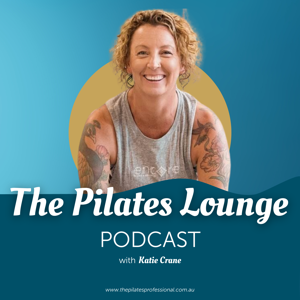


On The Pilates Lounge Podcast, Katie Crane sits down with Joanna Littlewood-Johnson, dancer, Pilates educator, and international pole athlete, for a grounded and honest conversation about athletic longevity, injury recovery, and what Pilates actually is when you strip it back to its roots.
This episode moves beyond surface-level training conversations—diving into how Pilates supports high-level performance without becoming performance itself, why simplicity is often more powerful than complexity, and how deep body awareness allows athletes to keep evolving well into midlife and beyond.
Joanna shares her journey from professional dance into Pilates and pole, including her experience recovering from a full Achilles rupture, and how her understanding of Pilates principles became the difference between simply doing rehab… and actually progressing through it.
Together, they explore the realities of training in a changing body—touching on menopause, tendon health, bone density, and the responsibility we carry as movement professionals to teach with depth, not trends.
In This Episode, We Cover:How Pilates supports athletic performance and longevity
The role of body awareness and muscle recruitment in advanced movement
Why simplicity in Pilates creates better outcomes than complexity
Joanna's recovery from a full Achilles tendon rupture
The importance of progressive loading and structured rehab
How Pilates knowledge enhances injury recovery outcomes
Training through menopause and physiological change
Bone health, osteopenia, and the need for strength and load
Why Pilates is not the performance—but the preparation for life
The growing disconnect between true Pilates and modern interpretations
Pilates is a practice and a system, not just a workout
Simplicity, done well, creates high-level performance outcomes
Injury recovery requires consistency, intention, and understanding
Women's bodies change—and training must adapt, not stop
The true benefit of Pilates shows up outside the studio
💬 "Pilates prepares you for the world outside—not just what you do on the equipment."
Learn More & Connect with JoannaInstagram: @joannalittlewoodjohnson_pole @corefusion_pilates_pole
Links (classes, downloads, training): https://linktr.ee/JoannaLittlewoodJohnson
This episode is a reminder that Pilates doesn't need to be complicated to be powerful.
When practiced with intention, it builds a body that is resilient, adaptable, and capable—whether that's on stage, in sport, or simply moving through life with strength and confidence.
Continue the Conversation in The Pilates MuseIf this conversation sparked something for you—professionally or personally—explore The Pilates Muse, where Katie shares deeper reflections on movement, injury, teaching philosophy, and the evolution of Pilates as a lifelong practice.
🎥 Prefer to watch?
Episodes of The Pilates Lounge Podcast are also available on YouTube.
About The Pilates LoungeThe Pilates Lounge Podcast is where intelligent movement meets real-world practice.
Hosted by Katie Crane, the podcast explores the deeper layers of Pilates—from injury and rehabilitation to athletic performance, teaching philosophy, and the long game of movement.
Each episode supports Pilates educators to think deeper, teach smarter, and serve their communities with integrity.
On The Pilates Lounge Podcast, Katie Crane sits down with Meghann Koppele and Mariska, co-founders of The Neuro Studio, for a deep and honest conversation about neurological movement, brain-based training, and the future of Pilates.
This episode goes beyond theory—diving into how the nervous system truly drives movement, why traditional cueing often falls short, and how movement professionals can create more meaningful, lasting change for their clients.
Meghann and Mariska share their approach to sensory-driven movement, explaining how working with the brain—not just the body—can dramatically improve outcomes for both neurological and non-neurological clients.
They also challenge common practices in Pilates, from over-reliance on supine work to the idea of "perfect alignment," and instead introduce a more adaptive, individualized, and functional way of teaching movement.
🎧 In This Episode, We Cover:💬 "Don't be compliant—be curious."
🌏 Upcoming Workshops in Australia (June)Meghann will be in Australia teaching immersive, hands-on workshops:
Sydney — June 21st: Hemiparesis (Single-Sided Weakness) 👉 https://www.theneurostudio.com/offers/vEQHKJCL/checkout
Sydney — June 22nd: Hypermobility 👉 https://www.theneurostudio.com/offers/FoSpc2Ho/checkout
Sydney Bundle (Save with both workshops) 👉 https://www.theneurostudio.com/offers/GpGBesao/checkout
Brisbane Advanced Neuro Lab — June 27–28 👉 https://www.theneurostudio.com/offers/ouxrNLf2/checkout
✉️ Learn More & ConnectFor private sessions while Meghann is in Australia: 📧 [email protected]
Explore their courses and curriculum: 🌐 www.theneurostudio.com 📧 [email protected]
💬 Final ThoughtsThis episode is a powerful reminder that movement is not just physical—it's neurological.
When we understand the brain's role in movement, we unlock new ways to support our clients—creating more meaningful, lasting results.
Continue the Conversation in The Pilates MuseIf this conversation sparked something for you — professionally or personally — explore The Pilates Muse, where Katie shares deeper reflections on movement, pain, teaching philosophy, and the evolution of Pilates as a therapeutic practice.
➡️ https://www.thepilatesprofessional.com.au/the-pilates-muse-publication
🎥 Prefer to watch?
Episodes of The Pilates Lounge Podcast are also available on YouTube.
About The Pilates LoungeThe Pilates Lounge Podcast is where intelligent movement meets real-world practice.
Hosted by Katie Crane, the podcast explores the deeper layers of Pilates — from chronic pain and nervous system regulation to business leadership, teaching philosophy, and the evolving role of movement professionals in modern healthcare.
Each episode supports Pilates educators to think deeper, teach smarter, and serve their communities with integrity.
On The Pilates Lounge Podcast, Katie Crane sits down with exercise physiologist, Pilates educator, and founder of NeuroPilates Method, Hayley Harwood for a grounded and deeply insightful conversation about neurological conditions, adaptive movement, and the real role of Pilates in complex care.
Hayley brings a powerful blend of clinical knowledge and lived, hands-on experience working with clients navigating neurological conditions, disability, and chronic illness. From multiple sclerosis to stroke recovery and Parkinson's, her work sits at the intersection of science, compassion, and movement as medicine.
Together, Katie and Hayley explore what it actually means to teach Pilates in this space — beyond choreography, beyond fitness — and into something far more meaningful.
This is a conversation about seeing the person, not the diagnosis.
Because movement, when done well, becomes more than exercise.
It becomes access.
It becomes agency.
It becomes possibility.
We Explore"When she's here, she doesn't feel like she has a disability… she's just a body that moves in her own unique way."
This is where Pilates becomes something far more powerful than exercise.
In a world where people with neurological conditions are often treated through a lens of deficit, Hayley's work flips that completely.
Instead of:
She asks:
And that shift alone changes everything.
Because when someone feels:
The nervous system opens.
And that's where real change begins.
Key Takeaway for Movement ProfessionalsIf you're teaching Pilates and you're not thinking about the nervous system…
You're missing the point.
Hayley reinforces a powerful truth:
Pilates, when applied well, becomes a bridge between clinical therapy and human experience.
And that's where your value lies.
Connect with Hayley HarwoodHayley Harwood is an Exercise Physiologist and Pilates educator, specialising in adaptive Pilates for neurological conditions and disability. She is the founder of NeuroPilates Method, based in Newcastle, Australia.
Her work focuses on creating accessible, supportive environments where movement becomes a tool for healing, empowerment, and connection.
https://www.instagram.com/neuropilates_method/
🌐 Website
https://neuropilatesmethod.com.au
Continue the Conversation in The Pilates MuseIf this conversation sparked something for you — professionally or personally — explore The Pilates Muse, where Katie shares deeper reflections on movement, pain, teaching philosophy, and the evolution of Pilates as a therapeutic practice.
➡️ https://www.thepilatesprofessional.com.au/the-pilates-muse-publication
🎥 Prefer to watch?
Episodes of The Pilates Lounge Podcast are also available on YouTube.
About The Pilates LoungeThe Pilates Lounge Podcast is where intelligent movement meets real-world practice.
Hosted by Katie Crane, the podcast explores the deeper layers of Pilates — from chronic pain and nervous system regulation to business leadership, teaching philosophy, and the evolving role of movement professionals in modern healthcare.
Each episode supports Pilates educators to think deeper, teach smarter, and serve their communities with integrity.
On The Pilates Lounge Podcast, Katie Crane sits down with nervous system–oriented therapist, educator, and founder of Functional Neuro Health Nick Moss for a deep and honest conversation about the nervous system, stress, movement, and what it really means to restore the body from the inside out.
Nick brings a unique perspective shaped by his journey from military life to personal training, through burnout and recovery, and into the world of functional neurology and applied neuroscience. With over 17 years of experience as a movement professional, he now helps practitioners and high performers understand how the nervous system drives pain, behavior, and performance.
Together, Katie and Nick explore how the nervous system underpins everything we do — from movement patterns and pain to emotional responses and long-term health — and why many issues can't be solved through movement alone.
This conversation is both practical and reflective.
Because healing isn't just about doing more.
Sometimes, it's about slowing down enough to let the system reset.
We Explore"Less is more. Less is more. Less is more."
One of the biggest themes in this episode is the idea that more effort is not always the answer.
Many people — especially high performers — are stuck in cycles of pushing harder, training more, and doing more… while their nervous system is already overwhelmed.
Nick shares how his own recovery required the opposite:
Because when the system is exhausted, adding more stress — even in the form of exercise — can make things worse.
True progress comes from working with the nervous system, not against it.
Key Takeaway for Movement ProfessionalsIf you work with the body:
You are working with the nervous system — whether you realize it or not.
Nick outlines a more complete way of thinking about client care:
For movement professionals, this means your role is not just to teach exercises.
You are helping regulate, guide, and support a whole human system.
Connect with Nick MossNick Moss is the founder of Functional Neuro Health, a practitioner, educator, and mentor specializing in applied neuroscience, nervous system regulation, and functional neurology.
He helps practitioners and high performers resolve chronic stress patterns, pain, and performance limitations through his clinical systems and training programs.
https://www.instagram.com/functionalneurohealth
🌐 Website
https://functionalneurohealth.com
About The Pilates LoungeThe Pilates Lounge Podcast is where intelligent movement meets real-world practice.
Hosted by Katie Crane, the podcast explores the deeper layers of Pilates — from neurological conditions and chronic pain to teaching philosophy, studio leadership, and the evolving role of movement professionals in modern healthcare.
Each episode supports Pilates educators to think deeper, teach smarter, and better serve the people who trust them with their movement.
On The Pilates Lounge Podcast, Katie Crane sits down with neurological physiotherapist and clinical researcher Haseel Bhatt for a powerful conversation about Parkinson's disease, neurological rehabilitation, and the critical role movement professionals can play in supporting people living with neurological conditions.
Haseel is the founder of Neurology Rehab, a dedicated physiotherapy clinic focused on helping people living with Parkinson's and other movement disorders improve mobility, independence, and quality of life through evidence-informed rehabilitation. He is also an Adjunct Lecturer at the University of Toronto, a published researcher, and a passionate educator helping clinicians translate neurological research into practical movement strategies.
Together, Katie and Haseel explore what Parkinson's actually is, how it affects the brain and body, and why movement professionals — including Pilates teachers — play a far more important role in neurological care than many realize.
The conversation also highlights a major shift in the Parkinson's field: where exercise was once considered optional, it is now widely recognized as one of the most powerful tools for maintaining function, mobility, and independence.
This episode provides both clarity and practical insights for movement professionals working with neurological conditions.
Because people living with Parkinson's are not fragile.
They are capable of movement, adaptation, and progress — when supported with the right strategies.
We Explore"If you've met one person with Parkinson's… you've met one person with Parkinson's."
One of the most important themes in this episode is that Parkinson's is highly individual.
Two people may share the same diagnosis — but their symptoms, progression, and daily challenges can look completely different.
That's why Haseel emphasizes the importance of what he calls a "fingerprint assessment."
Movement professionals must look beyond the diagnosis itself and instead understand:
The goal is not simply exercise.
The goal is helping people live well with Parkinson's.
Key Takeaway for Movement ProfessionalsIf you work with clients living with Parkinson's:
Movement matters.
But precision matters even more.
Haseel outlines a framework for supporting clients with neurological conditions:
For movement professionals, this means your role goes far beyond teaching exercises.
You become part of a team helping someone maintain mobility, confidence, and independence.
Connect with Haseel BhattHaseel Bhatt is a neurological physiotherapist, clinical researcher, and founder of Neurology Rehab, a clinic focused on improving access to specialized rehabilitation for people living with Parkinson's and other movement disorders.
Through his clinical work, teaching, and educational programs, he helps clinicians and movement professionals translate neuroscience into practical rehabilitation strategies.
🌐 Website
https://neurologyrehab.com
https://www.instagram.com/parkinsonsphysiotherapy
https://www.facebook.com/people/Neurology-Rehab/61566930015525/
Continue the Conversation in The Pilates MuseIf this conversation sparked something for you — professionally or personally — explore The Pilates Muse, where Katie shares deeper reflections on movement, pain, teaching philosophy, and the evolution of Pilates as a therapeutic practice.
➡️ https://www.thepilatesprofessional.com.au/the-pilates-muse-publication
🎥 Prefer to watch?
Episodes of The Pilates Lounge Podcast are also available on YouTube.
About The Pilates LoungeThe Pilates Lounge Podcast is where intelligent movement meets real-world practice.
Hosted by Katie Crane, the podcast explores the deeper layers of Pilates — from chronic pain and nervous system regulation to business leadership, teaching philosophy, and the evolving role of movement professionals in modern healthcare.
Each episode supports Pilates educators to think deeper, teach smarter, and serve their communities with integrity.
On The Pilates Lounge Podcast, Katie Crane sits down with integrative exercise physiologist and chronic pain recovery coach Rob Nash for a deeply thoughtful conversation about fibromyalgia, chronic pain, and the misunderstood role the nervous system plays in persistent pain conditions.
Rob brings over a decade of experience working with people living with chronic fatigue syndrome, fibromyalgia, dysautonomia, and other complex chronic conditions. His approach sits at the intersection of movement therapy, neuroscience, and compassionate coaching — helping people rebuild capacity without triggering the flare-ups that so often derail recovery.
Together, Katie and Rob explore the evolving science of pain, the limitations of purely biomedical models, and why people living with fibromyalgia are so often dismissed, misunderstood, or given advice that unintentionally makes things worse.
This episode brings clarity to one of the most confusing topics in modern healthcare.
Because fibromyalgia is not imagined.
It is a nervous system condition that requires intelligence, patience, and respect for the body's protective mechanisms.
We Explore:"Pain is ultimately about protection. The brain is trying to tell you something isn't safe — even if that signal isn't accurate anymore."
One of the most powerful ideas in this conversation is that pain can become habitual.
Not because someone is imagining it.
But because the nervous system has learned to associate certain movements, situations, or environments with danger.
Breaking that cycle requires patience, education, and new experiences of safety.
Sometimes the first goal is not strength or fitness.
Sometimes the goal is simply moving without triggering a flare-up.
Key Takeaway for Movement ProfessionalsIf you work with clients living with fibromyalgia:
Less is often more.
Rob emphasises that the goal of movement is not always progression.
Sometimes the success of a session is simply this:
The person moved.
They felt safe.
And they did not flare up afterward.
That alone can begin rebuilding trust between the body and the nervous system.
Connect with Rob NashRob Nash is an Integrative Exercise Physiologist and Chronic Pain & Fatigue Recovery Coach with over 12 years' experience supporting people living with chronic pain, fatigue and dysautonomic conditions.
His work combines education, pacing strategies, nervous system awareness, and individualized guidance to help people rebuild capacity without repeated crashes.
🌐 Website:
https://healthrive.com.au
📸 Instagram:
https://www.instagram.com/_healthrive
Rob works entirely via telehealth and supports clients across Australia.
Continue the Conversation in The Pilates MuseIf this conversation sparked something for you — professionally or personally — explore The Pilates Muse, where Katie shares deeper reflections on movement, pain, teaching philosophy, and the evolution of Pilates as a therapeutic practice.
➡️ https://www.thepilatesprofessional.com.au/the-pilates-muse-publication
🎥 Prefer to watch?
Episodes of The Pilates Lounge Podcast are also available on YouTube.
About The Pilates LoungeThe Pilates Lounge Podcast is where intelligent movement meets real-world practice.
Hosted by Katie Crane, the podcast explores the deeper layers of Pilates — from chronic pain and nervous system regulation to business leadership, teaching philosophy, and the evolving role of movement professionals in modern healthcare.
Each episode supports Pilates educators to think deeper, teach smarter, and serve their communities with integrity.
On The Pilates Lounge Podcast, Katie Crane sits down with the founder of Live Young Pilates for a grounded, intelligent conversation about what it really means to "live young."
Not cosmetically.
Not performatively.
But structurally, neurologically, and philosophically.
This episode explores longevity through the lens of Pilates — not as a trend, not as choreography, but as a lifelong practice that builds adaptability, resilience, and agency.
Together, we unpack how intelligent movement supports strength across decades, why midlife is a recalibration rather than a decline, and how the industry often confuses intensity with effectiveness.
This conversation is a reminder:
Living young is about maintaining options in your body — not chasing exhaustion.
We Explore:"Youthfulness isn't about how hard you train — it's about how well your body adapts."
This episode reinforces an essential truth:
Pilates done properly is not about performance. It's about preservation, progression, and intelligent self-awareness.
Living young isn't about trying to look 25.
It's about moving well at 55.
And 65.
And 85.
For Pilates professionals, this conversation is an invitation to zoom out — to look beyond class formats and social media narratives and ask:
Are we building bodies that will last?
👉 Your Next Step:Take this into your teaching practice:
➡️ Audit how you program for women over 40
➡️ Reflect on whether your cues support autonomy or dependency
➡️ Consider how breath, pacing, and recovery are integrated — not just load
➡️ Revisit your philosophy: is your teaching built for decades, or just for today?
Connect with LoukiaTo learn more about Loukia's work, philosophy, and offerings:
🌐 https://www.liveyoungpilates.com
This is a valuable resource for teachers and clients wanting a longevity-focused, intelligent approach to Pilates.
Continue the Conversation in The Pilates MuseIf you're craving deeper reflections, intelligent conversation, and writing that challenges how we think about Pilates, longevity, and professional integrity:
✨ Explore The Pilates Muse — a publication for Pilates teachers who want to think beyond cues and exercises
➡️ https://www.thepilatesprofessional.com.au/the-pilates-muse-publication
🎥 Prefer to watch?
Episodes of The Pilates Lounge are also available on YouTube.
This is where philosophy meets practice.
About The Pilates LoungeThe Pilates Lounge Podcast is where intelligent movement meets real-world practice. Hosted by Katie Crane, each episode supports Pilates teachers and movement professionals to think deeper, teach smarter, and build sustainable careers grounded in integrity, autonomy, and whole-person health.
On The Pilates Lounge Podcast, Katie Crane closes out her fibromyalgia series with a powerful reflective episode — weaving together the lived experiences, professional insights, and recurring themes that emerged across conversations with Pilates teachers, educators, and individuals living with or healing from fibromyalgia.
This episode is not an interview, but an integration. Katie pulls apart what these stories collectively reveal about chronic pain, trauma, nervous system load, and the real role Pilates can play — not as a cure, but as intelligent, compassionate support.
What emerges is a clear reminder: fibromyalgia is not random, not overnight, and not something to be "pushed through."
We Explore:The common threads shared by people living with or healing from fibromyalgia
How trauma, prolonged stress, and high-achieving personalities often precede chronic pain
Why fibromyalgia is deeply connected to the emotional and nervous system landscape
The relationship between chronic pain, fatigue, and depression
Why healing is never an overnight process — and why Pilates is not a "fix"
How movement supports regulation, grounding, and reconnection
The importance of unloading joints, reducing perceived threat, and avoiding excessive load
Why mat work, gentle movement, nature, and grounding can feel safer than equipment for some
The critical role of listening, pacing, sleep, rest, and self-prioritisation
Why Pilates teachers must be careful not to diagnose, label, or oversimplify client experiences
Pilates teachers working with clients who have fibromyalgia or chronic pain
Movement professionals wanting to teach with greater nuance and nervous system awareness
Teachers navigating load, fatigue, flare-ups, and client feedback
Practitioners ready to move beyond "harder is better" thinking
Anyone wanting a grounded, respectful perspective on self-healing and lived experience
"Fibromyalgia is the body yelling after years of whispers we didn't listen to."
This episode reinforces an essential truth:
People don't come to Pilates for exercises — they come for safety, understanding, and to be seen.
Across every conversation in this series, those living with fibromyalgia shared similar learning curves:
learning to listen instead of push
learning to rest without guilt
learning to soften self-judgement
learning to put themselves first
Not because it's trendy — but because their body demanded it.
For Pilates professionals, this episode is a call to stay curious, avoid assumptions, and honour the privilege of holding space for deeply personal stories.
👉 Your Next Step:Take this into your teaching practice:
➡️ Reflect on how your language, loading choices, and pacing influence nervous system safety ➡️ Notice where you may unintentionally reward pushing through fatigue ➡️ Ask better questions — and leave space for answers that don't fit neat boxes
Continue the Conversation in The Pilates MuseIf you're craving deeper reflections, intelligent conversation, and writing that challenges how we think about Pilates, pain, and professional practice:
✨ Explore The Pilates Muse — a publication for Pilates teachers who want to think beyond cues and exercises ➡️ https://www.thepilatesprofessional.com.au/the-pilates-muse-publication
🎥 Prefer to watch?
This episode — and the full fibromyalgia series — is also available on YouTube: https://www.youtube.com/channel/UCGs4C3-8NIw2BQZ1QTHZetg
This is where philosophy meets practice.
About The Pilates LoungeThe Pilates Lounge Podcast is where intelligent movement meets real-world practice. Hosted by Katie Crane, each episode supports Pilates teachers and movement professionals to think deeper, teach smarter, and build sustainable careers grounded in integrity, autonomy, and whole-person health.
On The Pilates Lounge Podcast, Katie Crane speaks with Kristin Windsor, a somatic healing practitioner who shares her extraordinary lived experience of fibromyalgia, complex trauma, nervous system dysregulation, and full recovery after years of chronic pain, mental illness, and medical dismissal.
Kristin brings depth, courage, and fierce honesty to this conversation — weaving together neuroscience, polyvagal theory, trauma recovery, and movement as a pathway back to safety, embodiment, and self-trust. Her story is not about bypassing pain, but about meeting the body with precision, patience, and radical responsibility.
This episode is part of Katie's ongoing fibromyalgia series, created to help Pilates professionals expand beyond muscles and exercises — and truly understand the nervous system realities shaping chronic pain.
We Explore:How childhood trauma and nervous system dysregulation can lay the groundwork for fibromyalgia
Why chronic pain, depression, anxiety, and fatigue often coexist
The role of the dorsal vagal "shutdown" response in weakness, exhaustion, and pain
Why fibromyalgia cannot be resolved through willpower or mindset alone
How neuroscience, neuroplasticity, and daily rituals supported Kristin's healing
The importance of movement as reconnection — not performance or intensity
Gentle movement, Pilates, yoga, breath, and presence as tools for safety
Why healing requires consistency, not motivation
What it actually takes to rebuild trust with the body after trauma
Pilates teachers working with clients living with fibromyalgia or chronic pain
Movement professionals supporting trauma-informed, nervous-system-sensitive bodies
Teachers navigating pain, fatigue, mental health, and long-term recovery
Practitioners ready to integrate neuroscience, regulation, and compassion into practice
"I didn't heal by forcing my body to change. I healed by learning how to listen to it — and respond with consistency, safety, and respect."
Fibromyalgia cannot be understood through muscles, joints, or exercise prescription alone.
Kristin's story reminds us that chronic pain is often the voice of a nervous system shaped by years of survival — not weakness, laziness, or lack of effort.
This conversation reinforces why Pilates teachers must expand their scope to include nervous system regulation, trauma awareness, pacing, oxygenation, and emotional safety.
When movement is rushed, forced, or aesthetic-driven, we reinforce harm. When it is paced, relational, and intelligent, Pilates becomes a powerful ally in healing.
👉 Your Next Step:If this episode resonated, consider this:
➡️ Reflect on one client whose pain or fatigue may be asking for safety, not progression ➡️ Reassess how your cueing, pacing, and expectations support regulation ➡️ Ask deeper questions — not to fix, but to understand
Continue the Conversation in The Pilates MuseIf you're craving deeper reflections, intelligent conversation, and writing that challenges how we think about Pilates, pain, and professional practice:
✨ Explore The Pilates Muse — a publication for Pilates teachers who want to think beyond cues and exercises ➡️ https://www.thepilatesprofessional.com.au/the-pilates-muse-publication
🎥 Prefer to watch?
This episode is also available on YouTube — experience the full conversation in a different way: https://www.youtube.com/channel/UCGs4C3-8NIw2BQZ1QTHZetg
This is where philosophy meets practice.
About The Pilates LoungeThe Pilates Lounge Podcast is where intelligent movement meets real-world practice. Hosted by Katie Crane, each episode supports Pilates teachers and movement professionals to think deeper, teach smarter, and build sustainable careers grounded in integrity, autonomy, and whole-person health.
On The Pilates Lounge Podcast, Katie Crane speaks with Lourdes, a Pilates teacher living with fibromyalgia, sharing her lived experience of chronic pain, fatigue, depression, and the long, often confusing road to understanding her body.
Speaking from El Salvador, Lourdes brings honesty, humility, and deep compassion to this conversation — weaving together motherhood, injury, nervous system awareness, and the power of Pilates as a practice of reconnection rather than performance.
This episode is part of Katie's ongoing fibromyalgia series, created to help Pilates professionals better understand the realities of this condition — so we can teach with more intelligence, empathy, and respect.
We Explore:What fibromyalgia can feel like before diagnosis — and why it's often mistaken for depression or "just ageing"
The overlap between chronic pain, fatigue, and emotional health
Why pain often comes first — and depression follows
Living, parenting, and teaching Pilates while managing fibromyalgia
Why reconnection, not intensity, is the foundation of sustainable movement
How mat work, breath, and props support safety and self-trust
Why listening to the body matters more than loading it
The role of self-love, gentleness, and pacing in long-term health
Pilates teachers working with clients living with fibromyalgia or chronic pain
Movement professionals supporting fatigue-prone, nervous-system-sensitive bodies
Teachers navigating pain, injury, motherhood, and long-term practice
Practitioners ready to prioritise awareness, regulation, and connection over intensity
"When we're in pain, we disconnect. My first goal is always to reconnect — through breath, awareness, and listening."
Fibromyalgia cannot be understood through muscles, joints, or exercise prescription alone.
Lourdes' story reminds us that pain, fatigue, and depression are not failures of motivation or discipline — they are signals from a nervous system under load.
This conversation reinforces why Pilates teachers must expand their lens to include nervous system regulation, emotional safety, fatigue management, and lived experience.
When movement is rushed or driven by aesthetics, we reinforce harm. When it's paced, intelligent, and compassionate, Pilates becomes a lifelong ally.
👉 Your Next Step:If this episode resonated, consider this:
➡️ Reflect on one client whose pain or fatigue may be asking for listening, not progression ➡️ Review how your session pacing, language, and expectations support safety ➡️ Ask better questions — not to fix, but to understand
Continue the Conversation in The Pilates MuseIf you're craving deeper reflections, intelligent conversation, and writing that challenges how we think about Pilates, pain, and professional practice:
✨ Explore The Pilates Muse — a publication for Pilates teachers who want to think beyond cues and exercises ➡️ https://www.thepilatesprofessional.com.au/the-pilates-muse-publication
🎥 Prefer to watch?
This episode is also available on YouTube — experience the full conversation in a different way: https://www.youtube.com/channel/UCGs4C3-8NIw2BQZ1QTHZetg
This is where philosophy meets practice.
About The Pilates LoungeThe Pilates Lounge Podcast is where intelligent movement meets real-world practice. Hosted by Katie Crane, each episode supports Pilates teachers and movement professionals to think deeper, teach smarter, and build sustainable careers grounded in integrity, autonomy, and whole-person health.
From the publisher's feed

21,061 Listeners
596 Listeners

8,319 Listeners
251 Listeners

38 Listeners
392 Listeners
61 Listeners

39 Listeners

108 Listeners

28,985 Listeners

18,833 Listeners

280 Listeners

99 Listeners

32 Listeners

27 Listeners