
Sign up to save your podcasts
Or

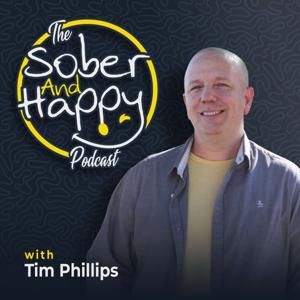


When your life still looks okay on the outside, it’s easy to convince yourself your drinking isn’t a real problem. You’re still working, paying bills, showing up, so it must be fine, right? In this episode, Tim unpacks the truth behind the “functional alcoholic” label and why it often hides more than it reveals.
We talk about how easy it is to keep adjusting the definition of “functional” to avoid change, how this label is quietly supported by society and even loved ones, and why managing your drinking takes more energy than you think. Tim shares from his own story how holding it all together started to cost him peace, connection, and growth, even when nothing had technically fallen apart.
If you’ve ever wondered, “Am I really okay with this being as good as it gets?”, this episode might be the starting point for something honest.
Episode Highlights:
1:00 – What “functional alcoholic” really means
2:00 – Why this label feels safer than facing the truth
3:03 – How society normalizes and even rewards overdrinking
4:04 – What people actually want from drinking (and it’s not moderation)
6:00 – How the meaning of “functional” slowly shifts
7:08 – The mental exhaustion of managing your drinking
9:20 – Why things can look fine outside but feel empty inside
10:29 – The most important question: What is it really costing you?
11:53 – Awareness comes before change, why noticing is enough for now
If this episode resonated with you and you want more tools, reflections, and support for building a life you actually enjoy without alcohol, visit https://soberandhappy.com/home/ to explore the podcast, resources, and next steps.
When you stop drinking, it’s easy to expect a clean upward curve—sleep gets better, moods improve, life gets easier. But what really happens in those first 30 days often surprises people. It’s not about failure or doing it wrong. It’s about understanding what your body and mind are going through.
In this episode, I walk through the first month of sobriety, week by week. We talk about the physical and emotional changes that can show up—from restless nights and sugar cravings to random anxiety and emotional fog—and why they’re all part of the process.
I also explain why discomfort in early sobriety doesn’t mean it’s not working, how your brain starts seeing triggers more clearly, and how your body slowly begins to reset. Most of all, this episode is a reminder that every hard moment is not a setback—it’s your system healing.
If you’re in your first 30 days, or supporting someone who is, this episode will help you feel more grounded, less confused, and more confident that you're not doing it wrong.
Episode Highlights:
0:00 – Why sobriety feels inconsistent day to day
1:00 – What really happens in your first 30 days alcohol-free
1:51 – Week 1: Physical symptoms, restless sleep, and intense cravings
4:10 – What cravings really mean and how to ride them out
6:12 – Week 2: The “now what?” phase, emotional overwhelm, and bargaining
10:01 – Week 3: Feeling good one day and terrible the next
12:19 – Week 4: Regaining trust, time, and small but real wins
14:23 – The best questions to ask after 30 days
If this episode resonated with you and you want more tools, reflections, and support for building a life you actually enjoy without alcohol, visit https://soberandhappy.com/home/ to explore the podcast, resources, and next steps.
Dry January is often framed as a test of willpower or a thirty-one-day challenge to get through. But for a lot of people, the hardest part is not avoiding alcohol. It is sitting with what shows up when alcohol is no longer there to do its usual job.
In this episode, I talk about a different way to approach Dry January, not as a detox, a countdown, or something to endure until February, but as a simple and honest experiment.
We explore why focusing on when the month ends often prevents real insight, how alcohol quietly fills roles like stress relief, boredom management, and emotional regulation, and why the discomfort many people feel during Dry January is actually useful information rather than something to push through.
I also share how to shift from judging individual hard days to noticing patterns, what questions to ask yourself without turning the month into a pressure-filled decision point, and how awareness creates clarity without forcing resolutions.
If you are sober curious, questioning your relationship with alcohol, or feeling restless or unsure during Dry January, this episode will help you slow down, pay attention, and use the month to learn something meaningful about yourself instead of just counting down the days.
Episode highlights:
0:00 – Why Dry January is not about whether you drink in February
1:09 – Why most people struggle with how they think about Dry January
2:00 – Using Dry January as an experiment instead of a challenge
3:31 – How alcohol quietly fills emotional and mental roles
4:49 – Why discomfort is actually useful information
5:23 – Shifting from discipline to curiosity
6:48 – Noticing patterns instead of judging individual days
8:12 – Why you do not need to decide what comes next yet
8:45 – The one question to ask before thinking about February
9:03 – This week’s reflection challenge
If this episode resonated with you and you want more tools, reflections, and support for building a life you actually enjoy without alcohol, visit https://soberandhappy.com/home/ to explore the podcast, resources, and next steps.
As the year comes to a close, a lot of people in sobriety don’t know what to do with it.
Part of you might feel proud of how far you’ve come. Another part might feel disappointed, stuck, or unsure if you’re doing this “right.” And for a lot of people, the easiest option is either to avoid looking back altogether or to beat yourself up for everything that didn’t go as planned.
In this episode, I walk through a more honest and realistic way to review your year in sobriety.
We talk about how to look at what actually changed — not just what you intended to do — how to spot patterns that helped you stay steady as well as patterns that made things harder, and how to use that clarity to think about what comes next without falling into pressure-filled resolutions.
If this year felt messy, slower than expected, or unfinished, this episode will help you make sense of it — and move into the next year with clarity instead of shame.
Relapsing can make it feel like everything you worked for just disappeared. The progress, the confidence, the belief that this time was different — all of it can feel gone in an instant.
But starting over doesn’t actually mean starting from zero.
In this episode, I talk about what’s really going on when someone relapses, why it feels so discouraging, and how to move forward without repeating the same cycle again. We look at relapse not as a personal failure, but as information — something that can actually help you rebuild in a smarter, more sustainable way.
If you’ve ever thought, “I thought I was past this,” or “I don’t know how to start again,” this episode is for you. We talk about the emotional side of relapse, how to spot the patterns that lead up to it, and what actually makes the next attempt feel different — not just hopeful, but believable.
You’re not starting over from nothing. You’re starting from experience. And that changes everything.
Healing the relationships we damaged during addiction is one of the hardest — and most important — parts of sobriety. In this episode, we break down what it really looks like to repair trust, make meaningful apologies, set healthy boundaries, and accept that not every relationship is meant to come with us into this new chapter.
You’ll learn how to apologize without losing yourself, why some people still won’t trust the “new you” right away, how to protect your growth without becoming controlling, and how to let go of relationships that can’t grow with you. If you’ve ever wondered, “How do I fix what I broke?” or “Why do my relationships feel so different now that I’m sober?” — this episode gives you the clarity and direction you’ve been looking for.
Why does getting sober feel so overwhelming—even before you take the first step? In this episode, we break down the hidden reasons your brain panics when you try to make a change. From the fear of losing a coping mechanism, to the identity you’ve carried for years, to the mental fatigue of suddenly having to rethink everything in your daily routine… there are real, understandable reasons the beginning feels so hard.
We’ll talk about the “overwhelm trap,” identity lag, decision fatigue, and the myth that you need motivation before you can change. You’ll learn why your mind jumps to worst-case scenarios, why you freeze at the starting line, and why none of this means you’re broken or weak—it means you’re human.
If you’ve ever said “I’ll start tomorrow” or felt like sobriety requires becoming a totally different person overnight, this episode will help you slow things down, find your first step, and start building real momentum.
Whether you’re trying to get sober, stay sober, or finally build a life that feels good without alcohol, this conversation will help you understand what’s happening in your brain—and how to move forward one small, doable step at a time.
Sobriety isn’t supposed to feel boring — but for a lot of people, it does. In this episode, we talk about why the spark disappears after you quit drinking, why that doesn’t mean anything is wrong, and how to start building real joy again in simple, honest ways. If you’re sober and life feels a little flat right now, this episode will help you get unstuck.
Heading into your first sober holiday season can feel overwhelming — loud rooms, old traditions, pushy relatives, and moments that catch you off guard. In this episode, we break down a simple plan to help you get through the holidays without drinking… and without feeling like you’re missing out on everything.
You’ll learn how to prepare for tricky situations, respond confidently when someone offers you a drink, avoid unnecessary pressure, handle the emotional moments that come out of nowhere, and create new holiday experiences that actually feel good. You’ll also hear why having a “finish line” at the end of the night can make all the difference — plus a challenge to help you walk into your next event feeling grounded instead of anxious.
If this is your first sober holiday season (or the first one you want actually to enjoy), this episode will help you feel steadier, more prepared, and a whole lot less alone.
In this episode, we dig into one of the most frustrating parts of early sobriety: when you’re doing everything right but still don’t feel better.
If you’ve ever wondered whether your progress “counts” because you don’t feel different yet, this conversation is for you.
You’ll learn why early recovery often makes emotions feel stronger — not because you’re failing, but because your brain and body are finally waking back up. We talk about why life can still feel messy without alcohol, why you sometimes feel more overwhelmed before you feel better, and how to recognize the quiet signs that you’re actually growing.
This episode is about giving you hope, perspective, and practical ways to see your progress even when it’s not obvious. You’ll walk away with a deeper understanding of what real growth looks like in sobriety — and why your hard days don’t mean you’re going backward.
Perfect for anyone in early sobriety, rebuilding their life, or trying to stay encouraged during the messy middle.
From the publisher's feed
Have you tried everything, but you still can’t make sobriety stick? Or maybe you are sober, but you feel like there should be something more to your new sober life? There are many paths to getting…

227,535 Listeners
1,709 Listeners

28,024 Listeners

2,542 Listeners

8,394 Listeners
243 Listeners

718 Listeners

46,086 Listeners

248 Listeners
1,254 Listeners

361 Listeners

19,155 Listeners

622 Listeners
3 Listeners
3,128 Listeners