
Sign up to save your podcasts
Or

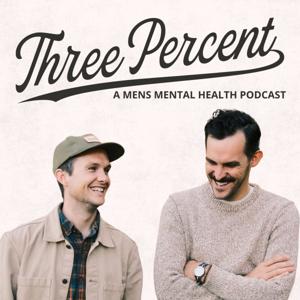


What happened to you is in the past. But what did it leave behind?
Learn more about your ad choices. Visit megaphone.fm/adchoices
Family estrangement between parents and adult children is rarely simple. When a family relationship has caused real hurt, is cutting contact the healthiest choice—or can reconciliation still be possible?
Learn more about your ad choices. Visit megaphone.fm/adchoices
What if the way you relate to God has less to do with your theology — and everything to do with your attachment strategy?
Dr. Geoff Holsclaw is back, and this time the conversation goes somewhere none of them planned. In part one, Geoff laid out the attachment landscapes — the desert, the jungle, the war zone, and the pasture — and gave listeners a way to see themselves in their relational patterns. This episode takes that framework somewhere more personal: straight into the room where faith lives. How does your attachment strategy shape your picture of God? And what does it actually look like to move toward something more secure — not just with people, but with Him?
KEY TAKEAWAYS
CHAPTERS
(00:00) Cold open: am I always trying to do it right with God?
LINKS & RESOURCES
KEYWORDS
Learn more about your ad choices. Visit megaphone.fm/adchoices
What if the most dangerous thing we can do around suicide isn't talking about it — but refusing to?
September is Suicide Awareness Month, and Jamie and Blake are kicking it off with someone they describe as the most accessible voice on this topic they've ever encountered: Jen Butler — real talk writer, comedian, and author of Volume Control — who has spent years refusing to let shame keep this conversation small. Both Blake and Jamie share openly from their own stories in this episode. Blake attempted suicide at 17. Jamie has experienced passive suicidality. Jen has had multiple attempts, multiple psych ward stays, and years of addiction underneath it all. And yet somehow this episode is also funny. Warm. Honest in a way that makes you feel less alone rather than more afraid.
Jen traces her story from a heartbreak at 14 in a Burger King parking lot, to a cancer diagnosis at 22 and the narcotic pain pills that followed, to two psych ward stints, breast implant illness, disordered eating, and finally — sobriety, courtesy of a poet with a man bun. She talks about what it took to write Volume Control — a choose-your-own-emotional-regulation guidebook she built over six years by writing letters to her future self from her darkest places — and previews her next book, Stay, which publishers keep loving and refusing at the same time, because the word suicide makes everyone nervous. The irony is not lost on her.
If you've ever had the thought that you just didn't want to be here anymore — or you love someone who has — this episode will give you language, permission, and a little bit of relief.
If you or someone you know is struggling, please reach out to the 988 Suicide and Crisis Lifeline by calling or texting 988.
KEY TAKEAWAYS
CHAPTERS
(00:00) Cold open: the reason I got sober was a poet with a man bun
LINKS & RESOURCES
KEYWORDS
Learn more about your ad choices. Visit megaphone.fm/adchoices
What happens when the anger showing up in your classroom has nothing to do with your students — and everything to do with a kid who never felt heard?
This week Jamie and Blake welcome Chris Winikka for a Top Plate episode — a live coaching call where a real member of the Three Percent community brings his actual 3% to the table. Chris who is in his 26th year of teaching high school computer science found the podcast while processing his own story, and somewhere along the way started noticing something he couldn't ignore: after decades of keeping his cool in the classroom, he was snapping at students. The anger was back — and it was louder than it should have been for what was actually happening.
What follows is one of the most practical and quietly moving Top Plate episodes yet. Chris traces the anger back through anxious attachment, a childhood of being dismissed as "just Chris," the identity crisis that came when AI started threatening his sense of worth as a teacher, and the slow realization that what his students need most from him has nothing to do with what he knows about programming. If you're a teacher, a parent, or anyone who has ever let frustration loose on someone who didn't deserve the full weight of it — this one will find you.
KEY TAKEAWAYS
CHAPTERS
(00:00) Cold open: who am I if AI can just do this stuff?
LINKS & RESOURCES
KEYWORDS
Learn more about your ad choices. Visit megaphone.fm/adchoices
What can Spider-Man teach us about masculinity, mental health, vulnerability, and authentic connection?
In this special episode of the Three Percent Podcast, Jamie and Blake take a different approach: they react to the newest Spider-Man movie and unpack the deeper psychological and relational themes hiding underneath the superhero story.
Through Peter Parker's loneliness, rage, isolation, self-acceptance, and relationships, they explore what happens when we don't have safe places to process our emotions—and what can happen when we finally allow ourselves to be known.
They talk about the difference between fixing our emotions and actually engaging them, why high-performing people can still experience deep hopelessness, how vulnerability creates vulnerability in others, and why some of our deepest pain can only be repaired through connection.
There are plenty of Spider-Man references, but ultimately this episode isn't really about superheroes. It's about what it means to stop hiding behind the mask and let ourselves be seen.
⚠️ Spoiler warning: This episode contains significant spoilers for the newest Spider-Man movie.
Takeaways
Chapters
(00:00) — What's Up, Spider-Fans?
(02:00) — What Spider-Man Has to Do With Men's Mental Health
(05:00) — The Loneliness of Being Spider-Man
(21:00) — Isolation, Rage & Self-Medicating
(24:00) — "You're Too Much"
(32:00) — The Power of a Corrective Emotional Experience
(34:00) — Connection Over Dominance
(38:00) — Vulnerability Breeds Vulnerability
(40:00) — You Don't Have to Fix What You're Feeling
(44:00) — Self-Acceptance & Being Loved for Who You Are
(46:00) — Vulnerability, Hope & the Final Handshake
(48:00) — What Spider-Man Can Teach Us About Connection
Keywords
Three Percent Podcast, men's mental health, Spider-Man, Marvel, masculinity, holistic masculinity, vulnerability, authentic connection, loneliness, depression, hopelessness, emotional health, emotional regulation, self-acceptance, self-compassion, shame, rage, isolation, male friendship, empathy, emotional connection, relationships, repair, corrective emotional experience, safe men, mental health, vulnerability and masculinity
Learn more about your ad choices. Visit megaphone.fm/adchoices
What if your Enneagram type isn't the definition of who you are, but simply a strategy you learned to survive?
In this episode, Jamie and Blake sit down with therapist and Enneagram practitioner Katie Gustafson to explore the Enneagram as more than a personality test. Katie describes it as a “map of attention”—a way of understanding what we instinctively focus on, what we're trying to protect ourselves from, and what we may be missing as a result.
This is ultimately a conversation about authenticity, grace, healing, and becoming more fully human.
Takeaways
Resources / Links
Katie Gustafson
https://katiegustafson.co/
Katie on Instagram — @katiegustafson.co
Three Percent Co. https://threepercentco.com/
Chapters
(00:00) — What is the Enneagram, really?
(05:00) — The stories we create as children
(07:00) — When your personality becomes a mask
(10:00) — What your Enneagram type helps you miss
(13:00) — The struggle of being “special”
(19:00) — Your Enneagram strategy vs. God's grace
(22:00) — What is the “ouchie”?
(24:00) — Hurt vs. harm
(30:00) — Nine different “normals”
(35:00) — Why anger matters
(40:00) — Anger, boundaries, and right action
(43:00) — The nine Enneagram strategies
(54:00) — When your strategy makes you lose yourself
(58:00) — Learning what you need
(1:02:00) — Your type is the small story
(1:05:00) — Becoming the author of your life
Keywords
Enneagram, Enneagram types, personality, authenticity, emotional health, emotional healing, relationships, attachment, self-awareness, self-compassion, common humanity, anger, boundaries, hurt vs harm, abuse, trauma, grace, God, identity, personal growth, healing, emotional honesty, needs, vulnerability, masculinity, therapy, narrative therapy, protective strategies, survival strategies, integration, wholeness, spiritual formation
Learn more about your ad choices. Visit megaphone.fm/adchoices
What does healing actually look like — not in theory, but right now, in the middle of your real life?
In part one, Jamie and Blake laid the foundation: the hidden rules they carried into healing, why they thought it meant fixing themselves, and how those expectations got in the way. Now they're back to answer the harder question — what does cultivating the garden actually look like for them today? Nearly a decade into their respective journeys through therapy, 12-step recovery, and story work, they're both currently going through it, and they're not pretending otherwise.
If you're somewhere in the middle of your own healing and wondering why it doesn't look like what you thought it would, this one's for you.
KEY TAKEAWAYS
CHAPTERS
(00:00) Welcome back: part two of what did you expect healing to look like?
LINKS & RESOURCES
KEYWORDS
Learn more about your ad choices. Visit megaphone.fm/adchoices
What if the most healing thing you can do in a season of pain isn't to fix it, process it, or even talk about it — but to make something?
Jamie and Blake are joined by two of their favorite people — artist Scott Erickson and musician, poet, and coach Justin McRoberts — for a conversation that goes places none of them planned. These four have been in each other's orbit for a while now, and it shows. What starts as a question about art and the low seasons of life quickly becomes one of the most honest, unexpected, and quietly stunning conversations this show has hosted.
Scott offers a definition of pain that stops the room: most pain is the death of future memories — the slow grief of realizing that the life you quietly expected to have isn't coming. Jamie opens up about being in a low himself right now, triggered by story work around eight years of abuse he's never fully shared, and what it's costing him to look at the mountain of those stories. Justin reframes the entire practice of making things — not as self-expression, but as a way to have a conversation with the parts of yourself you don't yet know how to talk to directly. And Scott, who spent a season this spring genuinely questioning whether he wanted to keep being an artist, closes the episode by inviting Jamie to throw himself the high school party he never got to have.
Bring a casserole to the wake. You'll understand by the end.
KEY TAKEAWAYS
CHAPTERS
(00:00) Cold open: make a casserole and show up to the shared wake
LINKS & RESOURCES
KEYWORDS
Learn more about your ad choices. Visit megaphone.fm/adchoices
What if the thing running your life isn't a choice — it's just the way your brain learned to stay safe?
Jamie and Blake are back with something a little different. Fresh off their annual retreat in Smithville, Tennessee, they're pulling back the curtain on a book they're writing — a field guide to the 3% — and using this episode to work through the big questions that anchor part one: the 3% that happened to you. No guest, no filter, just two friends and therapists getting into the neuroscience, the theology, and the deeply personal reality of why the past doesn't just stay in the past.
This is one of the more honest episodes they've recorded. Jamie shares openly about building his identity around his story of abuse — not to heal, but to get the hit of care that felt like worth. Blake gets into the neurobiology of why your brain is literally wired to encode pain louder than joy. And together they make a case for why the most countercultural thing a man can do is bring his hidden 3% into the light of real relationship.
KEY TAKEAWAYS
CHAPTERS
(00:00) Cold open: men's mental health, carnivore diet, never show feelings
LINKS & RESOURCES
KEYWORDS
Learn more about your ad choices. Visit megaphone.fm/adchoices
From the publisher's feed

1,694 Listeners

10,470 Listeners
463 Listeners

642 Listeners
1,914 Listeners

865 Listeners

1,253 Listeners

1,261 Listeners

444 Listeners

295 Listeners

1,817 Listeners

907 Listeners

2,112 Listeners

2,438 Listeners

67 Listeners