
Sign up to save your podcasts
Or

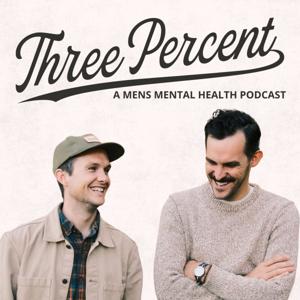


What if the reason your conversations keep going sideways has nothing to do with what you're saying — and everything to do with what you're actually feeling underneath it?
In this episode, Jamie and Blake welcome their friend Morgan Burch — relationship coach and creator of the SEEN Method — for a conversation recorded in person that feels less like an interview and more like a masterclass you didn't know you needed. Morgan breaks down the four-letter framework she developed out of her own marriage to help people move from barbed-wire communication to actual vulnerability. And what's wild is how simple it is — and how hard it is to do, because confusion and complication have always felt safer than being honest.
This one is funny, personal, and quietly devastating in the best way. Jamie and Blake both get caught in real time. Dan (Morgan's husband) makes multiple appearances from the couch. And by the end, you'll have a completely different relationship with your anger, your disappointment, and the expectations you've been silently holding over everyone around you.
KEY TAKEAWAYS
CHAPTERS
(00:00) Cold open: I wasn't good at controlling my emotions — I was good at hiding them
LINKS & RESOURCES
KEYWORDS
Learn more about your ad choices. Visit megaphone.fm/adchoices
What if healing doesn't look anything like you expected?
For many of us, healing starts with an unspoken goal: get rid of the anxiety, stop feeling angry, break the habit, or finally become the version of ourselves we think everyone else wants. But what if those expectations are actually keeping us stuck?
In this honest and unscripted conversation, Blake and Jamie explore the hidden "rules" they've carried about healing. They reflect on how they once believed healing meant becoming free from anger, discomfort, or unwanted behaviors, only to discover that true healing is far more about curiosity, compassion, and learning to feel at home in their own bodies.
This episode isn't about offering quick answers. It's an invitation to examine the expectations you've inherited, question the rules you've been living by, and begin imagining a different kind of healing.
Key Takeaways
- Healing isn't becoming someone else—it's becoming more fully yourself.
- The behaviors we want to eliminate often begin as survival strategies that deserve curiosity before judgment.
- Repressed anger doesn't disappear; it often turns inward in ways we don't recognize.
- Many of our expectations about healing come from unspoken family or cultural "rules," not necessarily what's true.
- Compassion creates more lasting transformation than shame ever could.
- Healing is an evolving process, not a finish line.
Chapters
(00:00) What did you expect healing to look like?
(05:18) The hidden rules we carry into healing
(11:42) Why we thought healing meant "fixing" ourselves
(18:55) Anger isn't the enemy
(26:40) When survival strategies become self-harm
(34:10) Why pornography, addiction, and numbing behaviors deserve compassion, not just condemnation
(40:00) Feeling at home in your own body
(45:15) The rules you inherited about healing
(48:00) Letting go of expectations and preparing for Part Two
Resources & Links
Three Percent Co.: https://threepercentco.com/
Keywords
healing, emotional healing, therapy, mental health, men's mental health, anger, shame, self-compassion, vulnerability, pornography recovery, addiction recovery, trauma, emotional health, nervous system, relationships, masculinity, Blake Roberts, Jamie Haigh, Three Percent Podcast, healing journey
Learn more about your ad choices. Visit megaphone.fm/adchoices
What happens when two podcasts built around helping men flourish sit down together?
In this special crossover episode, Jamie and Blake join Hunter Leavine, founder of The Captains Collective, for a conversation about masculinity, emotional health, vulnerability, and the healing power of community. Hunter shares his personal story of rebuilding after failure, the lessons he's learned from life on the water, and why nature often becomes the classroom where men finally begin telling the truth.
Together they explore how outdoor adventure, emotional honesty, and meaningful brotherhood aren't competing paths—but complementary ones. Whether you're more comfortable on a fishing boat than in a therapist's office, or vice versa, this conversation builds a bridge between both worlds.
Key Takeaways
Chapters
(00:00) – Introducing the crossover episode
Keywords
men's mental health, emotional health, vulnerability, masculinity, therapy, men's groups, brotherhood, friendship, healing, emotional resilience, shame, honesty, empathy, Hunter Leavine, The Captains Collective, outdoor adventure, fly fishing, nature, resilience, community, emotional intelligence, self-awareness, Christian mental health, personal growth, emotional healing, men's relationships
Learn more about your ad choices. Visit megaphone.fm/adchoices
June is Men’s Mental Health Awareness Month, and in this special episode, Blake and Jamie tackle a sobering reality: men are struggling, and many are doing it alone.
From higher suicide rates and lower treatment utilization to fewer close friendships and cultural expectations around self-sufficiency, the statistics tell an alarming story. But this conversation goes deeper than the data. Blake and Jamie explore why so many men resist asking for help, why vulnerability often feels like failure, and how shame keeps men isolated from the very relationships that could help them heal.
Along the way, they offer a compassionate reframe: what if your struggles aren't proof that you're failing? What if they're evidence that you've been surviving the best way you know how?
This episode is an invitation to move beyond performance, embrace humility, and become safe enough with yourself that you can experience deeper connection with God, others, and your own story.
Key Takeaways
Episode Chapters
(00:00) Why Men’s Mental Health Matters
(06:15) The alarming statistics around men's mental health
(15:00) Why men are less likely to seek help
(18:00) The hidden barrier: lack of awareness
(20:00) Self-sufficiency, isolation, and depression
(23:00) Why therapy often feels like failure
(27:00) A powerful definition of humility
(31:00) The emotional "box of crayons" men never received
(38:00) How the 3% helps men heal
(40:00) Are men narcissistic—or ashamed?
(47:00) Becoming the man you want to be
(48:00) Men aren't failing. Men are hurting.
Resources & Links
Keywords
Men's Mental Health Awareness Month, men's mental health, masculinity, vulnerability, emotional health, shame, therapy, counseling, depression, male friendships, self-sufficiency, humility, emotional awareness, relationships, healing, mental wellness, Three Percent Podcast, men's emotional health, connection, authenticity
Learn more about your ad choices. Visit megaphone.fm/adchoices
Why do some people struggle to trust God, while others keep Him at a distance? Why do our relationships with people often mirror our relationship with God?
This week, Blake and Jamie sit down with author, pastor, and professor Geoff Holsclaw to explore the powerful connection between attachment theory and spiritual formation. Drawing from his book Landscapes of the Soul, Geoff explains how our early relational experiences shape the ways we pursue intimacy, handle anxiety, and experience God's presence.
Together, they discuss the four attachment "landscapes"—the Desert, Jungle, War Zone, and Pasture—and how God invites each of us into deeper security, connection, and delight. Whether you're familiar with attachment theory or hearing about it for the first time, this conversation offers practical wisdom for understanding yourself, your relationships, and your faith journey.
Key Takeaways
About Geoff Holsclaw
Geoff Holsclaw is a pastor, professor, spiritual director, and author focused on helping people experience deeper connection with God, themselves, and others. Through his work at Embodied Faith, Geoff explores the intersection of attachment science, spiritual formation, and Christian discipleship, helping people move toward greater wholeness and secure relationships.
Resources & Links
Chapters
(00:00) – Introduction to Geoff Holsclaw
Keywords
attachment theory, Geoff Holsclaw, Landscapes of the Soul, spiritual formation, Christian spirituality, emotional health, secure attachment, anxious attachment, avoidant attachment, disorganized attachment, faith and psychology, relationships, healing, God's delight, Christian growth, mental health, Three Percent Podcast, embodied faith, spiritual maturity, emotional healing
Learn more about your ad choices. Visit megaphone.fm/adchoices
What if joy isn't waiting on the other side of your pain — but is actually woven through the middle of it?
In this episode, Jamie and Blake sit down with KJ Ramsey — trauma-informed licensed professional counselor, author, and self-described "increasingly feral mystic utterly devoted to the joy of being alive." KJ's newest book, The Place Between Our Pains: A Memoir of What Joy Can Survive, grew out of a personal dare: to discover that joy is more trustworthy than trauma. What followed was a cross-country adventure to revisit the national parks of her childhood, a near-death health crisis, and one of the most honest accounts of living with chronic illness, complex trauma, and radical joy you'll ever encounter.
KJ reframes everything about how we think about hope and joy — not as light, aspirational feelings, but as heavy things we were never meant to carry alone. She argues that joy isn't on the other side of grief, it emerges from within it, like mycelium threading silently beneath a forest floor, sustaining everything above it without anyone seeing. This conversation will move you. It may also wreck you in the best possible way.
TAKEAWAYS
CHAPTERS
(00:00) Cold open: those who struggle are positioned for more joy(03:00) Introducing KJ Ramsey and The Place Between Our Pains(07:00) What KJ hopes listeners take away: hope and joy are team sports(15:00) Why hope is terrifying — and joy is not what we think it is(19:00) Joy as mycelium: the hidden web threading everything together(30:00) When your life tests the truth of the book you're writing(35:00) The difference between looking for the good and holding tenderness for the bad(39:00) Reading from the book: the Moon Face chapter(49:00) The book cover, the thread metaphor, and living through a tumor on her face(57:00) Avoidance is a privilege — and those who can't avoid pain may become the most joyful
LINKS & RESOURCES
KEYWORDSThree Percent Podcast, KJ Ramsey, The Place Between Our Pains, joy and grief, chronic illness, complex trauma, hope, memoir, men's mental health, self-compassion, tenderness, mycelium, healing, connection, vulnerability, faith, wholeness, disability, personal growth
Learn more about your ad choices. Visit megaphone.fm/adchoices
What if the reason you can't lose weight, recover from workouts, or stay consistent with your health has nothing to do with discipline — and everything to do with what's unresolved in your story?
In this episode, Jamie and Blake sit down with their friend Conner Custodio — a holistic athletic coach who integrates faith, neuroscience, psychology, nutrition, and performance to help athletes regulate their nervous systems and get to the root of what's holding them back. Conner opens up about his own story: growing up in Bermuda in a chaotic household, being homeless at 15, attending six high schools in four years, and the car ride home that changed everything. From there the conversation moves into his work — and it hits whether you're a professional athlete or someone who just can't figure out why they keep falling off a workout routine. His core idea is deceptively simple: athletes attach to their sport because they've lost attachment where they really needed it. And until that gets addressed, no program, no diet, and no amount of discipline will fix what's actually broken.
KEY TAKEAWAYS
CHAPTERS
(00:00) Cold open: the lie your nervous system is living by
(05:00) Conner's story: Bermuda, six high schools, and being homeless at 15
(13:00) The car ride home that changed everything
(18:00) Why athletes are often the most disconnected from their bodies
(22:00) Why Conner says we were never designed for professional sports
(24:00) Hyperarousal and hypoarousal explained
(29:00) Attaching to sport because you've lost attachment where you needed it
(39:00) The full cup: when your capacity is already maxed before the day begins
(43:00) How trauma keeps your body in a low-grade workout state — and why you may need to eat more to lose weight
(51:00) The lie your nervous system believes — and what Jesus says instead
LINKS & RESOURCES
KEYWORDSThree Percent Podcast, Conner Custodio, holistic athletic coaching, nervous system regulation, athlete mental health, attachment theory, trauma and the body, hyperarousal, hypoarousal, window of tolerance, nutrition for athletes, reverse dieting, men's mental health, faith and fitness, sports psychology, personal growth, healing, emotional health
Learn more about your ad choices. Visit megaphone.fm/adchoices
Can AI help you understand yourself better? Absolutely. But can it replace real human connection?
In this episode, Jamie and Blake continue the AI & Mental Health series by exploring both the benefits and limitations of using AI for emotional support. They acknowledge the real value AI can offer—helping people name emotions, identify patterns, and even feel safe enough to begin opening up. But they also draw an important line: self-awareness alone isn’t healing.
Together, they unpack why anxiety, loneliness, and emotional pain are ultimately relational issues, not just intellectual problems to solve. AI may be able to give insight, language, and structure, but it cannot sit with you in your pain, notice your posture, respond to your tone, or offer the kind of embodied safety that changes people through relationship.
This conversation is thoughtful, nuanced, and deeply compassionate toward those who have found comfort in AI while also gently inviting listeners toward something more: real vulnerability with real people.
If you’ve ever found yourself endlessly processing with AI, stuck in your own head, or craving connection while still staying hidden, this episode will help you understand why awareness matters—but relationship is what actually transforms us.
KEY TAKEAWAYS
CHAPTERS
(00:00) Continuing the AI & Mental Health conversation(03:00) The surprising benefits of AI for emotional awareness(06:00) Why naming emotions already helps calm the nervous system(10:00) When AI becomes another form of avoidance(14:00) Why anxiety thrives in isolation and rumination(18:00) The limits of intellectual solutions for emotional pain(21:00) What therapists notice that AI never can(27:00) Immediacy: posture, tone, and embodied presence(29:00) Why AI can’t solve a relational problem(31:00) Moving from consuming to cultivating growth(32:00) An invitation into deeper reflection in The Basement
LINKS & RESOURCES
KEYWORDS
Three Percent Podcast, AI and mental health, anxiety, loneliness, emotional health, vulnerability, relationships, emotional awareness, rumination, nervous system, therapy, human connection, men’s mental health, healing, personal growth
Learn more about your ad choices. Visit megaphone.fm/adchoices
Why do the people we love most have the ability to trigger us the fastest?
In this conversation, Dr. Kelly Flanagan joins Jamie and Blake to explore what really happens when we move from connection into protection. Drawing from his new book, The Road Less Triggered, Kelly explains how our nervous systems react to perceived threats, why our hearts close in moments of conflict, and how we can learn to stay present instead of becoming defensive.
Together, they unpack why anger is often a doorway into deeper emotions, how sadness gets blocked for many men, and why healing begins by asking not “What’s wrong with me?” but “What happened to me?” The conversation is practical, deeply compassionate, and full of memorable metaphors that make complex emotional dynamics easier to understand.
If you’ve ever felt hijacked by your reactions, struggled to stay open in conflict, or wondered why small moments create such big responses, this episode offers a hopeful path toward greater calm, freedom, and connection.
KEY TAKEAWAYS
CHAPTERS
(00:00) Introducing Kelly Flanagan and The Road Less Triggered(05:00) Turning 30 days of conflict into 30 seconds(10:00) What it actually means to be triggered(14:00) Restoring your sense of choice(18:00) Why your nervous system thinks you’re in danger(22:00) Jamie’s story of trauma and non-consensual touch(27:00) Loneliness: feeling unseen, misunderstood, and unsupported(31:00) Calmness before connectedness(34:00) Anger as a doorway into your emotional life(38:00) The sadness underneath anger and anxiety(48:00) Openhearted boundaries(52:00) Final reflections and practical application
LINKS & RESOURCES
KEYWORDS
Kelly Flanagan, The Road Less Triggered, Three Percent Podcast, emotional triggers, relationships, marriage, anger, sadness, boundaries, vulnerability, men’s mental health, nervous system, trauma and healing, connection, emotional regulation
Learn more about your ad choices. Visit megaphone.fm/adchoices
What actually makes someone feel safe?
In this episode, Jamie and Blake slow down to explore one of the questions they’ve been asked most recently: what does “safety” actually mean—and how does it connect to the core idea behind Three Percent?
Through personal stories, recovery experiences, parenting examples, and reflections on friendship, they unpack why vulnerability feels so difficult for most people. Not because something is wrong with us, but because many of us learned early on that honesty, emotion, or neediness didn’t feel safe. The result? We stay hidden, disconnected, and stuck carrying things alone.
This conversation reframes vulnerability not as weakness, but as courage. It’s about learning how to recognize safe people, becoming safer people ourselves, and understanding that sharing your “3%” isn’t about oversharing—it’s about creating the kind of connection that leads to healing, freedom, and growth.
If you’ve ever struggled to open up, feared being fully known, or wondered why emotional honesty feels so uncomfortable, this episode will help put language to it.
KEY TAKEAWAYS
Why vulnerability often feels unsafe long before adulthood
How relational safety is built through attunement, repair, and consistency
What “3%” actually means beyond the podcast name
Why sharing your story creates deeper connection and healing
The difference between emotional safety and emotional comfort
Why staying hidden may feel protective—but ultimately costs more
CHAPTERS
(00:00) Looking for a new podcast co-host
(02:00) Why this conversation about safety matters
(04:00) How childhood shapes vulnerability in adulthood
(07:00) Trauma, attachment, and feeling emotionally unsafe
(10:00) What attunement actually means
(12:00) Helping kids regulate emotions in real time
(15:00) Why many adults never learned emotional safety
(16:00) The deeper meaning behind “3%”
(19:00) How to know if someone feels safe
(21:00) The fly fishing story and relational vulnerability
(24:00) Predictability, repair, and emotional trust
(27:00) What being safe for someone else actually looks like
(29:00) Why accountability and compassion must coexist
(33:00) “Vulnerability will always cost you something”
(35:00) Why staying hidden costs even more
(37:00) An invitation into deeper connection in The Basement
LINKS & RESOURCES
Three Percent Website: https://threepercentco.com/
Join The Basement (private community + monthly Q&A): https://threepercentco.com/membership
KEYWORDS
Three Percent Podcast, vulnerability, emotional safety, attachment, trauma and healing, men’s mental health, relationships, emotional regulation, authenticity, connection, shame, healing, friendship, accountability, personal growth
Learn more about your ad choices. Visit megaphone.fm/adchoices
From the publisher's feed

1,694 Listeners

10,470 Listeners
463 Listeners

642 Listeners
1,914 Listeners

865 Listeners

1,253 Listeners

1,261 Listeners

444 Listeners

295 Listeners

1,817 Listeners

907 Listeners

2,112 Listeners

2,438 Listeners

67 Listeners