
Sign up to save your podcasts
Or

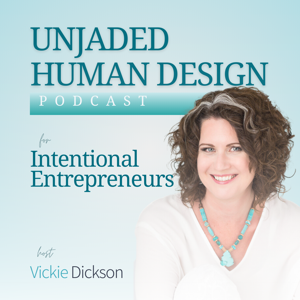


Wondering what to sell on Black Friday in your online business? You might already have everything you need to create a profitable Black Friday promotion.
If you're a coach, consultant, course creator, Human Design practitioner or online entrepreneur, Black Friday can be an opportunity to generate additional revenue without spending weeks creating a brand-new offer.
And if the thought of participating in Black Friday makes you want to run in the opposite direction? That's okay too.
In this episode of Unjaded, Vickie Dickson shares practical Black Friday sales ideas for online business owners, including ways to sell existing digital products, repurpose old courses and workshops, create limited-availability coaching offers, and pre-sell something you haven't built yet.
Drawing on her experience generating approximately $10,000 in Black Friday revenue in a typical year, Vickie explains why Black Friday doesn't have to mean slashing your prices, running expensive ads or creating something completely new.
Sometimes the easiest way to bring money into your business is to look at what you've already created.
In This Episode, We're Talking AboutBefore you create anything new for Black Friday, take a look at what's already sitting in your business.
Do you have an old workshop, course, masterclass, private podcast, digital report or training that people can still benefit from?
If you've been in business for a few years, chances are you've accumulated a library of valuable content that you're no longer actively selling.
Vickie shares how a business garage sale from Canadian Pinterest expert Megan Williamson sparked the idea of dusting off those forgotten offers and making them available again.
You don't necessarily need to completely rebuild or rebrand them.
Sometimes a simple, limited-time offer is enough to bring an existing product back into circulation.
Ask yourself: What have I already created that could be making money in my business right now?
2. Create a Limited-Availability Coaching OfferBlack Friday doesn't have to be about selling inexpensive digital products.
If you love working directly with clients, consider offering a limited number of one-on-one sessions, business intensives, coaching days or Voxer support packages.
These offers can work particularly well when your time and availability are limited.
And because people are purchasing access to your expertise and personal attention, you don't need to offer a dramatic discount.
You could offer a special bonus, additional support or an exclusive session format instead.
The value is in the experience of working with you.
3. Run a Different Black Friday Deal Each DayInstead of one offer, you could create a series of promotions across five or six days.
Vickie shares that she's used this approach for several years, typically generating around $10,000 in Black Friday sales, with one previous year bringing in approximately $11,500.
Each day features a different opportunity, followed by a recap of the available offers.
This approach can be particularly useful if you have multiple courses, coaching packages, workshops or digital products that appeal to different parts of your audience.
The key is to plan ahead and give people time to become interested before the sale begins.
4. Turn an Existing Course Into an Evergreen ProductHave a course you've taught live that could become a self-paced program?
Black Friday might be the motivation you need to make it available.
An evergreen course is a program customers can purchase at any time and complete at their own pace, rather than waiting for a scheduled launch or live cohort.
Vickie discusses the possibility of making Content by Design available in an evergreen format and adding a personal session as a bonus.
This allows you to make an existing body of work more accessible without needing to recreate the entire program.
5. Pre-Sell a Course Before You Create ItWhat if you're newer in business and don't have an archive of products to sell?
You can still participate in Black Friday.
In fact, it might be an opportunity to finally get that course, workshop or coaching experience off the ground.
Vickie shares how the first version of Content by Design was sold during Black Friday before the full program had been created.
Four people purchased seats at approximately $997 each, generating around $4,000 in initial sales.
You can use a pre-sale to validate interest, secure paying clients and create the program with a clear delivery commitment.
The important part is being transparent about what people are buying and when they'll receive it.
6. Offer an Experience That Helps You Develop Your SkillsOne of Vickie's early Black Friday offers was a 12 Days of Christmas Human Design experience.
Participants received short daily recordings exploring different aspects of their Human Design charts.
It was a way to serve clients while developing her skills and gaining valuable experience in a newer business.
If you're just starting out, consider what you could offer that would help your customers get a meaningful result while allowing you to practice your craft.
You don't have to wait until everything is perfect.
Sometimes getting into the room with paying clients is exactly what moves your business forward.
When Should You Start Marketing Your Black Friday Offers?Don't wait until Black Friday morning to tell people what you're selling.
Start building awareness several weeks ahead of time through the channels you already use, whether that's your email list, podcast, LinkedIn, Substack or social media.
You don't need to be everywhere.
But if you're planning a Black Friday promotion, give your audience time to reconnect with your work, understand the value of your offers and recognize why they might want to buy.
And remember, participating in Black Friday doesn't automatically mean you need to run paid advertising.
Vickie explains why she prefers to avoid competing with major advertisers during one of the busiest shopping periods of the year.
Frequently Asked Questions About Black Friday for Online BusinessesWhat can I sell on Black Friday as a coach or online entrepreneur?You can sell existing courses, masterclasses, digital downloads, private podcasts, coaching sessions, business intensives, self-paced programs or limited-time experiences. You can also pre-sell a new program with a clearly communicated delivery date.
Do I need to create a new product for Black Friday?No. Start by auditing your existing products and services. An older course, workshop or training that remains useful could become a Black Friday offer without requiring weeks of new content creation.
Should I discount my coaching services for Black Friday?Not necessarily. When you're selling personal access to your time and expertise, you can offer added value, an exclusive package or limited availability rather than a substantial price reduction.
Can I run a Black Friday sale if I'm new in business?Yes. You could offer a small number of one-on-one sessions, a live workshop, a short guided experience or a pre-sale of a course you intend to create. Be clear about what customers will receive and when.
Is Black Friday worth it for small online businesses?It can be. Black Friday is a period when many consumers are actively looking for offers. But whether it's worthwhile depends on your audience, products, profit margins, capacity and business goals. You don't have to participate simply because other businesses are doing it.
What if I don't want to participate in Black Friday?You can skip it. You could also create a promotion for Small Business Saturday or Cyber Monday instead. You're the boss of your business, and you get to decide which opportunities are worth your energy.
Your Black Friday Business AuditBefore you decide whether to participate this year, take a few minutes to look at what's already available to you.
Ask yourself:
You might discover that your Black Friday offer is already sitting on your computer.
And if you decide to sit this one out?
That's a perfectly good business decision too.
You don't have to participate in every marketing opportunity. But you do get to recognize the opportunities that are already sitting right in front of you.
Can Human Design help you understand your partner, improve communication, and create a healthier relationship?
After 34 years of marriage, I can tell you that understanding our Human Designs has completely changed the way my husband Pete and I relate to one another.
Not because Human Design magically fixed our marriage, but because it gave us language for things we'd been experiencing for decades without understanding why.
In this episode of Unjaded, I'm taking you inside our marriage and sharing the ways Human Design has helped us understand our emotional differences, communication styles, energy levels, individual needs, and the conditioning we bring into our relationship.
We're talking about Human Design relationship compatibility, defined and undefined emotional centers, emotional authority, split definition, electromagnetic connections, and what happens when two people experience the world through very different energetic systems.
And perhaps most importantly, we're talking about learning to give each other a pass.
Because sometimes the greatest gift we can give someone we love is understanding that they're simply experiencing life differently than we are.
In This Episode, We ExploreOne of the biggest breakthroughs in our marriage came from understanding our emotional systems.
I'm emotionally defined in Human Design, which means I experience my own emotional wave. My husband Pete has an undefined Emotional Solar Plexus, which, in Human Design, means he can take in and amplify the emotional energy of the people around him.
For years, I thought I was the stoic one and he was the emotional one.
He cried at our wedding. He feels things deeply. And when we'd have a difficult conversation, his emotional reaction often seemed much bigger than mine.
Learning about our Human Designs gave us a completely different perspective.
I began to understand that I had spent much of my life suppressing emotions, while Pete was experiencing and amplifying the emotional energy between us.
Now, rather than immediately reacting to one another, we can recognize what's happening, pause, and give ourselves space.
For someone with an undefined emotional center, one of the most useful questions can be:
"Is this emotion mine?"
That one question has made an enormous difference in how we communicate.
How Human Design Can Help Couples Understand Their DifferencesHuman Design relationship compatibility isn't simply about whether two types are supposed to get along.
It's about looking at two complete charts and understanding how those designs interact.
In our relationship, some of the most interesting dynamics show up through:
Emotional Authority and the Solar Plexus: Understanding why we experience and process emotions differently.
The 27-50 Channel of Preservation: Looking at nurturing, loyalty, responsibility, family values, and the shadow of martyrdom.
The 28-38 Channel of Struggle: Understanding Pete's strong convictions and his relationship with purpose.
The 29-46 Channel of Discovery: A channel we share that speaks to our love of experiences, commitment, and being in the right place at the right time.
Single Definition vs. Split Definition: Understanding why we process information differently and how Pete's design can bridge my split.
Human Design Variable and Determination: Recognizing why I need more flow and quiet while Pete thrives with greater structure and stimulation.
Defined Motor Centers: Understanding why two Manifesting Generators can have very different levels and expressions of energy.
These aren't reasons to put one another into boxes.
They're opportunities to become more curious about the person you're sharing your life with.
What Does It Mean When Someone Bridges Your Split in Human Design?One of the fascinating aspects of Human Design relationships is how two people's charts interact.
I'm a split definition, which means I have two separate areas of definition in my bodygraph.
Pete is a single definition, and his design contains a gate that bridges my split.
Within the Human Design framework, this means that when we're together, his energy can connect areas of my chart that are otherwise separate.
For me, that can feel like suddenly having access to an idea, an insight, or the next step in something I've been trying to figure out.
It's one of the reasons I encourage people to look beyond their Human Design types when exploring compatibility.
The nuances of your gates, channels, centers, and definition can tell a much richer story about your relationship.
Why Your Partner Doesn't Need to Be Just Like YouPete and I are both Manifesting Generators, but we don't move through the world in the same way.
I have three defined motor centers. He has two.
I need a lot of flow and flexibility. He prefers more structure and routine.
I thrive in quieter environments. He enjoys having music playing while he works.
And although we share certain channels, we have other energies that create very different ways of experiencing life.
Before Human Design, these differences could simply have been things we found annoying about one another.
Now we have another way to understand them.
The goal isn't to make your partner more like you. It's to understand who they already are.
What 34 Years of Marriage Have Taught MeOne of the things Pete and I figured out long before we discovered Human Design was that we didn't have to fight every battle.
When one of us felt particularly strongly about something, and the other person didn't, we could let the person with the stronger conviction have their way.
We didn't need to turn every difference into a power struggle.
Now I can look back at those early years and recognize how our individual designs may have been playing out.
And after almost seven years of experimenting with Human Design, I can see how much more understanding we've developed around our differences.
It's not about using Human Design to excuse behaviour, avoid responsibility, or decide that someone can't change.
It's about having a framework for understanding the other person more deeply.
And sometimes, that understanding is enough to change the entire conversation.
Questions Answered in This EpisodeCan Human Design improve your relationship?Human Design can provide a framework for understanding differences in emotional processing, communication, energy, decision-making, and personal needs. When couples use that information to become more curious and compassionate toward one another, it can support more constructive conversations and greater understanding.
What happens when one partner has a defined emotional centre and the other is undefined?In Human Design, the defined partner experiences a consistent emotional wave, while the undefined partner is understood to take in and amplify emotional energy from others. Recognizing this dynamic may help couples pause, communicate more clearly, and distinguish between their own feelings and what they're experiencing in the relationship.
What is split definition in Human Design relationships?Split definition means a person's defined centers form two separate connected groups in their bodygraph. Another person's gates or channels may bridge that split, creating a different experience of connection and information processing when the two people are together.
Can two Manifesting Generators have different energy levels?Yes. Even within the same Human Design type, charts can have different combinations of defined motor centers, channels, gates, and other characteristics. Human Design encourages looking at the complete chart rather than assuming everyone of the same type functions identically.
Does Human Design determine whether two people are compatible?Human Design doesn't need to be used as a pass-or-fail compatibility test. Its value can be in exploring how two people influence one another, where differences arise, and how those differences can be navigated with greater awareness.
This Episode Is For You If...If you're in a relationship, I invite you to pull up both Human Design charts.
Look at where you're different.
Look at where you're similar.
Look at the places where one person's gates or channels connect with the other's.
And most importantly, look at the places where you've been expecting your partner to experience the world exactly as you do.
Because understanding someone else's design might give you a completely different perspective on something you've been struggling with for years.
And that understanding might just change the way you love them.
Human Design is most powerful when we stop treating it as information to memorize and start using it to understand how we're actually living.
Resources mentioned in This EpisodeWhat if taking a break from your business isn't a sign that you're falling behind—but part of how you're designed to work?
In this quieter episode of Unjaded, Vickie Dickson is practicing what she teaches.
She's in hermit mode. Her body is asking for rest. And rather than forcing herself to produce a polished podcast episode simply because the content calendar says she should, she's listening.
Using Human Design, entrepreneurship and her background in holistic health, Vickie explores why rest isn't something we earn after we've finished everything on our list. It's a fundamental part of sustainable business, creativity and being human.
For entrepreneurs who have lived through hustle culture, relentless productivity advice and years of being told that consistency means always showing up, this episode offers another definition:
Consistency doesn't have to mean overriding yourself.
In This Episode, We ExploreAs a 2/4 Emotional Manifesting Generator, Vickie's second-line energy naturally requires periods of retreat.
But rest isn't exclusively a second-line Human Design need.
Different profiles, gates, channels, authorities and energetic patterns can create different relationships with withdrawal, rest, solitude and creative cycles—and underneath all of that is an even simpler truth:
Every human being needs rest.
Human Design isn't an excuse to disengage from your life or business. It can, however, help you recognize when you're overriding the natural signals your body has been giving you because you've learned that productivity is more valuable than rest.
What Does It Mean to Actually Live Your Human Design?Knowing your Human Design type, profile and authority is one thing.
Living it can be considerably more uncomfortable.
For Vickie, one of the greatest lessons of the Human Design experiment has been learning to surrender when her body requires rest—even when there are things that should be done.
That might mean:
That's where Human Design moves from information you know intellectually to something you actually embody.
Your Body Usually Whispers Before It ScreamsThis episode also draws on Vickie's previous work in holistic health and the patterns she's seen in women who have learned to normalize feeling unwell.
Your body's request for rest doesn't always arrive as complete burnout.
It may begin much more quietly.
A headache. An ache. A rash. Poor sleep. Getting sick. Feeling depleted. Losing your creativity.
The invitation isn't to diagnose those symptoms yourself or assume they're simply caused by overwork. It's to stop automatically dismissing what your body is communicating.
Because waiting until your body forces you to stop is very different from choosing to listen earlier.
Why Rest Can Make You More CreativeThere is another business reason to stop pushing:
Creativity needs space.
When you're exhausted, constantly producing and trying to squeeze one more task into the day, you may also be squeezing out the conditions your best ideas need.
Rest creates space.
Space creates response.
And for entrepreneurs whose work depends on ideas, creativity, intuition and original thought, rest can be part of the creative process—not an interruption to it.
Sometimes the most productive thing you can do for your business is stop working on it.
Questions This Episode AnswersWhy do entrepreneurs need rest?
Rest supports physical and mental recovery and creates space for creativity, perspective and sustainable work. Constant output isn't a requirement for building a successful business.
What does Human Design say about rest?
The relationship with rest and retreat can appear differently throughout a Human Design chart. For example, second-line profiles naturally require periods of hermit time and retreat. The broader invitation is to understand your own energetic rhythms rather than following universal productivity rules.
What is hermit mode in Human Design?
The second profile line is commonly associated with the hermit. People with a second line often need genuine periods of withdrawal and solitude before naturally being "called out" again by their people.
Can taking a break hurt my business?
Sustainable businesses are not built on your ability to produce without interruption. Taking intentional periods of rest can support clearer thinking, stronger creativity and the capacity to return to your work with more energy.
How can entrepreneurs avoid burnout?
One important piece is learning to recognize signs of exhaustion and respond earlier rather than continually overriding them. Sustainable business also requires questioning productivity expectations that treat constant visibility and output as the definition of success.
This Episode Is For You If...We're building businesses in the aftermath of hustle culture.
Maybe one of the things we get to leave behind is the belief that successful entrepreneurs should always be producing.
You don't have to earn rest.
Your business isn't going to implode because you take a day off.
Your audience isn't going to disappear because you miss a post.
And sometimes, the ideas you're desperately trying to force can't arrive until you create enough space for them to come through.
Rest when you need rest.
Then come back when there's something worth saying.
Have you ever held back from sharing something you're genuinely excited about because you were worried people wouldn't understand?
Maybe it doesn't fit your niche. Maybe it has nothing to do with the business people already know you for. Maybe you're afraid they'll think you're distracted, inconsistent, or not serious about what you do.
I have. And in this episode of Unjaded, I'm sharing exactly how that conditioning has been showing up in my own life and business.
As an Emotional Manifesting Generator, I have a lot of interests. I love Human Design, I love helping women build businesses, and I've also been pouring my energy into Blue Sparrow, my online and bricks-and-mortar retail store.
But while I've been sharing plenty of Blue Sparrow content on its own accounts, I've been holding back from sharing that part of my life on my main Instagram and Facebook accounts.
Why?
Because somewhere along the way, I picked up the belief that everything I share has to fit into one tidy little niche. That if I talk too much about my retail business, people might question whether I'm still serious about my Human Design business.
Which is ridiculous, when I actually say it out loud.
But that's the thing about conditioning. It doesn't have to make sense to influence how we show up.
In this episode, I'm unpacking what helped me recognize that pattern, why I'm changing the way I share my life and businesses online, and what it might look like for you to show a little more of who you really are.
Because your life doesn't have to make sense to anyone else.
And your business doesn't have to fit someone else's idea of who you're supposed to be.
In This EpisodeI've been sharing Blue Sparrow content on its own Instagram account and Facebook page, but I was hesitant to bring much of it into my main accounts.
I told myself that people were there for Human Design. They might not understand why I was suddenly talking about resale clothing, retail, and opening a physical store.
So even when I felt lit up and in response to share something, I sometimes stopped myself.
That was the part I needed to look at.
For me, following my Human Design strategy in content creation means paying attention to what I'm responding to and allowing that energy to inform what I share. When I continually pull myself back because something doesn't fit the niche I've created, I'm ignoring an important part of how I want to operate.
I'm not suggesting that every business needs to share everything on one account. Blue Sparrow has its own accounts for a reason. People need to be able to find the store, browse the products, and shop.
But I can also let people who follow me see what I'm building, what excites me, and what my life looks like as I do it.
You can have a clear business message without pretending that the rest of your life doesn't exist.
The Conditioning That Tells You You're Too MuchA woman in Australia recently messaged me to share that she, too, is a 2/4 Emotional Manifesting Generator with a history of different careers and businesses.
And she told me she was doing resale in secret because she was afraid people wouldn't get it.
I recognized myself in her message immediately.
We can watch other women doing incredible things and assume they've figured it all out. Meanwhile, we're holding back parts of ourselves because we're worried about being judged, misunderstood, or seen as too much.
Understanding your Human Design doesn't mean you'll never experience that fear again.
For me, it gives me a way to recognize when conditioning is influencing my decisions and to consider how I want to respond.
Sometimes that means sharing the thing I'm excited about, even when I don't know how everyone will receive it.
What Does Your Human Design Signature Look Like on a Tuesday?This is the question I really want you to sit with after listening.
I want a life that feels satisfying in the middle of an ordinary week. I want to enjoy what I'm building, follow the things that light me up, and experience more of what I want to experience while I'm here.
In Human Design, each type has a signature:
What would it take to experience more of your signature in your everyday life?
What would a satisfying Tuesday look like for you? What helps you feel successful or at peace? Where is there room for more surprise and delight?
You don't have to wait for a vacation, a milestone, or the day your business finally reaches a particular number.
You can begin asking those questions about the life you're living right now.
And perhaps there's a part of yourself you've been holding back that deserves a little more room.
A Question for YouWhat are you excited to do or share that you've been holding back because you're worried other people won't understand?
You don't have to change everything overnight. But what would it look like to let yourself be a little more of who you are today?
I'd love to hear what comes up for you.
Connect With VickieCome find me on Instagram and tell me what you're giving yourself permission to do, create, or share. https://www.instagram.com/vickie.dickson/
You'll also be seeing more of my life behind the scenes as I continue building my Human Design business and Blue Sparrow.
And if you're a Manifesting Generator who's been told to settle down, pick one thing, or stop changing direction, I think you'll feel right at home here.
What if you didn't have to force yourself to show up consistently, follow someone else's marketing strategy, or create content just because the online business world tells you that you should?
What if you could build a business around the way you naturally operate AND create content that brings the right people into your world?
In this episode of Unjaded, I'm joined by Kim, a 1/3 Sacral Generator from Australia, career counsellor, and member of Designed to Profit, for a conversation about Human Design, authentic marketing, podcasting, and building a business that works for YOU.
Kim helps high school students and their families navigate subject selection, university pathways, and career decisions through her business, Roadmap Education.
But what makes this conversation especially interesting is how she's learning to use her Human Design to shape the way she works with clients, creates content, and grows her business.
From understanding her undefined Throat Centre to discovering how answering her ideal clients' questions through her podcast brings new people into her business, Kim shares what happens when you stop trying to follow the rules of online marketing and start paying attention to what actually works for you.
And there are some fantastic business lessons here, regardless of your Human Design type.
In This EpisodeOne of my favourite parts of this conversation is hearing how Kim began attracting clients through her podcast, Course and Career Chat.
Initially, Kim focused on interviewing university students and recent graduates about their experiences.
But when she started creating solo episodes that answered the specific questions parents were asking about subject selection, university courses, and career pathways, something changed.
People started finding her through Google.
This is such an important lesson for entrepreneurs who want to create content that attracts clients through organic search and AI-powered search tools.
Instead of creating content around what YOU think your audience needs to know, start answering the questions they're already asking.
What are they typing into Google? What are they asking ChatGPT? What questions come up repeatedly in your client conversations?
When you create content that directly answers those questions, you're building a library of resources that can help the right people discover your business when they need your expertise.
And you don't need to reinvent your entire content strategy to do it.
You can start with the questions your clients are asking you today.
Your Human Design and Your Relationship With ConsistencyKim also shares how understanding her undefined Throat Centre changed her relationship with podcasting.
She had been pushing herself to publish consistently, only to reach a point where she felt she had nothing left to say.
Sound familiar?
Through Human Design, Kim began to recognize that she doesn't need to speak simply to fill the silence.
She can create content when she has something meaningful to contribute.
Instead of forcing herself to publish every week, she's experimenting with creating podcast series around specific topics her audience needs help with at particular times of the year.
This is what building a business through your Human Design can look like in practice.
It's not about abandoning business strategy.
It's about finding a way to implement that strategy that works with your natural strengths, energy, and way of operating.
You get to define what consistency looks like for YOU.
Your Expertise Is Worth More Than InformationAnother important conversation we have in this episode is around the value of your expertise.
Kim works in an industry where much of the information her clients need is freely available online.
Parents can research university prerequisites, course requirements, and career pathways themselves.
But that doesn't mean they know what to look for, understand how the information applies to their child, or have the time to piece everything together.
Kim brings her experience, knowledge, intuition, and ability to recognize what each individual student needs.
Sometimes, one piece of information or one question can completely change the direction of a client conversation.
The same is true in your business.
Your clients aren't necessarily paying you for information.
They're paying for your ability to help them understand what matters, identify the right next steps, and apply that knowledge to their specific situation.
And that's something worth remembering the next time you question whether your expertise is valuable when so much information is available for free.
Connect With KimKim is the founder of Roadmap Education, where she helps Australian high school students and their families navigate subject selection, university pathways, and career decisions.
Visit Kim's website here - https://www.roadmapeducation.com/
Build Your Business Through Your Human DesignIf you're tired of trying to piece together business strategies that don't feel right for you, I'd love to invite you into Designed to Profit.
Inside Designed to Profit, we bring Human Design and practical business strategy together so you can build the foundations of a business that supports the life you actually want to live.
From creating offers and refining your messaging to developing your content strategy and marketing ecosystem, you'll learn how to build your business around who you are rather than trying to fit yourself into someone else's business model.
And as Kim shares in this episode, you don't have to attend every live call to benefit from the training, resources, and community.
You get to learn, experiment, and implement in a way that works for you.
Check out Designed to Profit here - https://www.vickiedickson.com/designed-to-profit
Human Design in Real Life: How a Quad Right Manifesting Generator Builds Multiple Businesses
What does it actually look like to use Human Design when you’re making a major business decision - not merely talking about it in theory?
In this special Behind the Mic episode of Unjaded, the tables are turned. Leadership coach, facilitator and fellow Emotional Manifesting Generator Cat Matson interviews Human Design Business Strategist and serial entrepreneur Vickie Dickson about opening Blue Sparrow, her new bricks-and-mortar resale store.
Vickie shares why she chose to open a physical retail business when she already had an established online Human Design and business-strategy practice—and why the decision made very little sense on paper.
This isn’t a polished story about receiving perfect clarity and never doubting yourself again. Vickie talks candidly about Emotional Authority, the fear that can remain after a decision, and the subtle moment when she becomes unattached enough to either outcome to recognize her clarity.
She also explains how being a Quad Right, 2/4 Emotional Manifesting Generator affects the way she processes information, recognizes business problems, manages multiple interests and knows when she needs to withdraw from the world for a while.
Cat and Vickie explore Manifesting Generator energy, unconventional forms of rest, the pressure to prove you’ve done “enough,” and the difference between being depleted from doing too much and being depleted from doing the wrong things.
They also examine the invisible thread connecting Vickie’s businesses. On the surface, Human Design business strategy and a sustainable clothing store may appear unrelated. Underneath, both are about helping women remove conditioning, express who they are and create lives that feel like their own.
This conversation goes beyond Human Design labels to explore what it really takes to build a business around your energy, values, family and desired life—without using your design as an excuse to sit on the sidelines.
In This EpisodeVickie and Cat discuss:
Vickie describes Emotional Authority as waiting through the emotional energy surrounding a decision until she reaches a brief moment of neutrality. For her, clarity does not mean never experiencing fear or hearing an internal “no.” It means becoming unattached enough to either outcome to recognize what she knows in her body.
Does emotional clarity remove doubt?No. Vickie has experienced fear and middle-of-the-night doubt even after becoming clear about opening Blue Sparrow. She believes doubt is part of the human condition. Human Design gives her a reliable way to return to herself; it does not make every decision emotionally comfortable.
What is Quad Right in Human Design?Quad Right means that all four Variable arrows in a person’s Human Design chart point to the right. Vickie experiences this as an open, receptive way of taking in information. Rather than retrieving knowledge through a rigid or strategic process, the right person, conversation or question pulls forward what she has absorbed.
How does being Quad Right affect business?Vickie does her best business thinking in response to another person. When someone presents a business problem, the information she has gathered throughout her life begins connecting rapidly. This allows her to identify what is wrong and see potential solutions quickly, even when she could not have consciously prepared the answer in advance.
Can Manifesting Generators successfully run multiple businesses?For some Manifesting Generators, having several satisfying projects can increase rather than drain their energy. Vickie feels better when her days are full of work that engages her Sacral response. The important question is not simply, “Am I doing too much?” but, “Am I doing the right things for me?”
How do Manifesting Generators rest?Rest does not look the same for everyone. Vickie describes needing short, complete periods of withdrawal in nature, at her cottage or occasionally in a hotel. Her second-line hermit needs space to return to herself. She also protects her bedtime because pushing past it can cost her the entire following day.
Should Human Design determine what kind of business you build?Vickie’s position is clear: your Human Design does not tell you what you can or cannot do. It helps you understand how to do what you choose in a way that works with your energy. Business still requires action, responsibility and practical foundations, regardless of Type, Authority or Profile.
Key TakeawaysCat Matson is a leadership coach, facilitator and 6/2 Emotional Manifesting Generator based in Australia. She facilitates workshops within government agencies, serves as an entrepreneur-in-residence at Western Sydney University and supports people in becoming more effective, confident communicators and leaders.
In this Behind the Mic episode, Cat steps into the host’s chair to explore how Vickie applies Human Design to her businesses, relationships, energy and everyday decisions.
About Vickie DicksonVickie Dickson is a Human Design Business Strategist, copywriter, author, podcast host and serial entrepreneur who has built five six-figure businesses across five different industries.
As a 2/4 Emotional Manifesting Generator with Quad Right Variable, Vickie combines Human Design with practical business strategy to help women develop clear messaging, create aligned offers and build businesses that support who they are and how they want to live.
She is also the founder of Blue Sparrow, a sustainable style and resale business built around curated clothing, natural fabrics, self-expression and community.
Unjaded is where Human Design meets practical business strategy—without the rules, formulas and conditioning that make entrepreneurship harder than it needs to be.
What if the best decision of your life looked like the worst decision on paper?
Opening a brick-and-mortar retail store while running a thriving online Human Design business didn't make logical sense.
But it made perfect sense to Vickie's body.
In this deeply personal episode of Unjaded, Vickie shares the behind-the-scenes story of building Blue Sparrow and how the experience challenged everything she thought she knew about Emotional Authority, Sacral Response, conditioning, and trusting herself.
Through real-life examples, she explores why Human Design isn't about making "safe" decisions—it's about learning to recognize the difference between your mind, your conditioning, and your body's wisdom.
Whether you're questioning a major business decision, feeling pulled in a new direction, or wondering why your life no longer fits the boxes you've been trying to live inside, this episode offers a refreshingly practical look at what it actually means to live your Human Design.
In This Episode You'll LearnYour mind wants certainty.
Your Human Design asks for trust.
Sometimes the most aligned decision won't make sense until you're already living it. Learning to recognize the difference between fear, conditioning, and genuine inner knowing is one of the greatest gifts Human Design offers.
Who This Episode Is ForThis episode is for:
Most entrepreneurs start in the wrong place.
They create a lead magnet. They start posting on social media. They try to figure out their messaging. They brainstorm podcast topics. They build a funnel.
And then they try to figure out what all of it is supposed to sell.
In this episode of Unjaded, I’m taking you behind the scenes of a recent private Human Design business retreat to show you why I believe your offer needs to come first—and why everything else in your business should be reverse engineered from it.
Your offer determines the problem you're solving, the person you're speaking to, the beliefs and objections your messaging needs to address, the lead magnet you create, and the long-form and short-form content you publish.
When you start somewhere else, you're constantly trying to force all of those pieces to fit together afterward.
And yes—we're also talking about how your Human Design can influence the way you build that ecosystem, because having one clear area of expertise does not mean cutting off every other skill, interest or modality you bring to your work.
In This EpisodeWe explore:
Instead of:
Social Media → Lead Magnet → Content → Messaging → Offer
Start at the other end:
Offer → Ideal Client → Problem → Result → Messaging → Content → Lead Magnet → Marketing
Your client's journey may begin with your content or lead magnet.
Your work as the business owner begins at the destination.
Once you know exactly what you're selling, you can ask:
What problem does this offer solve?
What is happening in someone's life that tells them they have this problem?
What symptoms are they experiencing?
What do they currently believe that could prevent them from buying?
What objections or resistance need to be addressed?
What do they need to understand before this offer makes sense to them?
Those answers become the raw material for your messaging, lead magnets, podcast episodes, blogs, emails and social media content.
Human Design, Niching and Being Known for SomethingThere is another important conversation happening here.
In 2026, being clearly associated with an area of expertise matters—not only for your audience, but increasingly for Google and AI search engines trying to understand who you are and what you're an authority on.
That does not mean stripping your business down until only one tiny piece of you remains.
You can have multiple modalities, interests, tools and ways of working.
The goal is to create enough consistency around the problem you solve and the expertise you want to be known for that humans and search engines can connect the dots.
Your offer gives you the anchor that makes that possible.
Your Offer Becomes Your Content StrategyOne of the biggest fears people have about starting a podcast, blog or other long-form content platform is:
What will I talk about?
Build the offer first and that problem becomes much smaller.
Every component of your offer can become a content topic.
Every objection can become an episode.
Every belief your client needs to shift can become an episode.
Every symptom of the problem can become an episode.
Every case study can become content.
Every question clients ask can become content.
And those topics don't have to become massive hour-long masterclasses.
Going narrower and deeper into specific questions can create far more useful content—and makes it much easier for search engines and AI platforms to understand exactly what question that individual piece of content answers.
Questions Answered in This EpisodeWhat should I create first when starting an online business?
Start with the offer. Define who it's for, the problem it solves, the result it creates and how you help someone get there. Then reverse engineer your messaging, content, lead magnet and marketing from that offer.
Should I create my lead magnet before my offer?
No. Your lead magnet should help move the right person toward your paid offer. Creating it first often leaves entrepreneurs trying to force an unrelated offer onto an audience they've already attracted.
How does an offer help with content creation?
Your offer gives you the subjects your audience needs to understand before they're ready to buy. Problems, symptoms, objections, beliefs, questions, case studies and pieces of your methodology can all become content.
Do I need one niche if I'm a Manifesting Generator?
You need enough clarity for people to understand what you do and why they should come to you. That doesn't necessarily mean eliminating your other interests, tools or modalities. The work is finding the expertise or problem that connects them.
How can Human Design influence business strategy?
Human Design can help you understand how you naturally process information, respond to opportunities, communicate, work, create and interact with other people. Instead of using Human Design as a replacement for business strategy, it can help you build and execute that strategy in a way that fits you.
The Bottom LineIf the pieces of your business feel disconnected, stop trying to fix the pieces individually.
Come back to the offer.
Get crystal clear on:
Who is this for? What problem does it solve? What does that problem look like in their actual life? What result are you helping them create? What happens inside the offer to get them there?
Then work backwards.
Because your offer isn't simply something you sell at the end of your funnel.
It's the strategic foundation that informs your messaging, content, lead generation, marketing and entire business ecosystem.
In this episode of Unjaded, Vickie sits down with Henrietta Leight, a 6/2 Emotional Projector, executive coach, intuitive guide, and leadership mentor, to explore what it actually looks like to build a successful business by living your Human Design instead of fighting against it.
Together they unpack what it means to trust emotional authority, honour invitations, work with intuition, and create a thriving referral-based business without relying heavily on social media.
Whether you're a Projector yourself or simply curious about Human Design, this conversation offers a rare, practical look at how living your design creates greater clarity, deeper client relationships, and a more sustainable way of working.
Episode SummaryWhat does it really look like to build a successful business as a Human Design Projector?
In this inspiring conversation, Vickie interviews executive coach and intuitive mentor Henrietta Leight about emotional authority, invitations, intuition, recognition, and why slowing down often creates the deepest transformation.
Together they explore how Human Design, coaching, astrology and energetic awareness can help entrepreneurs build businesses that feel sustainable, purposeful and deeply aligned.
In This EpisodeIn this conversation you'll discover:
Henrietta Laitt is an executive coach, intuitive guide and leadership mentor who helps accomplished professionals navigate periods of transition with greater clarity, confidence and purpose.
Her work blends executive coaching with Human Design, astrology, Gene Keys, numerology and other intuitive frameworks to help clients reconnect with themselves, trust their own wisdom and move forward in alignment.
Connect with Henrietta here.
This Episode Is For You If...We'd love to welcome you into Designed to Profit (the community)
If you're ready for support as you build your business without breaking your life,
Designed to Profit is where it's at.
Designed to Profit Stories - Summer Series - Part 11 of 13
What will life look like after retirement? Have you ever thought about that?
Many people spend decades planning financially for retirement—but very few prepare for the emotional, personal and identity shift that comes with it.
In this episode of the Designed to Profit Stories Series, I'm joined by Human Design teacher, musician and coach Karen Robertson for a conversation that goes far beyond Human Design charts.
Karen shares what it means to build a meaningful life after 60, how Human Design can help us reconnect with purpose after a lifetime of conditioning, and why retirement isn't the finish line we've been taught to expect.
We also explore one of the rarest Human Design charts—having all nine centres defined—and why what looks powerful from the outside comes with its own unique challenges.
Whether you're approaching retirement, navigating a major life transition, or simply wondering how to create a life that feels deeply aligned, this conversation offers practical wisdom grounded in lived experience.
In this episode you'll learn:
What it actually means to have all nine Human Design centres defined
Common misconceptions about fully-defined Human Design charts
Why Human Design conditioning isn't only found in open centres
How Triple Split Definition influences decision-making and relationships
Why some people process best through movement and conversation
Human Design and meditation: finding practices that actually work for your design
The relationship between music, sound and healing
Why Generator satisfaction matters at every stage of life
The challenges many people face when transitioning into retirement
How to create purpose after leaving a career
Why many retirees struggle more with identity than finances
Following your Human Design instead of social expectations
The difference between living longer and truly living well
Why six-line profiles often become guides through lived experience rather than formal expertise
This episode explores questions like:
What is retirement really like?
How do I find purpose after retirement?
Can Human Design help during major life transitions?
What does it mean to have all nine centres defined in Human Design?
What is a Triple Split Definition in Human Design?
How do Generator types make better decisions?
Can Human Design help me understand aging and purpose?
Why do I feel lost after leaving my career?
Is it too late to reinvent myself after 60?
How do I build a meaningful next chapter?
About Karen Robertson
Karen Robertson is a Human Design guide, retired university music professor, lifelong musician and meditation enthusiast who specializes in helping people reconnect with themselves during life's biggest transitions.
Her work blends Human Design with decades of teaching, deep self-inquiry and practical wisdom to help people discover what comes next—not just in business, but in life.
Karen works extensively with adults approaching or living in retirement, helping them move beyond old conditioning and create a future that feels meaningful, purposeful and fully their own.
Connect with Karen Robertson here
Follow Karen on IG here
Ready to build a business that fits your design?
The online business world is full of strategies that promise fast growth—but many leave entrepreneurs exhausted and disconnected from the very life they were trying to create.
Inside Designed to Profit, we take a different approach.
Together we build businesses around your Human Design, your strengths, your natural way of making decisions, and the life you actually want to live.
You'll learn how to clarify your offers, simplify your marketing, create aligned customer journeys and build sustainable revenue—without sacrificing yourself in the process.
If you're ready to grow your business without breaking your life, we'd love to welcome you.
Join us here.
From the publisher's feed

4,585 Listeners
1,640 Listeners
120 Listeners
899 Listeners
4,247 Listeners
3,302 Listeners
469 Listeners
717 Listeners
92 Listeners

674 Listeners
457 Listeners

19,009 Listeners

8,482 Listeners

20 Listeners