
Sign up to save your podcasts
Or

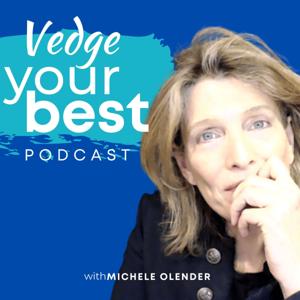


One thing almost every great goal is missing? A Plan B.
Whether you're going vegan, strength training, starting a business, or cutting back on alcohol, most of us have only ever had Plan A: perfection. And when it cracks — it always does — we don't slow down. We stop.
Stop planning only for perfection. Start planning in advance for reality - YOUR reality. Just like professional educators.
Mentioned in this episode
• Sid Garza-Hillman — MOTT: "most of the time”
• Marcus Aurelius: "You have to assemble your life yourself, action by action.”
• Day-tight compartments (Dale Carnegie)
• The abstinence violation effect (relapse research)
• Rigid vs. flexible dietary restraint
Having a clear Plan B isn't planning to fail — it's the reason you won’t. Plan B is there to jump in the moment you'd usually give up so you keep making progress.
Subscribe & Review:
If you enjoyed this episode, please subscribe and leave a review on your favorite podcast platform. Your feedback helps us grow and share the message of plant-based living with more listeners.
For more information, to submit a question or topic, or to book a free 30 minute Coaching session visit veganatanyage.com or email [email protected]
Music, Production, and Editing by Charlie Weinshank. For inquiries email: [email protected] Virtual Support Services: https://proadminme.com/
Does your to-do list say things like doctor, camp, garden, library, tofu—or simply dump?
Those words may remind you that something needs attention, but they don’t tell you what to do next. Often, a vague item keeps moving from list to list because it isn’t actually a task yet. It may be a project, an unresolved question, a missing decision, or something that requires another person’s help.
In this practical end-of-July episode, Michele shares how to turn vague reminders into specific next actions your future self can actually use.
You’ll learn:
• Why one-word list items are often topics or projects rather than tasks
• Four questions to ask when something keeps getting postponed
• Why asking, deciding, researching, and delegating all count as progress
• How to add the context your future self will need
• Why action verbs such as call, ask, choose, schedule, log in, buy, and order make a list more useful
• How context-based next actions can help you organize tasks by where, when, or with whom they can be completed
• How the “one big, two medium, three small” approach can make an overwhelming day more manageable
Michele also applies the idea to plant-based living. Instead of writing vegan or tofu, your real next action might be finding a vegan lasagna recipe, adding extra-firm tofu to the grocery order, asking a restaurant server about vegan options, or calling your doctor to discuss appropriate bloodwork.
Try this
Find three vague items that have been sitting on your list. For each one, ask:
What did I mean when I wrote this?
Is there something I still need to know, find out, or decide?
Does someone else need to be involved?
What is the next action I can actually complete?
Then put that specific action on your list, your calendar—or, when appropriate, someone else’s calendar.
You don’t need a new planner, a complicated system, or color-coordinated markers. You need a list that helps you make progress.
Mentioned in this episode
April Perry and LearnDoBecome’s work on Context-Based Next Actions Lists:
https://learndobecome.com/episode63-2/
This week’s reminder
Your to-do list should not be a collection of mysterious documents for your future self to puzzle over. Make it specific enough to show you where to begin—and then take the next small step toward vedging your best.
Subscribe & Review:
If you enjoyed this episode, please subscribe and leave a review on your favorite podcast platform. Your feedback helps us grow and share the message of plant-based living with more listeners.
For more information, to submit a question or topic, or to book a free 30 minute Coaching session visit veganatanyage.com or email [email protected]
Music, Production, and Editing by Charlie Weinshank. For inquiries email: [email protected] Virtual Support Services: https://proadminme.com/
What happens when you stop letting the algorithm choose what you learn and start building your own course of study?
In the first installment of my summer" personal curriculum," I open Peter Singer’s Animal Liberation Now: The Definitive Classic Renewed, the updated 2023 edition of his influential 1975 book, Animal Liberation.
Why start here? Singer’s work supplied much of the vocabulary and philosophical framework still used in conversations about animals today. We break down speciesism, sentience, utilitarianism, and the difference between animal welfare and animal rights—without assuming you already speak the language of philosophy. ( Because I don’t.)
We look at factory farming and animal experimentation, how Singer weighs a human preference for taste or price against an animal’s interest in avoiding suffering, and why the question of plant sentience does not necessarily weaken the vegan case.
There are criticisms of Singer’s work, including disability-rights objections to his views on euthanasia and profound cognitive disability.
This episode is neither a blanket endorsement nor a takedown.
It is an invitation to read critically, understand some of the ideas that helped shape modern animal ethics, and decide what holds up for you.IN THIS EPISODE
CONTENT NOTE
This episode includes discussion of factory farming, animal experimentation, animal suffering, euthanasia, disability rights, and ethically complex questions involving infants with profound, life-limiting disabilities.
What subject would you choose for a personal curriculum of your own? And how does this new series land for you—intriguing, too academic, or exactly the nudge you needed? Reach out and let me know.The next personal-curriculum book episode will arrive in a couple of weeks. Until then, I’ll be here every week to cheer you on as you Vedge Your Best.
Subscribe & Review:
If you enjoyed this episode, please subscribe and leave a review on your favorite podcast platform. Your feedback helps us grow and share the message of plant-based living with more listeners.
For more information, to submit a question or topic, or to book a free 30 minute Coaching session visit veganatanyage.com or email [email protected]
Music, Production, and Editing by Charlie Weinshank. For inquiries email: [email protected] Virtual Support Services: https://proadminme.com/
What would it look like to build your own Personal Curriculum around veganism, animal advocacy, and our relationships with other animals?
This week, Michele introduces a summer reading series centered around her Personal Curriculum for the summer of 2026 and invites the listeners to join her.
Shared references can help us have better conversations — more precise, more thoughtful, and more useful — especially in a world where we are often working from different facts, different frameworks, and different emotional starting points.
Documentaries like Cowspiracy, Earthlings, The Game Changers, and Dominion have helped bring countless people into the vegan and plant-based conversation. But books offer something different: the chance to slow down, build an argument, question assumptions, take notes, push back, and develop a more durable intellectual framework.
Deep reading can help us become harder to fool, better able to name what we are seeing, and more equipped to understand the language used around food, animals, “humane” labels, sustainability, health, and ethics. Maybe reading is an important form of activism.
What books have shaped YOUR thinking? What belongs in a shared set of references for vegan and animal advocacy conversations? What perspectives are missing from the usual lists? What have you read recently that challenged you, changed you, frustrated you, or helped you think more clearly?
Books Michele is considering for her personal curriculum:
Animal Liberation by Peter Singer
Why We Love Dogs, Eat Pigs, and Wear Cows by Melanie Joy
Eating Animals by Jonathan Safran Foer
The Sexual Politics of Meat by Carol J. Adams
Dominion: The Power of Man, the Suffering of Animals, and the Call to Mercy by Matthew Scully
Some We Love, Some We Hate, Some We Eat by Hal Herzog
Michele wants to hear from you:
What books belong in this conversation? Particularly those from a non-white, indigenous or colonialized perspective.
Which books shaped your vegan, vegetarian, plant-based, or animal advocacy practice?
Which arguments have helped you? Which ones have not?
You can leave a short voicemail through SpeakPipe, DM Michele on Instagram at @Vedge_Your Best, or send an email to [email protected]
By leaving a voicemail, you are giving permission for your message to potentially be played on a future episode of Vedge Your Best podcast.
No mandatory homework. No quizzes. No pressure to keep up. Just an invitation to read, think, question, take notes, and connect over some shared references — one chapter at a time.
Links:
SpeakPipe voicemail: https://www.speakpipe.com/VedgeYourBest
Subscribe & Review:
If you enjoyed this episode, please subscribe and leave a review on your favorite podcast platform. Your feedback helps us grow and share the message of plant-based living with more listeners.
For more information, to submit a question or topic, or to book a free 30 minute Coaching session visit veganatanyage.com or email [email protected]
Music, Production, and Editing by Charlie Weinshank. For inquiries email: [email protected] Virtual Support Services: https://proadminme.com/
This week on Vedge Your Best podcast, we revisit the Save Our Bacon Act and the 2026 US Farm Bill, and ask what backlash against veganism, animal welfare, and plant-based change actually mean? There’s still time to communicate with the Senate here.
It can feel discouraging when vegan, plant-based, and animal advocates are trolled online or dismissed as extreme. But what if some of that backlash is also a sign that compassionate food movements are becoming visible enough to challenge powerful systems?
We explore how social change happens, why we may not need everyone to agree all at once, and what we can learn from research on active participation, coalition-building, and visible support. Drawing on Erica Chenoweth’s work on nonviolent movements and the “3.5% idea,” we see why visibility matters, why purity debates can shrink movements, and how widening the on-ramp can help more people take meaningful action.You’ll hear about:• How visible participation helps others feel less alone• Why backlash can be a signal that a movement is being noticed• What vegan and animal advocacy can learn from the anti-smoking movement• Why coalitions matter, even when people do not agree on every tactic• How schools, restaurants, hospitals, and laws can build better “infrastructure” for compassionate choices• Why imperfect participation can still move us forward• Practical ways to show up more visibly without burning outMaybe we don’t need everyone to do everything. We need more people doing something, more visibly, together, over time.
Subscribe & Review:
If you enjoyed this episode, please subscribe and leave a review on your favorite podcast platform. Your feedback helps us grow and share the message of plant-based living with more listeners.
For more information, to submit a question or topic, or to book a free 30 minute Coaching session visit veganatanyage.com or email [email protected]
Music, Production, and Editing by Charlie Weinshank. For inquiries email: [email protected] Virtual Support Services: https://proadminme.com/
The 2026 House Farm Bill — a $1.4 trillion piece of legislation — contains a provision called the Save Our Bacon Act that would wipe out every state-level animal welfare standard for farm products in the United States, current and future. It passed the House 224–200 and is now heading to the Senate for debate in July. This episode explains what's at stake, who it affects, and exactly how to make your voice heard before it's too late.TAKE ACTION — US LISTENERS
The most important thing you can do right now is contact your senators directly.
https://www.senate.gov/senators/senators-contact.htm
Enter your state and you'll get your senators' phone numbers, email contact forms, and office locations. A phone call takes two minutes. A message through their contact form takes five.
What to say: "I am calling to ask Senator [Name] to oppose the Save Our Bacon Act — the preemption provision in the 2026 Farm Bill (H.R. 7567, Section 12006). Please protect state animal welfare standards."
Capitol Switchboard (they'll connect you to your senator's office): (202) 224-3121
Find and contact your senators
Your contact matters most if you live in one of these states
These states have senators on the Senate Agriculture Committee, which is where the bill is being shaped:
Arkansas · Mississippi · Iowa · Kansas · Kentucky · Alabama · South Dakota · North Dakota · West Virginia · Nebraska · Minnesota · New Jersey · Illinois · California · Pennsylvania · Michigan · Colorado · New Mexico · Georgia · Vermont
Pre-made action alerts (they do the work for you)
These organizations have built easy contact tools — you can send a message to your senators in under five minutes:
Humane World for Animals — Stop the Save Our Bacon Act https://humaneaction.org/protect-state-laws
ASPCA — Oppose Attacks on Animal Protection Laws in the Farm Bill https://secure.aspca.org/action/fsfp-act
Animal Legal Defense Fund https://aldf.org/project/oppose-the-farm-food-and-national-security-act-of-2026-house-farm-bill-federal/
BACKGROUND AND FURTHER READING
What is the Save Our Bacon Act? https://www.humaneworld.org/en/news/whats-happening-california-prop-12-farm-bill-save-our-bacon-act
Why the Farm Bill is no place for this provision (Civil Eats op-ed, May 2026) https://civileats.com/2026/05/28/the-farm-bill-is-no-place-for-big-porks-save-our-bacon-act/
ASPCA on the federal attack on state animal welfare laws https://www.aspca.org/news/federal-attack-farm-animals-and-states-rights-revived
Senate Agriculture Committee — signs of resistance https://sentientmedia.org/senate-ag-committee-set-to-spare-this-animal-welfare-law/
The 2026 House Farm Bill (H.R. 7567) — full text on Congress.gov https://www.congress.gov/bill/119th-congress/house-bill/7567
INTERNATIONAL LISTENERS
United Kingdom The UK-US trade deal (2025) opened British markets to US beef produced under welfare standards that would be illegal in the UK — putting British farmers who invested in higher welfare practices at a competitive disadvantage.
Compassion in World Farming — UK trade deal and animal welfare: https://www.ciwf.org.uk/our-campaigns/other-campaigns/trade-and-animal-welfare/
European Union The EU's Farm to Fork strategy promised to phase out cage farming across member states. Those commitments have been dropped from the 2026 Commission Work Programme after years of delays.
EU Animal Welfare Intergroup — warning on 2026 Work Programme: https://www.animalwelfareintergroup.eu/news/intergroup-warns-against-omission-animal-welfare-proposal-2026-work-programme
Canada Animal Justice published a national vision report in 2026 calling for stronger federal animal welfare standards.
Animal Justice — National Framework for Farmed Animal Protection: https://www.animaljustice.ca/wp-content/uploads/2026/04/Vision-Report-2026.pdf
What if the reason you're struggling with your plant-based choices has less to do with willpower — and more to do with the food culture surrounding you?
In this episode, I got completely hooked by a New York Times piece about financial habits — and couldn't stop thinking about how perfectly it applies to the way we eat. The article, by Paulette Perhach, makes the case that every friend group has a financial culture, whether anyone named it or not. Turns out, every friend group has a food culture too. And most of us didn't choose ours on purpose. We absorbed it.
We talk about what social contagion actually is, why it's not as scary as it sounds, and how it might explain why plant-based eating can feel so much harder than it should. We also talk about how to use it in your favor — without lecturing anyone, debating at dinner, or turning into the vegan police.
In this episode:
Three questions from this episode:
Resources mentioned:
This week's challenge:
Choose one place to be less passive. Suggest the restaurant. Bring the dish. Tell the host ahead of time. If you're just starting out, find one recipe that excites you, one account that makes this feel doable, or one person who gets it. That's enough.
Enjoyed this episode? Leave a review on Apple Podcasts — it helps more people find the show. And if this one resonated, share it with someone who might be ready to hear it.
You don't have to do it perfectly. You just have to Vedge Your Best.
Subscribe & Review:
If you enjoyed this episode, please subscribe and leave a review on your favorite podcast platform. Your feedback helps us grow and share the message of plant-based living with more listeners.
For more information, to submit a question or topic, or to book a free 30 minute Coaching session visit veganatanyage.com or email [email protected]
Music, Production, and Editing by Charlie Weinshank. For inquiries email: [email protected] Virtual Support Services: https://proadminme.com/
This episode drops on my 67th birthday. One thing I really wish I'd understood earlier? Waiting isn't the safe choice. It just sends the bill to your future self.
We tend to think that waiting is the less costly option. That the right time is out there, and when it arrives, the awkwardness will be gone, the support will be in place, and the path will be clear. But that perfect moment doesn't tend to show up. And while we're waiting for it, we're not building any of the skills we'll need when we get there.
This episode isn't about blame — yours or mine. It's about what's actually going on when we keep putting things off, and what it might look like to start practicing instead.
In this episode:
The question from this episode:
What would you do a little differently if you believed that waiting is costing you something?
Resources mentioned:
This week's invitation:
You don't have to solve the hard part first. If there's one food, one situation, one habit you're waiting to have figured out before you start — set it aside for now. What's one thing you can do? One meal, one choice, one grocery item. That's the practice. That's where it begins.
If this one landed for you, share it with someone who might need to hear it. And I'd love to know — what have you been waiting on? Leave a review on Apple Podcasts or come find me and tell me.
As always: you don't have to do it perfectly. You just have to Vedge Your Best
Subscribe & Review:
If you enjoyed this episode, please subscribe and leave a review on your favorite podcast platform. Your feedback helps us grow and share the message of plant-based living with more listeners.
For more information, to submit a question or topic, or to book a free 30 minute Coaching session visit veganatanyage.com or email [email protected]
Music, Production, and Editing by Charlie Weinshank. For inquiries email: [email protected] Virtual Support Services: https://proadminme.com/
“Oh Vegan? Must be nice…."
Some people hear words like "change” or “goal” and feel intrigued. Others feel offended. As if YOUR growth is a comment on who THEY are. In this episode, we talk about why that happens, what those people are actually protecting, and how understanding it can give you more insight and compassionate for them AND yourself.
We also talk directly to the RE-starters. If you've had a gap in your plant-based or vegan practice, this one is for you.
IN THIS EPISODE:
RESOURCES MENTIONED:
Carol Dweck — Mindset: The New Psychology of Success
Brené Brown — research on shame, vulnerability, and courage (brenebrown.com)
Kristin Neff — self-compassion research (self-compassion.org)
Subscribe & Review:
If you enjoyed this episode, please subscribe and leave a review on your favorite podcast platform. Your feedback helps us grow and share the message of plant-based living with more listeners.
For more information, to submit a question or topic, or to book a free 30 minute Coaching session visit veganatanyage.com or email [email protected]
Music, Production, and Editing by Charlie Weinshank. For inquiries email: [email protected] Virtual Support Services: https://proadminme.com/
You’re more consistent than you think, because not practicing is also a practice.
In this milestone 300th episode of Vedge Your Best, Michele reflects on what it really means to show up week after week.
This episode explores the stories we tell ourselves about discipline, follow-through, and identity and how those stories can become self-protective. If we say, “I’m just not wired that way,” we may be protecting ourselves from shame, disappointment, or other people’s expectations. But we may also be protecting ourselves from evidence that we are capable of more than we think.
For anyone who has ever thought, “I’m not consistent enough to be vegan,” “I’m not that kind of person,” or “I could never stick with that,” this episode offers a compassionate reframe. A vegan or plant-based practice can be about ethics, compassion, health, and the planet — and it can also be a way to update your belief in yourself.
In this episode:
Why Episode 300 made Michele question her own story about consistency
How “I’m consistently inconsistent” can become a self-protective identity
Why our brains collect evidence for the stories we already believe
What John Acuff calls “soundtracks” — the repeated phrases we play in our minds
The Instapot story and the idea of “practicing not practicing”
Why veganism or plant-based change can feel activating when you fear inconsistency
How “I’m not like that” can sometimes mean “I haven’t practiced that yet”
Why all-or-something is more useful than all-or-nothing
How consistency may simply mean learning how to come back
Episode 300 Challenge
Ask yourself three questions:
What have I been practicing that I’m not giving myself credit for?
What have I been practicing not practicing?
What is one tiny thing I want to practice on purpose this week?
Subscribe & Review:
If you enjoyed this episode, please subscribe and leave a review on your favorite podcast platform. Your feedback helps us grow and share the message of plant-based living with more listeners.
For more information, to submit a question or topic, or to book a free 30 minute Coaching session visit veganatanyage.com or email [email protected]
Music, Production, and Editing by Charlie Weinshank. For inquiries email: [email protected] Virtual Support Services: https://proadminme.com/
From the publisher's feed

11,770 Listeners
1,450 Listeners
536 Listeners
210 Listeners
877 Listeners
343 Listeners

3,397 Listeners
2,603 Listeners
458 Listeners

839 Listeners
2,323 Listeners
60 Listeners
321 Listeners
45 Listeners
19 Listeners